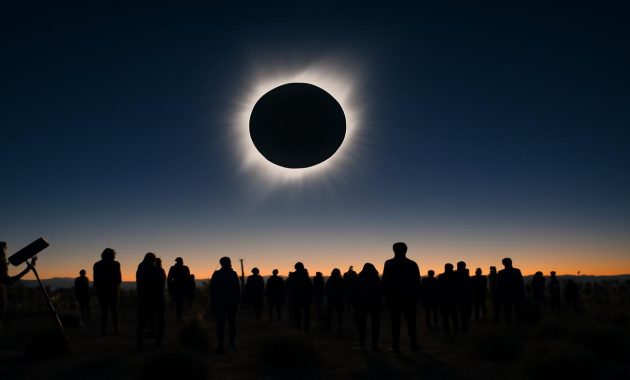
The news slipped into the world on an ordinary weekday morning, the way truly extraordinary things often do. A quiet bulletin from an observatory. A few sentences from an astronomer in a live-streamed conference. Then, like a shadow racing across a sunlit field, the realization spread: a date had been set. Day will turn to night, again—but this time for longer than any of us alive have ever seen. The longest solar eclipse of the century now has a calendar entry, circled in red ink in astronomy labs and living rooms alike. Somewhere, right now, a child is hearing about it for the first time and looking up, trying to imagine the sky going dark at noon.
A Date Inked in Shadow
It began, as it often does, with calculations. Months of orbital dynamics pinned down to the exact hour, minute, second. The Moon’s elliptical path, the Earth’s slight wobble, the Sun’s unblinking glare—dozens of tiny gravitational negotiations stitched together into a single, breathtaking outcome. Astronomers, who spend their lives measuring distances in millions of kilometers, have now offered something refreshingly human: a day to wait for, a time to gather, a moment to hold your breath.
The announcement came with the steady calm of scientists who know their math is ironclad. They spoke of seconds and durations, of totality and partial paths, of penumbra and umbra, but behind the technical language lay something almost childlike: excitement. Because this eclipse will not just be long—it will be the longest of the century, stretching totality near the outer edges of what Earth and Moon can even allow. Under the right sky, some regions will see the Sun completely erased for over six and a half minutes, an eternity in eclipse time.
Think about what can happen in six and a half minutes. Water can come to a boil. A coffee can be poured, stirred, and sipped. A train can slip from city center to suburbs. Entire conversations begin and end. And on that day, for those minutes, daylight will falter, the temperature will dip, birds will fall strangely silent, and a dusky twilight will sweep across landscapes that, moments earlier, were bright and ordinary.
Where the Moon’s Shadow Will Fall
The path of totality—the narrow track where the eclipse will be complete—is already being traced across maps and screens, a graceful, slanting ribbon cutting through continents and oceans. It begins where the Moon’s umbra first brushes Earth, far out over open water, then arcs over land, quietly choosing some towns and not others, some farms but not the next field, some city blocks but not the neighborhood down the road.
Across multiple regions, the spectacle will unfold in long, slow choreography. Many people will experience at least a partial eclipse: the Sun bitten into a luminous crescent, the light growing thin and sharp like late afternoon even though your watch insists it’s midday. For those in the path of totality, however, the experience will feel almost mythic. The sky will darken enough for planets to wink into view—maybe Venus first, then a bright dot of Jupiter, a reminder that we are never truly alone in the cosmic dark.
Coastal villages will watch the ocean lose its glint and turn to dull pewter. Mountain towns will see their ridgelines painted in thin, otherworldly blues and purples. In sprawling cities, towers and glass will reflect a world that looks suddenly filtered, as if someone has turned down the color saturation of reality itself.
| Region | Approximate Eclipse Experience | Estimated Duration of Totality |
|---|---|---|
| Coastal Areas along Central Path | Full day-to-night transition with ocean horizon darkening | 6–6.5 minutes |
| Inland Plains and Farmlands | Deep twilight over open landscapes, shifting animal behavior | 5–6 minutes |
| Mountainous Regions Near Path | Dramatic horizon glow and sweeping shadow racing across peaks | 3–5 minutes |
| Major Cities Slightly Off Center Line | Partial eclipse with eerie lighting and noticeable temperature drop | 1–3 minutes (or deep partial) |
| Regions Farther from Path | Crescent Sun, subtle dimming, still a visible celestial event | No totality (partial eclipse only) |
For now, the exact list of towns and cities under the central line is what astronomers and cartographers are polishing with almost obsessive care. But even without naming them, the feeling is clear: this will not be an eclipse you have to travel across an ocean to chase. It will be generous, crossing multiple regions in a long, slow sweep, offering millions the chance to look up and see day surrender, however briefly, to night.
A Sky That Changes How You Feel the World
Describing a total solar eclipse is a little like trying to describe the first time you heard your favorite song. Words can get close, but they never quite capture the vertigo of the real thing. Still, those who have stood under a shadowed Sun—scientists, skywatchers, children pressed against parents’ legs—agree on some details that seem nearly universal.
First, the light. As the Moon slides across the Sun, the world doesn’t just get darker; it changes flavor. Colors drain away into a kind of metallic clarity. Shadows sharpen into double outlines as sunlight is squeezed through the narrowing crescent of the Sun. The warmth on your skin thins; some people report goosebumps, even in summer, as the temperature falls by several degrees in minutes. Your body knows something is wrong before your brain figures out what to call it.
Then, the soundscape shifts. Birds grow restless, then quiet. Insects change their nocturnal rhythms, thinking night has arrived early. Dogs may bark or whine. Human conversations trail off as people tilt their faces upward, eclipse glasses in place, caught between nervous laughter and reverent silence. The world does not go mute, exactly—but it acquires a hush, a tension, like the held breath between notes of a song.
At last, totality. The final sliver of Sun snaps out, and for one surreal instant the world seems to blink. Overhead, the sky is suddenly a deep, improbable twilight. The Sun has been replaced by a black disk crowned with an electric white halo—the solar corona, the star’s outer atmosphere, normally drowned in blinding light. Streamers of plasma fan outward in delicate, ghostly tendrils. Some flare straight out; others curve like brushstrokes, tracing magnetic fields you can finally, impossibly, see.
Along the horizon, all 360 degrees of it, the world glows in apricot and indigo, as if someone has laid a permanent sunset around you. It feels like standing at the center of a vast, round stage while every edge of the world burns soft and gold. People cry. People cheer. People forget, for an instant, to take pictures. Many remember the feeling more than the view: the sense that reality has been peeled back just enough to expose a deeper, more mysterious layer.
The Long Shadow’s Gift to Science
For scientists, this eclipse will be more than a spectacle; it will be a rare laboratory, a long, dark window into the Sun’s outer atmosphere. Eclipses used to be the only way astronomers could study the corona, and even today, with space-based telescopes sending back constant data, a total eclipse still offers a kind of high-resolution intimacy no satellite quite matches.
The unusual duration of this event is a gift. More minutes of totality mean more time to capture detailed images, more time to track how coronal structures shift and flow, more time to measure temperature, magnetic fields, and subtle motions in the solar wind. Astronomers will line the path with telescopes—from small backyard setups to sophisticated mobile observatories—leapfrogging the shadow so that observations overlap and extend beyond what any one location can see.
Beyond solar physics, atmospheric scientists will be watching too. When the Sun blinks out, even briefly, the atmosphere responds. Winds change direction. Layers of air expand and contract. By scattering instruments across the path, researchers can watch how that brief plunge into twilight ripples through the sky above us. It’s like flipping a switch in a grand experiment where the variable is the star we live by.
Preparing for a Once-in-a-Century Sky
There is something quietly powerful about living in the run-up to a predicted wonder. The date now set for the longest eclipse of the century will begin to shape plans in ways both large and small. Hotels along the path will circle the day on their calendars and quietly adjust their booking strategies. Small towns that normally host harvest festivals or summer markets may find themselves instead planning eclipse celebrations. Teachers will begin sketching lesson plans; parents will make mental notes to keep the kids out of school that day.
Preparation, in this case, is not just about logistics. It’s also about how you want to remember the event. Some will chase the longest possible totality, traveling to the very heart of the shadow’s path. Others will stay close to home, choosing to watch the sky change over the familiar shapes of their own streets, their own trees, the rooftop they grew up beneath.
Whatever your approach, one piece of preparation is non-negotiable: eye safety. Looking directly at the Sun—even when a large portion is covered—can cause permanent eye damage. Specialized eclipse glasses or solar viewers, certified to meet appropriate safety standards, will be essential for all phases except the brief period of totality itself. During those few minutes when the Sun is completely covered, it becomes safe to look with the naked eye; the instant a sliver of sunlight appears again, the glasses must go back on.
Communities along the path are already drafting outreach plans: free viewing events in public parks, pop-up planetarium shows, dawn-to-dusk festivals celebrating light, dark, and the thin line between. Amateur astronomers are ordering filters and fine-tuning telescopes. Photographers are practicing their eclipse exposures, though many veterans of past eclipses whisper the same advice: take a couple of photos, then put the camera down and simply witness.
Why This Eclipse Feels Different
Solar eclipses come and go. Some sweep over remote oceans or polar ice, seen mostly by scientists and determined “eclipse chasers” who travel the globe to stand under their shadow. But this one, astronomers keep saying, is different. It’s the duration, yes—the longest totality of the century—but it’s also something about the moment we’re in as a species.
We live in a world of screenlight now, of notifications, of days chopped into tiny, buzzing fragments. The cosmos is always there, of course, but it has receded into wallpapers, background noise, a pretty image behind app icons. A major, long eclipse insists on being seen in real time. It can’t be paused, rewound, or watched later. You have to stand there, under the open sky, as the temperature falls and the birds grow quiet and the stars appear at noon.
For some, it will be a reminder of old stories, of myths in which dragons or wolves devour the Sun, in which gods wage battles across the sky. For others, it will be a bracing lesson in orbital mechanics: this is geometry you can feel on your skin. And for many, it will simply be awe—a rare, shared astonishment that cuts across languages, borders, and beliefs.
Events like this also have a way of rearranging scale in our minds. We are so often trapped in human-sized worries: bills, deadlines, messages that demand replies. To watch the Moon move in front of the Sun is to feel, for a moment, included in a larger story. The distances are huge, the motions precise, the timing exquisite. And yet, here we stand, in our jackets and lawn chairs, in parking lots and fields, invited to witness.
Stories Waiting to Be Told Under a Darkened Sun
Between now and the date the astronomers have confirmed, a quiet countdown has begun. Not the loud, ticking kind of digital clocks and event banners, but a slow accumulation of anticipation. Somewhere, a grandfather is already planning to tell the story to his grandchildren: how the air went cool, how the streetlights blinked on at lunchtime, how the neighbor’s dog tilted its head and whimpered. Somewhere else, an artist is sketching concepts for a painting that will try—surely in vain, but beautifully—to fit that impossible corona into a frame.
In cafés and offices and classrooms, plans will be hatched. “Where will you be during the eclipse?” will become a conversation starter, an invitation to imagine a future moment shared with millions of strangers scattered along a shadow track. Some will choose solitude, hiking to hilltops or quiet lakesides. Others will want crowds, the communal cheer and gasp of many voices rising together as the last sliver of Sun disappears.
When that day arrives, it will begin just like any other. Alarm clocks will chirp. Coffee will brew. Cars will nose into morning traffic. But the closer the hour approaches, the more the ordinary day will feel slightly off-kilter, humming with expectation. People will drift outside, clutching eclipse glasses, cameras, or nothing at all. Conversations will taper off as attention shifts upward.
And then, slowly, surely, the light will begin to change.
The first bite out of the Sun will look almost shy, just a small nibble at the disk’s edge. Clouds, if they’re kind, will part. The street you’ve known for years will start to look unfamiliar as shadows sharpen and the color of the day cools. Time will feel oddly elastic—both racing and stretching—as the Moon’s slow, relentless motion continues.
Eventually, the moment of totality will arrive. For the longest eclipse of the century, that moment will not be a blink-and-you-miss-it affair. It will lengthen into something you can inhabit, something you can walk around in, look at from different angles: the corona’s wispy tendrils; the faint glimmer of planets; the strange glow on the faces of the people around you. You’ll have time to notice the chill on your arms, the way the wind feels different, the collective intake of breath as day gives way, briefly, to night.
And then, as gently as it began, the spell will break. A single bead of sunlight—often called the “diamond ring”—will burst from the Moon’s edge. Daylight will rebound in a slow crescendo. Birds will stir. People will exhale, laugh, maybe clap without meaning to. In a matter of minutes, the world will look normal again, though it may not feel that way inside your chest.
Long after the last partial bite of the Moon has left the Sun’s face, after the eclipse glasses are tucked away in drawers and backpacks, the story will continue—told at dinner tables, in classrooms, across social feeds, in quiet journal entries. The astronomers, who began this with their precise confirmation of a date and time, will sift through terabytes of data and sharpen our understanding of the star that makes life possible. The rest of us will carry something less measurable but no less real: the memory of having stood, just once, in a world where noon became night and the sky opened to reveal its hidden crown.
On a future map of the century, this eclipse will sit there like a dark, beautiful bead threaded along the timeline: the day the Moon’s small, familiar face covered the vast, blinding Sun for longer than any of us had ever seen. We will have been there, beneath it, watching as the shadow passed and the light returned.
Frequently Asked Questions
How long will the longest solar eclipse of the century last?
The maximum duration of totality for this eclipse is expected to exceed six minutes in some locations along the central path. Most places under totality will experience between four and six minutes of complete darkness, which is exceptionally long by eclipse standards.
Will the eclipse be visible from my region?
Many regions will see at least a partial eclipse, while only a narrow path will experience totality. Exact visibility depends on where you are relative to that path. As the date approaches, astronomy organizations will publish detailed maps so you can check your specific location.
Is it safe to look at the eclipse?
It is never safe to look directly at the Sun without proper protection, except during the brief period of totality when the Sun is completely covered. You must use certified eclipse glasses or solar viewers for all partial phases. The moment even a small part of the Sun reappears, protection must go back on.
What does “totality” mean?
Totality is the period during a solar eclipse when the Moon completely covers the Sun’s bright face. During totality, the sky darkens, stars and planets may become visible, and the solar corona—the Sun’s outer atmosphere—can be seen as a luminous halo.
What should I bring to watch the eclipse?
At minimum, bring safe eclipse glasses. Many people also bring a comfortable chair or blanket, a hat and layers for changing temperatures, water and snacks, and optionally a camera with a solar filter. Give yourself time to arrive early and simply look and listen as the world changes around you.