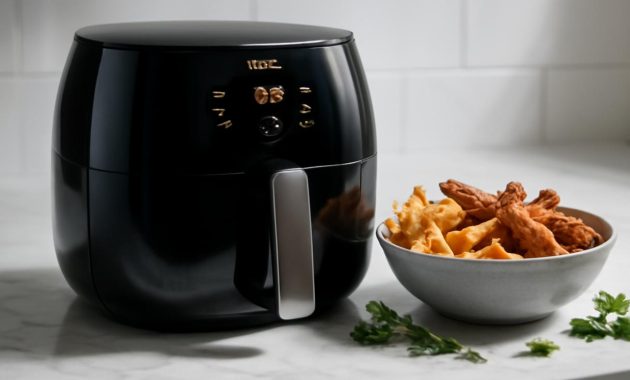
There’s a soft, familiar sound that comes from the kitchen as twilight settles in—a quiet hum, a gentle whir, a glow that feels almost like a small campfire in a modern shell. On the counter, where once a heavy, oil-splattered fryer might have lived, something sleeker now rests. It looks more like a statement piece than an appliance. Steam curls inside, a basket of vegetables and crisp-edged potatoes slowly transforming under a hot halo of air. It smells like comfort food. It feels like the future.
A New Kind of Sizzle
For years, our kitchens have carried the same soundtrack: the loud hiss of oil, the clatter of pans, the low drone of the oven fan. We’ve made peace with it. We’ve accepted a certain level of smoke, splatter, and guilt as the price of crisp fries or golden wings. But when Philips unveils its brand-new Airfryer, something about that old routine suddenly feels outdated—like using a rotary phone in a world of smartphones.
This isn’t just a slightly improved version of the gadget your friend raved about three years ago. It’s a quiet, well-considered declaration that maybe we don’t need to drown food in oil to enjoy it. That we can be a little kinder to our bodies, and, surprisingly, a little kinder to the planet at the same time.
The new Philips Airfryer steps into your kitchen not as a futuristic gimmick but as an invitation—to cook differently, to eat more consciously, and to rediscover something we often rush past: the simple, sensory joy of preparing food. You can hear it in the low whoosh of heated air, see it in the way vegetables blister and caramelize, and taste it in each hot, tender bite that doesn’t leave a greasy sheen on your fingers.
The Quiet Revolution of Daily Cooking
Healthy eating often gets framed as sacrifice. Less salt, less sugar, less fat… less fun. The plate gets emptier, the flavor gets duller, and the joy of dinner slips away. The new Airfryer pushes against that narrative, not with slogans, but with texture and timing and the small miracles of precise heat.
Open the drawer mid-cook—just for a second—and you’ll see it in action. Thin slices of sweet potato, tossed in barely a teaspoon of oil, balloon up around the edges, taking on a subtle crunch. Chickpeas rattle around like tiny bronze marbles, their skins bursting into crisp jackets over creamy centers. Chicken thighs turn the color of late autumn leaves, skin taut and crackling while the meat underneath stays tender and moist.
You close the drawer and notice something else: your kitchen doesn’t smell like a fast-food outlet. The air feels clearer, warmer, more inviting. There’s no heavy cloud of oil settling over the countertops, no slick film to wipe off later. What the new Philips Airfryer brings is not just taste, but relief—from mess, from excess, from the sense that “good” food always comes with a hidden price.
The Technology You Can Actually Taste
Behind that experience is the quiet power of high-speed hot air circulation. The Philips engineers didn’t set out to build a toy for food trends. They built a machine that rethinks how home cooking works, from the inside out. Every burst of air, every carefully regulated temperature shift, is designed to coat food in heat the way oil once did—only faster, cleaner, and with dramatically less fat.
In many recipes, you swap a vat of oil for a spoonful. Sometimes, for vegetables and pre-marinated dishes, you skip the oil entirely. Yet what comes out of the basket still carries that familiar satisfying crunch. It’s a small act of trickery that feels almost unfair: less oil, more joy.
Healthier Plates, Smaller Footprints
Health is the headline. Sustainability is the quiet subtext written between every line of hot air. Both are woven into the design of this new Airfryer in ways you can taste—and measure.
Imagine an ordinary weeknight. Instead of pouring out half a bottle of oil to deep-fry a batch of potatoes, you drizzle a teaspoon over them, maybe two if you’re feeling generous. You hit the power button, select a preset, and watch as the timer snaps into place. Fifteen minutes later, the fries emerge: crisp outside, fluffy inside, warm enough to make your fingers tingle.
You didn’t use a liter of oil. You didn’t waste energy preheating a full-sized oven for a tray that barely takes up a corner of it. And—you notice this when you clear the table—you didn’t generate a mountain of greasy pans and paper towels to deal with afterward.
One meal is an anecdote. A year of meals starts to look like impact.
| Aspect | Traditional Frying | Philips New Airfryer |
|---|---|---|
| Oil Usage | Hundreds of ml per batch | 0–15 ml per batch |
| Average Fat Content | Significantly higher | Up to 80% less added fat |
| Energy Use per Small Meal | Higher (full oven or deep fryer) | Lower, faster heat-up |
| Kitchen Clean-Up | Grease, splatter, lingering smell | Minimal residue, fewer dishes |
While numbers and charts can feel abstract, the change becomes personal when you notice how you feel after dinner. A plate of airfried potatoes with herbs doesn’t sit in your stomach like a stone. A batch of crispy cauliflower bites with a light yogurt dip feels like a treat, not a cheat. Over time, it shifts the emotional weather around eating. You’re no longer bargaining with yourself: “I’ll eat this, but then I have to compensate.” You’re simply enjoying what’s in front of you.
Energy, Time, and the Planet in the Background
There’s a subtler layer here, one that hums away quietly in the background of every meal: energy. The new Philips Airfryer doesn’t just use less oil; it also aims to use energy more intelligently. It preheats quickly. It concentrates heat within a compact chamber. It reduces cooking time for many dishes compared with conventional ovens.
Consider the countless small meals we cook each week—roasted vegetables, reheated leftovers, a portion of fish, a batch of nuts for snacks. Traditionally, we might fire up a large oven for these, pouring energy into heating unused space. With the Airfryer, you’re heating only what you need, when you need it. One household’s savings may feel modest. Millions of households, however, start to shift demand and waste on a much larger scale.
Sustainability, after all, isn’t only about grand gestures. It’s about thousands of minor choices—how we commute, what we buy, and yes, how we cook. The Airfryer doesn’t lecture you on any of this. It just makes the climate-friendly choice easier, faster, and more delicious.
From Frozen Snacks to Forest-Fresh Vegetables
What might be most surprising about this new Airfryer is not what it takes away, but what it adds to your cooking life. It’s not a one-trick gadget. It’s more like an extra pair of capable hands in the kitchen, ready to roast, crisp, bake, reheat, or gently dehydrate.
Picture a rainy Saturday afternoon. You come back from the market with a bag full of earthy carrots, bright peppers, and a small head of broccoli that still smells faintly of soil and sun. In the past, they might have ended up boiled to blandness or pushed to the back of the fridge. Now you toss them with a light gloss of oil, salt, pepper, maybe smoked paprika. Into the Airfryer basket they go.
Minutes later, the vegetables emerge transformed—edges caramelized, colors deepened, sweetness intensified. This is the kind of food that makes you want to eat more vegetables not because you’re supposed to, but because they are genuinely irresistible. The same device that once might have been reserved for frozen fries now becomes your go-to tool for coaxing flavor from fresh produce.
Then there are the snacks—the ones that usually arrive in boxes and plastic bags. Nuts turn fragrant and toasty with a whisper of heat and spice. Kale leaves become paper-thin chips that shatter softly between your teeth. Apple slices dry into chewy bites that taste like concentrated autumn. You begin to realize that convenience doesn’t have to mean packaging and preservatives; sometimes, it’s just a matter of a machine that does the slow, consistent work for you.
The New Heartbeat of Weeknight Dinners
As weeks pass, the Philips Airfryer finds its own rhythm in your routine. It takes on the middle-of-the-week rush when energy is low and appetites are high. A fillet of salmon, brushed lightly with lemon and herbs. A handful of cherry tomatoes that burst into pockets of sweetness. A cluster of asparagus spears, still retaining a gentle snap. Into the basket, program set, done.
Parents start using it to reheat leftovers that taste freshly made instead of limp and rubbery. Students lean on it in small apartments where ovens are either non-existent or unreliable. Busy professionals appreciate that it turns cooking into something less daunting and more like pushing play on a song you know by heart.
The Airfryer turns “I should cook tonight” into “I get to cook tonight”—not because it does the work for you, but because it respects your time, your ingredients, and your craving for food that feels both nourishing and indulgent.
Design That Feels at Home in Your Life
Step closer and notice the design details. The gently curved lines. The intuitive controls that don’t require a degree in engineering to decode. The way the basket slides out with a smooth, reassuring motion. It feels solid, like something meant to live on your countertop for years, not seasons.
Philips has spent decades inside our homes—through light, sound, and now, the orchestration of heat. With this new Airfryer, those decades of tinkering and refining show up in subtle ways. The interface avoids clutter; presets help you get started even if you’ve never used an Airfryer before. Cleaning is simple, with non-stick surfaces and parts designed for easy washing. Every frustration quietly removed is another small reason you’ll reach for it again tomorrow.
There’s also something undeniably modern about it. The Airfryer doesn’t hide like an old appliance you’d rather keep in a cupboard. It fits the aesthetic of open shelves, sleek counters, and small-space living. It feels as much a part of a contemporary home as indoor plants, natural light, and a wooden chopping board scarred by years of honest use.
Cooking as a Shared Experience
Over time, something else happens: your Airfryer stories start to travel. A neighbor drops by and asks what smells so good. A friend texts you for that crispy tofu recipe you mentioned. Your parents, skeptical at first, try yours once and begin to consider one of their own. The new Philips Airfryer doesn’t just sit on your counter; it becomes a talking point, a reason to swap techniques and photos and half-serious claims about who makes the best roasted chickpeas.
Healthy, sustainable cooking stops being a private struggle and becomes a shared experiment. You’re no longer alone in trying to eat better or waste less energy. The narrative shifts: it’s not about restriction; it’s about creativity. It’s not about perfection; it’s about progress that feels good, tastes good, and spreads naturally from kitchen to kitchen.
The Start of a New Era
What Philips has unveiled with its newest Airfryer is more than a refined appliance. It’s a quiet but decisive step toward a new norm in home cooking—one where the default is lighter, greener, and surprisingly more joyful.
In this new era, we’re not asked to sacrifice the crackle of fried food or the comfort of a quick meal at the end of a long day. Instead, we’re invited to reimagine those pleasures through a different lens—less oil, less waste, less guilt. More color, more texture, more flavor. More evenings where cooking doesn’t feel like a chore, but like lighting a small, modern hearth and gathering around it.
Stand in front of the Airfryer for a moment while it runs. Listen to its low, steady hum. Watch the faint glow from within. Think about the small rituals it might transform for you: the Sunday batch-cook, the solo lunch, the late-night snack shared with someone you love. This is where the grand ideas of health and sustainability actually take root—in the everyday, in the practical, in the gentle whir of an appliance that helps you do better without making it harder.
The new Philips Airfryer is not a miracle worker, not an overnight cure for all our culinary and environmental problems. But it is a tool crafted for this particular moment—when we know we must change, yet crave comfort; when we want to tread lighter, yet refuse to abandon the pleasure of good food. It gives us a way forward that feels human: incremental, flavorful, warm.
Perhaps that’s the real story here. Not technology for technology’s sake. Not trends and buzzwords. Just a simple, powerful question answered in brushed metal and moving air: What if eating well and cooking responsibly could feel this easy, this inviting, this delicious?
Frequently Asked Questions
Does the new Philips Airfryer really make food healthier?
It significantly reduces the need for added oil, which can lower the overall fat and calorie content of many dishes compared with traditional deep frying. The healthiness still depends on what you cook, but the Airfryer makes it easier to enjoy crisp textures with less fat.
Can it replace my oven?
For many everyday tasks—like roasting vegetables, baking small batches, reheating leftovers, and crisping snacks—the Airfryer can stand in for a conventional oven. For very large roasts or multiple trays, a full-sized oven is still useful, but you may find yourself using it less often.
Is it complicated to use for beginners?
No. The new Philips Airfryer is designed with intuitive controls and helpful presets. Most users can start with basic recipes—like fries, vegetables, or chicken—on day one. As you grow more confident, you can experiment with custom settings.
What kinds of food can I cook in it besides fries?
You can cook a wide range of dishes: roasted vegetables, fish, chicken, tofu, homemade snacks like chickpeas or kale chips, reheated leftovers, small baked goods, and even toasted nuts or dried fruit. It’s more versatile than its name suggests.
How does it contribute to more sustainable cooking?
The Airfryer reduces oil usage and can use energy more efficiently than preheating and running a large oven for small portions. It also helps you make more use of fresh ingredients at home, which can reduce reliance on heavily packaged convenience foods.
Is cleaning the Philips Airfryer difficult?
The basket and tray are designed to be easy to clean, with non-stick surfaces and removable parts. For most everyday cooking, a quick wash is enough, and you avoid dealing with large amounts of leftover cooking oil.
Will my kitchen still smell like fried food?
You’ll still enjoy the aromas of cooking, but without the heavy, lingering oil smell that comes from deep frying. Many users find that their kitchen feels noticeably fresher after cooking with an Airfryer compared with traditional frying methods.