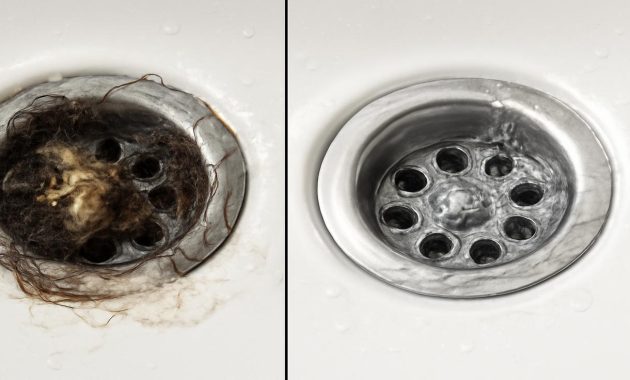
The sound came first—a low, throaty gurgle from somewhere deep beneath the kitchen floor, like the house had cleared its throat. Then came the smell. It arrived in slow motion, a creeping, swampy breath that made Anna drop the sponge into the sink and wrinkle her nose.
“Oh no,” she muttered, staring at the water circling the drain but refusing—absolutely refusing—to go down. Not tonight. Not after a 10-hour shift and a sink full of greasy dishes.
Outside, rain ticked steadily against the windows, soft and persistent. The whole small town seemed to be sinking into dampness that week—saturated lawns, swollen gutters, the creek behind the house churning brown and fast. Inside, though, everything had been, until this moment, under control.
Now, the kitchen sink was full of cloudy water, reflecting the tired lines of Anna’s face in its wavering surface. She reached for the plunger.
The Slow Clog Nobody Wanted to Talk About
The clog had been coming for weeks, if Anna was honest. The signs were there—little delays after running the tap, faint glugging sounds from hidden pipes, the occasional burp of trapped air. She’d shrugged it off the way most people do, like a small ache that doesn’t quite justify a doctor’s appointment.
Her house was old, a narrow two-story with creaky floors and pipes that remembered another century. The kind of house that held on to smells and seasons and murmurs of previous owners. Plumbing, the inspector had said when she bought it, was “functional but temperamental.” She’d signed the closing papers anyway, charmed by the oak tree in the backyard and the promise of finally having a place that was hers.
Now those same antique pipes were rebelling. The kitchen sink, the bathroom sink, and the shower all seemed to agree on one thing: they were done cooperating.
It wasn’t just inconvenience. It was a creeping sense of dread. Plumbing issues felt like the secret language of houses, and this message was clear: something deeper was wrong.
Anna had done the usual things. Boiling water. Baking soda and vinegar. Store-bought drain cleaner that promised miracles and delivered only a fizzy, chemical smell. The water might drain a little faster afterward, but never quite the way it used to. Each week, the flow slowed.
Tonight, it had stopped altogether.
The Arrival of the Pros
By morning, the situation had escalated from “mildly annoying” to “non-negotiable emergency.” The shower floor was a shallow lake. The bathroom sink coughed up cloudy water whenever the kitchen tap ran. When the downstairs toilet hesitated for a full ten seconds before flushing, Anna reached for her phone with a kind of resigned desperation.
The plumber that arrived three hours later wore a navy jacket, steel-toed boots, and an expression of stoic patience that suggested he’d seen things most people only have nightmares about.
“Name’s Miller,” he said, setting his toolbox down with a thud. “Let’s see what we’re dealing with.”
He listened carefully as Anna described the slow decline, the failed home remedies, the strange sounds in the walls when the washing machine drained. He nodded, made a few noncommittal noises, then headed for the crawl space access in the hallway closet.
There’s a particular silence that comes when someone else is beneath your home, poking at the bones of it. It’s part suspense, part helplessness. From the living room, Anna heard distant clanks, the scrape of tools, the occasional muffled curse.
After nearly an hour, Miller emerged with a streak of dirt across his cheek and a tightness around his mouth.
“You’ve got buildup,” he said simply. “A lot of it.”
He spread a few photos across the kitchen table—grainy images from a sewer camera system showing the inside of her main line. The pipe walls looked thick and uneven, like arteries lined in plaque. Grease, soap scum, bits of who-knows-what clinging and narrowing the passage until water could barely slip through.
“Not collapsed, thankfully,” he added. “But this isn’t just one clog. It’s years of stuff sticking, layer after layer.”
The quote for a full-scale mechanical cleaning and possible section replacement made Anna’s stomach flip. She stared at the numbers, then at the slow swirl of water in the sink, as if sheer willpower might fix it.
“Any other options?” she asked, half expecting him to say no.
Miller hesitated. “Well, there’s hydro-jetting, which is cheaper, but with pipes this old, there’s a small risk of damage. And to be honest, with this much buildup, I can’t guarantee anything short of going in physically is going to give you a long-term solution.”
He rubbed the back of his neck. “I’d give you a few days to think on it. But don’t wait too long. You’re on the edge of a full blockage.”
The Ordinary Bottle under the Sink
That night, after the plumber left and the estimate lay on the table like a challenge, Anna knelt on the cool tile floor and opened the cabinet under the kitchen sink.
This was not a moment of inspiration so much as a moment of avoidance. She was looking for a sponge, maybe a stray bottle of something half-promising. Instead, her hand closed around a familiar, squat plastic bottle with a faded label.
Dish soap.
Not the fancy, eco-labeled kind, either. Just basic, no-frills liquid dish soap—the stuff she used every day without thinking. For years, she’d heard a few older neighbors grumble about “never pouring grease down the drain, only hot water and a squirt of soap.” But she’d never thought of soap as anything more than a supporting character in the daily fight against dirty plates.
She unscrewed the cap and raised it to her nose. It smelled faintly of lemons and something clean, almost sharp. The kind of smell that suggested fresh starts.
In that quiet, tired moment, a thought flickered: Everything stuck in those pipes was, at its core, some combination of fat, oil, residue, and soap scum. And here in her hand was a product designed to break oil and grease apart.
The Late-Night Experiment
The idea felt halfway between foolish and brilliant, which is often where real experiments begin.
Anna set a pot of water on the stove and waited until it rolled into a full, rattling boil. Steam ghosted up to the ceiling, fogging the glass above the stove light. She turned off the heat and let it sit for a moment so it wasn’t scalding to the touch—just fiercely hot.
Then she poured a generous streak of dish soap directly into the drain, a slow, glistening ribbon disappearing into standing water. The lemon scent intensified, bright and artificial and somehow hopeful. She followed it with the hot water in stages, pouring a bit at a time, waiting between each pour as if listening for the house’s response.
The sink gurgled, but nothing miraculous happened. The water still sat, sullenly clouded, halfway up the basin. After the last of the hot water disappeared down, she rinsed the pot, turned off the kitchen light, and went to bed with the resigned conviction that she’d just wasted more time.
In the darkness, the pipes below the house carried on with whatever slow chemistry and rearrangement hot water and soap might inspire. The house exhaled. The rain eased.
The Morning the House Breathed Again
Dawn brought a pale light and the familiar grind of the coffee grinder. Anna’s routine was automatic: mug, grounds, kettle. She walked to the sink, prepared to work around a stagnant puddle for one more day.
But the basin was clear. Empty. The steel shone, undistorted by a layer of lingering water.
She frowned and turned the faucet on, hesitantly at first, then fully, the stream running strong and steady. The water rushed toward the drain—and vanished. No swirling hesitation, no lazy pooling. Just a clean, hungry pull downward.
In disbelief, she filled the basin halfway and yanked the stopper. The sink drained in a swift, smooth whirl, just like it had when she’d first moved in. The familiar sucking sound at the end felt like a sigh of relief from the house itself.
Upstairs, in the bathroom, the sink performed the same small miracle. Water flowed, disappeared. The shower drain, once stubborn, accepted a full blast from the tap without backing up.
It wasn’t merely improvement; it was transformation. Everything worked as if someone had quietly replaced the entire plumbing system overnight.
Calling in the Skeptics
By mid-morning, curiosity had overtaken relief. The pipes weren’t just a little better—they were suspiciously, improbably perfect. Anna kept hearing Miller’s words in her head: years of buildup, significant narrowing, mechanical cleaning recommended.
She picked up the phone.
“I’m telling you,” she said when the dispatcher answered, “it’s like something reset. Could you ask Miller to come back and take another look? I know it sounds strange, but… I need to understand what happened.”
Two hours later, the plumber’s van pulled into the cracked driveway once more. Miller stepped out, expression skeptical but curious. He tested the sinks, ran the shower, flushed the toilets. Every fixture responded with crisp efficiency.
His eyebrows climbed.
“This… is not what I saw yesterday,” he said slowly.
Back under the house he went, threading himself into the dim, dusty belly of the home. This time, the sounds from below were more frequent, a mix of surprise and muttering. After a while, he called up for his camera equipment.
Anna crouched near the access while he fed the lens into the main line again. On the small screen, the interior of her pipes appeared in ghostly grayscale. But they didn’t look the way they had the day before.
Where there had been thick, clinging walls of grime, there was now a smoother, wider channel. The pipe wasn’t spotless—decades of use don’t disappear overnight—but the change was dramatic. Instead of a sluggish, narrowed corridor, the wastewater had room to move, rushing past the lens in quick, confident streams.
“What did you do?” Miller asked, genuine bewilderment in his voice as he slid out of the crawl space.
Anna told him. After a beat of silence, he let out a short, incredulous laugh.
“Dish soap,” he repeated, shaking his head. “Just hot water and dish soap?”
The Chemistry of an Everyday Miracle
It wasn’t magic, of course. It was chemistry wearing the disguise of a $3 household product.
Dish soap is designed for one primary purpose: to break down fats and lift them away. At the molecular level, the little surfactant molecules in that lemon-scented liquid have a split personality—one end loves water, the other loves oil. When you pour it into a greasy pan, those molecules surround fat droplets and pry them apart, allowing them to wash away instead of clinging stubbornly.
In the dark, damp corridors of drain pipes, layers of cooking grease, oils, and soap scum often collect along the walls. Over time, they catch stray debris—coffee grounds that should have gone in the compost, rice that swells like tiny sponges, even microscopic food bits. The result is a sticky, narrowing passage that gradually strangles flow.
By sending a rush of hot water and a concentrated wave of dish soap through the veins of the house, Anna had effectively given her plumbing a deep, dissolving rinse. The hot water softened the accumulated oils, loosening their grip. The dish soap molecules wrapped around them, breaking the sticky cohesion that held the buildup in place.
Did it remove everything? No. But it broke up enough of the dense, greasy layers to restore space and speed—enough that even the plumber who’d declared the situation dire had to admit the transformation was stunning.
A Small Ritual That Became a Quiet Revolution
Word spread the way it often does in small towns: through chance conversations and shared complaint. At the hardware store, Anna mentioned her late-night experiment. Someone else chimed in with a similar story—an old trick their grandmother used to swear by.
Before long, it seemed everyone had a version: the retired teacher who poured a kettle of hot water and a squeeze of soap down her drains once a month “just to keep them honest”; the café owner who did a nightly flush after closing to fend off the inevitable grease from a day’s worth of dishes.
It wasn’t a cure-all. There would always be broken pipes, tree roots invading buried lines, and decades-old systems that needed more than a bottle from under the sink. But this small, almost embarrassingly simple ritual did something powerful: it shifted the story.
Instead of seeing drains as mysterious, unforgiving voids that suddenly failed without warning, people started to see them as living systems that could be maintained with gentle, regular care. The house, once an unpredictable machine, became more like a companion—one that responded to attention.
| Simple Habit | What It Helps With | How Often |
|---|---|---|
| Hot water + dish soap flush | Breaks up light grease and soap buildup | Every 2–4 weeks |
| Straining sink drains | Reduces food and hair entering pipes | Daily use |
| Avoid pouring fats down drains | Prevents heavy grease clogs | Every time you cook |
| Occasional professional inspection | Catches root intrusion & pipe damage early | Every few years or if problems persist |
Anna adopted her own version of the ritual. Once a month, usually on a quiet Sunday evening, she’d put a pot on the stove, listen to the soft rise of the water to a simmer, and pour a measured ribbon of dish soap into the sink. The scent of lemons became, oddly, a symbol of reassurance.
She knew now that her little experiment hadn’t replaced the need for real repairs someday; it had simply granted a reprieve, an unexpected extension of the system’s life. But there was something quietly empowering in knowing that not every household crisis required a crew of specialists and a staggering bill.
When the Extraordinary Hides in the Ordinary
Months later, when a neighbor down the street had their own slow-drain saga, the story of “the dish soap fix” made its way there too. The neighbor tried it, cautiously, ready to call in the professionals if nothing changed.
Their pipes, too, responded with a surprising loosening, an ease they hadn’t shown in years. They still ended up scheduling a camera inspection, just to be safe. The plumber, different company, different town, watched the screen and shook his head.
“For the life of me,” he said, “I didn’t expect this kind of flow after what you described.”
He left with a smaller invoice than he’d imagined and a new story to share on future calls.
Somewhere along the line, the tale of a basic household product, poured and rinsed in the quiet hours of a rainy night, became a sort of local legend. Not because it was a miracle cure—it wasn’t. Not because it made repair workers obsolete—it didn’t.
It lingered because it reminded people of something they often forget: the world is held together, more often than not, by small, humble tools and simple acts. The transformation of an old pipe, the startled reactions of skilled workers, the relief of a homeowner watching water flow freely again—those moments are stitched together by tiny molecules of soap doing the job they were made to do.
There is a particular kind of beauty in that—when the extraordinary reveals itself not in rare, expensive gadgets, but in the thing you’ve been reaching for every day without really seeing it.
Sometimes, the difference between a house that groans under the weight of its own history and a house that breathes easily again is nothing more than hot water, a squeeze of soap, and the willingness to try.
FAQs
Can dish soap really fix serious clogs?
Dish soap can help with light to moderate buildup, especially grease-related narrowing of pipes. It is not a solution for severe blockages, collapsed pipes, tree root intrusion, or foreign objects stuck in the line. If water does not drain at all, or backs up into multiple fixtures, a professional inspection is still necessary.
How exactly should I use dish soap to help my drains?
Run or heat a pot of very hot (but not boiling) water. Pour a generous amount of liquid dish soap into the drain—enough to see a clear stream going in. Slowly pour the hot water down after it in stages, allowing it to work through the line. Avoid doing this immediately before or after using harsh chemical drain cleaners.
How often is it safe to do a hot water and dish soap flush?
For most homes, once every 2–4 weeks is reasonable. Very old or fragile plumbing systems may require more caution—lukewarm to hot rather than near-boiling water. If you are unsure about the condition of your pipes, consult a plumber before making it a routine.
Could this replace professional plumbing maintenance?
No. Dish soap and hot water are supportive measures, not a substitute for real repairs. They can help maintain clearer pipes and delay some issues but will not fix structural damage, sagging lines, root intrusion, or broken joints. Think of it as brushing your teeth: it helps a lot, but you still need a dentist sometimes.
Is dish soap safe for all types of plumbing?
Standard liquid dish soap is generally safe for most household plumbing, including PVC and metal pipes, because it is designed to be rinsed down sinks. The main caution is extremely hot water in very old or brittle pipes. Use hot, not violently boiling, water, and avoid mixing with chemical drain cleaners unless the cleaner’s instructions specifically say it is safe.
What other simple habits help keep drains flowing?
Avoid pouring fats and oils down the drain, even in small amounts. Use sink strainers to catch food and hair. Run plenty of water while using garbage disposals, if you have one. Periodically flush with hot water. And if you notice recurring slow drains despite these habits, schedule a professional inspection to catch deeper issues early.