The woman in the clinic room looks healthy in the way that can trick you at first glance. Her skin glows, her hair is thick, and she laughs easily with the nurse. But when the door closes and the questions begin, a different story seeps out. She is exhausted in a way that sleep can’t fix. Her joints feel older than her years. Some days her hands don’t quite belong to her, trembling around a coffee cup. Blood tests, scans, referrals—she has a folder thick with results that explain pieces but never the whole. And then, almost as an afterthought, a line in her medical record: “Past Epstein–Barr virus infection.”
That last part might sound trivial. After all, Epstein–Barr virus—EBV for short—is almost everywhere. By mid-adulthood, around 9 out of 10 people on Earth have met this tiny passenger. Most never know it. Maybe they had a sore throat once in high school, called it a bad cold or a bout of mono, and moved on. EBV is like that uninvited guest at a party who slips into the crowd and stays in the house long after everyone forgets they were there.
But lately, scientists are leaning in, narrowing their eyes at this quiet guest. Because the deeper they look, the more it seems EBV might not just be loitering in the background. It may be quietly rewriting stories inside the immune system—and nudging some people toward autoimmune disease.
The Virus That Never Really Leaves
Imagine a forest that looks perfectly calm from a distance. Tall trees, stable trunks, leaves whispering in the wind. That’s how a healthy immune system appears most of the time: a living, responsive ecosystem. Now picture one tree whose roots are wrapped around something hidden and persistent—fungus, a buried cable, the foundation of an old building. You can’t see it from the path, but it changes how that tree grows and how the soil behaves around it.
That hidden “something” is what Epstein–Barr virus becomes once it finishes its dramatic entrance. In teenagers and young adults, EBV often shows up as infectious mononucleosis—“mono,” “the kissing disease,” that weeks-long episode of sore throat, swollen glands, and bone-deep fatigue. In others, the first meeting is so mild it barely registers. A little tickle in the throat, a quiet fever, a day or two of extra tiredness—and then life goes on.
Except the virus stays.
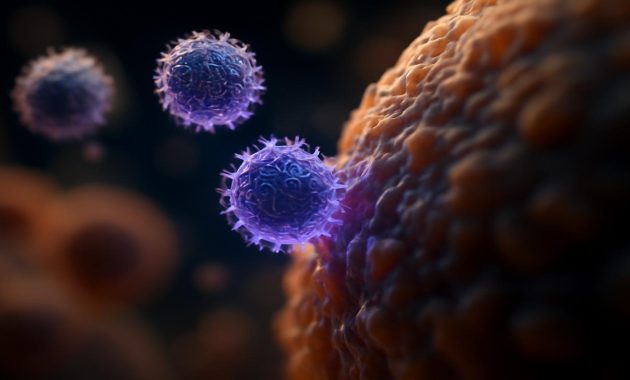
EBV slips into certain immune cells—mostly B cells, the white blood cells that help produce antibodies. It doesn’t keep loudly replicating the way some viruses do. Instead, it goes into a kind of dormancy, like a camper settling into a hidden cabin deep in the woods. It switches most of its viral genes off, whispering just enough to survive, and waits.
In that quiet phase, most of us live reasonably well with EBV in the background. Our immune system keeps it in check like a watchful ranger. Occasionally it stirs, especially when we’re stressed or our defenses are low. But the balance holds.
For some people, though, that balance tilts.
When the Immune System Starts to Mistake “You” for “Not-You”
Autoimmune diseases are, at their heartbreaking core, cases of mistaken identity. The immune system—this intricate security team built to protect us from infections and threats—starts misreading the map. It confuses self with intruder. Instead of just targeting viruses and bacteria, it turns its weapons toward joints, nerves, intestines, skin, or glands. The result can be illnesses like multiple sclerosis, lupus, rheumatoid arthritis, and others that creep into lives and rearrange them.
For decades, researchers have had a sense that infections might help spark this confusion. You can think of it like a training accident: in the rush to learn to fight a virus, some immune cells pick up the wrong target. They start recognizing pieces of our own tissues that just happen to resemble bits of the virus. This concept—called “molecular mimicry”—is central to the growing suspicion around EBV.
Under the microscope and in computer simulations, certain EBV proteins look surprisingly similar to proteins in our own bodies. An immune cell primed to go after EBV might, in some people with certain genes, start reacting to these look-alike human proteins. Once that reaction begins, it can snowball, turning a brief skirmish into a lingering war.
Walking through an autoimmune clinic, you see the human side of that war. A young man learning that the numbness in his legs is the first sign of multiple sclerosis. A woman in her thirties whose own immune cells are wearing away cartilage in her hands. A teenager whose fatigue is not “just stress,” but the early chapters of lupus. Behind the lab coats and acronyms there is a quiet question murmuring through the halls: why them? Why now?
The Pattern That Got Everyone’s Attention
The story might have stayed nebulous—just another “maybe” in a long list of possible triggers—if not for large, meticulous studies that changed the weather. One of the most striking came from tracking health data and blood samples from a huge number of people over many years. In this kind of research, scientists don’t just ask, “Who has EBV?”—because the answer is nearly everybody. Instead, they ask, “Who had evidence of EBV infection first, and who later developed autoimmune disease?”
For multiple sclerosis (MS), the pattern was startling. People who went from being EBV-negative to EBV-positive were far, far more likely to develop MS down the line compared with those who never showed EBV infection. Other possible culprits—like another common virus or unrelated health markers—didn’t show the same clear signal. It was as if, on a vast map of medical histories, a bright thread connected the dot labeled “EBV infection” to another labeled “MS diagnosis.”
Experiments went further. In some people with MS, immune cells that normally should be focused on outside invaders were reacting both to EBV proteins and to proteins found in the brain and spinal cord. Like a police sketch that resembles two different suspects, the viral and human targets overlapped enough to confuse the immune response.
EBV has also been implicated in lupus, where the immune system launches broad attacks on its own tissues, and in certain chronic inflammatory conditions. In some studies, the virus has been found in higher quantities, or in unusual patterns, in people with autoimmune disease compared with healthy controls. EBV proteins seem to interact with genetic regions linked to autoimmune risk, like a key that fits just a bit too well into a fragile lock.
None of this proves EBV is the single villain; life is never that simple. But it paints EBV not as a bystander, but as a recurring character in the plot.
A Quiet Virus with Loud Connections
Part of what makes this story compelling is how ordinary EBV seems. It doesn’t sweep through communities with the drama of a new pandemic. It’s slow, quiet, intimate—passed in saliva, lingering in shared cups, kisses, childhood play. It shapes-shifts its way through phases of infection, then fades into a latent state that can last a lifetime.
From there, its influence seems to depend on context: the genes you carry like an invisible script, the stressors on your body, the timing of infections, even your hormone levels and environment. Two people can walk through the same viral storm; one gets wet, the other walks away almost untouched.
That complexity is both humbling and strangely reassuring. It means that having had EBV—like almost everyone—does not doom you to autoimmune disease. Instead, EBV may be one key piece in a puzzle that also includes heredity, lifestyle, other infections, and chance. But understanding that piece could change how we approach prevention and treatment.
Listening to the Body’s Whisper Campaign
Part of living well with this emerging knowledge is learning to listen differently to the body. Many autoimmune stories begin not with a dramatic collapse, but with whispers: a fatigue that outlasts coffee, an ache that no longer feels like “just getting older,” a brain fog that makes familiar tasks feel slippery.
In the wake of mono or another strong viral illness, some people notice they simply don’t bounce back. Weeks stretch into months of feeling off—like being tuned a half-step flat. Others look back after an autoimmune diagnosis and realize that an earlier brutal infection was perhaps the first domino.
None of these patterns are proof in themselves. But they’re part of a growing body of lived experience that echoes what the cellular and molecular studies are hinting at: there’s a conversation, sometimes a conflict, between the virus that settles in and the immune system that negotiates with it.
Doctors are increasingly attuned to this. Some now ask more detailed questions about past viral illnesses when they see early autoimmune signs. Researchers are studying whether intervening earlier—right after a known EBV infection, or when certain immune markers begin to shift—might change the trajectory for people at high genetic risk.
Alongside them are patients who become their own careful observers, tracking symptoms, cycles, flares, and recoveries. They learn the rhythm of their body’s whisper campaign and advocate when something feels off, even if the first round of tests comes back “normal.”
What We Know, What We Suspect, What We Don’t
Science, at its best, is honest about uncertainty. With EBV and autoimmunity, the landscape right now looks something like this: solid ground in some places, promising trails in others, thick fog beyond that.
| Area | What’s Clear | What’s Emerging |
|---|---|---|
| EBV Infection | Most adults worldwide carry EBV, usually from childhood or adolescence. | The timing and severity of infection may influence future immune health. |
| Autoimmune Risk | Genetic background strongly affects who develops autoimmune diseases. | EBV appears to be a major environmental trigger in some conditions, especially multiple sclerosis. |
| Mechanisms | EBV hides in B cells and can alter how they behave. | Molecular mimicry, chronic immune activation, and gene–virus interactions are leading explanations. |
| Prevention | No approved EBV vaccine exists yet. | Vaccines and targeted antivirals are being explored as ways to prevent or reduce autoimmune risk. |
This map is shifting quickly. Ten or twenty years ago, mentioning EBV outside of discussions on mono and certain cancers might have felt like a stretch. Now, high-profile studies and careful lab work are pushing the virus closer to center stage in autoimmune conversations.
The Hope Wrapped Inside a Tiny Particle
Here’s the unexpected twist: the more clearly EBV is linked to autoimmune diseases, the more hopeful the story becomes. You can’t change your genes. You can’t rewrite what happened in your childhood body decades ago. But a virus—especially one with a relatively simple structure compared to the sprawling complexity of human biology—is something we might ultimately outmaneuver.
Vaccine developers are already on the trail. If we could create a safe, effective EBV vaccine and offer it early in life, we might prevent not just mono but potentially a slice of autoimmune disease in the decades that follow. Even a partial reduction in risk, spread across millions of people, would be profound.
Other researchers are asking whether, in those who already carry EBV and show early autoimmune signals, therapies that target EBV-infected cells or viral proteins could calm the storm. Could we teach the immune system to let go of old grudges, to distinguish more clearly between true threats and its own tissues?
These are not questions with answers yet, but they mark a shift—from resignation to strategy. They hint at a time when a conversation in a clinic room about MS or lupus might also include the words, “And this is what we can do about the viral piece.”
Living in the In-Between
For now, most of us live in the in-between: armed with emerging knowledge but without definitive personal roadmaps. If you’ve had mono, that doesn’t mean you will develop an autoimmune disease. If you have an autoimmune condition, it doesn’t mean EBV is the only reason, or that targeting it alone would cure you. The body is a tapestry of causes and effects, woven over years.
Still, there are ways to live more gently with the idea that a common virus may shape our deeper health. Some of them are surprisingly ordinary: respecting rest during and after infections instead of muscling through; taking seriously symptoms that linger beyond the typical recovery time; keeping regular medical care so that small shifts can be caught early.
There’s also the quieter work of letting go of old blame. Many people with autoimmune diseases carry a sneaky sense that they somehow caused this: by stressing too much, by not eating perfectly, by pushing their bodies too hard or not enough. Understanding the role of a virus like EBV offers a different narrative—one in which they are not at fault, but are instead navigating a complex biological intersection of genes, microbes, and life events.
In that sense, the EBV story is a reminder of how deeply entangled we are with the microscopic world. Our bodies are not sealed fortresses but living landscapes, crossed and recrossed by viruses and bacteria, shaped by them, sometimes harmed by them, occasionally even helped by them. To be human is to be in constant negotiation with these unseen companions.
The Woman in the Clinic, Revisited
Let’s return, for a moment, to the woman in the clinic room. Months after that first long intake, she has a name for what is happening inside her: an autoimmune disease that will require monitoring and treatment, adjustments in work and daily life, new rituals of self-care. Her past EBV infection is now a note of interest, part of her medical story but not its full definition.
What has changed most, perhaps, is how she sees her body. Not as broken, not as an enemy, but as a system doing its best in the aftermath of complex events it didn’t choose. She learns that the same immune system currently misfiring also kept her alive through countless infections, healed her cuts, fought off seasonal colds. Its intelligence is ancient and powerful, even when it stumbles.
She begins to treat herself with a bit more kindness. There are still hard days—medication side effects, flare-ups, appointments—but there is also a widening sense of belonging to a larger story, one that includes other patients, researchers, clinicians, and yes, even a tiny virus that may someday be outwitted.
In the end, the tale of Epstein–Barr virus and autoimmune disease is less about fear of infection and more about clarity: seeing that what happens in the invisible corners of our cells can echo through years, that common things can have uncommon consequences, and that understanding those connections can open doors to gentler futures.
And as science walks deeper into this forest—tracking the footprints of EBV through immune cells, genes, and lifetimes—we may find not just answers to “why,” but new ways to shape the “what next.”
Frequently Asked Questions
Does having had mono mean I will get an autoimmune disease?
No. Many people who have mono (caused by EBV) never develop an autoimmune condition. EBV appears to increase risk in some people, especially those with certain genetic backgrounds, but it is only one of many factors.
Can I get tested for Epstein–Barr virus?
Yes. Blood tests can look for EBV antibodies that show whether you’ve had a recent or past infection. However, because most adults have had EBV, a positive test usually doesn’t change medical decisions on its own.
Is there a vaccine for Epstein–Barr virus?
Not yet. Researchers are working on several vaccine candidates, but none are widely available or approved at this time. This is an active area of study, partly because of the potential to reduce autoimmune risk.
If I already have an autoimmune disease, does targeting EBV help?
This is still being studied. Some experimental therapies aim at EBV-infected cells or related immune pathways, but they are not yet standard care. Current treatments focus on calming the immune system and managing symptoms.
What can I do to protect my immune health now?
While you can’t erase EBV, you can support overall immune balance: get enough sleep, manage stress, avoid smoking, stay physically active within your limits, eat a varied, nutrient-rich diet, and keep up with routine medical care. If you notice persistent fatigue, pain, or neurological symptoms, speak with a healthcare professional rather than ignoring them.