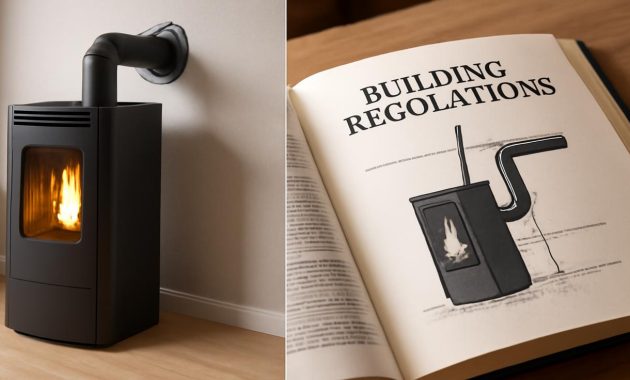
The first time you stand in front of a pellet stove that’s actually running, there’s a particular kind of silence that follows the sound of the ignition fan. You hear the faint rattle of pellets dropping, the low hum of the auger, and then—almost shy at first—the whoosh of flame. The glass glows, the room begins to gather warmth, and you find yourself wondering why you didn’t do this years ago. Then reality taps you on the shoulder: you don’t have a chimney. And somewhere between the dreamy warmth and the hard lines of your house plans, you ask the question that sends many homeowners down a rabbit hole of rules, building codes, and half-baked internet advice: can you install a pellet stove without a chimney—and what does the law actually say about it?
Why Pellet Stoves Don’t Always Need a Traditional Chimney
Pellet stoves sit in that curious space between old-world woodstoves and modern home appliances. They look like fireplaces, smell faintly of campfire when you open the door, yet they run on electricity, printed circuit boards, and tiny compressed pellets that feed in by the handful, not the armload. Because they burn more efficiently and cleanly than old woodstoves, they can often be vented in ways that would be flat-out illegal or dangerously smoky with traditional logs.
Legally and technically, most pellet stoves do not require a brick or stone chimney that runs from fireplace to roof. Instead, they use what’s called “direct vent” or “pellet vent” systems: insulated metal pipes, sealed and tested for high temperature exhaust, that can exit through a wall or roof. The law is less concerned with whether you have a chimney that looks like the ones in storybooks and more interested in whether your exhaust system is:
- Properly rated for pellet appliances
- Installed to the manufacturer’s specifications
- Compliant with local building and fire safety codes
In other words, the question isn’t “chimney or no chimney?” The real question is, “Does the entire system—stove, venting, placement—meet the legal and safety standards where you live?” And that’s where your story with a chimney-less pellet stove truly begins.
What the Law Actually Cares About (More Than Your Aesthetics)
If you imagine a stern building inspector with a clipboard, you’re not far off. But instead of hunting for cosmetic flaws, the law looks for specific safety and performance boxes to be ticked. Across most regions, the rules around pellet stoves without chimneys revolve around a few core themes: fire safety, air quality, and structural integrity.
In many countries and regions, pellet stoves are governed by a combination of:
- National or regional building codes
- Fire codes or specific heating-appliance regulations
- Manufacturer’s installation manual (which often has legal weight)
- Environmental or emissions standards
In practice, that usually means:
- Clearances to combustibles: Minimum distances from walls, furniture, curtains, and ceilings.
- Type of vent pipe: Typically a specific class, often labeled as “pellet vent” or a high-temperature, double-wall pipe.
- Exhaust termination: How far from windows, doors, vents, neighboring properties, and ground level the outlet can be placed.
- Fresh air intake: Some codes require outside air supply for combustion, especially in airtight or newer homes.
- Listing and certification: The stove and venting must often bear an approved mark or listing for safety (for example, UL, CE, or local equivalents).
The law usually allows through-wall venting for pellet stoves—no brick chimney required—as long as all of those conditions are honored. Where you can get into trouble is assuming that “no chimney” means “no rules.” A short, horizontal pipe popping out of a wall in the wrong place can fail inspection…or worse, send smoke into your patio, your neighbor’s bedroom window, or back into your own home on a windy day.
The Quiet Authority of the Installation Manual
There’s a seemingly boring booklet that arrives with every new pellet stove: the installation manual. Hidden inside those bland diagrams and tables are legal obligations. In many jurisdictions, following that manual is not just advice—it’s a requirement. Codes often refer directly to “installation in accordance with the manufacturer’s instructions.” Ignore its prescribed clearances and venting routes, and you might find your insurance company or inspector quietly, firmly, saying no.
Through-Wall Venting: The Appeal and the Legal Fine Print
For chimney-less homes, the through-wall option is the dream. You picture a neat little black stove tucked into a corner, a tidy pipe going out the back, then through the wall, and a discreet vent cap outside. No scaffolding, no brickwork, no tearing apart ceilings or roofing. The cost savings and simplicity are real—but so are the rules that make or break this option.
Most modern pellet stoves are designed for exactly this kind of installation. The exhaust is fan-driven, meaning the stove actively pushes fumes outside rather than relying entirely on rising hot air (as in a classic woodstove chimney). That’s why horizontal runs are legally and technically possible.
However, the law typically insists on things like:
- Minimum height of exhaust outlet above ground: Often to prevent snow burial, leaf blockage, or dangerously low fumes.
- Distance from openings: Exhaust must usually terminate a certain distance from doors, windows, air intakes, and sometimes property lines.
- Protection from combustible siding: Where the vent passes through walls, special thimbles and clearances are required.
- Guarding against recirculation: The outlet must not direct fumes into soffits, vents, or sheltered corners where gases can collect.
Picture a cold evening: your stove is humming, snow is shouldering its way up the side of the house, and the air sits heavy and still. If your vent outlet is too low or badly placed, it can clog, freeze, or dump smoke right where people walk or where fresh air is meant to come in. Laws are written with exactly these worst-case evenings in mind.
The Vertical Rise Debate
Some codes and manufacturers recommend (or require) a small vertical rise in the vent before it elbows outward. This isn’t about tradition—it’s about physics and safety. That short vertical section can:
- Improve natural draft if the power fails and the fan stops
- Help reduce the risk of exhaust blowing back into the appliance
- Allow ash to settle in a cleanout rather than pile up in horizontal stretches
Legally, this vertical leg might not always be absolutely mandated, but inspectors tend to favor setups that follow best practice. When your stove’s manual draws it, and your code official nods approvingly at it, treating it as “optional” can be an expensive gamble.
When the Law Pushes You Toward a Pseudo-Chimney
Not every house, or every code official, loves the idea of a barely-above-ground horizontal outlet belching warm air against siding or near a deck. In dense neighborhoods, in certain climates, or at higher altitudes, the law becomes more conservative. You may be told that your pellet stove must vent vertically above the roofline—or at least higher up the wall—much like a traditional chimney, even if the pipe is all metal and modular.
This can feel, at first, like bureaucracy for its own sake. But it often springs from very real issues:
- Downdrafts from wind: Wind curling around roofs and corners can shove exhaust back toward the house.
- Neighbor complaints: Even clean-burning pellets can have a mild woodsmoke scent; a low outlet near a fence can start disputes.
- Snow and ice: In cold regions, roofline termination keeps vents clear when drifts build up.
The law, in these moments, is playing referee between personal comfort, neighborly peace, and the invisible behavior of air. The result is often a compromise: you may still get a pellet stove without a traditional masonry chimney, but with a vertical vent—an external metal “mini-chimney” fastened to your wall, complete with support brackets and a roof or wall cap.
Common Legal Requirements Compared
While exact numbers depend on where you live, many places follow similar patterns. Here’s a simplified comparison of typical expectations for pellet stove venting without an existing chimney:
| Requirement | Through-Wall Direct Vent | Vertical Wall / Roof Vent |
|---|---|---|
| Chimney Needed? | No masonry chimney; pellet vent pipe required | No masonry chimney; pellet vent acting as flue |
| Typical Clearance from Windows/Doors | Minimum horizontal distance, often 1–4 ft (check local code) | Similar horizontal clearances; outlet often higher |
| Height Above Ground | Minimum height (to avoid snow / debris), varies by region | Usually well above ground, often above eaves or roofline |
| Power Failure Draft | Relies heavily on fan; short vertical rise may be advised | Better natural draft thanks to full vertical stack |
| Inspection Likelihood | Often scrutinized for distances and placement | Scrutinized for supports, penetrations, and termination height |
Permits, Inspections, and That One Phone Call You Should Make
There’s a point in every DIY heater project when excitement meets bureaucracy. Usually it’s the moment you realize that, to be legal, your cozy flame machine has to pass through the invisible gates of permits and inspections. It can feel tedious—until you remember that, at its heart, this is about putting a controlled fire inside your living room.
In many areas, installing a pellet stove—even with no chimney—requires a building or mechanical permit. Sometimes it’s a simple over-the-counter form; sometimes it involves drawings, details of the vent run, and proof that your stove is certified. Here’s where that one underestimated phone call comes in handy: phoning your local building department before you buy or drill anything.
What you want to ask them is straightforward:
- Is a permit required for a pellet stove installation?
- Do they allow horizontal through-wall venting, and under what conditions?
- Are there local amendments that differ from national codes?
- Do they require professional installation or is homeowner installation acceptable?
This short conversation can save you from buying the wrong type of vent pipe, choosing the wrong wall, or placing your stove somewhere that will never pass inspection. Insurance companies may also want proof of a permitted, inspected installation. If something goes wrong—a fire, smoke damage, a carbon monoxide incident—that signed-off permit can mean the difference between a claim being honored and being told you’re on your own.
DIY vs Professional: What the Law Thinks
Some places allow competent homeowners to install pellet stoves themselves, provided they follow every rule and pass inspection. Others insist on certified installers. The law usually doesn’t care how handy you feel; it cares who takes responsibility. If professional installation is required where you live, skipping it doesn’t just risk safety—it can make the whole system technically illegal, even if the pipe looks straight and the flame burns bright.
Inside the House: Clearances, Floors, and Invisible Lines of Safety
It’s easy to fixate on the vent—on how you’ll sneak exhaust out of the house without a chimney. But the law also looks very carefully at what’s happening inside the room where the stove lives. Close your eyes and imagine the space on a midwinter night, everyone gathered close, feet on ottomans, logs of pellets quietly feeding the flame. Now imagine that same scene if a curtain, chair, or rug quietly overheats over hours or days.
Building and fire codes, echoing those installation manuals, dictate things like:
- Minimum distance from back and sides of the stove to walls (especially if they’re wood or covered in paneling)
- Clearance in front of the stove door so nothing flammable sits in the “radiant” zone
- Hearth or floor protection if your floor is combustible (wood, vinyl, some laminates)
- Routing of electrical supply so cords aren’t pinched, overheated, or tripped over
None of this changes just because there’s no brick chimney in sight. Even with a sleek through-wall pipe, that disciplined invisible bubble of space around the stove has legal meaning. Move the stove too close to a wall to fit your dream furniture layout, and suddenly your installation becomes noncompliant.
Air You Can’t See, Laws You Can’t Ignore
Pellet stoves, like all combustion appliances, feed on oxygen. Some codes require a dedicated outside air intake—essentially a small pipe that brings fresh air directly from outdoors to the stove. This isn’t about being picky; it’s about preventing the stove from competing with bathroom fans, kitchen range hoods, or other appliances for the limited supply of indoor air.
In tightly sealed homes, skipping that outside air kit can lead to poor burn quality, smoke spillage, or even invisible backdrafting of exhaust from other appliances. When laws demand it, they’re handling the part of the story you’ll never see in Instagram photos: the quiet, constant exchange of indoor and outdoor air that makes a sealed house livable and safe.
Living with a Legal, Chimney-Less Pellet Stove
Once the last inspection is done and you’ve shaken hands with your installer or folded away your tools, what remains is the part you imagined from the beginning: living alongside a small machine that makes fire on command. You learn the rhythm of pellet refills, the subtle scent of the first few minutes of burn, the way heat pools in different corners of the room. You hear the fan more clearly on silent nights. The glass gets sooty and then clear again when you remember to clean it.
The law doesn’t vanish at this point; it just recedes into the background, present in the shape of your vent, the positioning of your stove, the floor pad underfoot. When you brush ash into the tray or feel the warmth on your hand near the glass, you’re inhabiting a space where design, desire, and regulation have all quietly aligned.
Without a traditional chimney, your pellet stove becomes a story of adaptation—of modern heating threaded through the bones of a house that was never drawn with a hearth in mind. The flame in the glass doesn’t care about codes. But the reason you can sit beside it comfortably, with the window closed and the snow deep outside, is that someone did.
FAQs About Installing a Pellet Stove Without a Chimney
Can I legally install a pellet stove without any kind of chimney?
In many places, yes—if you use an approved pellet vent system and follow both local codes and the manufacturer’s instructions. You might not need a masonry chimney, but you’ll still need a proper metal flue (through-wall or vertical) that meets legal requirements.
Do I always need a building permit for a pellet stove?
Not always, but often. Many jurisdictions require a permit and inspection for any new heating appliance. The safest approach is to call your local building department and ask specifically about pellet stove installations.
Is horizontal through-wall venting always allowed?
No. Some regions limit or heavily regulate horizontal terminations, especially in dense areas or harsh climates. Even where allowed, there are strict rules about height off the ground, distance from windows, and placement relative to neighboring properties.
Can I do the installation myself to save money?
That depends on your local laws. Some areas allow homeowner installation as long as the work passes inspection and follows all codes. Others require installation by a licensed or certified professional. Check before you start—unapproved DIY work can affect insurance and legality.
Is outside combustion air really necessary?
In older, drafty homes it might be recommended; in tighter, modern homes it’s often required by code. An outside air kit helps the stove burn correctly and reduces competition with other exhaust fans or appliances.
What happens if I ignore the manufacturer’s installation manual?
You risk failing inspections, voiding warranties, and potentially losing insurance coverage if something goes wrong. In many jurisdictions, “installed according to the manufacturer’s instructions” is part of the legal standard.
Will a pellet stove without a chimney affect my neighbors?
It can, especially with low, horizontal vents. While pellet stoves burn cleaner than many woodstoves, there can still be noticeable exhaust. Legal clearances and vent height rules are partly designed to reduce the chance of smoke drifting directly into neighboring windows or outdoor spaces.