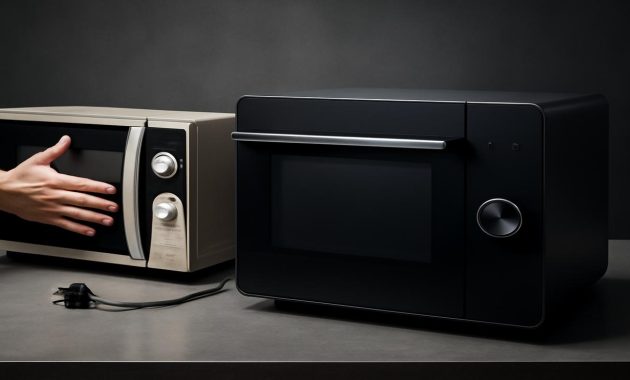
The first time I saw it, the box sat quietly on a wooden counter in a cabin at the edge of a forest—silent, black, and almost shy. No blinking clock numbers. No squealing turntable. No door slamming shut with a hollow thud. Outside, a storm was moving through the pines, but inside, the kitchen felt like the calm eye of something new. We were there to test it—this rumored “microwave killer”—a device that promised to heat, crisp, steam, and even brown food in a fraction of the time, without a single microwaved molecule in sight. It was the size of a small backpack, humming softly like a distant bee. Someone slid in a plate of leftover roast vegetables and cold chicken, shut the door, tapped a few icons. The soft glow inside was warm, almost like candlelight. By the time the rain turned to a whisper on the roof, that plate came out smelling like it had just been cooked over a fire.
The Quiet Rebellion Against the Microwave
For fifty years, the microwave has ruled the quick-meal corner of the kitchen. It’s the old plastic monarch of late-night popcorn, lukewarm coffee revivals, and emergency frozen dinners. It fits neatly into our rushed mornings and tired evenings, into college dorms and break rooms, into rental apartments and roadside motels. Its beeps and whirs are woven into the soundtrack of modern life.
But the microwave has always held a quiet flaw, something most of us learned to work around without fully naming: it never really cooks; it just heats. It blasts water molecules into frantic motion, leaving doughy pizza crusts with rubbery edges, potatoes hot at the ends and cold in the middle, vegetables limp and pale. It’s the kitchen equivalent of fluorescent lighting—functional, fast, and almost always a little bit sad.
So when word began to spread about a new device that heats as fast as a microwave but cooks like an oven, people didn’t just lean in out of curiosity; they leaned in with hope. Imagine, the whispers said, leftovers that taste better than the first time. Bread that comes back to life instead of turning into a chewy ghost of its former self. Fish that flakes, vegetables that keep their snap, pastries that stay crisp on the outside and soft at the center. A single device, compact and quiet, that might finally let us retire that humming rectangle above the stove.
The Nature-Inspired Heart of a New Kitchen Device
The designers behind this new device didn’t start in a lab; they started on a hillside. At least, that’s the story they like to tell. Sitting on damp grass, watching how smoke from a campfire curled and then disappeared into the cool evening air, they realized what they wanted wasn’t just another machine. They wanted a new way of bringing heat into food—fast, but kind.
Instead of microwaves bouncing around a metal box, this device uses a blend of rapidly circulating air, precise temperature control, and targeted infrared heat, fine-tuned the way a musician might tune a guitar string. Inside, a fan barely whispers as it sweeps heat around your food in tight, controlled currents. Sensors adjust temperatures down to the degree, reading the surface of what you’re cooking and gently shifting the intensity as though it understands that last night’s lasagna is different from this morning’s croissant.
Where a microwave shoves energy blindly through your leftovers, this new tool behaves more like a well-trained campfire: immediate, but attentive. It browns the top of a gratin while warming its center, crisps the edge of a grilled cheese without turning the middle into molten lava, revives roast chicken with skin that actually crackles when you cut into it. The result doesn’t feel “reheated.” It feels cooked.
The First Taste of Tomorrow’s Leftovers
Back in the forest cabin, we lined the counter with the usual suspects: pizza slices gone sadly stiff, roasted carrots and potatoes stale from a night in the fridge, a chunk of sourdough that had lost its spring. The storm outside woke the trees with a rustling sigh as we loaded the device in shifts, testing, tasting, raising eyebrows.
The pizza came out first. The cheese wasn’t oily or overblown. It relaxed, just enough to stretch when pulled. The crust crackled when folded, with that faint yeasty fragrance that pizza only has when it’s truly alive. Then the vegetables: carrots glistened with a new sheen, their edges just beginning to caramelize again, potatoes soft in the center, crisp where they’d kissed the pan the day before. The bread, my quiet favorite, emerged with a shell of crispness that gave way to a warm, fragrant crumb.
Someone laughed, not at the taste, but at the memory of what we’d accepted for so long: a world where leftover pizza was either stone-cold or microwaved into damp cardboard. Where bread was either fresh or doomed. Where reheated food always carried an apology in its texture.
Living with a Device That Actually Understands Heat
What makes this new kitchen tool feel revolutionary isn’t that it can do a lot of things—though it can—but that it makes doing those things feel natural. It doesn’t sit in the corner as a single-use machine. It’s the kind of appliance you leave out on the counter because it keeps inviting you back.
In the quiet of an early morning, the device glows softly as you slide in a mug of yesterday’s coffee or tea. In under a minute, it’s warm again, not scalded, not boiled into bitterness—just right. At noon, it’s reheating last night’s roasted vegetables without turning them to mush. In the evening, it’s finishing a tray of marinated fish, skin crisp and flesh just barely opaque, the air around you filling with the scent of lemon and sea.
Where a microwave is a blunt instrument, this thing is a conversation. It asks for a little more intention, and in return, it gives you food that feels less like a concession and more like a small act of care. And in a world of rushed meals eaten over sinks, at desks, in cars, that shift matters.
How It Stacks Up in Daily Life
It’s one thing to impress a handful of skeptics in a forest; it’s another to win a place in a cramped city kitchen or a busy family home. Over a few weeks of living with it, the rhythm of our cooking changed in small, telling ways. The microwave, still perched above the stove, began to gather dust.
| Task | Old Microwave Experience | New Device Experience |
|---|---|---|
| Reheating pizza | Soggy crust, uneven heat | Crisp base, melted cheese, oven-like flavor |
| Leftover roast vegetables | Soft, slightly rubbery, dull flavor | Lightly crisp edges, bright flavor, warm center |
| Reheating bread or pastry | Chewy, dense, sometimes tough | Crisp exterior, soft inside, revived aroma |
| Cooking fish or delicate foods | Often overcooked at edges, underdone inside | Evenly cooked, moist, with gentle browning |
| Everyday use and cleanup | Fast but messy splatters, plastic feel | Removable tray, easy wipe-down, solid build |
It wasn’t only about better results; it was about trust. With the microwave, there’s always that moment of guesswork—thirty seconds, maybe a minute, then open the door, stir, add more time, hope the center caught up. With this new device, the timing felt predictable. A few presets handled the basics, but even when dialing it in manually, there was a sense of reliability. If it said four minutes, it meant four minutes of good heat, not four minutes of roulette.
From Forest Fire to Countertop: A Different Kind of Heat
Most of us rarely think about heat as anything more than a number on a dial. But nature tells a different story. There’s the tang of smoke from a campfire, the sweet edge of caramelization on a charred ear of corn, the soft warmth of bread baked in a stone oven. Different heats leave different fingerprints on our food.
This device borrows from that natural spectrum. Its air circulation mimics the wrapping warmth of an oven, while its focused infrared elements behave more like the direct, radiant glow of embers. Instead of all-or-nothing blasts, it layers its energy—starting stronger to wake up cold food, then softening to keep it from drying out. You can almost feel it thinking, the way you would when you pull a skillet to the cooler side of the stove just before something tips from perfect to overdone.
There is a subtle joy to watching it work. Through its glass door, breads puff, cheeses bubble, skins blister just slightly. There’s no sudden explosion of steam, no plastic lid buckling wildly. The process is visible, almost theatrical, yet quiet enough not to disturb a sleeping house or a focused mind.
The Emotional Weight of Better Leftovers
At first, it might sound dramatic to say that a better way to heat food can change how you feel about your day. But food is one of the few things that touches every part of our lives—our time, our bodies, our memories. A weekday lunch of leftovers isn’t just about fuel; it’s about how gently or indifferently we treat ourselves when nobody is watching.
When a device lets you turn last night’s roasted vegetables, a forgotten half of a sandwich, or a slice of pie into something that feels freshly made, it changes the emotional weight of leftovers. They shift from “second rate” to “second chance.” Instead of a soft surrender to convenience, you get another moment of care, right in the middle of a crowded day.
Families notice it too. Kids who once shrugged at reheated pasta suddenly eat it without complaint, maybe even with enthusiasm. Partners who “aren’t leftover people” find themselves reaching for the container at the back of the fridge, trusting that what emerges from the new device will be worth sitting down for.
Replacing the Microwave: Not If, but When
Every big shift in the kitchen sneaks in quietly at first. The electric stove was once a novelty. So were dishwashers, blenders, coffee makers that didn’t require a stove. The microwave arrived as a futuristic marvel, and slowly, almost invisibly, it became an expectation. Its whir became the drumbeat of fast life.
Now, this new device is starting on the fringes—in design blogs, in thoughtful kitchens, in the homes of people who care a bit too much about bread. But its logic is hard to ignore. Why settle for food that merely stops being cold when it can regain its texture, color, and even some of its magic?
Replacing the microwave won’t happen overnight. Some people will hold on to theirs out of habit, cost, or the comfort of familiarity. Others will keep both for a while, using the microwave for emergencies and the new device for everything that matters. But step by step, taste by taste, that balance will shift.
One evening, you’ll slip your plate into the new device automatically, without thinking, walking right past the old microwave door. You’ll hear the gentle hum, smell the first notes of warming food, and realize you haven’t pressed those faded keypad buttons in weeks. What once felt necessary will start to feel outdated—like a landline phone or a drawer full of burned CDs.
A Different Soundtrack to the Modern Kitchen
Imagine the soundscape of your kitchen a few years from now. No sharp beeping countdowns, no rattling plates spinning on a plastic turntable, no abrupt, radioactive-feeling bursts of heat. Instead, there’s a low, even murmur of air moving with purpose. There’s the faint crackle of crisping bread, the gentle hiss of cheese releasing fat, the soft thump of a door closing with weight and intention.
In that future kitchen, this device becomes less of a gadget and more of an anchor. A small, glowing promise that whatever you pull from the fridge—homemade or store-bought, lovingly prepared or hastily assembled—can still become something that feels worthwhile. Fast doesn’t have to mean careless. Convenient doesn’t have to taste like compromise.
Frequently Asked Questions
Will this new device really be faster than my microwave?
For simple tasks like warming a cup of water, a traditional microwave may still be slightly faster. But for real food—leftovers, breads, vegetables, pizzas, and full plates—this device is designed to reach ideal temperatures quickly while also crisping and browning. In practice, you’ll often spend a similar amount of time but get dramatically better results.
Does it use microwaves or radiation like a traditional microwave?
No. It does not use microwave radiation at all. Instead, it combines precise hot air circulation with targeted infrared-style heating. That means your food is warmed and cooked more like it would be in an oven, but with much more speed and control.
Can it replace my oven as well as my microwave?
In many households, it can handle a surprising amount of what you’d normally reserve the oven for: roasting small batches of vegetables, baking pastries or reheating baked goods, finishing fish, or crisping up casseroles. For very large dishes, holiday feasts, or multiple trays at once, a full-size oven still has its place. But for everyday cooking and reheating, this device can often stand in for both.
Is it energy-efficient compared to a microwave?
While exact efficiency depends on models and usage, this device is built to heat quickly and in a focused way, which reduces waste. Because it doesn’t need long preheats and isn’t running a large empty cavity like a full-size oven, it commonly uses less energy for small to medium cooking tasks, often comparable to or better than microwave use for full meals.
What kinds of foods benefit the most from this new technology?
Anything with texture thrives here. Leftover pizza, roasted vegetables, bread, pastries, grilled meats, fish, casseroles, and grain bowls all come back to life beautifully. Delicate items that suffer in a microwave—like croissants, crusty loaves, or crispy-skinned chicken—are where you’ll most notice the difference.
Is it complicated to use for someone who’s used to a microwave?
It’s designed to feel familiar: a door, a simple control panel, straightforward presets. If you can use an oven and a microwave, you’ll adapt quickly. In many cases, you can simply choose a reheating mode, tap a time, and let the device do the fine-tuning for you.
Will this really replace the microwave in most homes?
Over time, it’s very likely. As people experience the difference in taste and texture, the old idea of “good enough” heat begins to feel less acceptable. Just as the microwave once nudged aside stovetop-only living, this new device is poised to take the microwave’s place—offering not just speed, but real cooking quality in the small, everyday moments that shape how we eat.