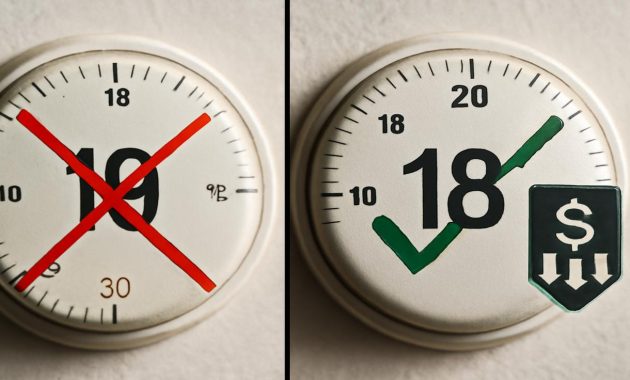
The first cold evening of the year always sneaks up on you. One moment, the windows are cracked open and the light has that late-autumn gold; the next, you’re standing in the middle of your living room, rubbing your hands together, staring at the thermostat like it’s a complicated moral question.
For decades, that question supposedly had a simple answer: 19 °C. Set it there, you were told, and you’d be warm enough, responsible enough, thrifty enough. It was the magical number whispering through energy brochures, government pamphlets, and well-meaning advice from neighbours who wore thick cardigans and spoke proudly about “just putting on another layer.”
But step into a modern home today, with its sealed windows, humming heat pump, programmable thermostats that glow softly in the dark, and you might notice something: 19 °C doesn’t feel the way it used to. Your toes ache. Your shoulders tighten. You find yourself hovering near the kettle more often than you’d like to admit.
Slowly, quietly, a new conversation has been growing among building scientists, doctors, energy experts, and the people who actually live in these changing homes. They’ve been testing, measuring, arguing over comfort, health, humidity, air quality, and bills. And together, they’ve arrived at an awkward truth.
The old 19 °C rule is officially outdated.
The End of a One‑Size‑Fits‑All Temperature
To understand why, you have to step back a few decades and imagine the homes that birthed the 19 °C rule. Drafts slipped under doors. Single-glazed windows hummed with cold. Walls breathed, in that slightly mouldy way. Insulation was an afterthought, not a given. In that world, 19 °C was not a single temperature so much as an average experience.
If the thermostat was set to 19, the wall next to you might be sitting at something closer to 14 °C. The floor could be another story altogether. A thermometer in the air lied a little; your body mainly feels the cold radiating from surfaces. That cool window glass, the uninsulated corner near the stairs, the mysterious chill in the hallway – they all tug warmth from you, even if the thermostat insists everything is fine.
Now imagine a different space: modern windows that buffer outdoor noise into a distant hush, insulation thick enough to dull the wind’s personality, floors that don’t greedily drink the heat from your feet. In such homes, your body doesn’t have to fight invisible cold surfaces. The same 19 °C suddenly feels… sterile. A little too sharp around the edges. You sit there, shoulders hunched, wondering how a number can be technically acceptable while your body quietly disagrees.
Comfort, it turns out, was never just about a single reading on a device pinned to the wall. And as our buildings evolved, our rules didn’t keep up.
The New Ideal: A Warmer, Smarter Middle Ground
In recent years, teams of experts have been quietly re-running the numbers. Building physicists have played with models. Medical researchers have followed the subtle ways cold homes nudge hearts, lungs, and immune systems into distress. Energy analysts have measured the exact cost of every extra degree of warmth, then set it against the cost of cold-related illness, missed work, and sheer human misery.
What they’ve been circling, from different directions, is a new sweet spot – not a single hard rule, but a range that respects both our bodies and our energy bills.
The emerging consensus: for most healthy adults, the ideal indoor temperature in winter typically sits between about 20 °C and 22 °C for living spaces, with the lower end of 18–19 °C reserved for bedrooms and very short occupancy areas.
Crucially, these aren’t just comfort numbers. Below roughly 18 °C for extended periods, health risks start to quietly rise. Blood pressure inches up. Older bodies in particular work harder to stay warm. Cold, damp rooms invite mould, and with it, the familiar tightness in the chest, the heavy cough, the winter wheeze.
At the same time, going much higher than 22–23 °C during heating season is often pure indulgence from an energy perspective. Your heating system works significantly harder for each extra notch, and your body doesn’t become twice as comfortable – just a little sleepier, maybe a little drier-throated from the hot air.
So if 19 °C was the banner of the old frugality, the new ideal is more of a respectful truce: warm enough to feel deeply at ease, cool enough to keep guilt and bills in check.
Comfort Is More Than a Number on the Wall
Walk through your home on a winter evening and pay attention not to the thermostat, but to your skin. Stand by the window. Sit at the far end of the sofa. Curl up near the hallway. You might notice something important: your idea of “comfortable” shifts as you move.
That’s because what you feel is a kind of collage, made from several overlapping sensations:
- Air temperature – what the thermostat measures.
- Radiant temperature – how warm the surfaces around you feel, especially windows, floors, and walls.
- Air movement – a draught across your ankles feels very different from still, quiet air.
- Humidity – dry air makes warm rooms feel cooler; damp air makes cooler rooms feel clammy.
- Your own body – age, health, clothing, activity level, even how much sleep you got last night.
In a modern, well-insulated home with good windows, something magical happens: the radiant temperatures creep closer to the air temperature. Sit by the window and you don’t feel that invisible heat drain. Floors stop biting your bare feet. Suddenly, 20–21 °C can feel as cosy as 22–23 °C once did in a draughty house.
In other words, improving your building can buy you comfort without turning up the temperature. And that is where the new ideal temperature range really starts to make sense. It’s not just about “pick this number.” It’s about building a whole environment that lets you live comfortably around that number.
What the Experts Quietly Recommend Now
If you sift through guidance from energy agencies, health organisations, and building researchers across different countries, a pattern emerges like a tide line:
- Living rooms and work areas: Many recommend around 20–21 °C as a good target – warm enough for comfort with light clothing, efficient enough not to punish your heating system.
- Bedrooms: Cooler is often better for sleep. Around 18–19 °C supports deep rest for most people, as long as bedding is warm and there are no draughts.
- Vulnerable people: For older adults, infants, or those with cardiovascular or respiratory issues, warm spaces of at least 20 °C are often prioritised to reduce health risks.
So where does this leave 19 °C? Not banned. Not dangerous in every case. But no longer the universal gold star. Instead, it slips into a new role: a reasonable lower boundary for bedrooms and unused rooms, and a short-term setting for when you’re away or asleep – not the default for your waking, living life.
Living With the New Temperature: A Day Indoors
Imagine a day in a home tuned to this new understanding. Outside, the world is washed in cold blue air. Inside, morning light spills onto a living room where the thermostat quietly rests at 20.5 °C. Bare feet test the floor – it feels neutral, not icy. The sofa, the table, the very air around you sits in that subtle band between “I notice I’m warm” and “I don’t notice temperature at all.”
In the kitchen, your breath doesn’t fog in front of your face when you open a cupboard. As coffee steams into the room, it doesn’t feel like the only source of warmth. The radiators – or the underfloor loops, or the discreet vents from a heat pump – aren’t laboring noisily. They’re just there, maintaining a gentle, steady background rhythm.
Later, as the afternoon darkens early, you lower the temperature by one degree in the bedroom and close the door. The bed welcomes you with its promise of insulation: quilts, blankets, cotton and wool working together like a small personal ecosystem. At 18.5 °C, your face feels the slightest hint of crispness while the rest of your body sinks into warmth. Your sleep comes easier than on those overheated nights when you tossed beneath a restless, sweating forehead.
Throughout the house, the new temperature philosophy turns into a kind of choreography: warm where life is lived, cooler where bodies rest, never so cold that the home itself starts to suffer. Pipes are protected, walls stay dry, and your energy meter turns more slowly than you might expect for the level of comfort you’re feeling.
How a Small Change in Degrees Affects Your Bills
Part of the anxiety around raising that sacred 19 °C has always been money. Heat, quite simply, costs. For many households, every degree upward can feel like a step towards something unaffordable.
Yet energy analysts consistently find a useful rule of thumb: in typical climates, changing your heating setpoint by just 1 °C can shift your heating energy use by around 5–7%. It varies with building type and weather, but that ballpark number is often repeated for good reason.
To make it more tangible, imagine this simplified comparison:
| Average Heating Setpoint | Relative Energy Use* | Comfort Level (Modern, Insulated Home) |
|---|---|---|
| 19 °C | 100% | Often cool, tolerable with layers |
| 20 °C | ≈105–107% | Comfortable for most people |
| 21 °C | ≈110–114% | Very comfortable, light clothing |
| 22 °C | ≈115–122% | Warm and cosy, potentially excessive for some |
*Relative to 19 °C as a baseline; actual figures vary by building, climate, and heating system efficiency.
So yes, moving from 19 to 21 °C will likely nudge your energy use up by around 10–14%. But that’s not the whole story. Better insulation, sealing draughts, using programmable thermostats, zoning your heating, and letting rooms cool slightly at night or when unoccupied can easily claw that back – and often more.
The point of retiring the 19 °C rule isn’t to give everyone permission to crank up the heat and forget the planet. It’s to replace a blunt, outdated target with a smarter approach: spend your heating energy where it truly matters, and design your home so that every degree counts for more comfort.
From Cold Resignation to Thoughtful Warmth
There’s a cultural piece to this story that numbers alone don’t capture. For a long time, low thermostat settings were worn like medals of honour. “We only heat to 19,” people would say, half-proud, half-shivering. Somewhere along the way, we tangled up virtue with discomfort, as if being cold indoors all winter was proof of moral seriousness.
But as health research has piled up and energy systems have evolved, that narrative is cracking. We now know that living for months in a chilly home can mean higher blood pressure and more winter deaths from heart and lung issues, especially among the elderly and those already unwell. Cold air and cold surfaces mean more moisture, more condensation, more silent mould blooming behind wardrobes and under windowsills.
At the same time, new technologies are changing the arithmetic. Heat pumps, properly sized and installed, can deliver three or more units of heat for every unit of electricity. Smart thermostats can learn your routines and shave waste in ways an old dial never could. Simple insulation upgrades and draught-proofing can make 20 °C feel like a luxurious embrace instead of a barely adequate compromise.
The future of indoor warmth isn’t about a single, heroic number. It’s about recognising that comfort is a basic human need, and that we can meet it efficiently without glorifying discomfort. The new ideal temperature range – roughly 20–22 °C in living spaces, 18–19 °C in bedrooms – is less a commandment and more a lens: a way of asking if your home, your body, and your bills are truly in balance.
Finding Your Own Sweet Spot
So where do you go from here, standing in front of that thermostat on the first cold evening, feeling the season shift under your skin?
You might start by experimenting.
- Set your living areas to 20 °C for a week. Notice your body, not the number. Are your shoulders tense? Are you reaching for extra socks? Or does the room fade into the background, which is what comfort really is?
- If you feel a persistent chill, nudge it gently to 21 °C. See if that one extra degree unknots the day.
- At night, let bedrooms rest around 18–19 °C, with warm bedding. Pay attention to your sleep, your sinuses, the clarity of your morning wakefulness.
- Walk slowly through your home with your senses tuned for draughts. A tiny leak near a window or door can undo the effect of a carefully chosen temperature. Sealing that gap might buy you a whole degree of comfort.
- Notice who shares your home. Older parents, small children, someone recovering from illness – for them, erring on the warmer side isn’t indulgent. It’s wise.
In the end, your ideal temperature won’t be exactly like your neighbour’s, just as your favourite winter coat isn’t identical to theirs. But the old 19 °C rule – strict, stoic, one-size-fits-all – has done its time. It was born for a different era, different buildings, a different understanding of health and energy.
The new wisdom is quieter, kinder, more nuanced: warm enough for your heart and lungs to rest easy, low enough for the planet and your wallet to breathe. Somewhere around 20–22 °C, tuned by your walls, your windows, your habits, and the people you love, lies a temperature where winter becomes not a battle, but a season you can inhabit fully, without shrinking from the cold inside your own home.
Frequently Asked Questions
Is 19 °C dangerous as a room temperature?
For short periods and for healthy, active adults, 19 °C is not usually dangerous. The concern arises when homes stay below about 18 °C for long stretches, especially for older people, infants, or anyone with heart or lung conditions. In those cases, a slightly warmer indoor climate (around 20 °C or more in main living areas) is generally safer.
What is the best temperature for sleep?
Most sleep research and building guidance points to around 18–19 °C as an ideal bedroom temperature for healthy adults. The key is warm bedding and a draught-free space. Much warmer rooms can disrupt deep sleep; much cooler rooms can leave you tense and under-rested, even if you don’t fully wake.
Will raising my thermostat by 1 °C dramatically increase my bill?
Increasing your setpoint by 1 °C typically raises heating energy use by around 5–7%, depending on your home and climate. That’s noticeable but not always dramatic. You can often offset it by improving insulation, sealing draughts, using programmable controls, and letting rooms cool slightly when you’re out or asleep.
Why do I still feel cold at 21 °C?
Feeling cold at 21 °C often means something besides air temperature is at work. Cold surfaces (like single-glazed windows), draughts at floor level, low humidity, or thin clothing can all make a room feel cooler than the thermostat suggests. Improving window coverings, using rugs, sealing gaps, and adding a layer of clothing can change your comfort dramatically without raising the temperature.
What temperature should I use if I have elderly people or babies at home?
For older adults, infants, and people with chronic illnesses, main living spaces are often best kept at around 20–22 °C. That range supports circulation and reduces the strain cold places on the heart and lungs. Bedrooms can still be slightly cooler, but it’s wise not to let regularly occupied rooms drop below about 18–20 °C for these more vulnerable groups.