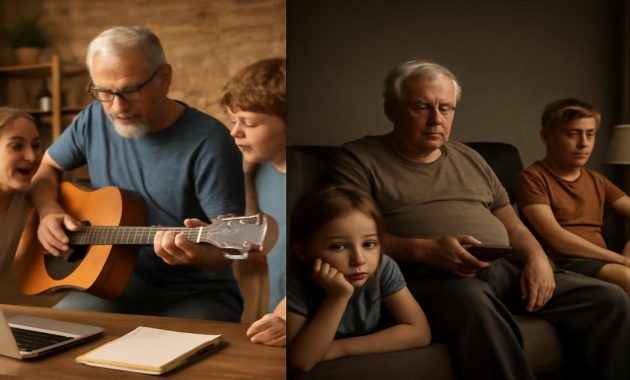
The first time you realize age is creeping up on you is rarely at a birthday. It’s subtler than that. It’s the way a waiter glances past you to speak to your kids. It’s the extra beat you take to remember a name you used to know without trying. Or the moment a grandchild tilts their head and says with brutal honesty, “Grandpa, why do you move so slow?”
Some people hear that and quietly start shrinking their lives to fit the stereotype. Others, at 70, are out there learning Spanish, deadlifting their bodyweight, texting their grandkids memes, and booking trips that make their adult children nervous. Same gray hair. Same number of candles. Completely different presence in the room.
This isn’t about “aging gracefully” in the soft-focus, greeting-card sense. It’s about staying mentally sharp and emotionally alive—so alive that your grandchildren don’t just love you…they are a little bit in awe of you. The difference doesn’t come from genetics, miracle supplements, or winning the lottery. It’s built, day by day, through habits—many of them deeply uncomfortable, especially when the world is quietly telling you to “slow down, you’ve earned it.”
Here’s the uncomfortable truth: retire at 65 and let your brain coast, and it will absolutely rust. Not overnight. But year after year, the edges dull, the curiosity fades, the days blend. Or you can choose a different path—the one the most inspiring 70-year-olds walk every day. They don’t just “keep busy.” They deliberately do things that stretch, shock, challenge, and sometimes even scare them.
1. They Start New, Hard Things When Everyone Expects Them to Wind Down
Most people treat 65 like a finish line: the long exhale, the recliner, the TV remote, the reliable routine. But the sharpest 70-year-olds quietly refuse that script. They treat 65–75 as a second adolescence—only this time, with better judgment and fewer insecurities.
An inspiring 70-year-old does something deeply uncomfortable: they become a beginner again. They lean into the humiliation of fumbling, forgetting, and learning from people half their age. They take the painting class where their first canvas looks like a crime scene. They walk into a community college course on world history and sit in the front row with a notebook. They sign up for a coding bootcamp, a woodworking workshop, or a language course, and let themselves be the slowest learner in the room.
Everyone else settles into what they already know how to do. It feels safe. It also quietly signals to the brain: “We’re done growing.” And the brain obliges.
The inspiring few send the opposite message. They schedule new challenges like doctor appointments. They make “awkward and confused” their new comfort zone. They know the brain is a “use it or lose it” organ, and that learning something difficult at 70 is like lifting heavy weights at the gym: the strain is the point.
The quiet test of curiosity
Watch an older person in a room full of unfamiliar technology or ideas. Most will step back, saying, “That’s for the young people.” The sharp ones step forward and say, “Show me how that works.” They don’t wait for someone to spoon-feed them. They pick up the device, tap the buttons, make mistakes, break nothing, learn something.
It’s a tiny moment with huge consequences. One response tells your brain to shrink. The other tells it: still hungry.
2. They Make Discomfort a Daily Practice, Not an Occasional Accident
We imagine older age as a reward for surviving the grind: softer chairs, easier days, familiar routines. But a life made of comfort is a life that slowly erases your edges. Your brain stays sharp when your life has friction.
The most alive 70-year-olds deliberately inject discomfort into their routines. They don’t wait for life to challenge them—they schedule the challenge.
That might mean cold morning walks when the wind bites at their cheeks instead of staying wrapped in a blanket. It means joining a local hiking group even when they worry about being the slowest one. It might be saying yes to babysitting grandkids for an entire weekend instead of “just an afternoon,” knowing it will leave them deliciously exhausted.
Discomfort stretches time. It forces presence. It tells your nervous system, “Pay attention. Something is happening.” And attention, more than any crossword puzzle, is what keeps the mind oxygenated.
How discomfort quietly separates two futures
Picture two 70-year-olds on a Tuesday.
- One has the day planned around the TV schedule, a predictable lunch, and an afternoon nap “because what else is there?”
- The other is meeting a neighbor to learn pickleball, nervous about looking clumsy, then heading to a community center talk on climate change, then video-chatting with a grandchild to help with a school project.
Same hours. Same age. One day feeds decay; the other feeds adaptation. Over years, the difference is staggering.
3. They Lift Things, Walk Far, and Treat Their Body Like a Brain Machine
We like to separate “body health” from “brain health,” as if one is push-ups and the other is Sudoku. In reality, your brain rides around in your body like royalty in a carriage. When the carriage is neglected, the trip gets rough.
The inspirational 70-year-olds do something deeply unpopular among their peers: they keep training. Not just “strolling around the block” exercise, but intentional, sometimes slightly intimidating movement. They lift weights—not because they want biceps, but because they want independence. They walk fast enough that conversation gets a little broken. They stretch their hips and shoulders, treating each joint as a promise to their future self.
Is it always comfortable? Absolutely not. Knees complain, balance wobbles, the mirror can feel confrontational. But every time they lace up their shoes when they’d rather sink into the couch, they are voting for a life where their brain has fresh blood, oxygen, and a body capable of exploring the world, not just watching it.
Movement as memory insurance
We talk endlessly about memory games and brain apps. Yet one of the most powerful, low-tech cognitive protectors is a brisk walk that gets your heart rate up. The older adults who move regularly don’t just “feel better.” They remember more. They process faster. They stay oriented—in time, in place, in conversation.
They don’t see exercise as vanity or punishment. They see it as rent they pay to stay mentally present for people they love.
4. They Offend People by Saying “No” and Shock People by Saying “Yes”
By 70, many people have spent a lifetime pleasing others, biting their tongue, keeping the peace. Then they retire, and that habit calcifies. They stop upsetting anyone. They also stop surprising anyone, including themselves.
The inspiring 70-year-olds do something more daring: they start editing their life with ruthless tenderness. They say “no” to the draining weekly coffee they’ve outgrown, even if it mildly offends someone. They say “no” to being treated as free childcare by default. They say “no” to conversations that only revolve around pills, ailments, and complaints.
And then, with that freed-up time and energy, they say “yes” to things people don’t expect at their age. They say yes to road trips with friends, to joining a choir, to volunteering at a food pantry, to traveling with their grandchildren and actually planning part of the itinerary themselves. They say yes to therapy, yes to late-in-life romance, yes to trying a new style, yes to starting a small side business just because “I’ve always wanted to.”
The social risk that keeps them alive inside
Everyone secretly dreads becoming the older relative whose presence feels like obligation: predictable stories, quiet resentment, the energy of “well, what can you do?” The ones who avoid this fate accept the social risk of changing. They will disappoint some people. They will confuse others. They refuse to stay in the role of “nice, tame elder” when their inner life is still roaring.
Boundaries, at 70, don’t make you selfish. They make you real. And real humans are infinitely more interesting to be around, at any age.
5. They Stay in Contact with Younger Worlds (Without Imitating Them)
Isolation doesn’t always look like living alone. Sometimes it looks like being surrounded only by people your age, talking only about the past, using technology only when forced, and quietly resenting a world that keeps changing without your permission.
The sharpest older adults put in real effort to stay connected to younger worlds. Not to be “cool.” To stay curious.
They ask their teenage grandchildren what music they’re listening to—and actually listen. They ask their 30-something neighbor what it’s like dating through apps. They ask the barista about the tattoos, the new student in their pottery class about their major, their adult children about the pressures of their jobs.
They don’t pretend to be 25 again, or start saying slang they don’t understand. They just stay porous, willing to learn, willing to update their mental map of how the world works. They accept that some things will feel alien. Instead of saying, “That’s ridiculous,” they try, “Help me understand that.”
Why this unnerves and delights their grandkids
The average grandchild expects the conversation to stop at, “How’s school?” and weather updates. But when a grandparent asks, “What’s something you believe that you think I might disagree with?” or “What’s the weirdest part of growing up right now?”—that’s electric. That’s real connection, generational translation, mental stretching on both sides.
This is not passive aging. This is staying culturally literate enough that the world doesn’t become a foreign country where you refuse to learn the language.
6. They Confront Their Own Story Instead of Hiding Inside It
The easiest way to rust is to live inside a repeating loop of your own greatest hits: the story of what you did, who you were, where you worked, what things used to cost “back in your day.” The past becomes a cozy room. And very slowly, a prison.
The most inspiring older adults do something far braver: they start editing and expanding their story. They ask questions like: What pain have I never really looked at? What am I still bitter about? What have I avoided forgiving, including in myself?
Some do this with a therapist, some through journaling, some with a trusted friend or spiritual guide. They revisit childhood wounds, marriages that failed, careers that disappointed, siblings they drifted from. This is uncomfortable, sometimes excruciating work. But it does something extraordinary to the brain: it reopens closed rooms. It releases stuck energy. It untangles old patterns that would otherwise harden into personality traits like cynicism, blame, and anxiety.
Story work as mental housecleaning
Think of your inner life like an old attic. The people everyone secretly dreads becoming are the ones who refuse to go up there. So the boxes pile up. The air gets stale. Spiders take over.
The inspiring 70-year-old turns on the light. They don’t have to “fix everything.” Just by looking, sorting, naming, discarding a few things, they create space. You feel it when you sit with them. Their presence is lighter. Their stories are rich but not suffocating. They listen as well as they talk. They no longer need every conversation to orbit their old hurts or lost chances.
7. They Plan for Death So They Can Live the Way They Actually Want
There’s one habit almost everyone avoids, and it might be the most powerful: deliberately facing their own mortality.
The average person pushes this away until illness forces the issue. The inspiring ones put their affairs in order early—and not just legally, but emotionally. They write a will. They choose a health-care proxy. They decide what kind of care they do and do not want if they can’t speak. They talk with their adult children about money, about the house, about their wishes.
On paper, this is “practical” stuff. In reality, it’s a profound act of love and liberation. It releases their family from the silent burden of guessing. It releases them from the constant hum of vague dread. Once the big questions are named and written down, something shifts. They’re free to spend the remaining years not pretending they’ll last forever, but savoring that they won’t.
Mortality as a focusing lens, not a terror
The 70-year-olds who talk openly about death tend to be strangely calm, even playful, about life. They’ll say things like, “If I’ve got ten good years, how do I want to spend them?” and then adjust accordingly—less time doom-scrolling or complaining, more time outside at sunrise, more time cooking for people, more time creating instead of consuming.
This doesn’t make them morbid. It makes them fiercely present. Their grandkids feel it when they’re with them: this is a person who knows time is precious, and acts like it.
9 Uncomfortable Habits That Keep 70-Year-Olds Sharp
Here’s a simple way to see the difference these habits make. The table below contrasts how inspiring, sharp 70-year-olds tend to behave versus the patterns that quietly age people long before their time.
| Habit | Inspiring 70-Year-Olds | Those Everyone Secretly Dreads Becoming |
|---|---|---|
| 1. Learning | Start hard new things and accept being beginners | Stick only to what they already know |
| 2. Daily Discomfort | Seek small daily challenges and new experiences | Design days around maximum comfort and predictability |
| 3. Movement | Lift, walk, stretch with intention | Sit more, move less, accept decline as “normal” |
| 4. Boundaries | Say no to draining obligations, yes to real desires | Say yes out of guilt, no out of fear |
| 5. Relationships | Stay connected to younger generations with curiosity | Talk mostly with peers about the past and ailments |
| 6. Inner Work | Revisit and reframe their life story, heal old wounds | Repeat the same stories, avoid deeper reflection |
| 7. Technology | Learn and use new tools enough to stay engaged | Dismiss new tools as “too much” or “for the young” |
| 8. Time | Plan days around growth, service, and joy | Fill time with passive entertainment and complaint |
| 9. Mortality | Face death, make plans, then live fully in the present | Avoid the topic, live in vague fear and denial |
The Day Your Grandchild’s Eyes Widen
Imagine a moment a few years from now. You’re 70, maybe 75. You’re standing in your kitchen, still a little out of breath from a long walk where you took a new route on purpose. Your grandchild is watching you scroll through photos from a weekend trip you took with friends. You offhandedly mention the online class you’re taking, or the community project you’ve joined, or the fact that you’ve started learning a new language “just because.”
They look at you, really look at you, differently. The script in their head about what “old” looks like wobbles. Maybe they say it out loud: “I hope I’m like you when I’m your age.”
That moment doesn’t come from luck. It comes from hundreds of small, uncomfortable choices you started making long before the world expected you to. It comes from refusing to retire from yourself when you retired from your job.
The habits that keep you sharp and shock your grandchildren are rarely glamorous. They’re awkward, sweaty, humbling, and often invisible to everyone but you. But they add up—to a presence that doesn’t fade into the background, to a brain that keeps firing, to a heart that stays open.
You don’t control how many years you get. You do control whether the years after 65 are an echo or a new verse. If you’re willing to be uncomfortable, your story isn’t winding down. In many ways, it’s just getting interesting.
FAQ
Is it really possible to stay mentally sharp into my 70s and 80s?
There are no guarantees, but research and real-life examples show that mental decline is not automatically tied to a specific age. Consistent physical activity, ongoing learning, social engagement, and managing health conditions can significantly support brain function well into later life.
What if I haven’t built any of these habits yet and I’m already over 65?
It’s not too late to start. Begin with one small, concrete habit: a daily walk, a weekly class, or a regular call with someone younger than you. Big changes grow from modest, consistent steps, not from trying to overhaul your life overnight.
How do I push past the fear of looking foolish when learning something new?
Remind yourself that everyone is bad at something the first time. Focus on curiosity, not performance. Choose environments that feel welcoming—community centers, online courses, or small local groups—and remember that your willingness to try is more impressive than getting it right immediately.
What if my health limits how active I can be?
Work within your realities, not against them. Consult your doctor or a physical therapist for safe movement options. Even gentle chair exercises, short walks, or light stretching can help. The goal isn’t athleticism; it’s circulation, mobility, and a sense of agency over your body.
How can I deepen my relationship with my grandchildren as I age?
Be genuinely curious about their world. Ask open questions, listen more than you lecture, and be willing to try things they enjoy, from games to music to technology. Share your stories, too, but connect them to what they’re going through, so it feels like a conversation, not a history lesson.