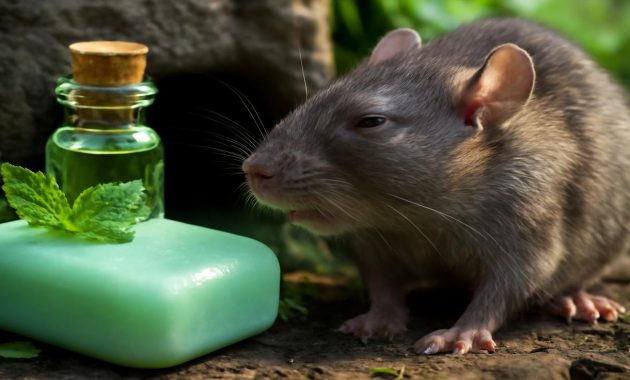
The first time you see a rat in the garden, it doesn’t feel like nature. It feels like a small, fast-moving problem. You’re out there checking the kale, maybe topping up the bird feeder, when a dark blur cuts across the edge of your vision. There’s the rustle, the whip of a tail, the faint skitter of claws on paving. Your brain takes a second to catch up, and then it comes: rat.
From that moment on, every sound in the dusk feels suspicious. The compost heap gurgles and settles? Must be rats. A leaf scrapes across the slabs? Definitely rats. You start to see them everywhere, even when they aren’t there at all. And then another worry starts to creep in with the autumn chill: will they stay? Will they set up home here, under your shed, in your compost bay, beneath the apple tree roots? Will your garden become their winter address?
Hidden in that question is another, much smaller one: what if there was one simple thing, one oddly ordinary object, that quietly tipped the balance? What if something as familiar as a bathroom product could help make your garden the sort of place rats choose not to overwinter in at all?
The scent that redraws the map of your garden
The change begins, as many late-autumn stories do, on a cold, breath-cloud morning. The grass is damp, the sky the color of unwashed wool, and every sound seems a little sharper in the chill air. On the garden table sits a small bottle that doesn’t look like it belongs outdoors at all: peppermint-scented bathroom cleaner. The label still smells of supermarket aisle and chrome taps, not soil and mulch.
You crack the lid and the scent rushes out, bright and almost electric. It cuts straight through the earthy background odour of the garden: through the faint sweetness of rotting apples, the metallic dampness of fallen leaves, and the sour, warm breath coming from the compost heap. Peppermint doesn’t just smell clean; it smells decisive. It smells like a line being drawn.
Rats live in a world painted by scent. Where you see a path, they smell a safe corridor. Where you see a compost bin, they smell possibility: food, warmth, nesting material. Your garden, to a rat, is not a neat set of beds and borders; it’s a map of aromas and messages written in ammonia and decay.
Strong, sharp smells—especially menthol-heavy ones like peppermint—can scramble that map. It’s not that peppermint magically poisons them or terrifies them. It’s more mundane and, in a way, more powerful: it overwhelms their ability to read the script. It irritates their sensitive noses, clogs the channels they use to navigate and assess safety, and makes a place feel confusing and hostile instead of familiar and secure.
What you’re about to do with this one bathroom product is not wage chemical war, but edit the story your garden tells to passing rats. You’re going to make it a bad read.
How one bathroom product becomes a garden tool
In the warm bright rows of the cleaning aisle, your hand reaches for something you usually think about in terms of sinks and tiles: a concentrated peppermint bathroom cleaner, or even a plain peppermint surface spray. The label promises freshness, shine, limescale control. It does not mention rats. And yet here it is, on your garden table, about to take on a new role.
The key is the peppermint oil. Many bathroom products use it because it feels fresh to us—our noses register it as clean, cool, invigorating. For rats, that same cool clarity is like a blaring siren. Their sense of smell is so finely tuned that what’s pleasant background to you becomes an overwhelming wall of sensation to them.
You don’t need to coat your garden in cleaner. You’re not disinfecting the soil. Instead, you create a thin, strategic scent fence in the places rats prefer to move and settle. Think of the garden from knee height downward: the hidden underworld of gaps and shadows. Under the shed. Behind the compost heap. Along the fence line where ivy threads its way through warped slats.
You mix the bathroom cleaner with water in an old spray bottle—nothing fancy, just enough to carry the scent. A splash of peppermint cleaner, topped up with water. You shake it and the fragrance bursts out again, like cracking open a mint leaf between your fingers. This simple mixture, used with a little regularity and some patient observation, is often enough to turn your garden from “promising winter refuge” to “somewhere else, thanks.”
| Item | Use in Garden | How Often |
|---|---|---|
| Peppermint bathroom cleaner | Base for scented deterrent spray | Light refresh every 7–10 days |
| Water spray bottle | Apply mixture to routes and hideouts | As needed, after rain or heavy dew |
| Old cloth or sponge | Wipe along ledges, shed bases, gaps | Monthly or when trails reappear |
| Gloves | Protect skin while handling cleaner | Every application |
Step into their world, just long enough
Before you start spraying, you pause and look, really look, at the garden the way a rat might experience it. This is less about fear and more about curious empathy. Where are the constant food sources? Where does warmth collect? Where could a small mammal slip in unseen?
That loose panel at the back of the shed, tucked behind the climbing rose. The generous, slightly overfull bird feeder, scattering sunflowers like confetti. The open compost heap with its sweet, fermenting peelings. These are invitations, written in scent and habit, to something small and hungry and pragmatic.
Your peppermint solution is the edit, not the whole story. You dampen an old cloth with the diluted bathroom cleaner and gently wipe the base of the shed where wood meets soil, paying attention to gaps and corners. You spray lightly along the back of the compost bin, not soaking it, just misting the route where a rat might dash. A touch under the lip of the outdoor step, along the inside of fence posts, around the gap where the hose disappears under decking.
The garden smells faintly like a winter sweet shop now: soil and leaves and a whisper of mint. For you, it’s pleasant. For them, it’s like stepping into a fog that burns the nostrils. They’ll test it, perhaps. A scout, nose twitching, edging along the usual path. The trail is wrong. The messages of previous nights are blurred, overwritten. The safe route is gone. In the delicate calculus of survival, this patch of ground suddenly isn’t worth the trouble.
The quiet power of “uncomfortable but not deadly”
There’s a temptation, when facing rats, to go straight for war. Poisons, traps, spikes, and boxes that promise finality. But gardens are small ecosystems, and everything you put down for one species has a way of echoing through others. A poisoned rat can become a poisoned owl. A snap trap doesn’t know the difference between a rat and a hedgehog’s curious paw.
The peppermint bathroom cleaner lives in a gentler category: uncomfortable but not deadly. Irritating enough to turn rats away, but not designed to kill anything. It doesn’t change the fact that rats exist; it simply makes your few square meters of earth part of their “no thanks” list.
This is often all that’s required. Rats are opportunists, not fanatics. They seek the easiest, safest winter quarters they can find. If your garden smells confusing and nose-prickling, they will, more often than not, follow their whiskers to somewhere less irritating. A neighboring abandoned lot, a neglected outbuilding, an unsealed compost heap that doesn’t have a hint of mint about it.
In that simple discomfort lies a kind of peace. You’re not erasing wildlife; you’re fine-tuning who gets to stay close. Mice and birds and beetles and robins move through your peppermint-scented paths largely unbothered. The rats, whose whole world is written in scent, receive a clear, persistent message: not here, not this winter.
Routines that matter more than gadgets
The bathroom product is the quiet star of this story, but it works best as part of rhythm and habit, not a one-time miracle. Overwintering is a long process; the season turns slowly, and so must your persistence.
As the days shorten, your garden rituals change. The hose is coiled away, the tender plants tucked under fleece, the last tomatoes gathered while they’re still firm and shy of red. Now you add another small ceremony: the peppermint walk.
Once a week, you pull on gloves, give the spray bottle a little shake, and wander the perimeter of your garden when the air is still. You re-mist the key routes—along fences, under wood piles, around the back of compost bins and water butts. Not drenching, just hinting. You notice where the soil has been freshly disturbed, where droppings might suggest a trail, where gnaw marks appear at the edge of a wooden step.
This isn’t paranoia; it’s attentiveness. The sort of slow noticing that gardeners hone anyway. You become fluent in the language of small changes. The peppermint is simply your accent, your way of speaking back: I see you, and I’d rather you moved on.
On nights when the frost paints the shed roof white, that scent lingers longer. On days of heavy rain, you know it will wash away more quickly, and you’ll top it up once the weather clears. There’s a satisfying simplicity to it, a sense that you’re using something already in your cupboard to bend the winter story in your favor.
Making your garden “almost perfect” for everyone else
The goal here is not sterility. A garden that cannot host any wildlife at all is a sad, brittle place. You likely want birds in winter, grateful for your seed and suet. You might welcome the crinkle of hedgehog leaves, the ribbon trails of slugs that feed the thrushes, the sly rustle of a fox passing through at midnight.
Peppermint doesn’t silence those stories. It mostly speaks to noses that live by every nuance of scent. For blackbirds, the garden is still a map of worms and fallen berries. For ladybirds, it’s a patchwork of aphid banquets. For hedgehogs, it’s a restaurant with a complex menu of beetles, earwigs, and slug eggs.
While you’re making the garden less appealing to rats, you can quietly make it excellent for everyone else. Secure the lids on your compost so it still steams and feeds the soil but doesn’t broadcast its contents like a buffet. Sweep up spilled birdseed and use trays that catch most of what falls, so you’re feeding small beaks, not big teeth. Lift wood piles just a little off the soil and site them in drier, more open spaces where hedgehogs can nest but rats are more exposed.
The peppermint bathroom cleaner becomes part of a broader, gentle design: food sources contained, hiding places thoughtful, scents layered. Think of it as tuning an instrument. You’re lowering the bass notes that call in the rats while leaving the melody clear for everything else.
Stories from the edge of the shed
Fast-forward a few weeks into winter. The days are thin, and your breath hangs in the air as you walk down the garden path. The peppermint scent is faint but present, a cool overlay on the deeper smells of damp earth and leaf mold.
You check the usual suspects. The base of the compost bin, where you once found rat droppings: clean now, no smear of movement at the edges. The void under the shed: undisturbed, the dry soil showing only the delicate claw marks of a robin that hopped there to explore. The bird table, once fringed with scattered seed: now tidier, with less on the ground, more above beak height.
At night, if you stand by the back door and listen, the garden hums in its winter key. A fox barks in the distance. A blackbird mutters in its roost as something passes too close. But that particular, fast, low rustle—that tinny clatter of claws on empty plant pots—has faded into memory.
It’s hard to prove a negative. You may never know exactly which rat decided, in some damp November twilight, that your garden was more trouble than it was worth. But the absence is noticeable. Your overwintering kale stands untouched. The compost contents sink slowly without being turned from below. The shed floor remains unchewed, your bag of bulb fertilizer intact.
And in the corner of your bathroom, the nearly ordinary bottle of peppermint cleaner waits for its next trip outside.
Why “just one product” can be enough
The charm of this approach lies in its modesty. One bathroom product, already part of your domestic life, becomes a subtle lever in the ecological balance of a small space. No need for exotic deterrent kits, solar gadgets, or neon-orange granules. No need for poisons that create more suffering than solutions.
This is not magic. It will not erase a longstanding, heavy rat infestation in a single evening. But as part of a quiet, persistent routine, it exerts pressure in exactly the way rats dislike: it makes their most vital sense unreliable. Over weeks, these small, consistent nudges push them to choose somewhere else to settle for the winter.
You may be surprised by how much difference something so familiar can make. A bathroom product is designed to transform spaces, after all—just usually indoor ones. In the garden, its role is humbler but no less meaningful: to tip the scales just enough that, when the cold closes in, the rats overwinter elsewhere and your patch of earth can rest, breathing peppermint and leaf mold until spring.
FAQs
Will peppermint bathroom cleaner harm my plants?
Used sparingly and diluted with water, peppermint bathroom cleaner is unlikely to harm established plants. Avoid spraying directly onto leaves or into the soil around delicate seedlings. Focus on hard surfaces, edges, and gaps—shed bases, fence lines, steps, and the outer sides of containers—rather than on planting areas.
How strong should the peppermint mixture be?
A light solution is usually enough. A common approach is a small splash of cleaner (about a tablespoon) in a standard spray bottle filled with water. You want a noticeable peppermint smell without leaving visible residue or making surfaces sticky. If you can smell it clearly at arm’s length, it’s probably strong enough for rats.
How often do I need to reapply it?
In dry, cold weather, once every 7–10 days is usually adequate. After heavy rain or if you wash areas down, reapply sooner, as the scent will fade more quickly. During peak rat activity in late autumn, a weekly check and light respray along key routes will keep the deterrent effect consistent.
Is peppermint cleaner safe for pets and wildlife?
Most peppermint bathroom cleaners, when used diluted and in small amounts, are not highly dangerous to pets or wildlife. However, some animals may find the scent irritating. Avoid puddles, don’t spray food bowls, and keep pets away until surfaces are dry. Always read the product label and follow safety advice, especially if you have very young, elderly, or sensitive animals.
Can I use pure peppermint oil instead of bathroom cleaner?
Yes, but with care. Pure peppermint essential oil is much stronger and can irritate skin and mucous membranes if used undiluted. If you choose this route, add just a few drops of essential oil to a spray bottle of water and shake well. The principle is the same: creating a sharp, persistent scent barrier along likely rat paths and entry points.
Will this work if I already have a serious rat infestation?
Peppermint scent is best as a deterrent and part of preventing overwintering, not as the sole response to a large, established infestation. If rats are nesting in buildings or causing damage, you may need professional help. Once numbers are reduced and entry points sealed, peppermint-based deterrents can help discourage them from returning.
Do I still need to manage food sources and shelter?
Yes. The bathroom product is a helpful tool, not a free pass. Secure compost lids, reduce spilled birdseed, clear dense clutter near walls, and check for gaps under sheds or decking. When scent deterrents and good housekeeping work together, your garden becomes far less attractive as a winter home for rats.