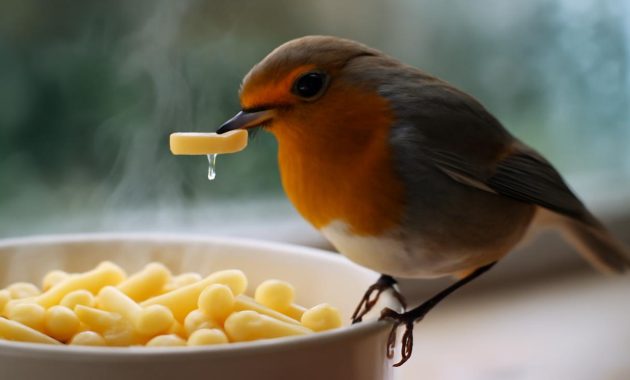
On a grey January morning, the kind that seems to press down on the rooftops and flatten the light, a flash of red appears at the edge of the lawn. It’s small, almost shockingly small against the bare earth and frost-curled grass. A robin – bright breast, needle-fine beak, eyes that look much too large for such a tiny face – lands on the garden table and tilts its head, listening for something only it can hear. You watch from the kitchen window, hands wrapped around a mug, and feel that small, familiar lift that robins always seem to bring. Winter might be clinging on, but so is life.
In that quiet, an unexpected thought crosses your mind: what on earth are these delicate, hollow-boned creatures eating when the soil is hard as concrete and every insect seems to have vanished? The answer, as the RSPCA has been gently but firmly pointing out, might already be in your kitchen. It doesn’t look like much – just a humble, pale staple that most of us take for granted, scooped into pans and scattered across dinner plates every day. But for the robins in your garden, right now, it can mean the difference between scraping by and truly coping with the cold.
The Kitchen Staple Sitting Beside Your Kettle
Walk into almost any British kitchen and you’ll find it waiting: a loaf on the counter, crusts flecked with flour, slices soft as cushions. Bread. So ordinary we barely see it anymore. And yet, in moderation and in the right form, this simple staple can be a lifeline for hungry garden birds – particularly robins – when natural food is scarce.
The RSPCA’s message is carefully balanced. They’re not urging people to turn bread into the only food birds receive, and they’re certainly not saying to fling out squashed, mouldy crusts and call it kindness. What they are saying, especially during cold snaps and prolonged wet weather, is that a little thoughtfully prepared bread can help birds cope – especially when combined with other bits and pieces from your kitchen. To a robin facing a long, freezing night, a few high-energy mouthfuls can be as welcome as a hot stew is to you.
It helps to picture that tiny robin in practical terms. Weighing roughly the same as a couple of coins, its energy reserves are small and quickly burned. When frosts arrive, earthworms retreat deeper into the soil, insects hide away, and the plump berries that brightened up autumn hedges shrivel and vanish. Every daylight hour becomes a race to gather enough calories to survive the dark, icy stretch ahead. That’s where your leftover bread – handled correctly – steps in.
Why Bread Helps (And When It Doesn’t)
Bread, by itself, is a bit like giving a child a plain white rice cake and calling it dinner. It fills a gap, but it’s not particularly rich in the nutrients birds truly need. Too much of it, especially if it’s the only thing on offer, can lead to malnourishment. This is why you so often hear the refrain “don’t feed bread to birds” repeated online and on park benches beside duck ponds.
But the RSPCA’s stance is more nuanced and more realistic. Their message recognises what actually happens in real homes, in real winters. People have bread. People worry about birds. And in a crisis – a sudden cold snap, unexpected snow, relentless rain that drowns out insect life – a modest amount of fresh bread can be part of a helpful spread.
The key words are: fresh, small, and part of a wider menu.
- Fresh: No mould, no green patches, no sour smell. If you wouldn’t eat it, a robin shouldn’t either.
- Small: Torn or crumbled into tiny, bite-sized pieces that won’t swell dangerously in a bird’s crop.
- Part of: Not the main dish, but a filler alongside richer, more nourishing foods from your kitchen.
So when the RSPCA urges people with robins in their gardens to put out this simple staple, they’re talking about bread as a useful, accessible tool – one that almost everyone can offer, right now, without a trip to the garden centre. Think of it as the potato in a stew: comforting, filling, but best when surrounded by other ingredients.
The Robin at Your Feet: A Winter Companion
Robins have a way of making it personal. Unlike many other garden birds, they seem comfortable slipping into our human spaces: perching on spades, supervising digging, flitting down to inspect an upturned pot. Their song, a silvery thread of notes, spills out even on the bleakest days, carrying over silent hedges and dripping branches.
In the garden, they are both bold and fragile. A robin will come astonishingly close when you’re turning soil, snatching up any worms or grubs you unearthed. On colder days, you may spot one standing fluffed-up on a fence post, appearing almost spherical as it traps warm air within its feathers. Under that puffball disguise, its tiny engine of a heart beats fast, burning energy at a relentless pace just to keep warm.
The RSPCA pays particular attention to birds like robins because they’re so often on the frontline of winter’s challenges. Their territories are small – a single garden, a scrubby hedgerow, a leafy corner of a park – which means their entire winter pantry might be no larger than the stretch of land you can see from your window. If that space is short on natural food, the stakes are high. Every small, human-offered crumb or seed can tilt the balance.
When that robin hops towards the patio, its bright eye fixed on the ground where you’ve scattered crumbs, you become part of its survival story. That’s a quiet responsibility, and also an extraordinary privilege.
Turning Your Kitchen Into a Bird Larder
Once you start thinking of your kitchen as a kind of temporary winter larder for birds, everyday ingredients take on a new significance. The RSPCA often highlights how much good can be done with nothing more than what you’d normally throw away or overlook.
Here’s how that humble loaf can become the centre of a small, life‑supporting buffet:
- Plain bread crumbs: Tear or crumble a slice into tiny pieces. Avoid large, dry chunks that can swell.
- Wholemeal over white: If you have both, wholemeal offers a slightly better nutritional profile.
- Mix with fat: Combine crumbs with a little unsalted kitchen fat – like cooled, plain roast drippings – to raise the energy value. Avoid salty, seasoned, or burnt fats.
- Top up with extras: Dried oats, grated mild cheese, and a few unsalted chopped peanuts (never whole, especially where there are chicks) transform a bland base into a wholesome, high-energy mix.
Laid out on a flat surface – a low table, a bird tray, the top of a plant pot – this mixture becomes an easy target for robins, who prefer to feed on the ground or from low platforms rather than high, dangling feeders. You’ll see that little red breast appear, the bird’s neat steps as it approaches, the quick peck-peck-peck as it selects the best bits and then retreats to a sheltered perch to swallow.
To help you visualize what’s helpful and what to avoid, here’s a quick reference you can glance at while standing in your kitchen:
| Kitchen Item | Is It OK for Robins? | Notes |
|---|---|---|
| Fresh bread (white or wholemeal) | Yes – in small amounts | Tear into tiny pieces; never mouldy; mix with richer foods. |
| Stale or mouldy bread | No | Mould can be harmful; throw away instead. |
| Unsalted roast drippings (cooled) | Yes – small amounts | Mix into crumbs or oats; avoid added salt or seasoning. |
| Dried oats | Yes | Great energy boost when mixed with crumbs or fat. |
| Grated mild cheese | Yes – sparingly | Choose mild, low-salt cheese; grate finely. |
| Salted snacks (crisps, salted nuts) | No | Too salty; can be harmful to birds. |
How to Offer Bread Safely (Without Harming Other Wildlife)
Feeding birds is never just about the food itself. It’s also about how, where, and when you offer it. The RSPCA constantly threads this message through their advice: well-meant help can backfire if not offered thoughtfully.
For robins, the ideal feeding set‑up is simple, low to the ground, and relatively open – so they can spot danger, but still dash into nearby cover if a cat appears. A shallow tray on a plant stand, the flat top of a wide fence post, or even a terracotta pot saucer set on bricks can all work.
A few guiding principles make a big difference:
- Little and often: Put out small amounts of food once or twice a day, rather than a huge pile at once that will spoil or attract rats.
- Keep it clean: Brush or rinse trays regularly, especially in damp weather, to help prevent the spread of disease.
- Avoid the lawn centre: Don’t scatter food where it can sit in puddles or mud; a raised platform keeps it drier and more hygienic.
- Think about predators: Position feeding spots where birds have a clear view and quick escape routes, not in tight corners where a cat can ambush them.
Robins are quick learners. If you develop a quiet routine – a handful of crumb mix placed out at more or less the same time each day – you may soon find a small audience waiting in the hedgerow whenever you open the back door. That daily exchange, the slight pause while bird and human observe each other across the boundary of species, can become one of winter’s quiet joys.
More Than Bread: Building a Robin-Friendly Garden
Bread might be the gateway – the thing you have on hand, the thing you can offer immediately in response to the RSPCA’s call – but it doesn’t have to be the whole story. As the months turn and the worst of winter loosens its grip, you can begin to think about helping robins and other birds in more lasting ways.
Start by imagining your garden not as a series of separate features (lawn here, patio there, flowerbed somewhere in between), but as a small ecosystem. Where could a robin shelter during icy rain? Where might insects overwinter? Where could spiders spin, beetles hide, tiny larvae feed? Every wild corner you allow becomes part of the long-term pantry that keeps birds fed without your intervention.
Ideas to gently shift your space into robin territory include:
- Letting a patch grow wild: A small strip of unmown grass or a messy corner with leaves and twigs can shelter countless invertebrates.
- Planting berry-bearing shrubs: Hawthorn, holly, rowan, and cotoneaster provide natural winter food and dense cover.
- Adding water: Even a shallow dish refreshed daily can become a vital drinking and bathing spot when puddles freeze.
- Leaving seed heads: Don’t rush to tidy away the dried stems of summer plants; they may still hold seeds and hidden insects.
The RSPCA’s immediate plea about bread is really a doorway into this broader relationship: a reminder that what we do in our small patches of the world shapes the lives of creatures who share them. Today, that might look like scattering a carefully prepared handful of crumbs. Next year, it might look like a thicker hedge, a wilder border, a bird bath kept ice‑free on the coldest mornings.
The Quiet Impact of Small Kindnesses
There is something almost ceremonial about stepping into the garden on a cold day with food in your hands. The air meets your face like a damp cloth, or a freezing slap, depending on the wind. Your breath smokes out in front of you. The familiar world of your home – central heating, warm mugs, the smell of toast – sits just behind you, separated by nothing more than a rectangle of glass and a door latch. Yet out here, the rules are different. Here, a frost can be an adversary and a wet day can mean the difference between finding enough to eat and going hungry.
You bend down, scatter the crumb mixture – bread, oats, a trace of safe fat, maybe a few crumbs of cheese – and straighten up, fingers tingling. The garden looks the same as ever: fence, shrubs, the neighbour’s washing line hanging slack. But if you wait, if you give it just a little time, the space begins to move. A blackbird drops in, glossy and assertive. A pair of blue tits inspect the feeder. And then, almost as if conjured by your decision to help, the robin appears.
It lands lightly, pausing for the briefest heartbeat, and then hops towards your offering. That bright breast, the faint flick of wings, the quick, precise pecks – all powered by the energy you’ve just scattered at your feet. The RSPCA’s advice, considered and practical, has travelled all the way from an office statement or a web page into this solid, living moment in your own small patch of the world.
Feeding birds will not fix the climate, or instantly repair lost hedgerows, or silence the heavy engines of habitat loss. The RSPCA knows this. What it does offer is something at once humbler and more profound: a thread of connection. A way to notice, to participate, to lean in rather than look away. When you respond to that call – when you take the simple thing on your counter and turn it into sustenance for a wild, watchful creature – you are, in a tiny but real way, changing the story of winter for that bird.
Tomorrow, you might change it again. And again. A handful of crumbs at a time.
Frequently Asked Questions
Is bread really safe for robins and other garden birds?
Yes, in small amounts and as part of a mixed diet. Fresh bread – never mouldy – torn into tiny pieces can help birds through tough weather, especially when natural food is scarce. It should not be the only thing they eat, but rather a filler alongside more nutritious foods like seeds, oats, and suitable fats.
What type of bread is best to put out?
Plain, fresh bread is best, with wholemeal slightly preferable to white because it contains a few more nutrients. Avoid flavoured, heavily seeded artisan loaves with lots of salt, olives, onions, or other additions that could be unsuitable for birds.
How much bread should I put out for garden birds?
Offer just a small handful of tiny crumbs at a time, once or twice a day. The idea is to provide a helpful top‑up, not a full diet. If bread is being left uneaten, reduce the amount to prevent waste and to avoid attracting unwanted pests.
Can I mix bread with other kitchen scraps for birds?
Yes, and that’s often the best approach. Mix small bread crumbs with dried oats, a little cooled unsalted fat, or a sprinkle of finely grated mild cheese. Avoid salted foods, spicy leftovers, or anything mouldy or heavily processed.
Why are robins a focus of this kind of advice?
Robins are common garden birds with small territories and high energy demands, especially in cold weather. They’re often very visible in gardens and will readily come to low feeding stations, so small changes in how we feed them can have a quick, noticeable impact on their ability to cope with harsh conditions.