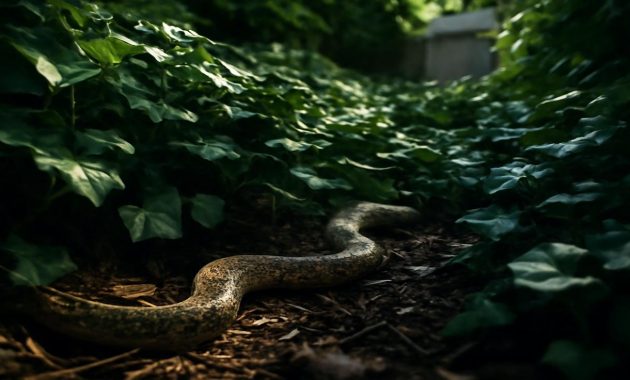
The first time I saw a snake in a garden, it wasn’t in some wild jungle or remote valley. It was in a perfectly ordinary backyard—freshly mulched, roses waking up after winter, the air smelling of cut grass and damp earth. I was crouched near a lush, arrow-shaped clump of leaves, admiring their sheen, when a subtle movement at the base of the plant made the world tilt for a second. A slender, patterned body slid out from the shadows, unhurried and unbothered, as if it owned the place. The plant it emerged from? The same one many people still tuck into corners of their yards, unaware of the quiet invitation it sends to passing snakes.
The Plant With a Quiet Reputation
In many parts of the world, there’s a garden favorite whispered about in conversations between neighbors and old-school gardeners: the Snake Plant, sometimes called Mother-in-law’s tongue (Sansevieria, now technically Dracaena trifasciata). Its sword-like leaves slice upwards from the soil, glossy, architectural, and effortlessly stylish. Interior designers love it. Minimalists love it. People who forget to water anything green absolutely love it.
Somewhere along the way, the name “Snake Plant” started doing what names do—it grew into a story. Homeowners, especially those with young kids or a shaky tolerance for slithering wildlife, began to ask: “Does this thing actually attract snakes?” In some regions, nurseries quietly advise against planting it in the ground outdoors, especially near house foundations, low walls, or around children’s play areas. The legend’s power is simple: a plant named after snakes, with leaves shaped like blades, dense enough to hide things you’d rather see coming.
To understand why this unassuming, oxygen-boosting darling of the houseplant world ended up with such a dramatic reputation, you have to step closer—right down into the soil level, where cool shadows settle and small creatures build their worlds.
The Hidden World at Ground Level
Gardens look tidy from above: flowers held high, shrubs clipped into polite shapes, borders lined like soldiers. But from a snake’s point of view—just a few centimeters above the soil—everything is a maze of stems, tunnels, and pockets of shade. It’s here that certain plants, especially dense, strappy ones like the Snake Plant, take on a new identity: not as decor, but as shelter.
Sansevieria doesn’t grow with airy stems or delicate foliage. It rises thickly, blade by blade, in a tight rosette. A mature clump becomes a living fortress. Inside that fortress, the soil stays a little cooler, a little moister, a little darker. Those conditions are irresistible to the small animals that snakes actually care about: frogs, lizards, mice, little burrowing mammals, sometimes even insects. And wherever prey goes, predators follow—quietly and efficiently.
Does the plant itself call out to snakes like some botanical siren? Not exactly. Snakes don’t nosedive into nurseries, searching for Sansevieria. But environments speak in textures, temperatures, and hiding places, and dense plants with upright, rigid leaves speak very clearly in the language of “safe spot.” Place that plant near a rock pile, a wood stack, or a damp shaded area, and you’ve effectively built a tiny studio apartment for something scaly.
That’s why some gardeners and local experts, especially in snake-prone regions, suggest you think twice before tucking Snake Plants into the soil around your porch or pathways. Indoors, they’re generally harmless and even beneficial. Outdoors, in the right climate, they become part of a network of microhabitats—sometimes beautiful, sometimes unnerving, depending on who you ask.
Why This Plant Feels So Comfortable to Snakes
The relationship between Sansevieria and snakes isn’t magical; it’s practical. It comes down to a handful of very simple reasons that, from a reptile’s perspective, make this plant a pretty attractive neighbor.
| Plant Feature | How It Benefits Snakes |
|---|---|
| Dense, upright leaves | Create hidden corridors where snakes can move unseen and rest undisturbed. |
| Clumping growth habit | Forms tight clumps that shelter prey animals like rodents or lizards. |
| Cooler, shaded soil | Offers thermal refuge during the heat of the day, especially in warmer climates. |
| Low maintenance | Often left undisturbed for long periods, ideal for shy wildlife that avoids frequent human activity. |
| Proximity to walls or foundations | Combines with cracks, crevices, and gaps that snakes naturally use as shelter. |
From a human angle, those same qualities read as: sculptural foliage, easy care, drought tolerance, and the ability to green up awkward corners. It’s a rare plant that looks equally good in a corporate lobby, on a student’s desk, and under a shaded eave. But that versatility can accidentally bring wild behavior a little closer to home than some people are comfortable with.
In warm, snake-rich regions—parts of Asia, Africa, Australia, the southern United States—outdoor Sansevieria patches can sometimes feel like a gamble. Most garden snakes are harmless, yes. Many are beneficial, too, keeping rodent and insect populations in check. Still, the surprise of stepping near a plant and seeing something move with that unmistakable fluid motion is enough to make even the bravest gardener’s heart jolt.
Between Myth and Reality: Do Snake Plants Really Attract Snakes?
Here’s where nuance matters. When gardeners say a plant “attracts” snakes, they often mean one of two things: either snakes are more likely to be found there, or it’s simply a spot where snakes can go unnoticed until discovered. For the Snake Plant, it’s largely the latter.
Snakes don’t eat leaves. They don’t nest in the way birds do, selecting a specific plant species for elaborate homes. They’re guided by three main needs: food, safety, and temperature. A Snake Plant in a pot on your living room shelf doesn’t meet any of those needs. A dense clump outside, tucked against a stone wall and a slightly messy compost heap? Entirely different story.
The myth of active attraction is powerful because of the name itself. If the plant had been called “Sky Sword Lily” or “Midnight Spear Leaf,” we probably wouldn’t be having this conversation. But names stick, and so do stories. In villages and suburbs alike, the phrase “Don’t plant that, it brings snakes” gets repeated, especially when someone shares a tense encounter: a child discovering a coiled body under the leaves, a pet rustling the clump and leaping back in alarm.
Nature, though, is rarely that simple. The plant doesn’t send invitations; we unknowingly set the table. When we combine certain plants with specific placements—shady corners, rock piles, rarely used side yards—we create ideal hideouts, whether we mean to or not. And if you live where snakes are common, local wisdom starts to sound less like superstition and more like pattern recognition.
Why Some Experts Advise Against Planting It at Home
Walk through a nursery in a city apartment district and you’ll find Snake Plants proudly front and center, labeled as “air-purifying,” “hard to kill,” “perfect for beginners.” But visit a rural garden center where venomous snakes are part of the seasonal rhythm, and the story changes slightly. You may hear a quiet, matter-of-fact warning: “Keep this one indoors. If you put it in the ground near the house, you might see more snakes.”
The concern isn’t that the plant is dangerous in itself. It’s that it can play a subtle role in making your immediate outdoor space friendlier to creatures you’d rather not meet at ankle height. Particularly if:
- You live in an area with known venomous snakes.
- You have children who play barefoot in the yard.
- You keep pets that like to poke their noses into every leafy corner.
- Your yard already has plenty of rodent activity or stacked materials like wood, bricks, or metal sheets.
Under those conditions, a dense, ground-level plant like Sansevieria near entry points—doors, garage steps, foundation vents—can become one more piece in a habitat puzzle. Not the sole reason snakes appear, but part of the reason they feel comfortable staying.
So some home-planting advice sounds like this: enjoy the plant, but treat it like the indoor star it’s already famous for being. Let it purify your bedroom air, thrive beside your couch, or soak up low light in a hallway corner. Outside, especially close to the house, opt for plants that don’t create the same kind of cool, concealed base cover. Think airy, fine-textured foliage you can see through, or seasonal flowers that die back in winter and don’t form permanent clumps.
Designing a Yard That Welcomes Birds, Not Snakes
There’s a delicate balance between wildlife-friendly gardening and wildlife-you’d-rather-not-share-a-patio-with. You can absolutely invite pollinators, songbirds, butterflies, and beneficial insects into your space without rolling out a green carpet for snakes.
Start by imagining your garden as a layered city. Tall trees form the skyline, shrubs make the mid-rise buildings, and low groundcovers become the alleyways. Snakes don’t generally lounge in the skyline; they live in the alleys, where cover and prey unite. That’s where your design choices matter most.
If the idea of snakes unnerves you and you live in a region where they’re common, consider these plant and layout principles:
- Favor airy over dense: Use plants with open branching and finer foliage near paths, doorways, and play areas. When you glance down, you should be able to see soil broken by light, not a dark, continuous mat.
- Lift groundcovers off critical edges: Keep at least a small gravel or mulch buffer between the house and any thick planting. This exposed strip is less comfortable for snakes to cross unnoticed.
- Limit permanent “thickets”: Plants that form year-round clumps—like Sansevieria in warm climates—should be placed intentionally, away from high-traffic zones, or swapped for seasonal flowers.
- Manage prey species: If you’re inadvertently feeding mice with accessible pet food, dropped birdseed, or open compost, you’re setting up a buffet line for snakes too.
- Use raised planters: In small yards, balconies, or patios, raised beds and containers keep plants closer to eye level and away from the cool ground-level crevices snakes prefer.
None of this means cutting ties with nature or sterilizing your garden. It means designing with awareness—acknowledging that every shady nook is an invitation to someone. The question is: whom do you want to invite?
Living With Wildness Without Losing Peace of Mind
There’s another layer to this story that surfaces when the sun goes down and the garden cools: the realization that, for all our discomfort, snakes are part of the living fabric of a healthy landscape. They slip through the gaps we don’t see, performing quiet services we rarely thank them for—mostly in the form of rodent control.
Yet coexistence doesn’t require naïveté. You can respect snakes as vital wildlife and still reasonably say, “Not right by my doorstep, please.” Avoiding outdoor planting of known “hideout” plants like dense Sansevieria near the house becomes less about fear and more about informed boundaries.
If you already have Snake Plants in your yard and feel uneasy, you don’t have to panic. Instead, you can:
- Relocate them into pots and move them indoors or to a more open, visible area like a patio, away from clutter or rock piles.
- Thin dense clumps so there’s less shadowed space at the base.
- Clean up adjacent materials—scrap wood, debris, tall weeds—that combine with the plants to create perfect cover.
- Monitor at cooler times of day, when snakes are more likely to move, to understand your yard’s patterns before making big changes.
Often, what we fear most is the unknown: the rustle in the leaves, the sense that something could be there. Altering the plant structure around your home reduces those unknowns. You’ll find it easier to see the soil, to spot movement, to feel like the space belongs to you again—even while acknowledging that it also belongs to many other lives.
In the end, the “garden plant known to attract snakes” isn’t a villain. It’s a mirror, reflecting how tightly our homes border the wild, how quickly a decorative clump of leaves can become a doorway into a hidden world. Whether you keep your Snake Plant indoors or out, what matters most is the choice behind it: eyes open, senses awake, a gardener quietly deciding how much wildness to invite in—and how close to the back door it’s allowed to come.
Frequently Asked Questions
Does the Snake Plant really attract snakes?
Not in the sense of actively luring them, but its dense, upright leaves and cool, shaded base can provide ideal hiding spots. In areas where snakes are common, they may choose to rest or hunt around such plants, especially if prey like rodents or lizards are present.
Is it safe to keep Snake Plants indoors?
Yes. Indoors, Snake Plants are generally safe from a wildlife perspective. They don’t attract snakes inside your home and are popular as low-maintenance, air-purifying houseplants. Just keep them out of reach of pets that may chew on the leaves, as they can be mildly toxic if ingested.
Should I remove Snake Plants from my yard if I live in a snake-prone area?
If they’re planted directly in the ground near your house, doors, or children’s play areas, it’s wise to reconsider. You can relocate them into pots, move them to more open, visible areas, or bring them indoors to reduce the chance of snakes sheltering nearby.
What kinds of plants are less likely to hide snakes?
Plants with airy, open structures and fine foliage are less likely to conceal snakes. Low, sparse groundcovers, seasonal flowers that die back, and raised planters all reduce the continuous, shaded cover that snakes prefer at ground level.
How else can I make my garden less inviting to snakes?
Keep grass trimmed, remove piles of wood or debris, seal gaps in walls and foundations, manage rodent populations, and avoid dense, permanent clumps of foliage right next to the house. These steps reduce both shelter and food sources, making snakes less likely to linger.