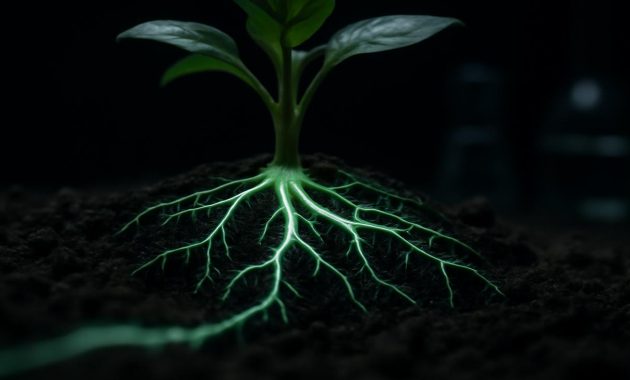
The first time you see it, you’d never guess it’s hiding a secret the size of a whole new industry. It looks like any other unassuming shrub clinging to a patch of poor, sandy soil in southern China—thin stems, modest leaves, nothing to announce itself as a scientific celebrity. The air around it smells faintly metallic after the rain, and the hills roll away in a haze of green and red clay. Somewhere beneath your boots, in the unseen chemistry of this soil, something extraordinary is happening. This little plant is drinking in metals that modern technology craves—and it’s doing it with a quiet efficiency no known species on Earth has been caught doing before.
The Plant That Drinks Rare Earths
The plant has a Latin name—Phytolacca acinosa, often just called pokeweed in English—but the particular Chinese populations that stunned scientists are no ordinary botanical entry in a field guide. In the wild hills of Jiangxi and neighboring regions, researchers noticed a strange pattern: this plant was thriving where other vegetation hesitated, colonizing soils laced with the same metals that usually stress or poison roots. Where rare earth elements were high, this plant was not just surviving; it was flourishing.
China, already the world’s heavyweight in rare earth production, has spent decades peeling these elements out of mountain rock with acids, open-pit mines, and leaching ponds that leave scars visible from space. But this discovery began far more quietly. Soil scientists and botanists surveying metalliferous sites took leaf samples, expecting perhaps some tolerance, maybe trace absorption. What they found instead forced them to recalibrate their understanding of what a plant can do.
The leaves were loaded with rare earth elements—lanthanum, cerium, neodymium, and their kin—concentrated in tissues at levels that would be considered toxic to most life forms. This was not passive contamination; this was active uptake and storage. In other words, this humble shrub was acting like a living sponge for the metals that sit at the core of our smartphones, wind turbines, electric vehicles, and missile guidance systems.
In technical terms, the plant appeared to be a “hyperaccumulator,” but not just for a common heavy metal like nickel or zinc. It was concentrating rare earth elements themselves—a group so chemically tricky and stubborn that they usually demand extreme industrial processes to extract and refine. For the first time, scientists had compelling evidence that a plant might be tuning its biology to pull rare earths from soil and lock them into its leaves and stems.
A Quiet Revolution in the Soil
It helps to remember what rare earths really are. Despite their name, they’re not actually rare in the Earth’s crust; they’re simply spread out, diffused, and difficult to separate. Think of them as dustings of precious spices ground into the flour of ordinary rock. Our usual way of getting them out is brute force: dig, crush, leach, separate, and in the process generate chemical waste and polluted water.
But here, under the open sky and drifting clouds, is an entirely different approach: let a plant do the chemistry.
When researchers dug into the soil around the roots of this Chinese pokeweed, they found patterns hinting that the plant doesn’t just tolerate rare earths—it actively seeks them. Its roots, like fingers reading braille in the dark, explore mineral particles and microlayers of soil. Somehow, at the cellular level, it has evolved transporters and pathways that welcome these unusual metals into its vascular system instead of shutting them out.
Once inside, the metals don’t simply wander freely. They’re escorted, bound to organic molecules, and siloed into specific cellular compartments, where they don’t interfere too much with basic life processes like photosynthesis. Under the lens of an electron microscope, tiny specks of rare earths appear tucked away within leaf tissues, like invisible vaults scattered through living green.
To walk through a hillside colony of these plants is to stand among quiet miners. Each leaf that shimmers in the wind might be hosting a cocktail of elements mined from a teaspoon of dirt. And as the seasons turn and the plant grows, sheds, and regrows its foliage, it is steadily gathering more.
From Poison to Resource
For most plants, rare earth elements are closer to poison than food. At high concentrations, they twist proteins, block essential nutrient pathways, and interfere with photosynthesis. Yet somehow, here is a plant that has turned this potential poison into a manageable presence—maybe even a benefit.
One possibility scientists are exploring is that rare earths may help this species outcompete neighbors in poor soils, giving it a subtle resilience when phosphorus or other nutrients are scarce. Another angle is simple evolutionary creativity: in a landscape naturally enriched with these metals, only those individuals that could handle them survived long enough to spread their genes. Over thousands of generations, what began as tolerance turned into specialization, and specialization into mastery.
The implications go far beyond a single hillside in China. If one plant can do this, others might too. Or its genetic tricks might be borrowed, edited into crop relatives or fast-growing shrubs deliberately planted to harvest metals. The slopes of mining waste and abandoned tailings across the planet could someday host green covers that pull value from what is currently toxic rubble.
Green Mining: Science Fiction Edging into Reality
Imagine, for a moment, what mining looks like if the main workforce is made of roots and leaves, not trucks and explosives.
Instead of tearing a mountain open, you seed it. You broadcast the seeds of metal-hungry plants across the scarred ground—perhaps the native Chinese pokeweed, or future cousins bred for specific elements and climates. For a season, or several, they grow. Rain falls, sun burns, insects visit. Beneath the surface, the roots get to work, unlocking metals that once would have demanded vats of solvents.
At harvest time, instead of ore trucks, you send in harvesters that cut biomass: leafy, branchy, above-ground tissue. Those stems and leaves are then dried, burned, or processed to create “bio-ore”—ashes and concentrates enriched in the very metals industry needs. The leftover energy from burning might even help power the extraction system.
This is not fantasy. The idea is known as phytomining, and it has already been tested for metals like nickel in places such as New Caledonia and Albania. What makes the Chinese discovery extraordinary is that we may finally have a phytomining candidate for rare earth elements themselves—the metals that underpin magnets in wind turbines and electric motors, phosphors in displays, and catalysts in industrial processes.
Early lab work suggests that repeated cycles of planting and harvesting hyperaccumulator plants can steadily increase the concentration of target metals in the harvested biomass. Each year, the soil grows a little cleaner and the plant matter a little richer in the desired metals. Over time, this can turn a low-grade deposit into a viable source, especially where conventional mining is uneconomical or environmentally unacceptable.
The Promise—and the Limits
Of course, nature has its own pacing. Plants don’t work on quarterly earnings reports. They grow as fast as their genetics and environment allow, and each harvest represents only a tiny fraction of the metal that a conventional mine can rip from rock in a single day.
That means phytomining with this rare earth–loving plant is not about replacing all mining. It’s about carving out new niches: cleaning up polluted sites while quietly recovering value; working on low-grade deposits that no one would otherwise touch; offering smaller communities a less destructive way to benefit from the metals beneath their feet.
There are ecological questions, too. What happens if fields of hyperaccumulators concentrate metals to such levels that herbivores or insects ingest toxic doses? How do we keep such plants from becoming invasive elsewhere, dragging rare earths into food webs never meant to bear that load? Could burning the biomass release metals into the air if not carefully controlled?
Every potential solution carries its own shadows. The task now is to design systems where the benefits of green mining outweigh new risks—where careful boundaries, controlled cultivation, and smart processing keep the miracle grounded in reality.
Why China’s Discovery Matters to Everyone
China currently dominates rare earth production, not because it alone has the deposits, but because it has invested massively in mining and processing, accepting the environmental burden as the price of economic power. As global demand for technologies built on rare earth magnets and components continues to surge, the world finds itself in a delicate bind: it needs China’s metal streams, but it also fears dependency.
Into this uneasy landscape walks an unassuming plant, discovered and studied by Chinese scientists who understand better than most the geopolitical weight of rare earths. Their research is not just an academic curiosity; it’s potentially a new chapter in how resources are managed and shared.
If a plant-based method could eventually complement or partially replace the dirtiest forms of extraction, China could position itself not only as the supplier of rare earths, but as the pioneer of cleaner, bio-based recovery. The same knowledge could be shared or adapted by other nations with their own deposits—from Africa to South America to Central Asia—offering paths to development that don’t automatically come with poisoned rivers and stripped hillsides.
In an era where conversations about climate change, sustainability, and supply chains have become deeply intertwined, a discovery like this doesn’t stay in the laboratory for long. It becomes part of global strategy, industrial planning, and environmental negotiations. It invites a new kind of diplomacy—one that asks how we might use the quiet power of plants to ease both ecological and political tensions.
A Glimpse Into the Plant’s Inner Alchemy
At the heart of this story is still a simple question: how does this plant do it?
Inside each root cell, membranes bristle with proteins that act as gatekeepers, shuttling ions in and out. For most plants, these proteins have a narrow tolerance—they’ve evolved to recognize familiar elements: calcium, magnesium, iron. Rare earths, with their similar charges and sizes, sometimes slip through like impostors, but usually they’re quickly shunted out or walled off.
In this Chinese pokeweed, the gatekeepers appear less defensive and more welcoming, at least to certain rare earths. Once inside, chelating molecules—in effect, tiny molecular claws—bind to the metals, escorting them safely through the watery corridors of the plant’s interior. Special storage compartments—vacuoles—serve as long-term vaults, preventing these metals from meddling with the plant’s core machinery.
Every step of this process is a potential blueprint. If researchers can identify the precise genes responsible, they might insert them into other species more suited to different soils or climates—a willow for temperate wetlands, a grass for arid mine tailings, a fast-growing shrub for tropical hills. Each could be tuned to favor a particular rare earth element, turning botanical diversity into a distributed, living network of micro-mines.
Seeing the Future in a Single Leaf
Hold one of those leaves in your hand—smooth, slightly waxy, green—but now you know what lies within: atoms that will someday spin in the magnets of a wind turbine blade, or color the pixels of a new generation of screens, or guide a satellite as it circles the planet. It’s an odd feeling, like holding a rough nugget of ore that’s somehow also a living, photosynthesizing organism.
We are used to thinking of technology and nature as opposites: one made of circuits and code, the other of sap and soil. But in this plant, the lines blur. The most high-tech metals of our age are passing through roots and veins that evolved long before anyone thought to name an element or design an electric motor.
There is a sense of humility in that realization. For all our refineries and reactors, it may turn out that some of the most elegant solutions are already out there, anchored in place, quietly practicing a kind of chemistry we never imagined.
Of course, turning this discovery into a practical tool requires patience. Field trials must be expanded; yields, measured; extraction methods, refined. Ecologists need to map unintended consequences. Local communities must be at the table when decisions are made about planting experimental fields or harvesting biomass. And governments must consider how to integrate phytomining into regulations built for hulking machines, not green ones.
Still, the direction of travel is clear: as our hunger for rare earths grows, the old ways of getting them—ways that rip, crush, and poison—will run up against hard physical and social limits. The discovery of a plant that can gather these elements on its own is a rare chance to ask a different question: what if we grow our metals instead of gouging them out?
A Small Green Doorway
Somewhere in the hills of southern China, a breeze rattles the leaves of a patch of pokeweed. Beneath, unseen, its roots are tasting the soil, distinguishing one ion from another with a precision no human hand could match. Raindrops bead along the stems and slide to the earth, carrying with them the faintest traces of dissolved minerals that will soon be drawn up again.
Perhaps a local farmer barely notices it, brushing past on a narrow path. A geologist pauses to take a sample. A botanist kneels to compare leaf shapes. None of them can quite see, in that moment, the web of future possibilities crisscrossing this simple plant. Rare earth policies. Mining reforms. Cleaner rivers. New livelihoods. Different landscapes.
Major discoveries for humanity don’t always arrive with thunderclaps or brand-new machines. Sometimes they sprout, leaf by leaf, on a forgotten slope. Sometimes they begin as a line in a research paper: “This species appears capable of accumulating rare earth elements at unprecedented levels.” And from there, doors open.
Walk through one of those doors, and you might find a future in which technology and ecology are less at war. A future where the minerals that shape our devices are gathered, at least in part, by living green. A future seeded by a quiet Chinese plant that taught us, at last, to listen more closely to what roots already know.
Key Facts About the Chinese Rare-Earth Plant
| Common reference | Chinese pokeweed (a form of Phytolacca acinosa) |
| Unique ability | Extracts and concentrates rare earth elements from soil in its tissues |
| Type of metals | Lanthanides (rare earths) such as lanthanum, cerium, neodymium, and others |
| Potential use | Phytomining (biological mining), environmental cleanup, and low-impact metal recovery |
| Environmental benefit | Could reduce the need for highly polluting conventional rare earth mining in some contexts |
| Stage of development | Primarily in research and early field testing; not yet used at large industrial scale |
FAQ
Is this really the only known plant that can concentrate rare earth elements?
So far, this Chinese pokeweed is among the very few species documented to hyperaccumulate rare earth elements at such high levels. Other plants can absorb small amounts, but this one stands out for its exceptional ability to concentrate them in its leaves and stems. As research expands, more species may be found, but for now it remains a rare and important example.
Does this mean we can stop traditional rare earth mining?
No. The metal output from plants is much lower and slower than from conventional mines. Phytomining is better seen as a complement, especially for cleaning up polluted sites, working with low-grade deposits, or providing a gentler alternative in sensitive areas. Over time, as techniques improve, it could take on a larger role, but it is unlikely to replace all conventional mining.
Is the plant safe for people and animals?
Because it can store high levels of metals, this plant is not meant for food or feed. In natural settings, grazing animals usually avoid strongly metalliferous plants, but in managed systems, fields would be fenced and biomass handled carefully. Safety depends on responsible cultivation and processing that keeps metals out of food chains and the open atmosphere.
How do we actually get the rare earths out of the plant?
After harvesting, the plant material can be dried and burned or otherwise processed to produce an ash rich in rare earth elements. From there, more targeted chemical or physical methods can separate and purify the metals. The advantage is that much of the unwanted material has already been removed by the plant, reducing the volume of waste compared with raw ore.
Could this work outside China?
Potentially, yes. If similar soils and deposits exist, and if regulations allow carefully controlled planting, phytomining could be tested in other countries. Researchers are also exploring the idea of transferring the key traits into other species better adapted to different climates. Any such expansion would need strong environmental oversight and local community involvement.
How long before this becomes common practice?
That depends on research funding, regulatory support, and industry interest. Field trials, ecological impact studies, and technological refinement take years. It is reasonable to expect pilot projects and niche applications to grow over the coming decade, with broader adoption possible if they prove technically and economically successful.
Why is this discovery considered a “major” one for humanity?
Because it touches three big challenges at once: our dependence on rare earth metals, the environmental damage of current mining practices, and the need for more sustainable resource strategies. A plant that can naturally gather these critical elements suggests new ways to power our technologies while doing less harm to the landscapes we depend on. It is a small organism with potentially very large consequences for how we live on this planet.