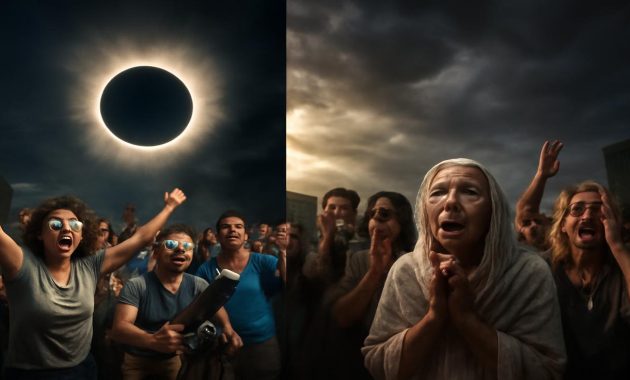
The first thing you notice is the hush. Not the kind that follows a slammed door or a finished sentence, but a slow, creeping quiet that seeps into the edges of the day. Birds pause mid‑call. A lawn mower in the distance sputters to a stop. Somewhere behind a bank of thin clouds, the moon is already drifting into position, an invisible intruder sliding between Earth and the sun. Nightfall is still hours away on the clock, yet the light has begun to feel… fragile, as if the afternoon itself were standing on tiptoe.
The Day the Sun Learns to Disappear
On this particular day, the world is bracing for more than a passing shadow. Astronomers have been whispering about it for decades: the longest solar eclipse of the century, a cosmic alignment so precisely timed it might as well have been choreographed. From one side of the globe to the other, a dark ribbon — the path of totality — will sweep over cities and farm fields, deserts and oceans, erasing daylight for millions. For several long, breathless minutes, the sun will be swallowed whole.
In a small town within that narrow path, a farmer named Lila stands by her fence and squints up at the hazy sky. She has seen partial eclipses before, those bite‑marks taken out of the sun that everyone admires through cheap cardboard glasses and smartphone screens. But this time, they say, it will be different. This time, the day won’t just dim — it will end, abruptly, then stagger back to life again.
Lila’s grandmother would have called it a warning. “When the sky forgets itself,” she used to mutter, “the earth remembers.” As a girl, Lila had hidden under the kitchen table during a short eclipse, trembling as her grandmother rattled a tin pot with a spoon to drive away the darkness. The old woman is gone now, but the memory floats to the surface as neighbors talk excitedly over back fences about eclipse parties, viewing glasses, and school field trips. In the grocery store, a poster declares in bold block letters: “CELEBRATE THE SHADOW.”
Not everyone is celebrating. Across social media, in late‑night talk shows, in community meetings and hushed religious gatherings, a question is spreading almost as quickly as the eclipse’s looming shadow: Is this something to honor as a rare and astonishing spectacle — or something to fear as a bad omen?
Light, Shadow, and the Human Imagination
It helps to remember that eclipses have always lived in the crossroads between science and story. Long before we knew about orbital mechanics and gravitational pulls, people looked up at a vanishing sun and reached for the only tools they had: imagination, myth, and fear. In ancient China, people believed a sky dragon devoured the sun, and they clanged pots and fired arrows to scare it away. The Vikings spoke of sky wolves chasing the sun and moon, occasionally catching them and plunging the world into chaos. In parts of West Africa, some cultures saw an eclipse as a moment of reconciliation, the cosmic lovers sun and moon coming together to patch up their quarrels.
Those stories still echo, even if we now know the angles and distances with chilling precision. We can calculate where the moon’s shadow will fall down to the kilometer, predicting its arrival decades into the future. We can simulate its path on glowing screens, model the temperature drop, chart the behavior of animals as day blinks off.
And yet, when the eclipse begins, the body knows something older than science. As the sun’s disk is slowly nibbled away, the light turns metallic, drained of warmth. Colors flatten; shadows sharpen at the edges. The wind shifts. Birds grow restless and veer toward their roosts. The human brain, honed by hundreds of thousands of years of sunrise and sunset, thrums with unease. It is not supposed to be twilight at 1:17 p.m.
For some, that unease registers as a quiet thrill — the electric tingle of standing close to something vast and wild. For others, it feels like a warning klaxon: This is wrong. This is not how the day should behave. In that gap, this new debate has taken root. Celebrate or fear? Is it hubris to throw a party under an extinguished sun, or superstition to read doom into a predictable dance of light and shadow?
The Science of a Vanishing Sun
From a strictly scientific standpoint, there is nothing supernatural about what’s about to happen. The moon orbits Earth; Earth orbits the sun. Every so often, their paths align precisely, and the moon’s shadow — usually cast off into space — slices across the face of the planet. Because the moon is just the right size, at just the right distance, it can neatly cover the sun’s bright disk. It’s a cosmic coincidence that many astronomers quietly call miraculous.
This eclipse, though, carries a special weight. Its path stretches thousands of kilometers, crossing time zones, cultures, languages. Astronomers estimate that more than a hundred million people will experience totality — the brief window when the sun is completely obscured, and only the ghostly solar corona streams out like a pale crown of fire. In some places, darkness will linger for nearly seven full minutes. Seven minutes without the sun. Seven long minutes for the mind to wander.
Scientists and eclipse chasers are ecstatic. Hotels in the path of totality have been booked for years; observatories have prepared arrays of telescopes and custom cameras. Researchers are poised to measure the temperature drop, capture high‑resolution images of the sun’s corona, and study how the sudden darkness confuses migratory birds and insects. For them, the eclipse is an opportunity, a rare open‑door moment when the usual brilliance of the sun dims enough that its hidden outer atmosphere can be examined in detail.
To many in the scientific community, the idea of fearing an eclipse seems quaint at best and dangerous at worst. “We should fear not understanding the universe,” one astrophysicist says in a televised interview, “not the moments when it reveals itself.” But that doesn’t stop the talk‑show caller who insists the eclipse lines up with an ancient prophecy, or the viral video claiming that electronic systems will fail, or the group that has decided to spend the day in prayer and fasting, shutters drawn tight.
Between Festival and Foreboding
In Lila’s town, the divide plays out in small, human ways. The local school has scheduled a field day to coincide with totality. Children will build pinhole projectors out of cereal boxes, decorate them with glitter and stickers, and eat star‑shaped cookies as the shadow rolls in. Parents have been warned about eye safety; the school has bulk‑ordered certified eclipse glasses. The principal writes in the newsletter, “This is a once‑in‑a‑lifetime learning opportunity. We plan to celebrate it.”
Across town, a modest white church has taken the opposite tack. Its announcement board now reads: “ECLIPSE: SIGN OF THE TIMES? SEEK SHELTER IN PRAYER.” The pastor has organized a special service at the very hour of totality. In the dim interior, away from the vanishing light, the congregation will sing old hymns about faith in the midst of darkness.
Similar fault lines appear across the globe. Some cities are throwing “shadow festivals” with music, art installations, and themed food. Tourism boards speak of economic booms, hotels packed, restaurants overflowing. Meanwhile, in other communities, leaders urge people to stay indoors, calling the eclipse a test, a judgment, a cosmic alarm bell. Some farmers plan to bring their livestock into barns, not for scientific reasons, but out of ancestral caution. They remember stories handed down through generations: of crops blighted after an eclipse, of storms that followed, of wars that seemed to arrive on the heels of a darkened sun.
Are these patterns real or coincidence? Historians can point to eclipses that coincided with dramatic events: battles lost, kings murdered, empires trembling. But they can also show you hundreds of eclipses that came and went without any obvious upheaval beyond a spike in traffic and a few startled crows. The human mind loves a pattern, especially when it’s drawn against a sky that suddenly refuses to behave.
Why Darkness Still Feels Dangerous
Even armed with scientific understanding, humans are not purely rational creatures. We carry older stories in our bones. For most of our evolution, darkness meant danger: predators prowling just beyond the firelight, treacherous ground, the risk of being separated from the safety of the group. Night had its own rules, and surviving meant respecting them.
An eclipse is darkness out of context. It arrives in what should be the safest stretch of the day, when the sun is high and predators retreat to their burrows. When that fundamental promise — that daytime is bright and reliable — is temporarily revoked, it rattles something deep and ancient. It’s not surprising that so many cultures turned eclipses into omens, anchoring that unease to the behavior of kings and armies, gods and demons.
Modern fears dress themselves in new clothes. Where once people feared dragons, some now fear invisible rays, global conspiracies, secret government tests timed with the shadow. The language has changed; the instinct hasn’t. An unexpected rupture in the ordinary invites explanation, and fear is a powerful storyteller.
But there is another story unfolding alongside that fear — a quieter, gentler narrative about what happens when large numbers of people, scattered across continents and belief systems, look up together at the same sky. During past eclipses, strangers have shared viewing glasses, passed toddlers to the front of the crowd, gasped in unison at the sudden appearance of the solar corona. People who cannot agree on politics or religion or the right way to brew coffee have stood together in open fields and parking lots and simply stared.
Shared Shadow, Shared Wonder
In a world that feels increasingly fractured, a total eclipse offers something unexpectedly radical: a shared experience of awe. No algorithm curates it for you. No corporation owns it. No border stops the moon’s shadow at customs. It sweeps over war zones and wildlife reserves, over crowded cities and lonely mountaintops, indifferent to lines on maps or names of nations.
Astronauts have spoken of the “overview effect” — the profound shift in consciousness that comes from seeing Earth from space, a fragile blue marble without visible boundaries. Totality is, in its own way, a miniature version of that effect for those pinned to the ground. For a few minutes, humanity is reminded that our lives, with their schedules and deadlines, are draped over something much older and grander than any of our individual stories.
Of course, not everyone is positioned to experience awe. The worker in a dim factory with no windows may only notice the sudden flicker in the lights. The overwhelmed parent may be more worried about keeping small hands away from unprotected gazes at the sun. The anxious watcher, steeped in doomsday predictions, may spend the entire event indoors, curtains drawn, heart pounding.
Still, the opportunity is there. Whether we step into it as celebrants or as skeptics, whether we bring confetti or caution, the shadow will arrive all the same. It asks nothing of us, yet it offers a certain clarity — a reminder that our planet moves through a clockwork of light and dark far beyond any one of us.
Preparing for the Longest Shadow
Some preparations are purely practical: stocking eclipse glasses, testing camera filters, reminding people that sunglasses are not protection. Hospitals review emergency plans, knowing that large crowds bring ordinary risks — dehydration, heatstroke, traffic accidents. Utility companies consider how a sudden dip in solar power might ripple through the grid. School districts decide whether to keep students indoors or invite them outside in supervised groups.
But there are quieter preparations too. Lila, standing by her fence, has dug out her grandmother’s old tin pot. She runs her fingers over the dented metal and smiles, thinking how the older woman would react to the sleek, certified eclipse goggles now sitting on Lila’s kitchen table. Progress and memory, science and story, side by side.
On her fridge, Lila has taped a simple note for herself:
- Step outside 30 minutes before totality.
- Listen carefully to the birds.
- Notice the temperature drop.
- Look up — but safely.
- Remember that this, too, is Earth being Earth.
Her neighbor has a different list, printed from an online forum filled with anxious speculation: stay indoors, unplug electronics, avoid eating or drinking during the eclipse. Two households, one shared sky, colliding interpretations. And yet, when the shadow comes, it will fall on both roofs with exactly the same indifference.
Somewhere else along the path of totality, a scientist readies a telescope, a child decorates a shoebox, a traveler sets an alarm in a hotel room, a monk lights a candle in a stone‑floored chapel. Fear and curiosity, reverence and revelry — all braided together, waiting for the moment when the sun seems to forget itself.
A Moment Suspended Between Stories
When totality finally arrives, it does not tiptoe. One moment, the world is strangely dim; the next, it is as if someone has cracked the sky. The last sliver of sun winks out, and a ring of ghostly fire hangs in its place. Streetlights flicker on. Stars appear where only blue emptiness had been. The temperature drops like a held breath released.
In the sudden twilight, the human response is immediate and deeply honest. People shout, gasp, cry, laugh. A few fall silent, eyes wide, as if they’ve stumbled into a cathedral they didn’t know they were looking for. Cameras click, but many hands fall to their sides, as if some instinct whispers that this is not something meant to be flattened into pixels. For seven minutes — long enough to feel the weight of it — day is undone.
Is it a bad omen? Or a rare blessing? In that suspended time, the question begins to feel oddly small. What matters is the undeniable fact of it: the precision of the orbits, the delicate lining‑up of distant bodies, the way our entire world can be plunged into twilight by a rock we rarely notice. Whatever stories we wrap around that fact — prophecy or physics, dread or delight — the universe remains stubbornly itself.
And then, just as abruptly, it is over. A bright bead of light erupts on the edge of the black disk, the so‑called “diamond ring” flashing as the sun reclaims the sky. Birds stir again. The metallic light warms. The crowd exhales, shuffles, talks in hushed or giddy tones. Traffic resumes. Notifications buzz. The world, so recently transformed, snaps back into its ordinary shape.
But for some, something has shifted. The grocery‑store clerk who stepped outside for a three‑minute break now feels the cash register a bit more distant. The pastor, who led prayers in the dark, finds words about humility resonating differently. The scientist reviewing perfect data frames senses, beneath the numbers, a soft awe. Lila hangs the tin pot back on its hook, eclipse glasses folded beside her grandmother’s favorite mug.
Celebrate or Fear? Maybe Listen Instead
The debate will not end with the return of the light. In the days that follow, talk shows will replay the most dramatic images. Commentators will argue about the “appropriate” response. Some will crow that nothing catastrophic happened, using it as proof that superstition is useless. Others will insist that the real consequences are still coming, invisible but certain.
Yet perhaps the more interesting question is not whether we should celebrate or fear this rare darkness, but whether we are willing to let it change us, even slightly. To let it remind us that the ground beneath our feet spins through an intricate choreography of light and shadow we did not design. To allow a few minutes of cosmic strangeness to soften the hard edges of our certainty.
Celebration and fear are both, in their own ways, responses to feeling small. One throws a party in defiance, delighting in the fact that we can predict, measure, and safely watch a phenomenon that once terrified our ancestors. The other bows its head, sensing in that same phenomenon a power beyond human control. Perhaps wisdom lies in a third posture: attentive humility. Eyes open, mind clear, storybook in one hand, star chart in the other.
The longest solar eclipse of the century will come and go. Clouds may block it for some, schedules may override it for others. But for millions, the day will briefly break in half, and a strange twilight will settle where noon should be. In that light — or that darkness — humanity will see itself reflected: curious and anxious, imaginative and calculating, frightened and brave.
Nightfall approaches at midday, not to punish or reward, but to follow the quiet laws that hold the planets in their paths. Whether we meet it with celebration, fear, or something more tender in between, the shadow will pass, and the sun will return, as it has always done. What lingers is up to us.
| Aspect | Celebrate It | Fear It |
|---|---|---|
| Emotional response | Awe, wonder, excitement | Anxiety, dread, unease |
| Cultural framing | Festival, learning event, shared spectacle | Omen, warning, spiritual test |
| Scientific value | Chance to study the sun, atmosphere, animals | Often overshadowed by fear narratives |
| Community impact | Brings people together outdoors | Keeps some communities indoors and isolated |
| Long‑term effect | Strengthens interest in nature and science | Reinforces existing fears and superstitions |
FAQ: The Longest Eclipse and Our Longest Shadows
Is a long total solar eclipse dangerous for humans?
Physically, the main danger is eye damage from looking directly at the sun without proper protection, especially during the partial phases. Totality itself — when the sun is completely covered — is safe to view with the naked eye, but only during those brief minutes. Beyond eye safety and typical crowd‑related issues, the eclipse does not pose a direct physical danger to humans.
Do eclipses cause natural disasters or bad events?
There is no scientific evidence that eclipses cause earthquakes, storms, wars, or other disasters. Because eclipses are memorable, people often link them to events that happen around the same time, but correlation is not causation. Eclipses follow predictable orbital mechanics and occur whether or not anything dramatic happens on Earth.
Why do some people still see eclipses as bad omens?
Eclipses temporarily break one of the most reliable patterns in our lives: daylight. For thousands of years, sudden daytime darkness felt threatening, and many cultures built myths to explain that fear. Those stories, passed down through generations, still shape how some people interpret the event, even in a scientific age.
Is it disrespectful to celebrate an event others see as a warning?
It depends on how the celebration is carried out. A respectful approach recognizes that people bring different beliefs and emotions to the same sky. It’s possible to honor the scientific wonder of an eclipse while acknowledging that others experience it as spiritually significant or unsettling, and to make space for both responses without ridicule.
How can I experience the eclipse without being overwhelmed by fear?
Learning the basic science behind eclipses can help replace vague dread with understanding. Planning ahead — obtaining proper viewing glasses, choosing a calm place to watch, going with trusted friends or family — can foster a sense of safety. It can also help to focus on sensory details: the changing light, the temperature, the behavior of animals. Treating the eclipse as a chance to observe, rather than a test to pass, often softens fear into curiosity.