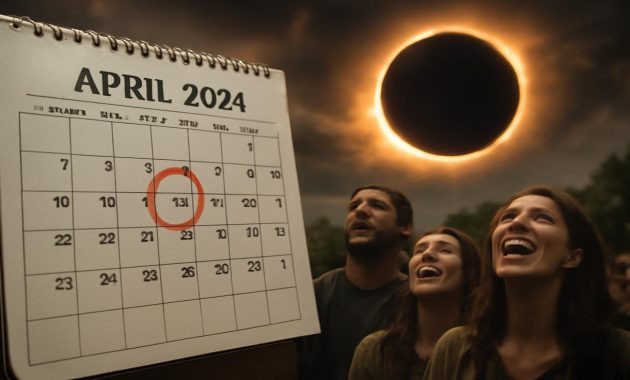
The announcement came quietly on a Tuesday morning: a date, a line on a map, and a promise that in the middle of an ordinary day, the sun itself would vanish. Somewhere between breakfast and afternoon traffic, day will turn to night. Not metaphorically, not in the dreamy language of poetry, but literally, as the moon slips perfectly across the face of the sun and holds it there, longer than it has in more than a century. You could have been scrolling through messages when you saw it—“the longest solar eclipse of the century has an official date”—yet the news lands with the weight of something ancient, something that makes your skin buzz, like you’ve just been invited to watch the sky rewrite its own rules.
The Date When Day Stops
By now you’ve probably memorized it, even if you pretend you haven’t. The official date of the longest solar eclipse of the century has begun circulating in headlines, scientists’ briefings, and group chats full of hastily made plans. At some point in the not-so-distant future, the sun will be swallowed in a slow, perfect silence, and for several long minutes, the world beneath its shadow will be transformed.
Imagine the build-up on that morning. The light will start off normal, just another sunrise bleeding into another busy day. But people in the path of totality—the narrow band of Earth where the eclipse is complete—will move with a slightly different tension. There will be folding chairs in fields and on rooftops, tripods planted like skinny metal trees along hillsides and sandy beaches. Families will gather with picnic baskets and certified eclipse glasses; amateur astronomers will fuss over telescopes; children will ask the same question again and again: “How long will it be dark?”
The air in those places will feel oddly expectant, like the hushed few seconds before a concert begins, when the crowd leans forward. People will talk more softly without knowing why. Even the birds, it seems, will sense something is coming.
The Slow Dimming of the World
Solar eclipses do not arrive in a single dramatic instant. They creep in. First contact, as astronomers call it, is subtle: the tiniest bite taken out of the sun’s bright disc. You’d miss it if you weren’t looking through protective glasses. But as the moon glides further in front of the sun, the world begins to feel…off.
The light will thin, turning the afternoon strangely metallic. Colors will lose their warmth. Shadows will sharpen into deep, cut-out shapes, uncanny in their precision. If you stand beneath a tree, the sunlight filtering through its leaves will scatter hundreds of tiny crescent suns onto the ground, each one a miniature version of the sky.
The temperature will drop, gently at first, then noticeably. A wind might pick up, or die away altogether. Somewhere nearby, a dog may begin to whine, uncertain. People will fall quieter without being asked to. Eyes will tilt upward in synchronized anticipation.
And then, in that last minute before totality, the world will move into something like a held breath. The last sliver of sun will shrink and bead up into what are called Baily’s beads—bright pearls of light sparkling along the rugged edge of the moon. One last flare, the “diamond ring” effect, will flash: a thin halo crowned with a single searing point of light.
Then the diamond will wink out. And day will turn to night.
A Darkness Unlike Any Other
Totality is not the same as nightfall. It is a different kind of darkness, one that falls too quickly, too strangely, to feel ordinary. The sky overhead will deepen into a bruised, velvety twilight—midnight at the zenith, sunset on every horizon. The temperature may drop several degrees in minutes. Streetlights and porch lamps will flicker on in automated confusion. Birds may spiral back to their roosts; crickets might start their evening chorus.
All the while, the sun will hang in the sky as a black disc, its face perfectly hidden. Around it will billow the solar corona—delicate, white, and ghostly, like a crown of feathers or streams of pale fire flowing into the dark. This normally invisible outer atmosphere of the sun only reveals itself during a total eclipse, glowing faintly in the sudden false night.
Planets that were there all along—Venus, perhaps Jupiter—will appear, bright and insistent. If you look across the landscape, the horizon will ring itself in a 360-degree sunset: amber, rose, violet, all glowing at once around the edges of the world.
For everyone within that line of shadow, time will seem to behave oddly. The very fact that this eclipse will be the longest of the century deepens that sensation. Totality, already a fragile, fleeting state during most eclipses, will stretch out just a little longer, gifting observers with extra heartbeats of astonishment. The longer the darkness lasts, the more your mind ping-pongs between childlike wonder and a quiet, primal unease. This isn’t how the sky is supposed to look, a small voice mutters. Another answers back: And yet, it is exactly how the universe works.
Why This Eclipse Is So Remarkable
Total solar eclipses, on their own, are not incredibly rare. Somewhere on Earth, one happens roughly every 18 months. But a particular eclipse passing over a particular place—your town, your country, your personal patch of Earth—can be a once-in-a-lifetime gift.
What makes this one so special is not just its path, but its duration. The longest solar eclipse of a century owes its extended drama to an especially neat cosmic choreography: the Earth’s position in its orbit, the moon’s distance from us, and the alignment of their paths.
When the moon is closer to Earth, it appears slightly larger in the sky. That means it can more completely and more deeply cover the sun’s disc. Combine that with the Earth reaching a part of its orbit where it is a little farther from the sun—making the sun appear smaller—and you get a match made in eclipse heaven: a black circle that covers the bright one perfectly, and for a longer time than usual.
On the day of this eclipse, these conditions line up nearly perfectly. As a result, observers located close to the center of the path of totality may experience darkness lasting well over six minutes—an almost luxurious eternity compared to many eclipses that flash past in two or three. In the grand mathematics of celestial mechanics, those extra minutes are the exception, not the rule. Over a hundred-year stretch, only one eclipse wins the title of “longest.” This is that one.
| Feature | Typical Total Eclipse | This Century’s Longest Eclipse |
|---|---|---|
| Maximum totality duration | ~2–4 minutes | ~6+ minutes of darkness |
| Frequency at a given location | Once every 300–400 years on average | Often truly once-in-a-lifetime |
| Brightness of corona | Visible but brief | Longer viewing of fine structures |
| Scientific opportunity | Good | Exceptional, extended observations |
Scientists are already mapping where the shadow will fall, tracing a narrow, winding corridor across continents and oceans. Within that path, towns you’ve never heard of will become temporary capitals of the cosmos. Hotels will fill years in advance. Small local airports will hum with rented planes. Villages will lay out hand-painted signs and makeshift parking lots in dry fields, ready for a sudden migration of sky-watchers.
How to Prepare for a Moving Shadow
To witness a total solar eclipse from the path of totality is to be, quite literally, in the right place at the right time. The moon’s shadow on Earth—called the umbra—moves across the planet at thousands of kilometers per hour. It does not wait. If you are just outside that narrow line, you might see a deep partial eclipse, but the world will never fully go dark.
Preparation, then, becomes part science, part pilgrimage. People will study maps and charts, watching the projected path as it crosses open ocean, deserts, farmland, dense cities, and the smallest of villages. They’ll weigh weather patterns, hunting for locations with historically clear skies. Some will choose remote mountaintops; others, familiar backyards lucky enough to lie beneath the shadow’s track.
In the weeks and months before the eclipse, the rhythm of ordinary life will gain an extra backbeat of planning. There will be talk of driving routes, camera settings, school field trips, bussing children to safer, open locations where the sky is wide. There will be reminders from scientists and safety advocates about proper eye protection—certified solar viewing glasses, filters for binoculars and telescopes, never looking directly at the sun during any partial phase.
Communities in the path might hold public talks and star parties, easing neighbors into the idea that the middle of their day will briefly resemble the middle of the night. There will be practice drills in classrooms: how to use viewing glasses, how to share equipment, why this is not something to fear, but something to respect and marvel at.
What It Feels Like To Stand in the Path of Totality
If you talk to anyone who has experienced a total solar eclipse from within the umbra, their stories tend to bend around the same emotional gravity. They may start by recalling the technical details—the way the light changed, the sudden drop in temperature—but soon they drift into words that sound almost spiritual. “Nothing prepared me,” they’ll say. “I knew what would happen. I’d read everything. But when it did…” and their voices trail off, reaching for something that resists full explanation.
That is the paradox of an eclipse. On paper, it is meticulously predictable. Astronomers can tell you the second it will begin, the exact interval of totality, the precise curve of its path centuries from now. There is no mystery in the mechanics. The moon is here. The Earth is there. The sun is farther away. Geometry does the rest.
Yet to stand beneath it is to feel a shock that seems to bypass the rational mind. Evolution carved into us an expectation: daylight means safety, vision, activity; night means rest, vulnerability, the unknown. A total eclipse takes that deep, unspoken rule and flips it. For a few impossible moments, your senses disagree with centuries of instinct. The clock insists it is midday, but the sky, the chill, the behavior of animals, all suggest twilight.
People respond in ways they did not anticipate. Some cry without quite knowing why. Others laugh, or shout, or fall completely silent. For those several elongated minutes—especially during an eclipse as long as this one will be—the normal noise of human life recedes, replaced by a hush that is at once communal and inward. It feels, many say, like being allowed backstage at the universe.
Scientists Chasing a Vanishing Sun
For researchers, this eclipse is not just a spectacle but a rare laboratory. Even in an age of space telescopes and solar probes, a long total solar eclipse offers something irreplaceable: a stable, wide, and relatively dark window through which to observe the sun’s fragile outer atmosphere.
During those extended minutes of totality, teams of scientists will be pointing a fever dream of instruments at that ghostly corona. They will study its temperature, its structure, the way it braids and shimmers under the influence of the sun’s tangled magnetic fields. They’ll be probing questions that have haunted solar physics for decades: Why is the corona hotter than the sun’s surface? How do solar storms begin, and how do they ripple outward to affect our planet’s technology and atmosphere?
The extra time given by this century’s longest eclipse is priceless. Longer darkness means longer exposure times for cameras, clearer images of faint structures, and the chance to track subtle changes in real time. Along the path of totality, coordinated teams may set up observing stations at intervals, passing the baton of data collection from one site to the next as the shadow races along, stitching together an unbroken record of the sun’s behavior.
Yet even these scientists, surrounded by cables and laptops and carefully packed equipment cases, are not immune to the emotional weight of the event. Many of them grew up knowing the date of their first or rarest eclipse before they ever knew what they wanted to study. On the day itself, between calibration checks and frantic note-taking, they will look up too. For a few breathless moments, they will set aside their roles as observers and simply be humans under a changed sky.
Why This Matters in an Age of Screens
We live in a time when any wonder of the world can be replayed endlessly on a tiny rectangle in the palm of our hand. You might ask: why travel, why plan, why stand in a field for hours just to watch the sky do a trick that a streaming video can mimic in far more comfort?
The answer, for those who go, lies in the difference between seeing and being there. A video can show you what happens in an eclipse. It cannot wrap you in the strange cooling wind that arrives ten minutes before totality. It cannot echo the spontaneous gasps of strangers all around you when the last bead of sunlight vanishes. It cannot reproduce the way your own heartbeat seems to sync with the sudden darkening, the way your brain staggers trying to reconcile a night sky crowning a midday landscape.
There is also something rare, now, about a scheduled global moment that does not care about our politics or algorithms or priorities. The moon does not negotiate its path with us. The sun does not adjust its brightness for our convenience. On that day, at that time, for those minutes, the sky will do what the sky does, and we will either be there to witness it—or we won’t.
The longest solar eclipse of the century offers a chance to step briefly outside our usual narratives. For a heartbeat of history, millions of people will be united by the same impulse: to look up. The child on a farm road, the pilot at cruising altitude, the scientist hunched over a telescope, the grandmother sitting in a lawn chair—all of them will share the same stunned whisper when day folds into night and the sun becomes a dark, burning crown.
After the Shadow Passes
As totality ends, the world will not snap back to normal in an instant. A thin bead of light will appear on the edge of the moon’s silhouette, the diamond ring re-igniting. Daylight will return in a rush, a reverse sunrise that feels abruptly too bright. Birds will call again, perhaps a little confused. People will blink hard, as if waking from an oddly vivid dream.
In the days that follow, social feeds will flood with photos and shaky videos: kids in cardboard eclipse viewers, timelapse sequences of the approaching shadow, wide-angle landscapes under that eerie half-light. Scientists will retreat to their labs and data centers, chasing new insights hidden in streams of numbers and spectral lines. News anchors will speak of record crowds and traffic jams, of small towns overrun by eager sky-watchers, of police officers guiding cars under a strangely dark noon.
But the truest legacy of this eclipse may settle more quietly, in the private memory of those who found themselves for a few minutes at the heart of the moon’s moving shadow. Years later, they will still be able to describe the way the horizon glowed all the way around, the way a familiar place was temporarily transformed into an alien dreamscape. They will remember, with a clarity that outlives most days, where they stood when day turned to night.
And somewhere, a child who watched that darkness roll in will decide, without saying it out loud just yet, to study the stars. Another will simply carry the memory like a secret compass, a quiet reminder that the universe is bigger, stranger, and more beautiful than the everyday rush suggests.
The date is set now. The countdown has begun. The path of shadow is already written across maps and minds, even though the sky above you today looks perfectly ordinary. But on that future day, when the moon slides silently between us and the sun and holds the light at bay for the longest time this century will ever know, the ordinary will fall away. For a handful of minutes, we’ll remember that we live not just on a planet, but in a solar system, in a cosmos of intricate, indifferent, astonishing motions.
And in that brief, impossible twilight, when noon looks like night and the sun wears a crown of ghostly fire, you may find yourself whispering the simplest, oldest thing a human can say to the sky: “I was here. I saw this.”
Frequently Asked Questions
How long will this eclipse stay in totality?
At its maximum, totality during this eclipse is expected to last more than six minutes for observers near the center of the path. Most locations within the path of totality will experience several minutes of darkness, making it notably longer than typical eclipses.
Is it safe to look at the eclipse with the naked eye?
It is only safe to look at the sun with the naked eye during the brief interval of totality, when the sun is completely covered by the moon. At all other times—before and after totality—you must use certified solar viewing glasses or properly filtered telescopes and binoculars.
What is the “path of totality” and why is it so narrow?
The path of totality is the narrow track across Earth where the moon fully covers the sun. It is narrow because the moon is much smaller than Earth, and its deepest shadow (the umbra) only covers a limited strip as it moves. Outside this path, observers see only a partial eclipse.
Can I still enjoy the eclipse if I’m not in the path of totality?
Yes, you can still witness a partial eclipse, which is fascinating in its own right. The sun will appear as a crescent, and the light will change noticeably. However, the dramatic effect of day turning to night, and the appearance of the corona, are only visible within the path of totality.
Do animals really behave differently during an eclipse?
Many observers report changes in animal behavior: birds returning to roost, insects beginning their nighttime calls, farm animals heading toward shelters. These responses seem to be triggered by the rapid dimming of light and temperature drop that mimic twilight conditions.
How should I plan if I want to travel to see it?
Start early. Identify locations along the path of totality, check typical weather for the date, and book accommodations well in advance. Plan for heavy traffic near the event, pack proper eye protection, and arrive on-site hours before the eclipse to settle in and enjoy the gradual changes.
Will there be another eclipse like this in my lifetime?
There will be other total solar eclipses, but one that matches or exceeds this duration may not occur again in your lifetime, depending on your age and location. This particular eclipse is the longest of the century, which makes it an especially rare opportunity to experience extended totality.