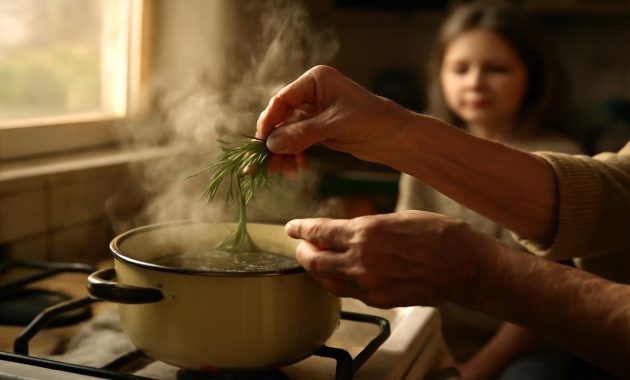
The first time my grandmother told me to boil a handful of rosemary, I thought she was joking. The sky outside was the color of old pewter, the kind of afternoon that made the house feel a little heavier, the air a little stale. I was visiting her for the weekend, carrying my own invisible weather inside me—stress, a tangle of thoughts, the jittery leftovers of city life. She watched me with that calm, hawk‑like gaze of hers and said, as if she were telling me to put on a sweater, “Go to the kitchen and put some rosemary in a pot. Cover it with water. Let it boil.”
“To make tea?” I asked, already picturing the sharp, bitter flavor.
“Not for drinking,” she said, smiling. “For the house.”
I laughed then, but I went to the kitchen anyway. That tiny, seemingly odd request turned out to be the single best home tip I’ve ever learned—one that has quietly, powerfully transformed the way my home feels on an ordinary day. Boiling rosemary isn’t flashy or complicated, but it has a way of changing a room that no scented candle or store‑bought spray has ever managed to do. It’s a ritual, a bit of practical magic, and a bridge back to the steady hands and wise eyes of my grandmother.
The First Pot of Rosemary Steam
I remember standing in her kitchen, a space that always smelled like baked apples, soap, and something warm I could never quite name. The rosemary was in a chipped blue mug by the window, branches gathered from the bush that leaned against the back fence. When I picked it up, the needles scratched lightly against my fingers; the scent was dry but potent—piney, medicinal, almost wild.
I filled a small pot with water, about halfway, and dropped in two generous sprigs. The rosemary floated on the surface like tiny green boats. I set the pot on the stove and turned up the heat. Within minutes, thin ribbons of steam began to rise, carrying with them an scent that shifted as the water warmed—from faint and sharp to deep, round, and enveloping.
My grandmother moved through the kitchen with the unhurried confidence of someone who had made thousands of meals and solved thousands of small problems within these same four walls. She took a cloth and wiped down a counter that was already clean, humming to herself. “You’ll see,” she said, without looking at me. “Let it roll at a low boil. Just let it breathe.”
I watched the water turn the palest shade of green. The steam reached my face, warm and damp, and I breathed it in without meaning to. It felt like a window had cracked open inside my chest. The house began to smell less like the dim, stale day outside and more like a hillside after rain—bright, sharp, and somehow hopeful.
We left the pot simmering on the back burner as we went about the afternoon. Every time I walked in or out of the kitchen, the scent wrapped around me: clean without being sweet, comforting without being heavy. By evening, I realized I was breathing more deeply, talking more softly, paying more attention to the way the light fell on the old wooden table.
“It changes the air,” my grandmother said, as we washed dishes together. “And when you change the air, you change the way people feel inside it.”
Why Rosemary Works Better Than a Candle
Over time, I came to understand that my grandmother’s rosemary ritual wasn’t some vague, nostalgic superstition. There’s something very real and practical happening in that little pot on the stove. When rosemary meets heat, its natural oils rise with the steam, spreading through the room in tiny, invisible currents. You’re not just masking smells—you’re replacing them with something alive and complex.
Most scented candles, sprays, and plug‑ins try to dominate the air. They shout. Boiling rosemary, by contrast, whispers. It doesn’t cover every smell so much as it threads itself through the space—through the curtains, the hallway, the worn cushions on the couch—subtle but persistent. It’s the difference between turning on a fluorescent overhead light and letting sunlight spill in through sheer curtains.
There’s also a psychological shift that happens when you take the time to stand at your stove and set this little green ritual in motion. You are not just pressing a button on an air freshener; you’re choosing, actively, to care for your space and for yourself. You’re touching the herb, filling the pot, lighting the burner. It’s physical, sensory, and intentional.
My grandmother used rosemary the way some people use music: to set the mood of the house. When guests were coming, she’d put a pot to simmer an hour beforehand. If someone came over upset, she’d offer tea and quietly set rosemary boiling in the background. When the seasons shifted—from the stiffness of winter to the restless energy of spring—she’d say, “Time to wake the house up,” and the rosemary would come out.
The Quiet Science in the Steam
You don’t need to dive into chemistry to appreciate this, but there is a gentle, grounding logic behind the sensation. Rosemary contains aromatic compounds that have been associated with clarity, alertness, and a lifted mood. Whether you think in scientific terms or in the softer language of tradition, the effect is similar: your mind feels a little sharper, your body a little less tense, your thoughts a bit lighter.
Instead of a room that smells like “ocean breeze” or “vanilla sugar”—vague names attached to smells that don’t exist in nature—you get something ancient and honest. You get a scent that has been wafting off sun‑baked hillsides and kitchen gardens for centuries. And your body, without conscious effort, recognizes it as something real.
How to Boil Rosemary at Home
By the time I moved into my first apartment, I had adopted my grandmother’s habit entirely. Now, whenever my home feels off—stale after a long week, shaken after bad news, or just tired in a way I can’t name—I reach for a handful of rosemary. Over the years, I’ve adjusted the method slightly, but the heart of it is still hers.
Simple Rosemary Steam Ritual
Here’s the loose, flexible way I do it, just as my grandmother taught me, but translated into my own small kitchen:
- Fill a medium pot about halfway with fresh water.
- Add 2–4 sprigs of fresh rosemary (or 1–2 tablespoons of dried if that’s what you have).
- Bring to a gentle boil, then reduce the heat to a low simmer.
- Let it simmer for 15–45 minutes, depending on how strong you want the aroma.
- Top up the water if it gets too low, and never leave it unattended for long.
As the pot simmers, I’ll often crack a window just an inch, letting fresh air mingle with the herb scent. Sometimes I’ll turn off the harsh overhead lights and rely on softer lamps instead, as if I’m framing this small act with kinder lighting. The rosemary becomes a sort of invisible companion, steady in the background.
When I’m working from home and my focus starts to fray, I’ll set the pot on the back burner and let the scent roll through the apartment like a quiet tide. I find myself sitting up straighter, returning to the task at hand with a little more clarity. It’s not a miracle cure for distraction, but it nudges my mind back into alignment.
Small Variations for Different Moods
Every home has different rhythms—some days are loud and chaotic, others slow and heavy. The rosemary base stays the same, but you can weave in small changes to match the atmosphere you want to invite.
| Mood | What to Add to the Pot | How It Feels at Home |
|---|---|---|
| Calm & cozy evenings | Rosemary + a slice of orange peel | Soft, warm, gently sweet, like a slow sunset. |
| Fresh start mornings | Rosemary + a squeeze of lemon or lemon peel | Bright, clear, almost fizzy in the nose. |
| After guests or big cleaning days | Rosemary on its own, strong simmer | Crisp and clean, like pressing a reset button. |
| Rainy day comfort | Rosemary + a small cinnamon stick | Warm, grounding, a hug for the room. |
I don’t follow strict measurements; I go by scent, by instinct. A little more rosemary on a day when the house feels particularly heavy, a touch of citrus when my own energy feels sluggish. It becomes an intuitive practice—part house care, part self‑care.
Transforming the Atmosphere, One Room at a Time
There is a small moment that repeats itself every time I boil rosemary. I will be in another room—folding laundry, answering emails, or standing, distracted, by the window—when the scent drifts in. For a second, I forget that I put the pot on. The house simply smells like peace. Then I remember, and there’s this quiet satisfaction: I did this. I changed something tangible, with almost nothing at all.
On busy weeks, my living room can feel like a dumping ground: bags in the corner, shoes kicked off, mail in a pile near the door. No amount of air freshener can change the emotional clutter of that. But when rosemary steam begins to move through the air, it feels like the house exhales. The objects are still there, but the space between them softens.
Friends notice it, too. They’ll step inside and pause, mid‑sentence, nose lifting slightly toward the air.
“What is that smell?” they ask. “It’s so… clean. But not like cleaning supplies.”
“It’s just rosemary,” I say, and watch their faces soften with surprise. Just rosemary. As if that could possibly be enough. But it is.
Over time, my home has begun to collect memories attached to that scent. Late‑night conversations that unknotted something in my chest. Quiet Sunday afternoons with a book and a heavy blanket. Soft music playing in the next room while the pot murmurs quietly on the stove. The smell of rosemary is threaded through all of it like a fine, green stitch.
From My Grandmother’s House to Mine
When my grandmother’s health began to decline, I went to see her more often. The rosemary bush in her yard had grown wide, its branches long and woody, almost like the arms of an old friend reaching out. On one visit, she asked me to cut some to bring home with me. “Plant this,” she said. “So your house will always know where it came from.”
I took those cuttings back to my tiny balcony and coaxed them into a pot of their own. The first time I boiled rosemary grown from that plant, the scent hit me like a wave: not just pine and earth, but months of visits, old stories told over tea, her laugh, her worn hands gently turning pages of recipes she knew by heart.
Now, every time I boil rosemary, I am also steeping memory. The practice has outgrown its purpose as a simple home tip. It has become a way of keeping someone I love close, carrying her presence forward in something as simple and everyday as the air itself.
Making It Your Own Ritual
The transformation that rosemary brings is as much emotional as it is sensory. It’s not just about having a house that smells pleasant; it’s about building small, repeatable moments that tell your nervous system, “You’re safe here. You can slow down.”
What I love most is how easily this practice becomes personal. Maybe for you it will be Saturday mornings, with windows thrown open and rosemary steam curling around the edges of fresh air. Maybe it will be your quiet signal at the end of a workday: burner on, herbs in, laptop closed. Or your way of tending to the home after hard news—an act of care that doesn’t fix anything but says, softly, “We’ll get through this.”
You don’t need a sprawling garden or a fancy kitchen. A single plant in a small pot on a windowsill will do, or even a jar of dried rosemary from the pantry. What matters is the act itself: heating water, watching the first small bubbles form, letting the scent rise slowly and do what it has always done for centuries—refresh, steady, awaken.
In a world that constantly pushes us to buy more to feel better, there is something powerfully grounding about turning to a simple herb and some water. It’s an invitation to believe that the atmosphere of your home isn’t something that happens to you; it’s something you can shape, one quiet pot of rosemary at a time.
The Atmosphere You Can Feel, Even With Your Eyes Closed
Sometimes, when I want to test whether my home feels the way I hope it does, I’ll play a small game with myself. I’ll close my eyes, stand in the center of the room, and breathe in. Do I smell yesterday’s cooking oil, the musty edges of a long‑unopened closet, the sour trace of anxiety? Or do I feel something else—a clarity in the air, a softness that’s hard to name but easy to sense?
On the days when rosemary has been simmering, the difference is unmistakable. The air feels less like a container holding my worries, and more like a companion helping to soften them. There is a lightness in the room that has nothing to do with square footage or furniture, and everything to do with care.
My grandmother was never one for complicated philosophies. She believed in doing small things well and doing them often. “You can’t control everything that comes through your front door,” she once told me, drying her hands on a worn dish towel. “But you can decide how the air inside greets it.”
Boiling rosemary is my way of honoring that wisdom. It’s my answer to dull Mondays and restless evenings, to rooms that feel cluttered and moments that feel too heavy. It’s a tiny, green‑scented reminder that we have more power than we think to turn our houses—whatever their size, whatever their shape—into places that feel like refuge.
And so, on gray afternoons or bright winter mornings or quiet, ordinary Tuesdays, I find myself reaching again for those slender sprigs. I rinse them under cool water, listening to the soft patter in the sink. I drop them into the waiting pot, hear the first hiss of the flame, and watch as the water begins its slow, shimmering dance. Before long, the house shifts around me, almost imperceptibly at first, then undeniably: calmer, clearer, more alive.
It still amazes me that something this simple can feel this profound. A handful of rosemary. A pot of water. A little heat. And suddenly, the atmosphere of home is not just different—it’s yours.
Frequently Asked Questions
How long should I boil rosemary to scent my home?
Usually 15–30 minutes of gentle simmering is enough to fill a small to medium‑sized home with scent. For a stronger aroma, you can let it simmer up to 45 minutes, adding a bit more water if it gets too low.
Is it better to use fresh or dried rosemary?
Fresh rosemary gives a brighter, more complex scent, but dried works very well too. If you’re using dried rosemary, start with 1–2 tablespoons; you can always add more if you want a stronger aroma.
Can I leave the rosemary pot unattended?
It’s best not to leave any simmering pot completely unattended for long periods. Keep the heat low, check on the water level occasionally, and turn it off if you’re leaving the house or going to sleep.
What should I do with the rosemary water afterward?
Once it cools, you can safely pour it down the sink. Some people like to strain and use the cooled water to wipe surfaces or refresh floors, but if you do that, test on a small area first.
Will boiling rosemary get rid of strong odors like cooking smells?
It can soften and replace many everyday odors, especially after cooking, but for very strong or persistent smells, it works best combined with basic ventilation—like opening a window or running a fan—rather than as the only solution.