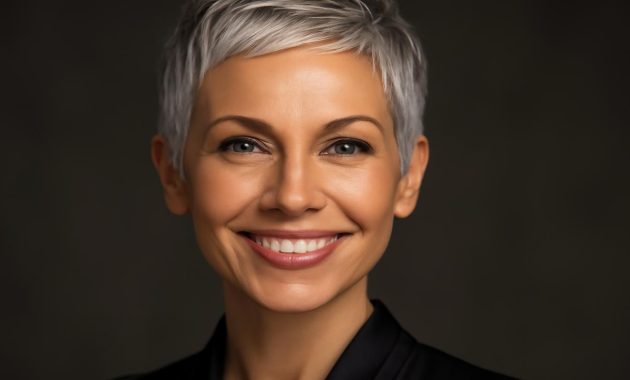
The hair fell in soft little snowflakes around her bare toes, drifting onto the black cape and the salon floor. Maria watched in the mirror as each familiar strand slid away, decades of habit scattering like dust. For the first time in years, her neck felt air on it—cool, almost thrilling. “You’re sure?” the stylist had asked at least three times before the first decisive snip. She was. Or at least, she wanted to be. Fifty-four, newly retired, newly single, and strangely ready. She hadn’t planned on a transformation that Tuesday afternoon; she’d only booked a trim. But then she’d caught a glimpse of herself in the salon mirror, framed between two younger women with sharp, luminous crops, and the question had landed with unexpected force: When did I start hiding behind my hair?
The Quiet Power of Letting Go
There’s a particular kind of courage that arrives after 50. It’s quieter than the bravado of youth, but stronger in all the ways that matter. You’ve survived heartaches, raised kids or careers or both, watched the years leave their handwriting at the corners of your eyes. And one day, you look in the mirror and feel an impulse—not to be younger, exactly, but to feel lighter, clearer, more like the person who still laughs too loud with her best friend at dinner.
That’s where hair comes in, especially short hair. Not as a magic spell or a desperate act of anti-aging, but as a reset. A shedding. A way of telling the world—and yourself—“I’m still here, and I’m not done taking up space.”
Ask any good hair expert and they’ll say the same: the right short haircut can soften lines, lift your features, and bring a kind of energy to your face that easily reads as “10 years younger,” without trying to pretend you’re 30 again. It’s less about erasing time and more about redirecting light. Short hair opens the face, sharpens the silhouette, and lets your bone structure and personality do the talking.
But what exactly counts as “the right” short haircut after 50? To find out, I sat down with master stylist and image consultant Elena Ruiz, who has spent over 25 years cutting hair for women in their 40s, 50s, 60s, and beyond. “Short hair isn’t about age,” she told me, comb resting lightly in her hand. “It’s about intention. After 50, women know what they like—and what they’re done tolerating. Hair should follow that truth.”
The Expert’s Eye: What Makes a Short Cut Look Younger?
Before we dive into specific styles, Elena insists on a simple truth: a youthful-looking haircut is all about movement, shape, and light. Not length.
“When women say, ‘I feel older,’ they’re usually describing hair that’s dragging their face down,” she explains. “Too heavy, too long, no shape, no volume at the crown. It emphasizes gravity instead of fighting it.”
Here are the key principles she uses with clients over 50 who want to look fresher, softer, and yes, often 10 years younger:
- Lift at the crown: A little extra height near the top of the head opens up the face, making features look more awake and less tired.
- Soft edges, not harsh lines: Blunt bobs and ultra-sharp cuts can look severe; a bit of texture around the ends keeps things modern and forgiving.
- Face-framing layers: Gentle pieces around the cheeks and jawline soften lines and highlight your eyes.
- Strategic volume: Not big hair, but full hair—especially where it counterbalances sagging or hollow areas.
- Natural movement: Hair that moves—even a little—feels alive, easy, and energetic.
“Think of it like this,” Elena says. “We’re not cutting your hair; we’re sculpting how light and shadow play on your face.” Once you understand that, the actual styles start to make a lot more sense.
The Short Haircuts That Take a Decade Off—Without Trying Too Hard
In Elena’s chair, there are five short hairstyles she turns to again and again for women over 50 who want a fresh, youthful look without a high-maintenance routine. Each one can be customized for face shape, hair texture, and lifestyle—no cookie-cutter cuts here.
1. The Soft Layered Pixie
The word “pixie” can send some women straight back to memories of boyish haircuts gone wrong, but the modern, layered pixie is a very different creature. It’s airy, feminine, and surprisingly versatile.
Picture this: short at the nape, slightly longer on top, with feathered, piecey layers you can push forward, sweep to the side, or tousle with your fingertips. Nothing stiff, nothing over-styled.
“A soft pixie is brilliant for women whose hair has thinned with age,” Elena says. “Shorter lengths make fine hair look fuller, and those little layers create texture that looks youthful and playful.”
The magic of this cut is in the fringe. Side-swept bangs can disguise forehead lines and draw attention to your eyes. Add a touch of mousse or styling cream, and you’re done in under three minutes. It’s low effort, high payoff.
2. The Cheekbone-Grazing Bob
If cutting your hair above your ears feels like too bold a leap, the cheekbone-grazing bob is the perfect middle ground. It sits somewhere between jaw and cheek, following the lines of your face like a gentle frame.
“This bob hits that sweet spot,” says Elena. “It reveals the neck, which is instantly elegant and slimming, but still gives you hair that swings and moves.” The length naturally lifts the face, especially when the ends are lightly textured instead of blunt.
Worn straight, it looks polished and sharp. With a loose wave or bend—from a curling wand or simply twisting damp hair and letting it air dry—it feels effortlessly modern. And here’s a secret: that cheekbone length reflects light upward, giving your skin a subtle glow.
3. The Modern Shag for Grown-Ups
The word “shag” might conjure up images of the 1970s, but today’s version is far more refined—soft layers, airy texture, and a relaxed, easy energy that somehow looks good on almost everyone.
“A modern shag with a shorter overall length is one of my favorite cuts for women over 50,” Elena tells me, her eyes lighting up. “It’s like wearing good music on your head. It has rhythm.”
Shorter in the back, a bit longer near the sides, and layered throughout, this cut is especially flattering if you have naturally wavy or slightly unruly hair. It embraces what your hair already wants to do, instead of fighting it.
Long, wispy bangs or curtain bangs can soften a high forehead and blend seamlessly into the rest of the cut. The result? A look that’s neither “trying too hard” nor “giving up.” Just deliberately undone, in the best way.
4. The Side-Swept Crop
Imagine hair that hugs the nape and sides, with a longer, sweeping top section that drapes diagonally across your forehead and temple. That’s the side-swept crop—a shape that’s especially kind to round and square faces.
“Diagonal lines are incredibly flattering,” Elena explains. “They break up width in the face and draw the eye upward, which is exactly what we want after 50.”
This cut shines on straight to slightly wavy hair and pairs beautifully with glasses. The longer top gives you styling freedom—sleek and refined one day, tousled and voluminous the next. It’s one of those cuts that looks intentional even when you only spent 90 seconds on it.
5. The Textured Short Bob with Volume at the Crown
For women who want something classic yet lifted, this is Elena’s quiet masterpiece. It’s a bob that sits between the jaw and just above the shoulders, but the trick lies in its architecture: subtle layers at the crown and softly tapered ends.
“Many women stick with one-length, shoulder-grazing hair for years,” she says. “But that length, without shape, can pull everything down. Lifting the back and shortening slightly makes the whole person look more upright, more awake.”
Think of it as a gentle push in the direction of confidence. The crown volume adds height, while the slightly shorter back avoids that heavy, flat line at the shoulders. With a bit of root spray or a round brush and dryer, it springs to life in minutes.
Choosing the Right Cut for Your Face, Hair, and Life
No two women wear the same haircut the same way, and that’s especially true after 50, when life, hormones, and history have shaped your hair into something uniquely yours. To help you visualize which of these short styles might feel like home, let’s break it down simply.
| Feature | Best Short Styles |
|---|---|
| Fine or thinning hair | Soft layered pixie, side-swept crop, textured short bob |
| Thick or wavy hair | Modern shag, cheekbone-grazing bob, textured bob with crown volume |
| Round face shape | Side-swept crop, layered pixie with height, angled bob |
| Square or strong jaw | Soft shag, textured bob, cheekbone bob with soft ends |
| High forehead or lines | Side-swept fringe, curtain bangs with shag, longer pixie fringe |
Elena recommends bringing photos to your stylist—not to copy exactly, but to say, “I like this feeling.” Pay attention to where the hair ends on the neck, how full it is on top, how soft the edges look. “Words like ‘short’ or ‘bob’ mean different things to different people,” she warns. “But a picture plus a good conversation? That’s gold.”
And then there’s the lifestyle question. How much time do you honestly want to spend on your hair each morning?
- If you want a “wash, air-dry, done” life: opt for a modern shag or soft pixie that works with your hair’s natural texture.
- If you don’t mind 5–10 minutes with a dryer: a cheekbone bob or textured bob with crown volume will reward you.
- If you like playing with styling products: the side-swept crop offers lots of daily styling personalities.
Color, Texture, and the Secret Ingredient: Confidence
A short haircut rarely travels alone; it often arrives hand in hand with a conversation about color and texture. As hair goes grey or white, its texture can shift—becoming coarser, more fragile, or flatter than before. Shorter cuts tend to make those changes easier to manage.
“Grey hair with a sharp short cut is one of the chicest combinations I see in my chair,” Elena says. “The contrast between silver strands and a modern shape can be stunning.” If you’re embracing your natural color, short styles keep it looking intentional rather than transitional. If you’re still coloring, going slightly lighter—soft highlights, warm lowlights, or a dimensional blend—can deflect attention from lines and shadows on the face, creating a more luminous effect.
Texture is the other quiet hero. A touch of sea-salt spray, volumizing mousse, or smoothing cream can make a short cut look polished without feeling stiff. The goal is always touchable hair—hair that looks like it belongs on a woman who has stories to tell, not on a mannequin.
“At some point, you stop asking, ‘Will this make me look younger?’ and you start asking, ‘Will this make me feel more like myself?’” Elena says. “Ironically, that shift is exactly what makes a woman look younger—because she’s lit up from the inside.”
That’s the secret ingredient no stylist can bottle: the moment you see yourself in the mirror and recognize the woman looking back.
Stepping Into the Chair—And Into a New Story
Back in that Tuesday afternoon salon, Maria’s transformation wasn’t instant. As the last long pieces fell, a flicker of panic crossed her face. “Is it too short?” she asked, fingers creeping up toward her temple. Elena caught her hand gently, smiled, and turned the chair so she could see the whole picture: the exposed neck, the soft, sweeping fringe, the way her cheekbones suddenly stood out like sculpture.
“You look like yourself,” Elena said. “Just…unburdened.”
Maria stared for a long moment. Then her lips curved, slowly, into a grin she hadn’t seen in years. She looked awake. Playful. Almost mischievous. She looked, in the most honest sense of the word, younger—not because her years had disappeared, but because they suddenly fit her more comfortably.
If you’re hovering on that same edge—scrolling photos, touching your hair, wondering if you dare—consider this: short hair after 50 isn’t about surrender. It’s about claiming.
Claiming your face, just as it is. Claiming your time, because you don’t want to spend an hour blow-drying anymore. Claiming your story, which is richer and deeper than any single decade. Whether you choose a soft pixie, a cheekbone bob, a modern shag, or something entirely your own, the question to ask isn’t “What will people think?” but “How do I want to feel when I walk out that door?”
Hair grows back. Time marches forward. But that electric, weightless feeling when the mirror finally matches the truth of who you are now? That’s worth every falling strand.
FAQ: Short Haircuts After 50
Will cutting my hair short really make me look younger?
Short hair itself isn’t a magic fix, but the right short cut can absolutely make you look fresher and more awake. By adding lift at the crown, removing heavy, dragging lengths, and framing your face with soft layers or fringe, a short style can visually counteract sagging and shadows. The result often reads as “younger,” but more importantly, it looks more vibrant and alive.
What if my hair is thinning—can I still go short?
Yes, and in many cases you’ll find short styles look much fuller than longer ones. Fine or thinning hair benefits from layered pixies, side-swept crops, and textured short bobs. Shorter lengths remove weight that can make hair look flat and stringy, and strategic layering creates the illusion of density.
Do short haircuts require a lot of styling time?
It depends on the cut and your hair texture. A modern shag or soft pixie can be very low-maintenance, especially if your hair has a bit of natural wave or movement. Bobs and crown-volume cuts may need a few minutes with a dryer or a styling product. Talk honestly with your stylist about how much time you’re willing to spend each day.
How often will I need to get a trim with a short style?
Most short cuts look their best with trims every 4–8 weeks, depending on how fast your hair grows and how precise the shape is. Pixies and very short crops generally need more frequent visits. Shags and textured bobs are a bit more forgiving and can stretch slightly longer between appointments.
Can I wear short hair if I have a round or full face?
Absolutely. The key is choosing the right shape. Side-swept crops, layered pixies with height at the crown, and angled or cheekbone-grazing bobs can visually elongate and slim the face. Avoid overly rounded, helmet-like styles; instead, aim for diagonal lines, soft layers, and a bit of lift on top.
What about my grey hair—should I color it with a short cut?
That’s entirely personal. Grey and white hair can look incredibly chic with a modern short style, especially when the cut is intentional and sharp. If you prefer color, soft highlights or multi-dimensional shades can add depth and brightness. The most “youthful” color is one that harmonizes with your skin tone and feels like you.
How can I talk to my stylist so I get the short haircut I actually want?
Bring at least three photos of styles you like and be ready to explain what you love about each one—length, fringe, volume, texture. Tell your stylist about your daily routine and how much styling you’re willing to do. Ask for their honest input about what will suit your face shape, hair texture, and lifestyle. A good stylist will listen, guide, and adapt the inspiration to you rather than copying a photo exactly.