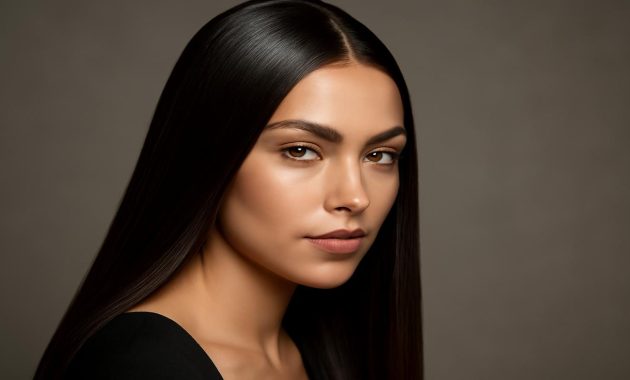
The first thing you notice is the sound. Not the sharp hiss of formaldehyde fumes being blasted flat with an iron, but the soft, rhythmic hum of a blow dryer moving slowly through damp hair. The salon smells faintly of cocoa butter and something floral—not the chemical sting that once made you hold your breath during a Brazilian straightening. In the mirror, someone’s curls are relaxing, lengthening, but not surrendering entirely. There’s still movement, a suggestion of waves. The stylist grins and says, “This is nanoplasty. Think of it as the quieter, kinder cousin of what you used to do.” And just like that, you realize: the era of punishing your hair into submission might finally be over.
The Slow Goodbye to Brazilian Straightening
For years, Brazilian straightening was the holy grail for anyone dreaming of mirror-sleek hair. It promised months of pin-straight strands and a kind of glossy, immovable perfection that looked incredible in photos and under city lights. But in between those smooth selfies were headaches—literal and metaphorical.
Maybe you remember the ritual: your stylist donning a mask and gloves, the chemical fog creeping through the salon, the way your eyes watered as the fumes hit the air. You’d tell yourself to “just power through,” because beauty demanded a bit of discomfort. Or a lot.
Then came the stories. Friends whispering about breakage. Itchy scalps. Sensitivity. Hair that looked shiny for a while but felt secretly fragile, like it might snap if you brushed too enthusiastically. You began to suspect that the price of ultra-straight hair was being paid silently, strand by strand.
As more people turned ingredient labels into reading material and started asking deeper questions about what was actually going on their hair and skin, Brazilian straightening quietly shifted from “miracle” to “maybe not.” The world changed; hair did, too. We started wanting hair that looked like it could move, bend in the wind, and still feel like ours. And into that shifting landscape stepped a new word, whispered first in niche salons and then shouted across social feeds: nanoplasty.
Nanoplasty: The New Smooth That Still Feels Like You
If Brazilian straightening was about domination, nanoplasty is about negotiation. It doesn’t walk into the room and shout, “You will be straight!” Instead, it leans in and murmurs, “How about we work with what you’ve got?”
At its heart, nanoplasty is a smoothing treatment built around a different philosophy. Rather than using harsh chemicals to break your hair’s natural bonds and rebuild them into enforced straight lines, it focuses on filling, coating, and nourishing the hair fiber. Many formulas rely on a mix of amino acids, nourishing oils, keratin-like proteins, and mild acids to realign the cuticle and create that coveted glassy finish—without the same level of aggression.
Imagine your hair shaft as a tiny, frayed rope. Traditional straightening would strip it, rearrange it, and lock it into place, sometimes leaving it slightly hollowed out inside. Nanoplasty, instead, tries to slip into all the tiny gaps, plumping, smoothing, and sealing with care. The look is sleek, yes, but softer at the edges. If Brazilian straightening was a crisp, starched shirt, nanoplasty is a silk blouse that still looks polished but moves with you.
Another big difference lies in the trade-off: instead of perfect, pin-straight hair at any cost, nanoplasty offers a spectrum. On tight curls, it might transform corkscrews into loose waves or relaxed curls. On wavy hair, it might deliver that dreamy, effortless-smooth look you usually only get the day you leave the salon. On already straight hair, it can elevate “pretty okay” to “hyper-reflective runway shine.” The point isn’t to erase your texture; it’s to refine it—soften it, tame the frizz, and add that impossible-to-ignore gloss.
Inside the Chair: What a Nanoplasty Session Actually Feels Like
Walk into a salon for nanoplasty, and the mood is surprisingly calm. No masks. No panicked rush to crack a window. Instead, there’s a sense of quiet ritual, almost spa-like, but with a blow dryer instead of a stone massage.
The stylist starts with a deep cleanse, washing your hair with a clarifying shampoo that strips away buildup and leaves the strands almost squeaky under the water. It’s like hitting the reset button. Once towel-dried, your hair feels light, airy, bare. This is the blank canvas.
Then comes the treatment itself. A creamy, sometimes slightly silky solution is painted carefully onto each section. Your hair is combed through until each strand is coated. The smell is usually soft—sometimes sweet, sometimes neutral, never the eye-burning sharpness you might remember from your Brazilian days. You sit for a while as the formula seeps in, the stylist checking your hair in the mirror like an artist stepping back from a painting in progress.
There is heat involved, yes, but it feels gentler. After the product has had its time to work, the stylist blow-dries your hair and then follows with a flat iron at a controlled temperature, sealing in the treatment. Instead of feeling like your hair is being punished into straightness, it feels like it’s being polished, coaxed into alignment.
By the time they do the final comb-through, your hair falls in a new way—heavier from the smoothness, but strangely lighter in how it behaves. It doesn’t puff. It doesn’t rebel. It just… glides. You turn your head, and it swings in one smooth piece, like silk being unfurled.
Nanoplasty vs. Brazilian Straightening: A Quick Look
Underneath the sensory experience and the poetry of shine, there are clear, practical differences between what many of us used to subject our hair to and what nanoplasty promises now.
| Feature | Brazilian Straightening | Nanoplasty Treatment |
|---|---|---|
| Main goal | Pin-straight hair, strong hold | Smoother texture, shine, frizz control |
| Typical feel in salon | Strong chemical fumes, masks, ventilation | Milder scent, calmer environment |
| Impact on curl pattern | Often heavily reduces or erases curls | Softens curls/waves; can be tailored to keep some texture |
| Hair health over time | Risk of dryness, brittleness, breakage | Designed to be more nourishing and protective |
| End result look | Very straight, sometimes stiff-looking | Smooth, shiny, with natural movement |
Nanoplasty doesn’t promise that frozen, anime-straight silhouette. What it offers instead feels more in tune with where many of us are heading: hair that’s enhanced, not erased.
Who Nanoplasty Was Quietly Made For
There’s a particular moment when you realize your hair routine is running your life. Maybe it’s when you check the weather more often than your messages, tracking humidity like a storm chaser. Maybe it’s when you avoid the ocean because you know one dip will undo two hours of heat styling. Or maybe it’s when your arms are aching from yet another attempt to coax your hair into behaving before a big meeting or a first date.
Nanoplasty steps into that frustration like a deep breath. It’s especially suited to people who live somewhere between “I love my curls” and “I wish they’d just cooperate.” If you treasure your natural texture but dread frizz, puffiness, and unpredictable shrinkage, this treatment feels like a compromise that doesn’t ask you to abandon who you are.
On coarser hair, nanoplasty can soften and loosen, making everyday styling less of a battle. On fine hair that fluffs up at the slightest hint of drizzle, it can lend weight and discipline, while still letting strands move. For those who used to flat iron daily just to “smooth the surface,” nanoplasty can cut that ritual down dramatically, sometimes to nothing more than a quick blow-dry or even an air-dry with a simple brush-through.
It’s not just about appearance, either. There’s a psychological shift that happens when your hair is no longer the unpredictable variable in your day. Mornings feel lighter. Vacation packing becomes simpler. Rain is just weather again, not a personal enemy. You start to plan days around what you want to do, not what your hair can handle.
The Texture Story: Keeping What You Love, Easing What You Don’t
One of the quiet revolutions nanoplasty brings is the idea that straight isn’t automatically the end goal. Many stylists now talk about “texture management” instead of “permanent straightening.” Their clients don’t walk in asking to look like someone else—they ask to look like themselves on their best hair day, every day.
For tight curls, nanoplasty can mean more definition and less volume at the roots, while lengths softens into a pattern that’s easier to detangle and style. For waves, it can create that elusive brushed-out, airy movement you see in editorial photos but rarely get from a curling wand alone. For dense, thick hair, it can mean less bulk, more slip, and fewer tangles at the nape of your neck.
There’s an intimacy in this approach: the stylist isn’t working against your hair but with it, constantly adjusting, asking, “How much of your curl do you want to keep? How do you usually style it? What bothers you most?” The goal is no longer about transforming you into a different person; it’s about calibrating what you already have so it fits your life.
Caring for Nanoplastied Hair: The Relationship, Not the One-Night Stand
Every long-lasting hair treatment is a kind of relationship. If Brazilian straightening often felt like a dramatic, high-maintenance fling—intense, consuming, and leaving wreckage behind—nanoplasty aims to be more like a steady partnership. It gives you a lot, but it asks for some care in return.
After treatment, your hair usually needs a little adjustment period. Some salons recommend waiting a day or two before washing, others allow same-day rinsing depending on the formula. You’ll likely be nudged away from sulfate-heavy shampoos, which can strip away the smoothing effects too quickly, and guided toward gentle, hydrating products that respect the work that’s gone into your strands.
Maintenance isn’t about fear; it’s about respect. Think of your hair as wearing a very fine, invisible silk veil—it doesn’t need to be handled like glass, but it deserves better than harsh detergents and aggressive brushing. With the right products and a bit of mindfulness, the effects of nanoplasty can last for months, not days.
And here’s the subtle magic: your routine often gets simpler, not more complicated. Many people find they can ditch multiple styling creams, endless serums, and daily ironing sessions. The treatment builds a kind of memory into your hair; even when you sleep on it, wake up, and face the mirror, it remembers the smoothness.
Why Shine Feels So Emotional
There’s something almost primal about the way we respond to shine. Glossy hair catches light the way water does, reflecting, shimmering, suggesting health and vitality even when we’ve had three hours of sleep and lived on coffee for a week. It’s why we smooth our hair before stepping into a room, why a good hair day can carry us through a tough one at work.
Nanoplasty leans hard into this relationship with shine. By sealing down the cuticle and filling in microscopic gaps, it creates a smooth surface where light doesn’t scatter chaotically but bounces in long, clear lines. In photos, your hair looks suddenly expensive. In person, it feels like fabric between your fingers—soft, continuous, almost liquid.
But the deeper shift happens internally. When your hair looks reflective and calm instead of frizzy and frazzled, you often feel more reflective and calm too. You lift your chin a little higher. You stop apologizing for “my hair is a mess today” in every conversation. One of the quietest, most profound gifts nanoplasty gives is permission to stop thinking about your hair quite so much—and to simply enjoy it.
The Future Is Smooth, Not Straightjacketed
We’re living in a moment of renegotiation—not just with our hair, but with beauty as a whole. There’s a growing suspicion of any standard that demands we fight our bodies, our textures, our edges. At the same time, there’s joy in enhancement, in play, in choosing how we want to present ourselves to the world on any given day.
Nanoplasty exists at that intersection. It doesn’t force you into a single story, the way Brazilian straightening once tried to. Instead, it hands you a gentler set of tools and asks, “What do you want your hair to say about you?” Do you want waves that look curated but not crunchy? Curls that fall instead of defy gravity? Straight hair that reflects the sun like glass, but still moves in the wind?
In that sense, this treatment isn’t just about smoothness and shine. It’s about quiet confidence. About walking out of the salon, touching your hair, and feeling not just the slip of conditioned strands, but an ease that wasn’t there before. The knowledge that your hair will show up for you, day after day, without a fight. The realization that you don’t have to choose between health and glamour, between being yourself and feeling polished.
Brazilian straightening had its moment, born from an era that loved extremes and instant transformations at any cost. But the world is different now. So are we. As we tilt toward choices that are kinder, slower, and more in tune with who we are, it makes sense that our hair follows. Nanoplasty isn’t a loud revolution—it’s a quiet one. A whisper in the salon chair that says: you don’t have to burn, strip, and battle your hair to love it. You just have to meet it halfway.
FAQ: Nanoplasty Treatment and Smooth, Shiny Hair
How long does nanoplasty last?
Most people notice the smoothing and shine effects for around two to four months, depending on hair type, how often they wash, and the products they use. With gentle care and sulfate-free products, some results can linger even longer.
Will nanoplasty make my hair completely straight?
Not necessarily. On very curly or coily hair, nanoplasty usually relaxes and softens the curl rather than erasing it. On wavy hair, it can make strands look almost straight or very loosely wavy. The result is tailored by your stylist based on your goals.
Is nanoplasty safer than Brazilian straightening?
Nanoplasty treatments are generally designed to be gentler, using nourishing ingredients and milder formulas. However, “safer” always depends on the exact product used, how it’s applied, and the condition of your hair. A thorough consultation with a trained stylist is essential.
Can I do nanoplasty on colored or bleached hair?
Many people with colored or lightened hair choose nanoplasty, and it can even make damaged hair feel smoother. Still, very compromised or over-processed hair may need extra care or a different approach. Your stylist should assess your hair’s health first.
What kind of aftercare does nanoplasty require?
You’ll generally be advised to use sulfate-free shampoos, hydrating conditioners, and avoid very harsh treatments that strip the hair. Heat styling can still be used, but many people find they need much less of it. Your stylist may recommend a simple routine and occasional touch-up treatments.
Can I keep my curls and still do nanoplasty?
Yes. You can ask your stylist to focus on frizz reduction and shine rather than maximum straightness. That way, your curls remain, but they’re easier to manage, with more definition and less halo frizz.
How is nanoplasty different from a keratin treatment?
Both are smoothing treatments, but nanoplasty formulas lean more heavily into nano-sized nourishing ingredients and are often customized for a more natural look, with less emphasis on making the hair pin-straight. Many people find nanoplasty gives more flexible, touchable results.