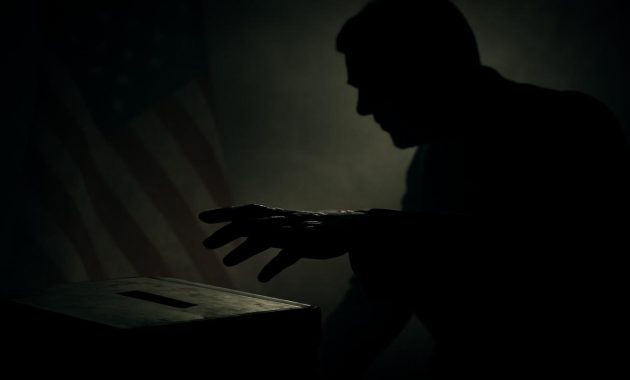
The first time I heard a county elections clerk whisper that she was afraid to go to work, it was a bright October morning, leaves brittle underfoot, campaign signs rattling in the wind. She spoke softly, as if the trees themselves might be listening. “I’ve done this job for twenty-two years,” she said, fingers wrapped around a cooling paper cup of coffee. “I’ve never once worried that a president might try to use my little office to hold on to power.” She looked up, eyes rimmed with sleeplessness. “Until now.”
A Low Hum of Fear in a High-Stakes Season
Across the United States, from dusty town halls in Arizona to fluorescent-lit counting rooms in Pennsylvania, that same uneasy whisper has become a kind of national background noise. People are talking lower, watching more closely, checking back doors twice before locking up the ballot vault. The 2020 election ended, but its echo never stopped reverberating. It now rolls into another season: the midterms, those off-year contests once considered sleepy, procedural, almost boring.
Only they don’t feel boring anymore. They feel electric and flammable, like a dry forest waiting for a single match.
Former President Donald Trump is not on the ballot, yet in another sense he is everywhere on it. His endorsements, his rallies, his incessant claims of a stolen election—debunked in courts, audits, and recounts—form the weather system around this year’s races. He wants loyalists in secretaries-of-state offices, on county canvassing boards, in state legislatures that certify results. He doesn’t talk about quietly stepping aside if his favored candidates lose. He talks about “stopping the steal” again, preemptively, as though the next election can only end one of two ways: in victory or in proof of conspiracy.
It is this push for control—not just of voters, but of the machinery that counts their voices—that has seasoned officials and new volunteers alike glancing over their shoulders, wondering how fragile our routine of peaceful elections really is.
The New Ground Game: Power Over Process
On a recent evening in a converted strip-mall church somewhere in the Midwest, the fluorescent lights hummed and folding chairs squeaked as they filled. The event flyer called it a “patriot training” for election integrity. Inside, the tone was less civic seminar and more battle briefing. A local activist cued up videos of Trump rallies. Another speaker talked about how school boards, city councils, and election offices were “ground zero in the war to save America.”
America has seen fierce partisanship before. What feels different now is the deliberate targeting of the gears and levers themselves—the people who design ballots, buy machines, open mail-in envelopes, and tabulate results late into the night. The push is subtle in some places, blunt in others. Retiring officials are replaced by open partisans who parrot Trump’s false narratives. Rules are rewritten. Emergency powers to reject results are floated casually, like trial balloons.
The goal is not just to win votes. It’s to hold veto power over the counting of those votes if they don’t go the “right” way.
Trump, whose political survival has always depended on spectacle and loyalty, understands something basic about American elections: most people never see how they actually work. The process happens in back rooms lit by bad coffee and overworked staff, governed by state codes few bother to read. It’s invisible. And what’s invisible can be reimagined and recast—in speeches, in social media posts, in cable monologues—as corrupt, rigged, and ripe for takeover.
At rallies, he paints a picture of heroic patriots infiltrating a crooked system—from precinct volunteers to statewide officials—imbuing routine jobs with a revolutionary glow. To those already convinced the last election was stolen, this is not a normal political movement; it’s a rescue mission.
The Pressure Cooker on Local Officials
For the people actually running elections, though, heroics still look like recalibrating scanners and triple-checking signature matches. They are being squeezed between the dizzying technicalities of their work and a rising tide of anger from outside.
There’s the Georgia elections worker who received threats against her children after a conspiracy theory video singled her out. The Arizona volunteer who found his license plate number posted online. The Pennsylvania county supervisor whose voicemail filled with promises that “we know where you live” after he certified a result that Trump didn’t like.
These stories are not anomalies. They are becoming a pattern, a grim soundtrack. Every call to “take back our country” from imagined thieves can land, in practice, on the shoulders of a clerk who has never once asked how a ballot will affect their own job security. Many are quitting rather than live under that pressure.
Vacancies don’t stay empty. They attract a new kind of candidate: people who run on a platform of refusing to certify any result they define as suspicious—a category that increasingly seems to mean “any result in which our side loses.” In some races, Trump personally anoints these would-be gatekeepers, praising their “courage” to ignore norms that once guided both parties.
The effect is cumulative, like erosion. One flood doesn’t reshape a coastline; many do. One election cycle of intimidation and replacement might not break the system. But what about two, or three, with escalating rhetoric and growing experience at exploiting every crack?
The Authoritarian Drift: When Losing Stops Being an Option
Democracy, for all its rituals and pomp, has always rested on one radical agreement: sometimes your side loses, and you live with it. You regroup, re-argue, organize, vote again. There’s a humility baked into that bargain, a recognition that no faction—no movement, no leader—has a permanent claim on power.
Authoritarian politics reject that humility. They insist that certain leaders embody the “real” nation in such a pure and permanent way that their defeat can only be explained by cheating, betrayal, or foreign plots. Losing becomes metaphysically impossible; therefore, the system must be rigged whenever results go the other way. Once that story takes hold, the logical conclusion is that the system must be changed until it can never again deliver the “wrong” outcome.
Watch Trump’s words closely and you can see this logic hardening. When he speaks of elections, it is rarely as uncertain contests of ideas and more as tests of loyalty—of judges, of legislatures, of bureaucrats. Who will stand up for him if the numbers go the wrong way? Who will courageously reject the tallies, raise objections, find “new” votes, pressure canvassing boards, or demand do-overs?
What was attempted clumsily in 2020—a flurry of lawsuits, pressure campaigns on state officials, an incitement of a crowd that surged into the Capitol—is being refined into something more systematic for future elections. Instead of improvising chaos after losing, the strategy now is to pre-position people and policies that will make subversion smoother, quieter, and more legal-looking if the moment comes.
From Fringe Anxiety to Democratic Crisis
Not long ago, fear that a president might try to cling to office despite losing was the stuff of speculative novels, not staff meetings in county election offices. Yet many of those meetings now include security briefings, contingency plans, legal hotlines. Poll workers get training not only in how to handle malfunctioning machines but how to respond if a group of angry observers starts shouting “Stop the count!” from the hallway.
This is what a democratic crisis looks like in its early stages: not tanks in the streets or decrees dissolving legislatures, but quiet recalibrations of what everyone expects in November. The bar keeps moving. A president publicly pressuring state officials to “find” votes is shocking once; by the third or fourth time we hear about similar pressure, it’s background noise.
The midterms have become a testing ground—a dress rehearsal for how far a leader and his movement can push the line without triggering a full institutional backlash. If attempts to meddle with certification, to intimidate workers, or to cast doubt on unfavorable races succeed or go unpunished, the lesson will be clear: next time, they can push harder.
The paradox is that many Americans feel exhausted by politics at precisely the moment when attention is most needed. The pandemic, economic uncertainty, social media overload—all of it combines into a fog of fatigue. When you’re worn out, the promise of a strongman who says “I alone can fix it” sounds, to some, like a relief rather than a threat. That’s how authoritarian surges often arrive: not with chest-thumping alone, but with a seductive promise to end the chaos they themselves have stirred.
Midterms as a Fault Line
The midterm elections used to be described in horse-race terms: which party will gain seats, how many incumbents will fall, what it means for the next presidential cycle. This year, the usual metrics feel strangely inadequate, like counting raindrops while missing the approaching flood.
Every ballot measure, statehouse race, and county-level contest now contains a quieter, more unsettling question: will the people who emerge on top accept the basic rules of the game next time? Or will they rewrite the rulebook in ways that favor one man and one movement, chipping away at the principle that voters choose leaders, not the other way around?
Here is what is on the line: secretaries of state who could refuse to certify results they dislike; governors who might sign laws giving legislatures the power to seize control of electoral slates; down-ballot officials who could slow-walk counts in certain precincts while amplifying unverified allegations in others. Any one of these actions, on its own, might seem technical, boring, or easily dismissed. Taken together, they represent a toolkit for bending future elections toward predetermined outcomes.
Consider how these pressures intersect at different levels of government:
| Level of Power | Key Role in Elections | Potential Point of Subversion |
|---|---|---|
| County & Local | Staff polling places, count ballots, certify local results | Refusing to certify totals, “losing” ballots, intimidating workers |
| Statewide Officials | Oversee statewide counts, certify results, manage recounts | Blocking certification, launching bad-faith audits, changing rules midstream |
| Legislatures | Write election laws, draw districts, set certification procedures | Empowering themselves to override results, stripping powers from neutral officials |
| Congress | Count electoral votes, resolve disputes in presidential races | Objecting en masse, attempting to discard legitimate state results |
In a healthy democracy, these levels serve as checks on one another. In an authoritarian drift, they become a ladder, each rung staffed with allies ready to pull the rope in the same direction.
The Explosive Mix of Fear and Denial
There’s another, quieter dynamic at play: the gap between what many officials privately fear and what they are willing to say out loud. In closed-door conversations, judges, election administrators, and even some members of Congress will concede their anxiety. They talk about “stress tests,” about “constitutional gray zones,” about the alarming number of candidates openly unwilling to commit to accepting future results.
But in public, the tone often softens. No one wants to sound alarmist. No one wants to be accused of partisan hysteria. So the language gets smoothed out: “institutional challenges,” “heightened tensions,” “renewed scrutiny.” Meanwhile, those stoking distrust are anything but gentle in their wording. They talk of “traitors,” “rigged outcomes,” “war for the soul of America.”
That asymmetry matters. Fear, left unspoken by those who hold responsibility, doesn’t disappear; it curdles into denial. Regular voters, trying to interpret the moment, can swing between complacency—“If it were really that bad, someone would say so”—and fatalism—“It’s all corrupt anyway; nothing I do can help.” Both responses feed the same outcome: fewer engaged citizens, more room for extremists to shape the process.
In that silence, a darker question grows: how much damage can be done to a democracy before it stops recovering between cycles? No one can draw that line with precision, but many can feel us walking toward it.
What It Feels Like on the Ground
If you step inside a county elections office a few weeks before Election Day, it doesn’t look like a battlefield. It looks like a cluttered classroom crossed with a post office: stacks of envelopes, cardboard boxes of forms, whiteboards scrawled with color-coded schedules. Someone is always hunting for a missing stapler. Someone is always explaining, for the fifth time in an hour, how to properly seal a mail-in ballot.
The sensory details are ordinary: stale coffee, humming printers, the faint chemical tang of disinfectant wipes. The extraordinary thing is the purpose of all this mess: to translate human preference into legitimate power, peacefully. Every bubble filled in, every signature scribbled, is a tiny act of faith that this translation is possible and will be honored.
Now add Trump’s push for election power to that room. Suddenly, observers dialing in from outside counties, livestreams set up in corners, stern letters from partisan lawyers requesting access to “all logs and communications.” Workers who once worried about paper jams now worry their faces will be splashed across conspiracy websites. A wrong move with a ballot tray could be edited into a viral clip claiming fraud.
Talk to these officials and you hear something poignant: they are not asking for glory. They are asking to be left alone to do a boring, essential job. They want the noise turned down, the threats dialed back, the public to remember that most of them are neighbors, not villains. “I just want to go back to arguing about where to put the voting booths,” one clerk joked, then didn’t quite manage to laugh.
It’s easy, from a distance, to speak about “democratic resilience” in abstract terms. Up close, resilience looks like tired people showing up for another 14-hour shift even after someone screamed at them in the grocery store. It looks like a Republican county official telling a furious Trump supporter: “I voted for him. I still won’t lie for him.” It looks like an independent voter signing up as a poll worker for the first time just to see the process with their own eyes.
If This Is a Crossroads, Which Way Do We Turn?
The story of this moment is not finished. It is being written—in statehouses and school gyms, in courtrooms and community centers, in living rooms where families argue over cable news and in quiet walks where neighbors decide whether to talk about politics at all.
Trump’s push for greater influence over the nuts and bolts of elections has already changed the landscape. It has injected fear into jobs that were once invisible, emboldened a new class of candidates willing to treat democratic norms as optional, and normalized the idea that losing can always be rebranded as theft. That is the authoritarian surge many analysts warn about: not an instant coup, but a creeping recalibration of what counts as acceptable behavior by those who seek power.
Whether this surge crests or deepens into a full democratic crisis depends on choices that seem, at first glance, small. Do you vote in a midterm you once would have skipped? Do you ask local candidates whether they will honor results regardless of who wins? Do you pay attention to the folks running for offices you used to ignore—secretary of state, county supervisor, election board member?
Democracy has never simply been about who occupies the highest office; it’s about whether the loser of an election can walk away, plan their next campaign, and trust that the rules will be the same next time. If that trust erodes, we will feel it long before we see it formally declared. We will feel it in the hush of election offices, in the tremor of a clerk’s hands as they open a ballot, in the way neighbors talk—or choose not to talk—about November.
Standing outside that courthouse on a chilly autumn evening, watching a line of voters coil around the block under a fading sky, you can almost feel the tension in the air. Each person shuffles forward, hands in pockets, breath clouding. The door opens and closes. Somewhere inside, machines whir, pens scratch, forms shuffle. An old ritual continues under new strain.
The question hovering above that line, above this midterm season, is stark and simple: will we allow one man’s refusal to lose to rewrite the meaning of all those quiet, hopeful steps toward the ballot box? Or will we insist—calmly, stubbornly, together—that in this country, power still changes hands because the people say so, not because a leader clings tightly enough to the levers?
FAQ
Why are experts worried about Trump’s influence on the midterms?
Experts are concerned because Trump is focusing not only on helping certain candidates win, but on placing loyalists in positions that control how elections are run and certified. That raises the risk that future results could be challenged or manipulated from within the system, especially if races are close.
Is there evidence that U.S. elections are broadly fraudulent?
No. Numerous audits, court cases, and investigations after the 2020 election found no evidence of widespread fraud that could have changed the outcome. While small irregularities happen in any large system, the overall integrity of U.S. elections has been repeatedly confirmed by bipartisan officials.
What does “subverting an election” actually look like in practice?
Subversion can take many forms: refusing to certify legitimate results, pressuring local officials to “find” votes, spreading false claims to justify audits or delays, or changing laws so that partisan bodies can override popular vote totals. It often looks bureaucratic rather than dramatic—but the impact can be profound.
Are all Trump-endorsed candidates threats to democracy?
Not necessarily. Some endorsed candidates accept the legitimacy of past elections and commit to following the rules. The concern centers on those who deny verified results, refuse to say they will accept future outcomes, or openly support giving politicians more power to overturn votes.
What can ordinary voters do to protect democratic norms?
Voters can research down-ballot candidates, especially those overseeing elections; support officials who commit to fair processes; volunteer as poll workers or observers; and stay engaged even in off-year and local races. Speaking up calmly against false claims in personal circles also helps slow the spread of misinformation.