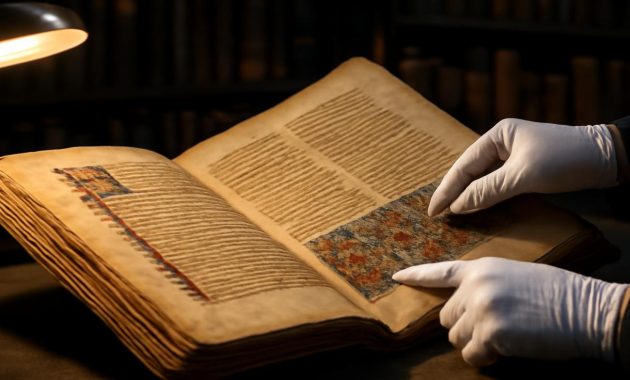
The first thing that hits you is the soundscape. Not the clash of swords or the thud of siege engines you half-expect from the Middle Ages, but the scratch of quills on parchment, the shuffle of boots on damp stone, the soft crackle of wax seals. Imagine standing in a chilly 14th-century chamber as a clerk leans over a heavy wooden table, dipping his quill into dark ink, turning lived days into lines and numbers. He is not thinking of us. He is thinking of pay, rations, horses, names. Yet seven centuries later, those same lines have slipped free of the dim room and spilled into the bright, humming servers of a modern database. And suddenly, the lives of English soldiers long buried under soil and myth feel startlingly alive.
The Archive That Time Forgot
For years, historians knew these records existed. Rolls of parchment—pay lists, muster rolls, administrative accounts—were tucked into archives in London, Kew, and other repositories, their edges browned and their ink fading, but stubbornly legible. They documented the armies of medieval English kings between the late 13th and early 15th centuries: the age of Edward I, Edward III, the Black Prince, and Henry V. It was a time of campaigns in Scotland, Ireland, Wales, Flanders, Gascony, and, most famously, France.
On the face of it, they were dull documents. Not chronicles of glory, but spreadsheets in ink: soldiers’ names, captains, wages, how long they served, and where. For centuries, they were used sparingly, like reference books no one quite wanted to read cover to cover. Then someone had the idea—what if we didn’t just sample them? What if we digitized them all?
The result is a vast, searchable database of medieval English soldiers. It looks, at first glance, oddly modern: fields, filters, entries that can be sorted and counted. Yet each row hides a life once lived in mud and steel and fear. Where once you would have to coax facts from curling parchment with careful fingers, now you can tap a keyboard and pull up the service record of a man who rode with Henry V to Agincourt or trudged with Edward I into the wild borderlands of Scotland.
But the real magic is what happens when you stop looking at individual names and start seeing patterns. When the database starts whispering about what soldiers were actually doing, day after day, year after year—not just in our legends, but in the messy, unromantic reality of medieval war.
Beyond the Battlefield: The Work of War
Ask most people what English soldiers did in the Middle Ages, and they will say “fight.” It sounds obvious. Battles like Crécy, Poitiers, and Agincourt loom large in schoolbooks and national memory: banners snapping in the wind, lines of archers, knights in shining armor, the roar of cavalry charges. But the database tells a quieter, more complicated story.
First, it reveals something sobering: actual pitched battles were rare. When researchers charted the service periods of tens of thousands of men, they found long stretches of time with no famous clashes at all. Armies marched, positioned, waited, negotiated… and waited some more. The bulk of a soldier’s life was not the moment of impact, but the long grey in-between.
Those in-between days were full. Medieval armies were less like wandering mobs and more like moving ecosystems that needed constant maintenance. Soldiers dug trenches and earthworks. They repaired roads and bridges so supply wagons could pass. They garrisoned half-ruined castles and windswept outposts, where the wind whistled through arrow slits and boredom threatened to undo discipline.
The database tracks when individuals served in particular campaigns—sometimes over years. Taken in aggregate, they show that many men spent far more time guarding captured towns, escorting convoys, and intimidating local populations than they ever did facing an enemy across a battlefield. War, it turns out, looked a lot like work: repetitive, logistical, often tedious work punctuated by moments of terror.
It also shows the rhythms of seasonal campaigning. You can almost feel the weather in the data. Service spikes in spring and summer when roads are passable and forage is available. It dips in winter when mud and cold make movement expensive and difficult. The database reads like a year’s breathing: expansion and contraction, marches and winter quarters, advance and uneasy rest.
Who Were These Men, Really?
When you zoom in on a single name, the Middle Ages abruptly lose their blur. You might find “John atte Wood,” an archer listed under the retinue of a minor knight. Next to him, “William Carter,” a man-at-arms whose name hints at craft or trade. Peer through the screen and you can almost see their faces: not anonymous warriors, but butchers’ sons, small landholders, perhaps a runaway apprentice or two, all bound together by pay and promise.
One of the database’s most striking revelations is just how many of these men were not noble. The chivalric tales dwell on knights with ornate heraldry and long genealogies, but the army rosters show something closer to a corporate structure. At the top: lords and knights, contracted directly by the king. Beneath them: their retinues—men-at-arms and archers, sometimes dozens, sometimes hundreds, rallied under familiar banners.
There is a stark honesty in the pay columns. Knights earned more; men-at-arms less; archers less still. Yet the sheer number of archers on the rolls undercuts any fantasy of war as purely elite combat. It was the drawn bow, not the shining spur, that defined many English campaigns. Names recur over multiple years, suggesting seasoned professionals: career soldiers moving from one expedition to the next, accumulating scars and stories while the chroniclers were busy describing their lords.
And then there is the geography on the page. The database often records where captains and soldiers came from. Clusters emerge: men from Cheshire serving together in Wales, veterans from the Welsh Marches fighting in France, coastal communities supplying sailors and archers for campaigns overseas. You begin to sense local cultures of warfare, places where boys grew up watching their fathers march off, where war was not an exceptional event but a recurring season like harvest.
| Soldier Type | Typical Role | Features in Records |
|---|---|---|
| Knight | Leads retinues, heavy cavalry, command roles | Higher daily pay, titled names, often recurring across campaigns |
| Man-at-arms | Armored infantry or mounted fighters | Listed under captains, middle-range wages, frequent re-enlistments |
| Archer | Longbow or crossbow specialists | High numbers, modest pay, local clusters visible by origin |
| Garrison Troop | Castle and town defense, policing duties | Long service spans in one place, fewer campaigns but steady employment |
Every line in that table can be traced to lives half-glimpsed through the database: a knight juggling politics and patronage, a man-at-arms whose armor bears dents from three campaigns, an archer whose fingers are permanently grooved from the bowstring, a garrison soldier who knows every stone in the town walls by touch.
Following the Money and the Marches
If you want to know what soldiers were really doing, follow the money. The database is built on financial records: musters taken so that the Crown could pay its men (or, not infrequently, fall behind on paying them). This yields an almost forensic timeline of movement and activity. Mustered in England in May; serving in Gascony by late summer; discharged in the chill of November. It reads like a travel log scrawled in royal ink.
Patterns begin to surface. Some men appear, vanish, and never return. Perhaps they died abroad or drifted back into local anonymity. Others are almost constant presences, hopping from Scotland to Flanders to Aquitaine as if war were a circuit. Their careers show that medieval soldiering could be, in its own brutal way, a profession—one that turned the map of Europe into a workplace.
The database lets historians test old assumptions. How big were medieval armies, really? The inflated figures in some chronicles shrink to more plausible sizes when measured against surviving rolls. How long did campaigns actually last? Sometimes far longer than the single season we imagine—especially in sieges, where months could blur into years of stalemate, sickness, and strained supply lines.
Look closely enough, and you see the hidden labor behind every military success. A swift chevauchée—those infamous mounted raids ravaging enemy countryside—only looks effortless from a distance. The rolls show the need for farriers, wagoners, and drovers, all folded into service lists. Horses had to be fed and shod, carts repaired, fodder gathered. War was not simply a clash of wills; it was a constant struggle to keep men and animals moving, fed, and vaguely healthy.
In that sense, the database quietly disassembles the clean lines of our war stories. Victories start to look like the final, visible tip of a vast submerged pyramid of organization and endurance. For every man who charged on a battlefield, dozens spent weeks just getting him there with enough energy left to fight.
Soldiers, Subjects, and Strangers
Now and then, an entry in the database startles. A name that is not obviously English, a hint of foreign birth or identity. Medieval armies were more cosmopolitan than we often acknowledge. The rolls reveal Welsh archers alongside English men-at-arms, Gascon knights serving an English king by virtue of his holdings in France, even the occasional soldier with a name hinting at distant origins. War blurred lines of language and loyalty, especially on frontiers where English, French, Welsh, Irish, and Scots identities collided.
Service records also reveal the fraught relationship between soldiers and civilians. Many men returned repeatedly to the same regions on campaign—Normandy, Brittany, the Scottish lowlands—places where the local population might begin to recognize the rhythms of English military presence: tax collectors, billeted troops, requisitioned supplies, and the spike of fear when banners appeared on the horizon.
Garrison lists show another side of this: the soldier as occupier and neighbor. Men stationed for months or years in captured towns did not simply hover in a state of abstract war. They bought food in markets, drank in taverns, fathered children, and quarreled with locals. The database can’t tell us what was said in those quarrels or how affection and resentment intertwined in those streets, but it can mark the fact of cohabitation. It captures, in cold columns, the warm mess of entangled lives.
Strip away hindsight and national boundaries, and you see individuals navigating a world in which serving the king might also mean speaking a second language, courting a local, or learning to live among strangers who eyed your sword with complicated feelings. The database does not romanticize this; it simply lays the evidence bare and invites us to imagine the human texture behind it.
War Stories Hidden in the Gaps
The seduction of a large dataset is its apparent completeness. So many names, so many dates, so many lines marching neatly downward. It is easy to forget how much is missing. The database, for all its power, is a record of formal service. It is not a diary. It cannot tell us what a soldier whispered to himself on a sleepless night or what he feared most as the sea crossing loomed.
But it can point to the gaps, and in those gaps, stories take root. A man appears for three campaigns, then vanishes. Did he die from disease, battlefield wounds, or the long, grinding toll of marching boots and bad food? A surge of new recruits from a single county coincides with a bad harvest. Were men drawn by wages they needed to keep their families afloat, or pushed by hunger at home? The database does not answer; it asks, insistently.
Even silence is telling. Not every soldier who fought appears in the rolls we still have. Paper burns, ink fades, chests of documents are lost to carelessness or catastrophe. What we see is impressive, but it is still a fragment. Recognizing that fragility makes each surviving entry feel less like a statistic and more like an improbable survivor—one name that slipped through centuries of risk to land on your screen.
And that, perhaps, is the database’s most surprising gift. By stripping away cinematic legend and giving us the accounting bones of war, it paradoxically makes medieval soldiers feel closer and more real. You learn not only that they fought, but that they waited, worried over wages, reenlisted, deserted, or settled. You see patterns of human behavior that feel familiar across time: the search for income, the pull of comradeship, the hope that a risky venture abroad might improve a life at home.
Reading the Middle Ages Through a Digital Lens
It may seem strange that one of our most evocative windows into the emotional landscape of medieval war is a modern digital interface. Cold numbers, tidy filters, export options—hardly the stuff of romance. Yet when you move through the database with a little patience, its chill surface peels back.
Picture scrolling through a list of archers mustered for a campaign in 1415. The names blur, and then one catches your eye because you recognize it from a schoolbook tale of Agincourt. That man—real, paid, counted—stood in the rain somewhere along a muddy French field. Around him, the others whose names did not make it into legend drew their bows with the same wet, aching fingers. The database cannot give you their thoughts, but it can give you their presence.
What English soldiers were really doing in the Middle Ages, the database insists, was living entire lives within and around war. They were working: marching, guarding, hauling, building, repairing. They were negotiating: with weather, with hunger, with commanders, with their own fear. They were making choices: to sign up again, to stay home, to desert, to follow a captain they trusted into yet another risky venture overseas.
In the end, the database’s greatest revelation might be its quietest. It shows that medieval war was not a series of isolated, glorious episodes but a long, exhausting process woven deep into the fabric of everyday life. It was a job, a fate, a gamble. And the men who bore it were not abstractions in armor; they were individuals whose names have come back to us, one line at a time, across seven hundred years.
Frequently Asked Questions
What period of the Middle Ages does this database mainly cover?
Most of the surviving records, and therefore most entries in the database, focus on the late 13th to early 15th centuries—roughly from the wars of Edward I through the early stages of the Hundred Years’ War and into the era of Henry V.
Were all English soldiers in the Middle Ages professional warriors?
No. While some men built long careers by serving in multiple campaigns, many others were part-time soldiers or temporary recruits. They might have been farmers, craftsmen, or small landholders who took up arms for a specific expedition and then returned home.
Does the database include only knights and nobles?
Not at all. It lists large numbers of archers, men-at-arms, and garrison soldiers from non-noble backgrounds. Knights and lords appear as captains and commanders, but the rank-and-file make up the bulk of the entries.
Can the database tell us how soldiers felt or what they believed?
Directly, no. It records service, pay, units, and sometimes place of origin, not emotions or opinions. However, by analyzing patterns—such as repeated reenlistment or concentrations of recruitment in certain regions—historians can make informed interpretations about motivations and experiences.
Why is this kind of database important for understanding medieval history?
It shifts our view from a handful of famous battles and noble figures to the everyday reality of warfare as experienced by thousands of ordinary people. By making large quantities of data searchable, it allows historians to discover patterns that would be invisible in scattered parchment rolls, revealing how deeply war shaped medieval society.