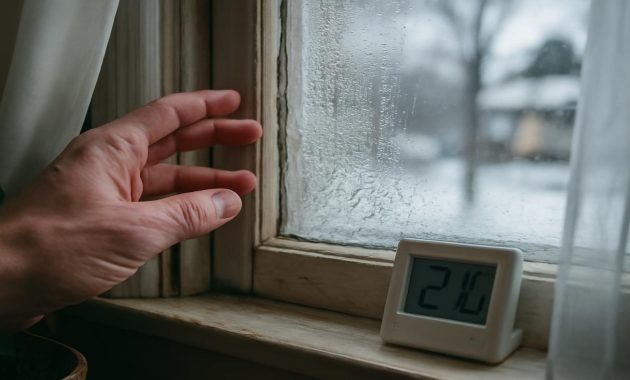
The kettle clicks off with a soft sigh, and you wrap your fingers around the mug, expecting that familiar wave of warmth to follow you from the kitchen to the couch. The thermostat on the wall glows confidently: 21°C. That is supposed to be comfortable. Officially “room temperature.” But when you sink into the cushions, a small shiver runs up your arms. The air feels sharper than it should, your toes complain against the floor, and you find yourself tugging the blanket higher, glancing suspiciously at that unwavering 21°C display.
If you’ve ever stood in the middle of your living room, wrapped in a sweater, wondering why your bones still feel cold while the thermostat insists you’re fine, you’re not alone. The mystery isn’t that your home is lying to you—it’s that your body is hearing a different story than your heating system is telling.
The Hidden Temperature Your Body Actually Feels
There’s a quiet, invisible conversation going on in every room you walk into. On one side, there’s the air temperature: what your thermostat measures and displays in confident, glowing numbers. On the other, there’s something far more subtle—what your body actually feels, shaped by surfaces, materials, and movement you barely notice until you start to shiver.
Stand near a big window on a winter evening, even if it’s double-glazed. The air around you might still technically be 21°C, but the glass itself is much colder. Your face and hands radiate heat toward that chilly surface, and in return, you sense cold—not because the room’s air changed, but because your body is losing warmth to the environment.
This is called mean radiant temperature, and it might be the most important kind of “temperature” you’ve never heard of. While thermostats track air temperature, your body responds to both air and the temperature of surrounding surfaces: walls, windows, floors, furniture. If those surfaces are cold, your body bleeds heat toward them like a slow, silent leak.
You may have experienced this in another way: walking into an old stone church in summer. The air might be pleasantly cool, but the stone walls and flagstone floors feel almost icy. You lower your voice, your arms fold across your chest, and a tiny chill blooms under your skin. The air isn’t that cold—but the surfaces, and how they absorb your body heat, make you feel as if you’ve stepped into a refrigerator.
The Quiet Thieves of Warmth in Your Home
In a modern home, the same quiet theft of warmth happens constantly—and not just through windows. It happens through everything that separates you from the outdoors. That plaster wall behind your couch? On the other side might be a winter night pressing inward. The floor beneath your feet? It might be sitting above an unheated basement or a crawl space breathing in the cold.
You don’t see this, but you feel it as a slow, diffuse chill—especially in certain spots. That one corner of the room that never feels quite right. The draft you can’t identify but swear is there. The chair you gradually avoid in January because it “just feels colder” than the rest of the room. These aren’t your imagination; they’re the places where your body is quietly losing the warmth it’s trying so hard to hold.
Even tiny air leaks, the kind that slip in around an outlet on an exterior wall or sneak under a poorly sealed door, can make your home feel colder than the thermostat suggests. Your skin picks up these microcurrents long before a digital sensor on the wall does. Air brushes against your ankles. Your wrists feel exposed. You might even move to a different seat without fully realizing why.
And then there’s the floor. Especially if it’s uninsulated or covered in hard materials like tile or stone, the surface can sit several degrees cooler than the air around it. Your feet, rich with nerve endings and blood vessels, report this difference immediately. So even when the thermostat is showing a polite 21°C, your nervous system is muttering, This floor feels like 17°C, and your whole sense of comfort is dragged down with it.
The Science Behind “Why 21°C Doesn’t Feel Like 21°C”
Our bodies judge comfort with a kind of internal calculus that never stops. It weighs air temperature, humidity, drafts, radiant temperatures, and even what you’re wearing. When those inputs don’t add up quite right, 21°C on paper might feel like 18°C in your bones.
What our bodies seem to crave isn’t a single perfect number, but a balance—a space where the air is warm enough, the surfaces aren’t stealing heat, and the air movement is gentle. Buildings scientists call this thermal comfort, but to your body, it’s simply: Do I feel okay right now?
Surprisingly, your personal comfort band is usually a zone, not a fixed point. It might be something like: “If the air is around 20–23°C, surfaces are close to that, humidity isn’t too dry, and I’m wearing a sweater, I feel good.” That’s why the exact same thermostat setting can feel fine in one home—and miserable in another. It’s not really the number on the wall. It’s everything wrapped around it.
To see how this plays out in everyday life, imagine two houses on the very same street, both set to 21°C:
- House A is well insulated, with triple-glazed windows and warm wood floors over a heated space. The walls and windows sit close to the air temperature. When you walk in, the room feels still, mellow, and enveloping.
- House B has older single-glazed windows, patchy insulation, and a tile floor above an unheated basement. The air may be 21°C, but the window glass and floor are several degrees cooler, and there’s a faint draft near the back door. You walk in and pull your sweater tighter.
Same thermostat. Completely different experience.
How Different Factors Shape How Warm You Feel
Here’s a simple way to visualize what your body is quietly noticing when you say, “It just feels cold in here.”
| Factor | What Your Thermostat Sees | What Your Body Feels |
|---|---|---|
| Air temperature | 21°C – job done | “Feels okay… if everything else agrees.” |
| Radiant surfaces (walls, windows, floors) | Often ignored | “Those cold windows are drinking my heat.” |
| Drafts and air movement | Barely noticeable indoors | “There’s a chill around my ankles.” |
| Humidity | Almost never measured | “Dry air makes 21°C feel like 19°C.” |
| Clothing and activity | Not part of the equation | “Sitting still in a T-shirt? Need more warmth.” |
Once you see all these layers, the thermostat number starts to look less like a verdict, and more like a single line in a complicated story.
The Subtle Role of Humidity and Air Movement
There’s one more pair of quiet actors in this story: humidity and air movement. They’re easy to overlook—there’s no bright screen on the wall announcing your living room humidity—and yet they deeply influence how you experience 21°C.
In winter, indoor air often dries out as heating systems run. You might notice it as static shocks, dry hands, or a sore throat in the morning. But dry air also increases the rate at which moisture evaporates from your skin. Every tiny bit of evaporation carries heat away from your body, subtly cooling you. So a room at 21°C with very dry air can feel cooler than the same room with a gentle, comfortable level of moisture.
Then there’s motion. Even the slowest stream of air across your skin increases heat loss. That’s why a breeze on a mild day can feel chilly, and why a fan can make a warm room feel bearable. Indoors in winter, small drafts can have the same effect in reverse: they can make a room feel colder even if the overall temperature hasn’t changed at all.
Sometimes, the draft isn’t from outside at all, but from the way warm air rises and cold air sinks inside your home. If your feet are perpetually cold while your head feels fine, you might be living in a small indoor weather system, with a layer of cooler air pooling near the floor and warmer air ignored near the ceiling.
How to Make 21°C Finally Feel Like 21°C
The solution to a cold-feeling home doesn’t always mean cranking the thermostat up a few more degrees and bracing yourself for the heating bill. Often, it’s about nudging your environment so that your body’s different “thermometers” all point roughly in the same direction.
Some of the most effective changes aren’t flashy. You might never see them in a glossy renovation photo, but your body will feel them immediately.
Warm the Surfaces, Not Just the Air
- Use thick curtains at night. Closing heavy, lined curtains over windows after sunset slows the radiant heat loss from your body to that cold glass. It’s like wrapping a scarf around the bare neck of your home.
- Lay down rugs on hard floors. A simple rug over tile or uninsulated wood changes how your feet experience the entire room. The rug doesn’t just feel softer; it also interrupts heat loss to the cold floor beneath.
- Rearrange your furniture. Moving a favorite reading chair away from an exterior wall or large window can instantly change how that corner feels, without any change to the thermostat.
Soften the Drafts and Balance the Air
- Seal the little gaps. Foam gaskets behind outlet covers on exterior walls, weatherstripping around doors, and simple draft stoppers can take the sting out of mysterious cold spots.
- Aim for gentle, not gusty. If you use fans or forced-air heating, adjust vents or fan speed so the air mixes without constantly blowing across where you sit.
- Even out the room. Sometimes a slow, low fan in reverse mode can push warm air from the ceiling downward in winter, smoothing out that floor-to-ceiling temperature difference.
Pay Attention to Humidity
- Consider a humidifier in very dry climates. Modest humidity (often around 40–50%) can make a room at 21°C feel more comfortable and less “brittle.”
- Avoid going too high. Excessive humidity brings its own problems, like condensation and mold; the goal is gentle moisture, not a tropical greenhouse.
Dress for the Reality, Not Just the Number
There’s a quiet cultural idea that a “proper” home should feel warm enough for short sleeves in midwinter. But your body is part of the system too. A cozy sweater, thick socks, or slippers are not a failure of your heating—they’re a way of shifting your comfort band without forcing your boiler or heat pump into overdrive.
In some of the most energy-conscious countries, it’s completely normal to keep indoor temperatures a little lower and simply wear warmer clothing in winter. Comfort lives in the balance between the environment and your body, not in a single uncompromising number on the wall.
When Your Home Starts to Feel Like a Living Organism
Once you begin to notice all these layers—air temperature, radiant surfaces, drafts, humidity—you may never look at your home the same way again. It stops being a static box with a thermostat and becomes something closer to a living organism, with warm and cool currents, internal weather patterns, and subtle exchanges of heat and air.
On a cold evening, you might find yourself gravitating toward the interior of the house, where the walls feel gentler. You’ll notice the way sunlight streaming through a window in the morning doesn’t just brighten the room; it gently warms the surfaces it touches, making that corner feel softer and more inviting without altering the thermostat at all.
And maybe, as you wrap your hands around that mug of tea, you’ll look at the thermostat differently. Instead of wondering why 21°C isn’t doing its job, you’ll start listening to the other, quieter signals in the room—the coolness of the wall behind you, the faint brush of air near the door, the bite of the floor through thin socks.
Because the surprising truth is this: your house was probably never “lying” to you about being 21°C. It was just speaking a language your thermostat doesn’t fully understand yet—one of radiant warmth and quiet drafts, dry air and cool surfaces, of how space actually feels on skin and bone.
Comfort, it turns out, is a story written not only in degrees, but in details.
Frequently Asked Questions
Why does my house feel colder at night even at the same thermostat setting?
At night, outdoor temperatures drop and the surfaces of your home—especially windows and exterior walls—cool down. Your body then loses more heat to those colder surfaces, making you feel cooler, even though the air temperature (what the thermostat reads) hasn’t changed.
Why do my feet feel cold when the thermostat says the room is warm?
Floors, particularly tile, stone, or uninsulated wood, can be several degrees cooler than the air. Because your feet are in direct contact with that surface and have lots of nerve endings, they signal “cold” even in a technically warm room.
Can humidity really affect how warm 21°C feels?
Yes. Very dry air increases evaporation from your skin, which cools you down. A room at 21°C with extremely dry air can feel noticeably colder than the same room with comfortable humidity levels.
Why does sitting near a window make me feel colder?
Windows, even modern ones, are usually cooler than interior walls in winter. Your body radiates heat toward that cold surface, and you sense that heat loss as a chill, even if the air temperature is fine.
Is turning up the thermostat the only way to feel warmer?
No. Improving insulation, adding curtains or rugs, sealing drafts, adjusting air movement, increasing humidity slightly, and wearing warmer clothing indoors can all make you feel warmer at the same thermostat setting—and often more efficiently.