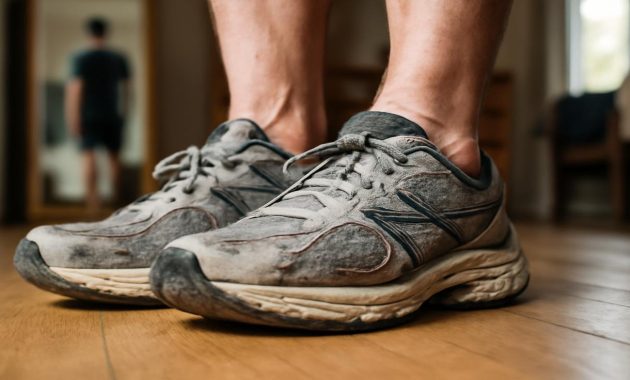
The first thing you notice is the sound. A faint, rhythmic slap as your right heel kisses the pavement just a fraction harder than your left. You don’t think much of it. The street is busy, the air humming with engines and snatches of conversation, the smell of coffee drifting from a corner café. Your steps fall into the city’s everyday music. Yet somewhere between your soles and your spine, something subtle is shifting. The quiet sign your shoes are affecting your posture isn’t a dramatic pain or a sudden limp. It’s softer than that—an ancient body language your feet have been speaking for years, hoping you’d finally listen.
The Tiny Tilt You Don’t Notice (But Your Body Does)
Imagine watching yourself from behind as you walk down the sidewalk. Not the curated version of yourself you see in the mirror, shoulders squared and chin lifted for a second, but the unguarded version: that late-afternoon shuffle on your way home, the slump that arrives somewhere between emails and dinner.
Slow the moment down. Your left foot lands just a little flatter, your right toes grip a bit harder with each push-off. Your hips tilt—a mere millimeter, maybe two. Your spine responds, curving ever so slightly to keep your eyes level with the horizon. Your neck leans forward, your head compensates. By the time you notice anything at all, it shows up as an ache in your lower back or a vague tightness in your shoulders.
We like to blame long hours at the desk or bad sleeping positions, and they do play a role. But the stage for that discomfort is often set much lower, in a place we rarely scrutinize: the quiet landscape inside our shoes.
Your posture does not begin at your shoulders. It begins at the ground. The way your foot meets it—how your shoes shape that contact—creates a chain reaction all the way to your jaw. If the foundation is even slightly off, your body spends the entire day making micro-adjustments. You don’t hear the negotiations, but your muscles do. The quiet sign isn’t always pain; sometimes it’s just that you end each day more tired than makes sense.
The Whisper Beneath Your Feet: How Shoes Nudge Your Spine
Take a moment and remember the last time you walked barefoot on grass. The ground, cool and a little springy. The way tiny twigs and dips in the soil made you place each step with care. Your toes spread, seeking balance. Your arch came alive, a subtle bow of tension and release. Your ankles, knees, and hips made dozens of tiny, elegant decisions with every step.
Now contrast that with slipping your feet into a thick, cushioned shoe. Your brain trusts the padding, so your foot grows a little lazier. The sole widens your base but mutters a quiet lie: Don’t worry about the details; I’ve got this. Over time, muscles built for sensing every grain of sand and patch of uneven earth become underused, like a path in the woods no one takes anymore.
The shoe you wear can:
- Shift your weight slightly forward (think high heels or thick-heeled sneakers).
- Lock your ankle in place, reducing movement and flexibility.
- Change how wide your toes can splay, altering your balance strategy.
- Raise one side of your foot more than the other, affecting your hip height.
Each tiny change asks your posture to adapt. None of this feels dramatic at first. Maybe you notice your calves are always tight. Or that you lean on one leg in line, favoring a side you can’t quite explain. Perhaps your shoulders sit unevenly in photos, one lower than the other. These are the quiet signs—the body’s mounting evidence that something about the way you live inside your shoes doesn’t quite match the architecture it was designed for.
The Quiet Clues: Little Signals Your Shoes Are Rewriting Your Posture
Most posture problems don’t arrive like a thunderclap; they drift in like mist. Your body is astonishingly patient, adapting again and again before it ever raises its voice in pain. That’s why the signs that your shoes are influencing your posture more than you think are often easy to ignore—until you know what to look for.
Stand on a hard floor for a moment and notice:
- The way your weight settles. Do you sink more into your heels or the balls of your feet? Do your arches collapse inward? Do your toes grip the floor?
- The alignment of your knees. Do they cave in slightly toward each other? Or drift outward?
- Your hips and shoulders. Does one side feel higher, tighter, or heavier?
Now think about your favorite pair of shoes—the ones you wear for hours without a second thought. They may be quietly teaching your body to live a little crooked. Here are some subtle, everyday signs that your footwear is steering your posture:
- You consistently stand with more weight on one leg.
- Your lower back feels tired even when you haven’t done anything “strenuous.”
- Your neck and shoulders are tight, especially on one side.
- Your feet ache not at the start of the day, but after hours in one specific pair of shoes.
- Your ankles roll inward or outward when you’re tired, and your shoes reflect that in their wear pattern.
One of the most revealing clues lives in a place most of us never inspect—the underside of our shoes. Your soles quietly record the story of your posture in rubber and foam. A quick glance can be startling.
Reading the Story Written on Your Soles
Pick up a well-worn pair of shoes and turn them over. That pattern of scuffs, smooth patches, and thinning tread is more than just evidence of miles walked—it’s your posture, printed in reverse.
| Wear Pattern You See | What It Might Mean for Your Posture |
|---|---|
| Heels worn down more on one side | You may be leaning or rotating slightly to that side, causing uneven hip and spine loading. |
| Inner edge of sole more worn (especially at the forefoot) | Possible overpronation, which can pull knees inward and affect hip and lower-back alignment. |
| Outer edge more worn | You may be supinating (rolling outward), which can create tension up the outside of the leg and into the hip. |
| Toe area heavily worn, heel nearly untouched | You might be walking on the balls of your feet, pushing your weight forward and shortening your calves and hip flexors. |
| Even, moderate wear across heel and forefoot | Your gait and posture are likely more balanced, with fewer extreme compensations. |
None of these patterns are a diagnosis, but they are a whispered hint: something about the way you stand and move is being shaped by what’s on your feet.
When Style and Comfort Quietly Collide with Alignment
Most shoes are designed for how they look and how they feel for a few minutes, not for how they’ll guide your posture over eight-hour days and thousands of steps. The mischief happens at the intersection of style, comfort, and long-term alignment.
Consider a pair of soft, ultra-cushioned sneakers. Slip them on in the store and your feet feel cradled, your steps muffled. They’re undeniably comfortable. But that generous cushion might be doing something sneaky: dulling your foot’s ability to sense the ground. Your body relies on a constant stream of information from pressure points in the soles. When those signals get muffled, the fine control that keeps your joints neatly stacked is less precise. So your body compensates higher up—tight calves, overworked thighs, a sway in your low back.
Or think of dress shoes and heels. A small heel lifts your weight just enough to pitch your body slightly forward. To keep from falling, you pull your shoulders back and arch your lower back more than you realize. The front of your hips tighten, your glutes turn on differently, your knees shift. Wear that configuration of tension for hours, day after day, and your version of “neutral” posture quietly morphs into something new, something more effortful.
Even “flat” shoes can play a role. Many ballet flats or sandals offer almost no support and a thin, stiff sole. Your toes work harder to keep the shoe from slipping off, gripping on every step. That constant toe clench can create tightness that travels into your arches, calves, and even the base of your spine. Again, the sign isn’t always sharp pain. It might simply be that you can’t stand in line for long without shifting, searching unconsciously for a position that doesn’t feel tiring.
Your Body’s Quiet Coping Strategies
The human body is miraculous in its ingenuity. When shoes nudge it out of alignment, it doesn’t protest right away. It negotiates.
- When your heel is raised, your calves shorten and your pelvis tips.
- When your arch collapses, your knees turn inward and your hips rotate.
- When your toes are squeezed or lifted by a toe box, your balance strategy changes higher up.
You might start locking your knees to feel stable, or thrusting your ribs forward to counter a forward-tilted pelvis. These little coping mechanisms become your new normal. The quiet sign isn’t just the shoes you wear—it’s the way your body has reorganized itself around them.
Relearning the Ground: Small Experiments, Big Clues
If this all feels oddly personal now—if you’re suddenly thinking of that one pair of shoes you love but somehow always feel drained after wearing—there’s good news. You don’t need a lab or a specialist to begin listening more closely to your body’s signals. You can start with simple experiments.
Here are a few ways to let your posture speak up:
- Try the barefoot reset (safely). At home, on a clean, hard surface, stand barefoot for a minute. Notice how your body arranges itself without shoes. Do you feel more or less stable? Do your knees soften or lock? Does your weight naturally shift somewhere new?
- Compare shoe days. Pick two very different pairs of shoes you own: maybe a cushioned sneaker and a flatter, firmer pair. Spend one whole day in each (ideally on similar activity levels) and keep mental notes:
- Where do you feel tired: feet, knees, hips, lower back, shoulders?
- Do you stand differently by the end of the day?
- Do you feel like collapsing into a chair sooner with one pair?
- Watch your reflection in motion. In a hallway mirror or store window, observe yourself walking in slow motion, just for a few steps. Look for:
- Is one arm swinging more than the other?
- Does one hip hike or drop as you step?
- Do your feet land straight, or do they angle inward or outward?
- Check your “rest pose.” The next time you’re waiting—at a bus stop, in a line, at the kitchen counter—notice how you default to standing. Are you always on one hip? Are your toes curled inside your shoes? Are your knees locked?
These tiny investigations are not about judging or criticizing your body. They’re about building a friendship with it, one where you respect the small hints before they become pleas.
Choosing Shoes That Support the Story You Want Your Body to Tell
Once you start noticing how your shoes affect your posture, it’s hard to unsee it. The good part is that every new pair of shoes becomes less of a random purchase and more of a conversation with your body.
When you next shop for shoes, think less about trends and more about alignment. Ask yourself:
- How does my whole body feel when I put these on? Don’t just bounce on your toes. Stand still. Walk a short distance. Feel your lower back, your shoulders, your neck.
- Where does my weight go? Do the shoes tip you forward or backward? Do your toes have room to spread? Can your heel settle without strain?
- Do I feel stable without working hard? Stability should feel quiet, not like a constant effort to keep from wobbling.
Look for features that make your body sigh in relief rather than just your feet:
- A heel that is not dramatically higher than the forefoot.
- A shape that matches your foot (not the other way around).
- Enough flexibility that your toes and arch can move, but not so floppy that your foot has to grip constantly.
- Cushioning that supports, rather than smothers, your sense of the ground.
You don’t need to throw out every pair you own or swear eternal loyalty to one type of shoe. Think of it more like building a diverse “posture wardrobe”—different shoes for different tasks, each chosen with awareness of how they might nudge your alignment. Some days you might accept a trade-off for style or occasion, but you’ll do so consciously, balancing it with more supportive choices the rest of the week.
Supporting Change from the Ground Up
If you suspect your shoes have been quietly reshaping your posture for years, your body might need time to adapt to better choices. Muscles that have been on vacation need a gentle return to duty.
- Start by alternating newer, more supportive or more natural-feeling shoes with your usual pairs.
- Add short bouts of barefoot time at home, on safe surfaces, to wake up dormant foot muscles.
- Practice simple moves: spreading your toes, rolling gently from heel to forefoot, balancing on one leg near a wall or counter.
These small rituals, repeated over weeks, help your posture unwind from old habits and learn new ones. Your body will respond with small but meaningful signals—less end-of-day ache, easier standing, a more relaxed neck. The noise quiets; the alignment under it all grows clearer.
Listening to the Softest Signals
The quiet sign that your shoes are affecting your posture more than you think might not be pain at all. It might be the way you exhale as you finally slip them off at night, the relief flooding through your spine. It might be the way you instinctively rub one arch, or roll an ankle, or stretch your hip without quite knowing why.
Our culture often tells us posture is about willpower—“sit up straight,” “shoulders back,” “stand tall.” But the deeper truth is simpler and kinder: good posture is what happens when your body feels safe and supported enough to stack itself naturally, from the ground up. Your shoes are part of that ground story.
When you start paying attention to the softest signals—the uneven wear on a sole, the subtle sway when you stand, the familiar end-of-day fatigue—it’s not a reason to worry. It’s an invitation. A chance to align the way you move through the world with the way your body was built to move: responsive, balanced, quietly efficient.
Tomorrow, when you lace or slip on your shoes, pause for a breath. Feel how your feet land, how your spine follows. The story is already being written, step by step. Now, you get to choose how it unfolds.
FAQ
How do I know if my shoes are actually causing my posture issues?
Notice if certain aches or tightness show up only after wearing specific shoes for several hours—especially in your lower back, hips, knees, or neck. Check the soles for uneven wear and compare how your body feels on days you wear different types of shoes. If discomfort reliably pairs with one style, your footwear is likely playing a role.
Can changing my shoes really improve my posture?
Yes, especially over time. Because posture begins at the feet, shoes that better support natural alignment can reduce the compensations your body has been making in your knees, hips, and spine. The change is usually gradual—less fatigue, fewer hotspots of tension—rather than a dramatic overnight shift.
Are minimalist or barefoot-style shoes always better for posture?
Not always. While they can help some people reconnect with natural foot movement, transitioning too quickly from highly cushioned or structured shoes can strain unprepared muscles and joints. The “best” shoe is the one that matches your current strength, mobility, and daily demands while nudging you gently toward healthier alignment.
How often should I replace my shoes to protect my posture?
It depends on how much you walk and the surfaces you’re on, but many everyday shoes begin to lose their supportive structure between 500–800 kilometers of use, or roughly every 6–12 months for frequently worn pairs. Look for thinning soles, leaning heels, and a general feeling of instability or increased fatigue.
What’s one simple daily habit to help my posture if I can’t change all my shoes right now?
Spend a few minutes each day barefoot on a firm surface, gently shifting your weight from heel to toe and side to side while keeping your knees soft. This wakes up the small stabilizing muscles in your feet and ankles, which can improve your balance and alignment even inside your current shoes.