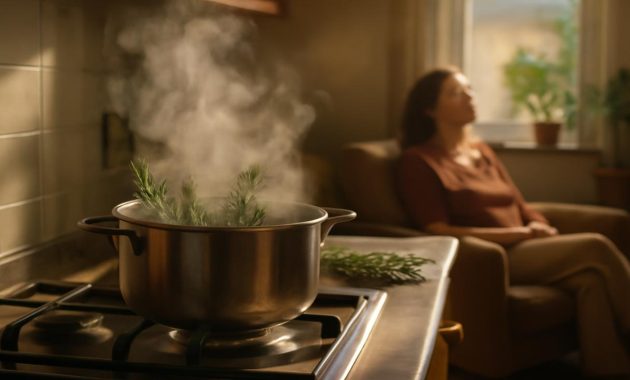
The first time I boiled a handful of rosemary on my stovetop, it wasn’t because of some TikTok trend or glossy magazine tip. It was because my grandmother told me to. “Just try it,” she said over the phone, hearing the exhaustion in my voice about a musty-smelling apartment and a cleaning routine that never quite seemed to keep up. So I did what she’d always done in her tiny stone house: I filled a pot with water, tossed in a bundle of rosemary sprigs, and turned on the heat.
Within minutes, my kitchen shifted. The air thickened with steam, and a scent rose up that was hard to describe at first—piney but soft, woodsy but bright, like a forest after rain if someone had opened a window and let in sunshine. I leaned against the counter and just breathed. No artificial “ocean breeze” plug-in. No confusing cocktail of unnamed “fragrance notes.” Just rosemary, water, and heat. And it felt…clean.
The Old Pot on the Stove Trick Everyone Forgot
There’s something almost suspiciously simple about the idea: boil a pot of rosemary and your home will smell better. That’s it. No expensive gadgets, no chemical-laced sprays. Just an herb you might already have tucked in your pantry or growing in a pot on your windowsill. It sounds like the kind of advice you’d find in a dust-covered housekeeping book from the 1950s, wedged between tips on polishing silver and starching collars.
But this old trick is quietly making its way back into modern homes—dragged into the spotlight by people who are exhausted by artificial fragrances and want something that feels both natural and comforting. The funny part? Even cleaning experts can’t quite agree on it.
Some swear by it: “Boil rosemary, and your house will smell cleaner than any store-bought product,” they insist. Others roll their eyes. “Nice scent, sure. But that’s not cleaning. Don’t fool yourself.” And somewhere in between, the rest of us are standing at the stove, wooden spoon in hand, wondering if this bubbling pot is just aromatherapy…or something more.
The Science Hiding in the Steam
Boiling rosemary isn’t just about making your home smell like an upscale spa. When those needle-like leaves hit hot water, they release essential oils into the steam—compounds like cineole, camphor, and rosmarinic acid. These are the same molecules that give rosemary its sharp, clarifying scent, the ones that have been studied for their antimicrobial and mood-lifting properties.
Does that mean your pot of rosemary is secretly disinfecting your walls and countertops? No. That’s where the experts who scoff have a point. Steam infused with rosemary isn’t a replacement for actual cleaning products on dirty surfaces. It’s not going to scrub your bathtub or remove grease from your stovetop.
But in the air? That’s where things get more interesting. Some studies suggest that certain herbal vapors can help reduce airborne bacteria and freshen the perceived quality of indoor air. You may not be sterilizing your home, but you are changing how it feels to be inside it: the smell, the weight of the air, the mood.
For a lot of people, that’s not a trivial difference. It’s the difference between a home that looks clean and a home that feels clean.
How to Boil Rosemary at Home (Without Turning Your Kitchen into a Sauna)
The beauty of this trick is how accessible it is. There’s no perfect formula, no lab-grade precision required. But there are a few ways to make the most of it.
| Step | What to Do | Tips |
|---|---|---|
| 1. Choose Your Rosemary | Use 4–6 fresh sprigs or 2–3 tablespoons of dried rosemary. | Fresh gives a brighter, greener scent; dried is more intense and earthy. |
| 2. Fill the Pot | Add about 1–1.5 liters of water to a medium pot. | Leave room so it doesn’t boil over as it simmers. |
| 3. Bring to a Boil | Add the rosemary and bring the water to a rolling boil. | You’ll smell it within a couple of minutes. |
| 4. Reduce to a Simmer | Lower the heat to a gentle simmer for 20–60 minutes. | Top up with water as needed to avoid boiling dry. |
| 5. Place Strategically | Keep the pot on the stove, or carefully move it to another room (on a heat-safe surface). | Open interior doors so the scent can travel throughout your space. |
Within about ten minutes of simmering, you’ll notice the change. The steam waltzes through the rooms, threading that herbal scent into curtains, soft furnishings, and the invisible corners of the air you rarely think about.
If your home is dry in winter, the added humidity might even make your skin and sinuses happier. In summer, you might simmer the pot for shorter bursts, letting the fragrance drift but not turning your living room into a foggy greenhouse.
Adding Your Own Twist
Once people try boiling rosemary once, they tend to experiment. This is where the stove turns into a kind of scent studio, and suddenly you’re blending like a perfumer with a wooden spoon instead of crystal glassware.
- Lemon and rosemary: Throw in a few lemon slices or strips of peel for a bright, clean smell that feels like freshly washed linens.
- Orange and clove with rosemary: Cozy, winter-holiday vibes. The rosemary keeps it from being too sweet or heavy.
- Lavender and rosemary: Relaxing and spa-like. Good for evenings, when you want your house to exhale.
- Eucalyptus and rosemary: Invigorating, almost medicinal—in the best way. Ideal for stuffy days when you need clarity.
But even plain rosemary on its own holds its ground. It’s subtle yet persistent, like the faint smell of pine needles crushed underfoot on a morning trail.
Why This Simple Pot Divides Cleaning Experts
Ask two different cleaning professionals what they think of boiling rosemary and you’ll probably get two completely different answers.
On one side are the romantics and natural-cleaning enthusiasts who say, “This is brilliant. It makes the space feel alive, reduces that stale indoor smell, and helps people move away from synthetic fragrances that give them headaches.” They talk about the mental reset it provides, the sense of ritual—how the act of tending a simmering pot gives you a quiet moment in the middle of a hectic day.
On the other side are the pragmatists. They look at the same pot and shrug. “Fine, if you like the smell,” they say, “but don’t pretend this replaces scrubbing, disinfecting, or proper ventilation.” And they’re right. Steam, even scented steam, will never remove grime from your tiles or lift stains from your couch.
What they sometimes underestimate, though, is that cleaning is not just about dirt. It’s also about perception, comfort, and the emotional layer of living in a space. A home is not a laboratory. It’s a place where memory sits in fabric and scent, where the smell of something fresh can trick your stressed brain into loosening its grip.
The Emotional Side of “Clean”
Imagine walking into a room that has just been cleaned with harsh chemicals. It might be spotless, but the air feels sharp, synthetic, almost aggressive. Now picture a room where the floor has been swept, the counters wiped, and a pot of rosemary has been simmering quietly in the background. You’d likely call both spaces “clean,” but which one would you rather sit down and read a book in?
This is why the rosemary debate cuts deeper than it seems. It strikes at the heart of what “clean” means. Is it purely about hygiene—removing bacteria, killing germs, banishing dust? Or is it also about the softer, less measurable experience of being at ease in your own home?
Boiling rosemary can’t stand in for disinfectant, but it can do something a disinfectant never will: create a gentle, sensory anchor. A smell that says, “You’re home. You’re safe. You can breathe here.” For some experts, that counts as part of cleaning. For others, it’s just window dressing.
Ritual, Memory, and the Scent of Home
What makes this humble method so powerful isn’t just chemistry—it’s story. Many people who rediscover it aren’t actually discovering something new; they’re remembering something old.
There are memories tucked into it: a grandmother who simmered rosemary and orange peel every Sunday, a mother who boiled herbs before guests arrived, a neighbor whose small apartment always smelled unexpectedly peaceful despite the thin walls and traffic outside.
You might notice your mind slowing down as the scent builds, as if the steam is ironing out the noise of the day. Maybe you wipe down the counter while the pot bubbles, not out of obligation but because it suddenly feels pleasant to tidy in that soft, herbal fog. Maybe you turn off your phone for a moment. Maybe you don’t, but you at least look up.
In that way, boiling rosemary becomes less of a “hack” and more of a ritual—a small, repeatable act that tells your nervous system: we are resetting now. The house is being readied for rest, for conversation, for silence.
And like any good ritual, it’s personal. Some people simmer rosemary only on weekends. Others save it for stormy days, for post-illness air changes, for when something difficult has just happened and the house feels heavy. It’s not magic. But it can feel a little like it.
When the House Breathes with You
There’s a moment, when you’re standing near that simmering pot, where the kitchen feels like a living thing. The windows fog slightly. The gentle hiss of the burner becomes a kind of background heartbeat. You lift the lid for a second, and a little cloud escapes—warm, fragrant, fleeting.
For a brief moment, the house seems to breathe with you. You inhale rosemary, exhale tension. You notice tiny details that usually blur into the rest of your day: water droplets clinging to the side of the pot, light glancing off the surface, the way the rosemary sprigs darken and soften as they release their oils.
No all-purpose spray can give you that. It’s not meant to. But in a world where cleaning often feels like an endless to-do list, this small act feels strangely kind.
So, Is It Worth Trying?
If you ask the skeptical experts, they’ll say: “Sure, but don’t expect miracles.” And they’re right. Boiling rosemary is not going to erase mildew, kill every germ, or replace a good scrub.
If you ask the believers, they’ll say: “Yes, absolutely. It changes everything.” And they’re also right, in a different way. It can change how your home feels, how you feel inside it, how you transition from the outside world to your own space.
The most honest answer lies somewhere in the middle: boiling rosemary is a forgotten old trick that doesn’t fix everything—but it quietly improves a lot of things that matter. It softens harsh smells, adds a layer of natural fragrance, and turns “chores” into something closer to care.
And in that sense, maybe the real transformation isn’t just in the rooms, but in the person standing in the doorway, breathing in, and thinking, “This feels like home.”
Frequently Asked Questions
Does boiling rosemary actually clean the air?
Boiling rosemary releases aromatic compounds into the air that can make your home smell fresher and more pleasant. Some of these compounds have mild antimicrobial properties, but this should not be treated as a substitute for proper cleaning, disinfecting, or ventilation. It improves how the air feels more than how “clean” it is in a strict scientific sense.
Can I use dried rosemary instead of fresh?
Yes. Dried rosemary works well and often produces a stronger, slightly earthier scent. Use about 2–3 tablespoons of dried rosemary for a medium pot of water. Fresh rosemary tends to smell brighter and more green, but both are effective for scenting the air.
How long should I simmer the rosemary?
You can simmer rosemary for anywhere from 20 minutes to an hour or more. The longer it simmers, the more the scent spreads, but keep an eye on the water level and add more as it evaporates. Never leave the pot unattended, and turn off the heat if you’re leaving the house or going to another floor for a long time.
Is it safe to leave the pot on all day?
It’s not recommended to leave any pot simmering unattended for long periods. If you want to run it for several hours, stay nearby, check the water level regularly, and keep the heat very low. Safety should always come before scent.
Will this get rid of strong odors like smoke or cooking smells?
Boiling rosemary can help soften and mask lingering odors, especially in combination with good ventilation (like opening windows or using a fan). It may not completely eliminate very strong or deeply embedded smells, but it often makes them less noticeable and replaces them with a fresher, herbal aroma.
Can I reuse the rosemary after boiling?
Once rosemary has been boiled for a long time, most of its aromatic oils have already been released. You can reuse the same pot for a second round later that day by adding more water, but the scent will typically be weaker. After that, it’s best to compost or discard the spent rosemary and start fresh next time.
Is boiling rosemary safe for pets?
In small, occasional amounts, the scent of simmered rosemary in the air is usually not an issue for most pets. However, some animals can be sensitive to strong aromas. Make sure the room is well ventilated, don’t confine pets in a space filled with heavy steam, and never let them drink the simmering water. If your pet has respiratory issues or specific health conditions, consult your veterinarian first.
Can I use other herbs along with rosemary?
Absolutely. Many people combine rosemary with lemon, orange, cinnamon sticks, cloves, lavender, or eucalyptus. Just be mindful of how strong some of these scents can be and start with small amounts. You can always add more, but you can’t take it back once the pot is too intense.
Will this replace my usual cleaning routine?
No. Boiling rosemary is best seen as an addition, not a replacement. Keep doing your regular cleaning: dusting, vacuuming, wiping surfaces, and disinfecting where needed. The rosemary steam layers on top of that to create a fresher, more comforting atmosphere.
How often can I do this?
You can simmer rosemary as often as you like, as long as you’re comfortable with the scent and practice basic stove safety. Some people enjoy doing it once a week as part of a cleaning ritual; others bring out the pot only for special occasions or when the house feels particularly stale.