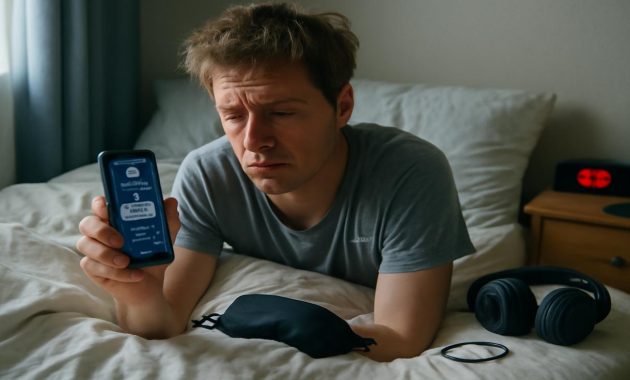
The first time you notice it, you’re standing at the kitchen sink, staring at a spoon. The house is quiet. You slept eight hours last night—at least the numbers on your sleep app say you did. You even took a long, hot bath before bed, lit a candle that claimed to smell like “forest dawn,” and promised yourself you’d finally unplug. By all accounts, you did everything right. And yet, there you are, fingers slack, mind foggy, watching dish soap slide slowly down silver metal as if you’ve just woken from a half-remembered dream. You are, technically, rested. But you do not feel restored. Not deep in your bones. Not in that quiet, steady way that makes the world feel a little softer around the edges.
The Rest That Doesn’t Quite Land
Most of us know how to talk about being tired. We trade exhaustion like weather reports. “Busy.” “Burned out.” “Running on fumes.” We wonder out loud if it’s our mattress, our age, our screens, our coffee habit. We download apps, buy eye masks, experiment with melatonin and chamomile and magnesium gummies. We become amateur scientists of our own sleep.
And still, the mornings arrive with that same dull ache of incompleteness, as if some invisible hand has been skimming a portion of our rest while we weren’t looking. You may lie down, close your eyes, drift off, and technically sleep—yet the next day, your mind feels edgy, your patience thin, your joy strangely out of reach. Your body sat down, but something in you never actually put its weight on the chair.
Here’s the uncomfortable possibility: what if the issue isn’t how much we rest, but how we relate to rest itself? What if the hidden reason your rest doesn’t feel fully restorative is that you never truly arrive for it? Your body shows up, but your nervous system stays on the front porch, hand still on the doorknob, ready to bolt.
The Nervous System That Won’t Stand Down
Picture your nervous system as a flock of small, watchful birds perched along a wire. They are not out to get you. They are trying to keep you safe. Every ping, every notification, every half-finished task, every subtle conflict, every scrolling session in bed—it all sends the quiet signal: Stay ready. Stay awake. Stay on guard.
Even when you close your laptop and slip under the covers, those birds do not automatically fly off. If your days are threaded with urgency—deadlines, messages, background noise, podcast chatter, the constant shuffle of decisions—your body’s internal wiring learns that vigilance is the default setting. When you try to rest, part of you remains braced, like a driver with hands clenched on the steering wheel long after the car has stopped.
Rest, in the deep, healing sense, isn’t just the absence of doing. It’s the felt experience of safety. Without that, sleep becomes a kind of truce, not a homecoming. Your brain dips into rest, but never quite trusts it enough to sink all the way down. You sleep, but you do not fully surrender. And surrender, as inconvenient as it sounds to our productivity-obsessed culture, is where restoration lives.
The Quiet Tax of Half-Rest
You pay for this half-rest in small, cumulative ways. The forgotten word on the tip of your tongue. The way your shoulders inch toward your ears when your phone buzzes. The irritation at small noises. That hollow little gulp of dread when you open your inbox. None of these moments look dramatic from the outside. They are easy to explain away. But together, they form a subtle tax on your life—a tax that grows steeper the longer your nervous system forgets how to truly offload.
We tend to respond by adding more “rest hacks”: longer weekends, more vacations, another night of sleep. But if the underlying story in your body is still “I can’t really stop; I have to stay prepared”, then the extra time off behaves like water poured on waxed leaves. It glistens for a moment, then rolls right off.
When Rest Becomes Another Performance
There’s another quiet reason your rest may feel thin: somewhere along the way, “taking care of yourself” turned into yet another project, another performance to perfect. You may recognize the pattern.
You promise yourself a “slow Sunday,” but end up filling it with “productive relaxation”: organizing closets, batch-cooking, catching up on that one educational podcast you’ve been meaning to hear. You go for a walk, but you’re tracking your steps, optimizing your heart rate, analyzing the quality of the sunset for your camera roll. You lie down to read, but you’ve chosen a book you think you should be reading, not one that quietly delights you.
Underneath it all lurks an unease: the idea that rest needs to be earned, measured, or at least useful. That even your down time must produce something—skills, insights, content, better health metrics, a more “optimized” version of yourself. Rest stops being a gift and becomes one more line item in a never-ending self-improvement project.
The Subtle Shame of “Unproductive” Stillness
Here’s something your body knows but your calendar might not: real rest is, by nature, gloriously “unproductive.” It does not care if you can explain it, post about it, or justify it. It does not need a before-and-after photo, or a graph showing your improvement. Rest is the crack in the schedule where you are allowed to be useless, unpolished, and unremarkable.
When we deny ourselves that kind of unstructured, unapologetic stillness—when we replace it with optimized self-care—the body feels the difference. There is strain where there should be slack. Vigilance where there should be wandering. We lie down physically but remain socially, mentally, and emotionally “on stage.” No wonder it doesn’t land.
The Nature of True Restoration
Think back to the last time you felt genuinely restored, even for a fleeting moment. Maybe it was emerging from a lake, skin tingling, hair dripping, sun turning droplets into small, bright planets on your arms. Maybe it was sitting under a tree with your back against rough bark, watching a line of ants navigate around fallen leaves. Maybe it was the strange, raw quiet after a good cry, when the world looks freshly rinsed, edges softened, sounds slightly muffled.
Notice how those moments share a few traits: your senses were engaged, but not overwhelmed. Time felt looser, less chopped into tiny units. You were not actively doing anything to improve yourself; you were simply being in contact—with water, with air, with your own internal weather. In those moments, your nervous system received a credible signal: Right now, it is safe to stand down.
This is what restorative rest actually is: not just the pause in action, but the deep, bodily conviction that you can soften your grip on the world and it won’t fall apart. That someone, or something—the earth, the sky, the river, the slow turning of the planet—is holding you, even if just for a breath.
How Nature Helps Your Body Believe You
We often think of time in nature as a nice extra, something to sprinkle on top of our busy lives like garnish. But from your nervous system’s perspective, the living world is not decoration; it is a stabilizing force. The regularity of waves, the rustle of leaves, the steady dimming of light at dusk—all of this forms a kind of sensory lullaby, a wordless reassurance that you are part of a larger, slower rhythm than your notifications suggest.
When you step outside and let your gaze rest on something that is not a screen, not demanding, not asking you to decide anything—just clouds drifting, a bird preening, raindrops gathering on a window—your body’s internal guard dogs get a chance to nap. The sympathetic nervous system, wired for fight-or-flight, loosens its hold. The parasympathetic system, built for digestion, repair, and rest, quietly rises like a tide.
| State | How It Feels | What Your Body Can Do There |
|---|---|---|
| Chronic Vigilance | Edgy, easily startled, scrolling on autopilot, tired but wired | React, plan, push through, perform |
| Surface-Level Rest | Lying down but thinking, “I should be doing more,” sleep that feels light or choppy | Refuel just enough to keep going, but not to truly reset |
| Deep Restorative State | Heavier limbs, slower thoughts, gentle curiosity, subtle sense of safety or softness | Repair tissues, rebalance hormones, integrate emotions, restore attention and creativity |
Your body cannot be forced into that third state by sheer willpower. But you can make invitations. You can create conditions in which your nervous system slowly relearns that it is allowed to land.
Changing the Story You Tell Yourself About Rest
Beneath sleep schedules and screen habits lives something quieter and far more powerful: the story you carry about what rest means. For many people, this story sounds something like: “Rest is a reward for getting enough done.” Or, “If I let up, something bad will happen—someone will be disappointed, I’ll fall behind, I’ll lose ground.”
Those beliefs rarely arrive as full sentences. They’re more like background static, absorbed from families who survived by hustling, from cultures that idolize productivity, from systems that treat human beings as replaceable parts. It can feel risky, even disloyal, to loosen your grip when so many around you are still hanging on tight.
Yet that loyalty to constant effort comes with a cost. When rest is always conditional—always something you must earn—your body never fully trusts that the off switch will stay on long enough to be worth it. Even when you stop, you do not believe your own pause.
A Different Kind of Permission
What would it feel like to experiment with a different story: “Rest is not a prize; it is a precondition for being fully human.” Or even more radical: “I am allowed to rest simply because I exist.”
This is not about abandoning responsibilities or pretending bills don’t exist. It’s about acknowledging a simple biological reality: bodies that never experience true off-duty time quietly begin to break, even as their owners keep smiling, emailing, achieving. Stress hormones creep upward. Inflammation smolders. The threshold for joy rises, while the threshold for overwhelm drops.
Changing your inner script about rest is slow, unglamorous work. It might look like catching yourself mid-thought—“I haven’t earned a break yet”—and gently asking, “Says who?” It might look like noticing that small spike of guilt when you sit down in daylight and deciding, for just sixty seconds, not to move anyway.
Small, Tangible Ways to Make Rest Actually Land
If your nervous system has forgotten how to trust rest, you can re-teach it through small, consistent experiences of safety and ease. You don’t have to overhaul your entire life. Think in terms of tiny experiments: brief, sensory-rich pockets of time where you step off the treadmill and onto the earth, even if the earth is a single plant on your windowsill.
1. Shift From Numbing to Noticing
Scrolling, binge-watching, and background noise often masquerade as rest, but they tend to numb rather than nourish. Instead of declaring a dramatic digital detox, try this: once a day, for three minutes, turn everything off. No screens, no podcast, no conversation. Just sit somewhere—on a step, in a chair, under a tree—and notice.
Notice the exact quality of the light. The smallest sound you can hear. The sensation of your clothing against your skin. The temperature of the air entering your nose as you breathe. With each exhale, let your shoulders fall a fraction of an inch. You are not trying to be mindful “correctly.” You are simply reminding your body that it is allowed to exist without incoming information for a short, survivable moment.
2. Trade Ambition for Texture
Instead of aiming for “a perfect morning routine,” ask: how can I add a tiny bit more texture—more actual, physical sensation—to what I already do? If you drink coffee or tea, can you wrap both hands around the mug and feel the warmth seep into your fingers for three slow breaths before taking a sip? If you walk the dog, can you notice how the ground feels different under your feet where the sidewalk cracks or the grass begins?
These small acts are not decorative. They are messages to your nervous system: “We are here, in this body, not racing three hours ahead.” Texture roots you in the moment. And rest, underneath all our ideas about it, is a relationship with the present.
3. Build a Tiny Ritual of “Enough”
One of the biggest barriers to true restoration is the endless, fuzzy edge of “more to do.” Your day has no clear ending, just a slow blur from work into semi-work into anxious scrolling. Try establishing a tiny daily ritual that marks the moment you are “off duty,” even if other tasks remain.
It might be closing your laptop and placing a hand flat on its lid, saying silently, “This is enough for today.” It might be lighting a single candle when you’re done with chores, letting the flicker mark the start of rest. You’re not claiming that every task is complete. You are claiming your right to be a person, not a to-do list in human form.
4. Let Nature Tuck You In
Sleep schedules matter, but so does how you arrive at the edge of night. Long before electricity, our bodies synced with dusk: colors drain from the sky, sounds soften, temperatures drop slightly. You can borrow that rhythm, even in a modern apartment.
An hour before bed, dim one light if you can. Look out a window for a full minute and simply watch the sky, whether it’s inky black, cloudy, or reflecting city glow. Let your gaze soften, not focusing on any single point. This simple act signals your brain: day is ending. The world is changing pace. You are allowed to change pace too.
5. Include the Parts of You That Feel “Too Much”
Sometimes, rest doesn’t land because certain feelings show up the moment things get quiet: grief, resentment, loneliness, panic. It can feel easier to stay busy than to meet what’s waiting in the silence. But those feelings do not disappear when you outrun them. They just wait, patient and heavy, in the corners of your life.
Consider letting small, manageable amounts of those emotions exist during your rest instead of treating them as intruders. If sadness shows up when you sit down, notice where it lives in your body—tight throat, prickling eyes, heaviness in the chest—and place a palm there. You’re not fixing it; you’re acknowledging it. Restoration doesn’t mean feeling happy. It means becoming whole enough to carry the full range of your inner weather without splitting yourself into “acceptable” and “too much.”
Rest as a Place You Can Come Home To
Imagine, for a moment, that rest is not an activity but a place within you—a small, weathered cabin at the edge of a quiet clearing. Maybe you haven’t visited in years. The path there is overgrown, branches snagging your sleeves, brambles catching your ankles. But the cabin is still there, patient, waiting. Smoke still knows how to rise from its chimney. The floorboards still remember the weight of your steps.
You do not have to move there full-time. Life will always pull you back into traffic and spreadsheets and grocery lists and errands. But you can begin to find your way to that clearing more often. At first, you will arrive out of breath, still checking your phone, mind still chewing through conversations and tasks. Over time, with each small, honest, sensory moment of slowing, the path will smooth. The birds on the wire will grow less jumpy. Your body will begin to believe you when you say, “We are safe. We can soften. We can stay, just for a little while.”
And one morning, months from now, you may wake up, stand at the kitchen sink, and notice—quietly, without fireworks—that something feels different. The spoon in your hand is just a spoon. The day ahead is just a day. Your shoulders are lower; your breath deeper. For once, the rest you’ve taken didn’t roll off like water on wax. It seeped in, down into the unlit rooms of you, and turned a few of the lights back on.
That is the hidden reason your rest has felt incomplete all this time: not because you were bad at sleeping, or weak, or lazy. Because somewhere deep inside, a watchful part of you was never convinced it could safely let go. Learning to convince it—gently, consistently, in the language of sensation and safety—is the quiet, radical work of a lifetime. And you can begin today, in the span of a single, unhurried breath.
Frequently Asked Questions
Why do I still feel tired even when I sleep 8 hours?
Because restorative rest is about more than sleep quantity. If your nervous system stays on high alert—due to stress, constant stimulation, or internal pressure to “stay productive”—your body never fully drops into a deep, repairing state. You’re sleeping, but not truly off-duty.
Is scrolling or watching TV considered rest?
It can feel like relief, but it’s often more numbing than nourishing. Your senses are still being flooded with information, and your brain remains engaged. Genuine restoration usually involves moments of lower stimulation, where your attention can soften and wander.
Do I have to spend time in nature to feel restored?
Nature is a powerful ally, but you don’t need a forest or ocean. Even small, consistent doses—a plant on your desk, sunlight through a window, a few minutes feeling fresh air on your face—can help your nervous system downshift. The key is sensory presence, not scenery perfection.
How can I rest when my life is genuinely demanding?
You don’t need big chunks of time to start. Look for tiny pockets: three quiet breaths before opening an email, a one-minute pause to feel your feet on the floor, a short “enough for today” ritual at night. These micro-moments, repeated often, slowly retrain your body to recognize and trust rest.
What if I feel anxious or emotional when I try to rest?
That’s common. When activity slows, stored emotions and thoughts float up. Instead of seeing this as failure, treat it as part of the process. You can set gentle limits—like giving yourself five minutes to feel whatever comes, then returning to a simple sensory anchor such as your breath or the feeling of your hands on your knees. Over time, your system learns that stillness is uncomfortable but survivable, and eventually, soothing.