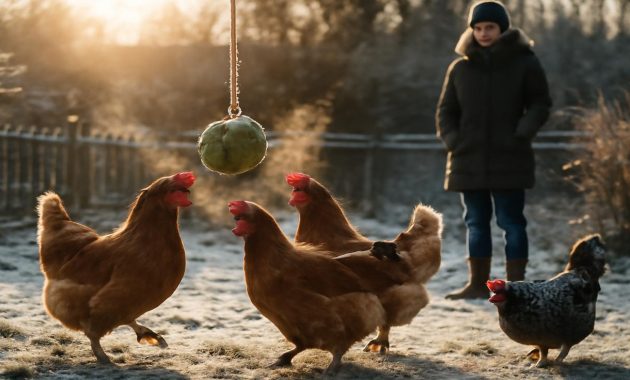
The first snow came on a Tuesday. It arrived quietly, sugar‑dusting the hedge and softening the late‑autumn clatter of the yard, laying a new stillness over everything. The air had that bright, glassy edge that nips at your nose and seeps through sleeves. The hens stepped out of their coop, paused at the strange white crust under their toes, and gave me that look—head tilted, amber eyes sharp—as if to say, “And what exactly is this?” That’s when I knew: if winter was going to be more than a long, bored shuffle between feeder and roost, we’d need a game. Something that turned cold into curiosity, and short gray days into the moment they’d wait for.
The Day the Hens Discovered “Treasure Time”
It started accidentally, the way many good barnyard traditions do. I had an old scoop of scratch grains in my hand and a yard covered in snow. Tossing the scratch in its usual bare patch felt pointless; the girls were already suspicious of the icy edges. So instead, I crouched down, cleared a little circle in the snow with my mittens, and buried the scratch under a thin layer of the white stuff.
For a moment, nobody moved. The flock clustered together, inching forward like a feathery tide. Mabel, always the boldest, took one decisive step, lowered her beak, and tapped at the snow. Then another tap. A third. Suddenly, her beak struck something worth the trouble. She made the low, throaty trill that means, “Food! Over here!” and the calm morning detonated into delighted chaos.
Feathers fluffed out against the cold, combs bright as winter berries, they dug. Snow flew. The soft thud of beaks against the frozen crust mixed with the faint rustle of wings and the strange little murmurs only chickens make when they’re excited. Each kernel they unearthed seemed like a small miracle, uncovered by their own effort. Within minutes, the yard looked like it had been carefully, messily tilled by a team of tiny, determined archaeologists.
I watched their body language transform. Before “treasure time,” they had been cautious, hunched slightly against the chill, moving as if every step through the cold air was a chore. Now they were alive with purpose, warming themselves not just with extra calories, but with sheer, busy motion. When their crops were full and the snow thoroughly rearranged, they shook out their feathers, satisfied, and wandered off to scratch under the shrubs.
The next day, when I stepped out with the scoop, they were waiting.
The Science Hiding in a Simple Winter Game
This silly little ritual—burying treats in snow, straw, or leaves—might look like a human’s attempt at barnyard entertainment. But it actually speaks deeply to who chickens are, and what they need, especially when the air bites and daylight shrinks.
Chickens are foragers by design. Their feet, their beaks, their necks, even the subtle way their eyes track the ground—everything about them is built for searching, scratching, uncovering. In wild and semi‑wild settings, most of a chicken’s day is spent moving and hunting for bits of food: seeds, bugs, greens, and whatever else their sharp gaze finds. When winter comes and we pen them in more tightly to protect them from weather and predators, that natural behavior narrows into a short walk between feeder and drinker. The body stays safe, but the mind gets bored.
Boredom in chickens isn’t just a mood; it can become a problem. Birds with nothing to do may start feather pecking, bullying, or pacing along fences, watching the unreachable distance. Their movements become repetitive, and that bright interior curiosity dims. Suddenly, winter feels like something you all have to endure together, rather than simply another season of shared living.
“Treasure time”—or whatever you decide to call your own version of this game—wakes that forager’s brain back up. It asks them to search, to solve a tiny puzzle: Where is it? How deep? How fast can I get to it before that bossy hen does? Each peck, each deliberate scratch not only lets them burn energy and generate body heat, it also flicks on their ancestral instincts, that old woodland rhythm of seek and find.
And here’s the quiet beauty of it: you don’t need to be a poultry scientist, or have acres of land, or buy special equipment. You just need a few minutes, some safe treats, and a willingness to play along with your birds’ natural cleverness.
How to Play the Cold‑Day “Treasure Hunt”
Over time, my little spur‑of‑the‑moment idea grew into a winter ritual. The hens began to anticipate it the way a dog knows the sound of the leash. If I was a few minutes late, a chorus of impatient clucks would rise from the run. And as the game evolved, I learned a few simple tricks that turned it into the best part of their cold day.
Choose Your “Treasure” Wisely
You want something they love, but not so rich that you accidentally overdo it. Think of it like their favorite snack, not a full meal. A few ideas that work well on chilly days:
- Scratch grains (in moderation)
- Sunflower seeds (black oil variety is a big hit)
- Small pieces of vegetable trimmings (like kale stems, finely chopped carrots, or cabbage shreds)
- Oats scattered dry
I avoid sticky foods or anything that will freeze hard into clumps. Keep the pieces small. Half the fun is in uncovering many little things, not a single big prize.
Pick Your “Playing Field”
Snow makes this game almost magical—the contrast of pale flakes and dark grains, the soft hiss of their feet pressing patterns into the surface. But if you don’t have snow, or if your region swings between wet mud and hard frost, there are plenty of alternatives:
- A thick layer of dry straw or hay
- Dry leaves piled into a corner of the run
- Wood shavings or chips spread over the floor
- A shallow bin filled with sand and leaf litter (great if the run is muddy)
The key is to create a loose, scratchable layer—something they can dig through, shuffle aside, and rearrange with their feet. You’re aiming for texture and depth more than anything else.
Make It a Ritual
Chickens are attentive to patterns. They learn when you open the coop, when you bring feed, when the garden gate swings open. This game works best when it becomes something they can count on, especially on colder days when their world already feels smaller.
Pick a time that works for both of you. For example, mid‑morning once the frost has started to ease, or late afternoon before they head up to roost. Walk out with your scoop, call them in your usual way, and let that moment become a little ceremony.
As you bury the treats—whether in snow, straw, or a leaf pile—talk to them if that feels natural. They won’t understand the words, of course, but they recognize the cadence and warmth in your voice. Many keepers find their own silly phrases for this daily event. I call out, “Treasure time!” and the hens come running in a feathered avalanche, snow kicking off their feet like confetti.
Start Easy, Then Get Creative
At first, keep it simple. Scatter the treats in a small area and lightly cover them. You want quick wins. As they learn the game, you can start getting more inventive:
- Layer the treats—scatter, cover with straw or snow, scatter a bit more on top.
- Create “zones” in different corners of the run so they have to roam.
- Scatter a few pieces farther away to encourage bolder birds to explore.
- For very nervous hens, leave some treats visible to tempt them into digging deeper.
Watch how your flock plays. Some birds will be relentless diggers, others will hang back and swoop in when an easy prize appears. You’ll quickly learn who the masterminds, the freeloaders, and the quiet opportunists are.
The Way Hens Turn a Game into a Story
Part of the joy of this winter game is in the story it writes across the day—the way it shapes their rhythms and your own. On the coldest mornings, when the sky feels heavy and pale and your breath curls in white plumes, that little burst of energy and laughter (yes, your own laughter absolutely counts) becomes a bright point in an otherwise muted landscape.
Watch how they move through it. There’s always one who runs in first, skidding on the crusted snow. Another who hangs back, eyes wide, gauging whether the white stuff will swallow her feet. The soundscape is different, too: the crisp tap of beaks, the rustle of feathers, the occasional offended squawk when one hen believes firmly that her kernel was stolen.
On some days, your boots will sink deep, making soft, squeaking prints alongside their three‑toed tracks. On others, the snow will be a thin, crunching layer over the earth, each step sending a faint shock of cold up your legs. You’ll notice how the sun, low and amber, glints off their feathers—making the russet of a Rhode Island Red glow like embers, or the barred plumage of a Plymouth Rock shimmer in graphite bands.
They don’t know it’s “enrichment.” They don’t care that you’re supporting natural scratching behavior or reducing winter stress. They just know that in the middle of a long, chilly day, there is a time when the world becomes a puzzle and they are the ones clever enough to solve it.
And as you stand there, mittens tucked into your coat, cheeks flushing from the cold, you’ll notice something else: for those few minutes, you’re not checking your phone or hurrying on to the next chore. You’re present. You’re part of their small, intense world where snow can hide treasure and a human hand can change the shape of the day.
A Simple Comparison of Winter Game Setups
As you experiment, you might find certain setups suit your flock—and your climate—better than others. Here’s a quick comparison that can help you decide what to use on any given day:
| Surface | Best For | Pros | Considerations |
|---|---|---|---|
| Fresh Snow | Cold, dry winter days | Soft, fun to dig; visually engaging; easy to clean (it melts) | Some hens hesitate at first; avoid deep drifts for smaller birds |
| Straw or Hay | Covered runs or very cold snaps | Adds insulation; great scratching material; lasts multiple days | Can get damp if run is wet; change regularly to stay fresh |
| Dry Leaves | Late autumn and early winter | Natural, rustling texture; full of tiny bugs and organic bits | Break down over time; may blow away in strong wind |
| Sand & Litter Mix | Muddy or wet climates | Good drainage; doubles as dust‑bathing area | Heavier to move; may freeze hard in extreme cold |
Little Bodies, Big Winters: Why This Moment Matters
On a chart, a chicken’s winter needs look simple: enough calories, dry shelter, liquid water, some protection from wind. But when you step into the run on a bitter afternoon, you see the other side of the story: a cluster of small, bright souls trying to make sense of a season that takes away insects, bare soil, and much of their exploring space.
When you set up a daily game, you’re not just giving them something to do. You’re reshaping winter itself. You’re telling their days: “Yes, it’s cold. Yes, the ground is hard. But in the middle of all this, there will be a moment that’s entirely yours.”
They respond with more than just happy scratching. Birds who have something to look forward to tend to keep better condition—they move more, they stay mentally active, and they’re less likely to turn on each other out of frustration. Feathers remain sleek and orderly; their eyes stay bright. Even the pecking order can soften around a shared game, because there are so many small prizes and so many places to find them.
And for you? This ritual draws you more deeply into their world. You start to notice subtle changes: which hen is slower to join the game, who is puffing up more than usual against the cold, who has suddenly become bolder, charging to the front of the treasure field. You glimpse small health issues earlier, simply because you’re there while they move, rather than just glancing at them on the roost at night.
Winter becomes less of a season to endure, and more of a chapter in your shared story: the cold chapter, yes—but also the one with the treasure hunts, the steam of your breath mingling with the soft fog rising from their feathers, the quiet knock of beaks against snow as the sky darkens toward early evening.
When the Scoop Comes Out, the Yard Comes Alive
Now, when the wind picks up and the world goes gray at midafternoon, I reach for the same old metal scoop. Inside, the hens shift on their perches, listening. I step into the yard, the snow squeaking faintly under my boots, and call out the words they know now by heart.
They spill from the coop in a tumble of wings and soft, urgent clucks. Their breath puffs in faint clouds as they run. I bend down, scatter the grains across the snow, brush a layer over them, and step back. For a heartbeat, there’s silence.
Then Mabel lowers her head. One tap. Two. Three.
The game begins.
On the cold days, when my fingers burn and my scarf grows damp with my own breath, that five or ten minutes becomes the warmest part of my day—not because the air is any softer, but because the yard is suddenly full of life. The hens leap from treasure to treasure, stitching their tracks across the snow, rewriting their own small geometry of joy.
When you find your own version of this game—whether it’s snow treasure, straw puzzles, or leaf‑pile hunts—you’ll see it too: that moment when winter lifts just a little, and the cold becomes not an enemy, but the crisp, bright setting for the best part of the day, for both of you.
FAQ
Is it safe to let hens walk and scratch in snow?
Yes, in most cases it’s safe for healthy adult hens to walk and scratch in shallow snow. Avoid deep drifts, icy surfaces, and extremely wet slush that can chill their feet. Provide a dry, sheltered area so they can retreat and warm up whenever they choose.
How often should I play this “treasure hunt” game in winter?
Once a day is usually enough, especially if you’re using treats like scratch grains or seeds. Think of it as a special daily event rather than an all‑you‑can‑eat buffet. You can skip days if the weather is severe, but a regular rhythm helps your flock look forward to it.
What kinds of treats should I avoid using for this game?
Avoid salty, sugary, or heavily processed foods, as well as anything moldy or spoiled. Very sticky foods can freeze into hard clumps, and large pieces can pose a choking risk. Keep the treats small, simple, and similar to what you’d normally offer in moderation.
Can I play a similar game if I don’t get snow?
Absolutely. Use straw, dry leaves, wood shavings, or a sand‑and‑litter mix instead. The idea is to create a scratchable layer your hens can dig through to uncover hidden treats. The joy comes from the search, not the snow itself.
Will this game make my hens dependent on treats?
Not if you keep portions modest and base their main diet on a balanced layer feed. The game should be a small supplement and a source of enrichment, not their primary food source. As long as they always have access to their regular feed, they’ll treat “treasure time” as a delightful bonus, not a necessity.