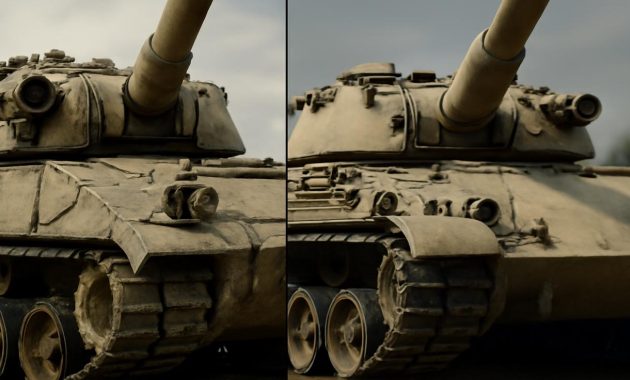
The wind on the Bourges test track smells of metal dust and damp earth. A low, broad-shouldered armored vehicle idles at the start line, its turret slowly rotating in a smooth, predatory arc. Technicians in orange vests move around it with the quiet focus of stagehands before opening night. Somewhere behind the concrete bunkers, someone gives the signal. The engine roars, the vehicle surges forward, and for a moment—watching the turret stay perfectly level as the hull bucks and shudders over obstacles—you can almost forget you’re looking at the result of thousands of design decisions, arguments, spreadsheets, and sleepless nights.
This is what the French defence industry is now betting on: not bigger guns or thicker armor, but something far less glamorous and far more unforgiving—the invisible art of integrating the turret from day one. Get it wrong, and armies pay for years in broken suspensions, cracked hulls, unreliable fire, and machines that spend more time on maintenance stands than in the field. Get it right, and the vehicle becomes what it was always supposed to be: a single, balanced organism instead of a stitched‑together Frankenstein of metal.
The Cost of “We’ll Bolt It On Later”
If you talk to older French engineers, they’ll almost always start with a story that begins the same way: “We had a platform, and someone decided to put a bigger turret on it.” The memory usually ends with a sigh. Historically, across many armies, the turret too often arrived late to the party—added as a module, as if you could simply drop a heavy, complex weapon station onto an existing vehicle and call it a day.
On paper it looks efficient. You already have a proven chassis. You have a new gun system or a remote weapon station. Marry the two and you save time and money. In reality, the marriage can be more like a slow, painful divorce. The center of gravity moves just a few centimeters too far forward. Suspension components start failing under loads they were never meant to carry. Recoil forces travel through the hull in unexpected ways, loosening welds, cracking plates. Turret cables snake through spaces that weren’t designed for them, chafing, snagging, cutting out at the worst possible moment.
Armies pay for that shortcut in ways that don’t make headlines but show up relentlessly in maintenance logs: higher breakdown rates, lower availability, crews losing confidence in their machines. The turret—meant to be the sharp end of the spear—becomes a weak link, not because the gun is flawed, but because it was treated like an accessory instead of the heart of the system.
French designers have lived through enough of those compromises, at home and in foreign programs, to know better. And now they are placing a deliberate, almost stubborn bet: if you integrate the turret from day one, you spend more upfront, you argue more in design reviews, you redraw more cables and bulkheads—but you end up with vehicles that fight harder, last longer, and break less.
The Turret as a Living Organ, Not a Plug‑In
Stand close to a modern French turret—on a Jaguar EBRC reconnaissance vehicle, for example—and you can feel how alive it is. Sensors blink, servomotors whine softly, the cannon’s thermal sleeve radiates a faint heat, and inside, behind armor and ceramic tiles, software nerves are constantly firing. The turret is no longer just a rotating platform for a gun; it is a sentient organ stuffed with optics, radar, electronics, missiles, and data links.
This complexity is why French manufacturers like Nexter and Arquus are pushing so hard to treat turret integration as a central design principle instead of a late-stage adaptation. From the very first sketches, the turret’s weight, rotation envelope, recoil path, power draw, cooling needs, and digital connections are drawn into the blueprint of the vehicle. Not as boxes added later, but as anchoring lines that shape everything else around them.
Imagine designing a human body by building the skeleton, muscles, and legs first, then deciding, at the last minute, to add a head. It might be technically possible, but it would never move quite right. That’s what late-stage turret grafts often resemble. When the turret is born with the vehicle instead, the result is something altogether different: balance you can feel when the hull leans into a turn, stability you can see when the gun remains on target while the tracks or wheels claw over broken ground.
Weight, Recoil, and Invisible Geometry
In conversations in Satory and Roanne, engineers like to talk about millimeters and milliseconds. A few millimeters of extra height in the turret ring, a slight shift in how ammunition is stored, a fraction of a second in the fire-control loop—each of these affects how the vehicle reacts to the most basic act it will ever perform: firing its gun.
Recoil forces don’t just travel backward; they spread through metal like waves. If the hull wasn’t designed from the ground up with that wave pattern in mind, components further away—electronics racks, welds near engine mounts, even fixtures in the crew compartment—start to suffer. French designers now run digital twins that simulate these shock paths early in the project. The turret is not an add-on; it is the source of energy around which the whole structure is tuned and braced.
This invisible geometry reaches into every corner of the vehicle. The placement of batteries. The routing of hydraulic or electric drive lines for turret motion. The ventilation ducts that must clear away the heat from gun firing, from optronics, from the silent but relentless hum of processors. All of this only truly works if turret and hull are conceived as one.
Lessons Written in Sand and Dust
French vehicles have spent decades in harsh theaters: the rocky tracks of Afghanistan, the baking sands of Sahelian Africa, the muddy, flooded routes of Eastern Europe. Those deployments wrote their opinions of turret integration in oil leaks, sheared bolts, and after-action reports.
In Mali and Niger, for instance, weight creep was a constant enemy. A vehicle designed with a certain turret and armor package would deploy, only for commanders to request extra protection, new communication gear, or an upgraded weapon system. Every addition seemed modest by itself—another box, another plate, another sensor—but together they pushed chassis and turret far beyond their initial equilibrium.
Crews felt it first: a slightly more sluggish traverse, a nose that dipped harder into potholes, a subtle delay as the suspension tried to catch up with the terrain. Mechanics felt it next: bearings wearing faster, hydraulic systems running hotter. Commanders felt it at last, when availability rates dipped or when a key vehicle refused to move just when it was needed most.
These are the experiences that now echo in design studios when French engineers talk about “integration from day one.” The question is no longer merely: Can we put this turret on that vehicle? Instead, it is: What happens to this entire ecosystem over ten or fifteen years of upgrades if we don’t leave space, structure, and power budget for evolution?
Planning for the Turret’s Future Self
Modern turrets are not static. Over a program’s life, they gain new sights, counter‑drone systems, heavier armor modules, different ammunition types, sometimes even new main guns. The French answer has been to build in growth margins from the start—structural reserves that are invisible to the eye but absolutely real to the metal.
That might mean an oversized turret ring that looks like overkill on day one but allows a heavier weapon to be mounted later without cutting into the hull. It might mean extra conduits and power lines laid empty in the first production batch, waiting patiently for future electronics. It might be a deliberate decision to accept a small penalty in weight now to avoid an enormous penalty in unplanned retrofits later.
This is the mindset shift: the turret is not just integrated as it exists today; it is integrated as a series of possible futures. The bet is that this foresight will save not just money, but something more precious in conflict—time. Time not spent immobilising vehicles for months in workshops just to graft on the next generation of capabilities.
The Digital Thread That Binds Hull and Turret
Step into the quiet, air‑conditioned heart of a French development office, and the contrast to the dusty test range is startling. On the screens, the vehicle is not olive green but a translucent blue skeleton. The turret appears as a complex knot of volumes and forces within that skeleton, spinning, flexing, firing in slow motion. Here, the union of hull and turret starts with numbers, not steel.
The French defence industry has embraced model‑based systems engineering, not as a buzzword, but as a survival tool. In these digital twins, the turret is wired into the rest of the vehicle from the first line of code. The fire‑control software knows the behavior of the suspension. The energy management system understands the spikes the turret will demand when slewing at maximum speed and firing. The ergonomic layout of the crew compartment anticipates where turret actuators and stabilization hardware will intrude.
This digital thread is what allows engineers to see that moving a single black box inside the turret might clear enough space for better ammunition access, which in turn changes how loaders work, which in turn affects crew fatigue and combat rhythm. In old programs, such realizations often came too late, or not at all. Now, they arrive while designs are still fluid.
From Simulation to the Shock of Reality
Of course, no simulation survives first contact with reality unscathed. That is why French teams still put prototype vehicles through punishing tests: endless kilometers on harsh tracks, sudden stops, full‑power traverses, live firing at extreme angles and temperatures. But the difference now is that those tests are no longer just pass–fail events. They are dialogues between the digital and the physical.
When a turret shakes slightly more than predicted, or a vibration in the hull appears at a certain speed and elevation, the data doesn’t just go into a report. It flows back into the digital twin. Models are refined. Mounting points move by millimeters, stiffness is adjusted, damping curves are tuned. The turret is re‑integrated, again and again, in a loop that only exists because it started from a position of unity rather than bolted‑on separation.
It is a quiet revolution, the kind that doesn’t lend itself to dramatic press conferences. But it shows up in the way prototypes age—or don’t. In the way a crew can drive fast, fire on the move, and still talk calmly inside their helmets because the vehicle is not fighting itself to stay balanced.
The Human Factor Inside the Ring
If you climb into a turret during trials, the first shock is how small it feels. Even in remotely operated or unmanned turrets, the space around them is crowded with meaning: racks of ammunition, power converters, screens, periscopes, emergency handles. Integrating the turret from day one forces designers to ask a deceptively simple question: what does it feel like to fight from here?
French crews are blunt in their feedback. A control grip placed a few centimeters too high will be cursed for years. A badly positioned display might force a gunner to twist his back in a way that becomes agony after a long patrol. If turret integration is an afterthought, such human factors often end up compromised to make room for mechanical or electronic necessities. When the turret is part of the original architecture, humans have a seat at the design table from the start.
That shows in small details: the angle of a seat so that, when the vehicle lurches over a ditch and the turret fires, the gunner’s spine takes less strain. The placement of footrests so that a commander can brace properly while scanning. The routing of ejection paths for spent casings so they don’t intrude into the crew’s space or create hot spots on the hull roof where infantry might be riding.
| Aspect | Late Turret Graft | Day-One Integration |
|---|---|---|
| Vehicle Balance | Center of gravity often shifted; higher rollover and wear risks | Center of gravity optimized with hull; predictable, stable handling |
| Reliability Over Time | Frequent structural and mechanical stress issues | Lower stress peaks; longer component life |
| Upgrade Potential | Costly retrofits; limited space and power reserves | Growth margins planned; easier tech insertion |
| Crew Ergonomics | Compromised layouts, awkward work positions | Controls, screens and access designed around turret |
| Operational Availability | More downtime, higher maintenance burden | Fewer unexpected failures; higher fleet readiness |
Training, Trust, and the Feel of a Good Machine
There is another element that numbers seldom capture: trust. Crews develop an almost animal sense of whether a vehicle “likes” what it is being asked to do. A badly integrated turret feels sullen. It resists quick slews. It shakes on uneven ground. It demands constant small corrections. Over time, that erodes confidence, and confident crews are the ones who win firefights.
French doctrine has increasingly emphasized firing on the move, networked engagements, and rapid tempo. None of that works if gunners are secretly worried that a hard brake or a sharp turn will throw off their shot or stress the turret beyond its comfort zone. Full integration from day one aims at the opposite: a vehicle that invites aggressive maneuvering, that stays composed even when the crew pushes it to the limit because hull and turret are not arguing about where the energy should go.
In training grounds from Champagne to overseas ranges, instructors notice when a new generation of vehicles arrives that simply feels better. Less time is lost to “quirks” and workarounds. More time is spent on tactics, on coordination, on using the machine as a seamless extension of doctrine rather than wrestling with its idiosyncrasies.
Industrial Gamble, Strategic Signal
For French industry, prioritizing turret integration from the first sketch is more than an engineering preference. It is a competitive stance. Export customers have become wary of platforms that promise versatility through modularity but deliver it through heavy, late add‑ons that cause support headaches. They have seen too many vehicles retrofitted with turrets that unbalance the whole system, each bolt tightening the knot of future maintenance.
By betting early and loudly on integration, France is sending a signal that it has learned from those missteps—not just its own, but everyone’s. Programs like the SCORPION family underline this philosophy with their tightly coupled designs, in which data architecture, protection systems, and turrets are co‑developed rather than traded like separate commodities.
There is risk in this. A tightly integrated turret and hull are more difficult to swap out if a customer wants a radically different gun system or a third‑party weapon station. But French engineers are trying to square that circle by building flexibility into interfaces, not by sacrificing the deep mechanical and structural harmony that keeps vehicles alive under fire.
In a world where battlefields are increasingly unforgiving—to hardware and humans alike—the message is stark: the era of casual turret grafting is ending. Those who ignore integration will keep paying dearly in broken parts and immobilised assets. Those who get it right, quietly, from day one, may find their vehicles still rolling, still firing, long after others have rattled themselves into obsolescence.
FAQ
Why is turret integration so important for armored vehicles?
Because the turret is both heavy and dynamic, it affects balance, structural loads, power consumption, crew ergonomics, and combat effectiveness. If it is not designed into the vehicle from the start, even small mismatches can lead to higher breakdown rates, poorer accuracy, and reduced operational availability.
What problems occur when a turret is added late to an existing chassis?
Late turret grafts often shift the center of gravity, over‑stress suspensions, create unexpected recoil paths, and force awkward routing of cables and components. Over time, this causes accelerated wear, vibrations, cracks, and more frequent maintenance, as well as a less stable firing platform.
How is the French defence industry addressing these issues?
French companies are designing hulls and turrets together from day one, using digital twins and model‑based systems engineering. They simulate weight, recoil, power, and thermal behavior early on, and they validate those models with extensive physical testing, adjusting designs iteratively for optimal integration.
Does full integration reduce flexibility for future upgrades?
It can, if done rigidly, but French designers plan growth margins into the structure and systems: oversized turret rings, reserved power and data capacity, and extra routing paths. This lets them add new sensors, weapons, or armor later without destabilizing the vehicle.
How does better turret integration affect the crew?
Crews benefit from improved ergonomics, more stable firing on the move, and vehicles that feel more predictable and trustworthy. This reduces fatigue, speeds up training, and allows soldiers to focus on tactics and situational awareness instead of compensating for mechanical quirks.