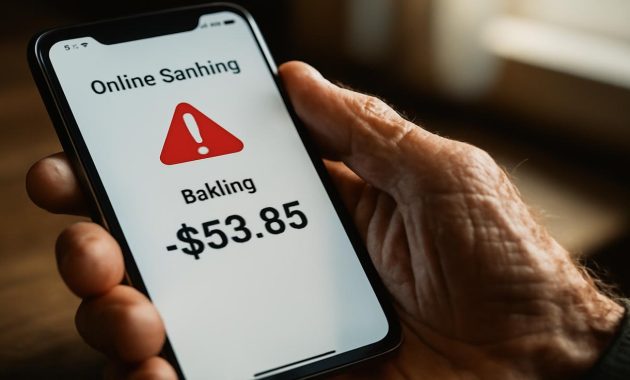
The kettle clicks off just as the morning light slips over the windowsill, turning everything in the little kitchen a soft, forgiving gold. You cradle your mug, listen to the familiar creaks of the house waking up, and reach for the same thing you always do on the first Wednesday of the month: your bank statement. It’s a habit formed over decades, a quiet ritual as ordinary as the way the clock on the wall ticks — steady, predictable, reassuring. Only this March, that ritual suddenly feels different. There’s a knot in your stomach you can’t quite name. Because somewhere between the headlines, the letters you half-read, and the snippets of conversation on the bus, you’ve heard it: a warning for state pensioners born before 1959 to check their bank accounts on Wednesday morning. And it isn’t the kind of warning you can brush aside.
The Quiet Wednesday That Turned Into a Question
Outside, the street looks like any other March morning in Britain — hedges ragged from winter, daffodils insisting on their right to bloom, the air still carrying that faint cold that lingers in the bones. Inside, the glow of your phone or the rounded numbers on your paper statement become the whole world for a moment. You’ve learned to live by those numbers.
For many state pensioners born before 1959, the state pension isn’t just a monthly figure; it’s the line that divides “enough to manage” from “where do I cut back next?” The pension lands in the account, and life arranges itself around it: food, heating, rent or mortgage, bus fares, birthday cards for the grandchildren, a box of biscuits when they visit. It’s a delicate balance held together by routine.
So when an “urgent warning” starts doing the rounds — on the news, mentioned by friends, muttered in queue at the post office — it doesn’t feel like just another piece of distant bureaucracy. It feels personal, unsettling, like the floorboards of your month might not be entirely solid. Something about March. Something about payment dates. Something about checking, double-checking, not assuming that the money is where it’s supposed to be.
A Month of Margins: Why March Matters
March has always been an odd month. It’s neither the sharp, honest cold of January nor the soft surrender of April. It’s in-between — and in-between is where small changes can tilt a careful life off balance. The gas bill still bites. The days are a little longer, but not quite warm enough to leave the heating off. New tax years loom, budgets shuffle, and quiet adjustments are made in offices that feel a world away from your kitchen table.
For pensioners born before 1959, this particular March carries a sharper edge. Maybe you’ve seen a headline hinting at changes, delays, or checks. Maybe your neighbour knocked on your door, saying, “They’re telling us to look at our bank on Wednesday morning — don’t just assume it’s gone in.” There’s a sense of something shifting under the surface, even if you can’t see the whole machinery moving.
You’d be forgiven for thinking of the system as a machine so big it can’t possibly notice you. But that’s precisely why this warning matters. Systems change. Payment cycles adjust around bank holidays or midweek calendars. Occasional errors creep in, especially in months dense with administrative shifts. The March in which the first Wednesday feels less like routine and more like a crossroads is the March you’re living through now.
The First Wednesday: A Small Window, A Big Check
That Wednesday morning in March — whatever the exact date falls on this year — isn’t just another square on the calendar. It’s a checkpoint. A pause. A moment to sit with your cup of tea or coffee, open your online banking app or your paper statement, and really look.
This isn’t about panic. It’s about noticing. It’s about knowing, with certainty, whether your state pension has been paid in full, on time, and as expected. For someone born before 1959, even a small discrepancy is not cosmetic — it has weight. A missing payment can ripple through the whole month. A smaller-than-expected figure can turn a week into a calculation rather than a plan.
Imagine catching it early, on that Wednesday morning, instead of on a Friday afternoon when the lines are longer, when offices are closing, when the wait for corrections stretches into the following week. That’s what this urgent warning is nudging you toward: not worry, but attention. A careful, deliberate glance at the numbers that underpin your days.
Stories Written in Numbers and Receipts
Across the country, quiet stories unfold behind closed doors, all threaded together by one thing: the arrival of a pension payment. In a small bungalow in the Midlands, a widower lines up his bills on the table like a deck of cards. In a flat overlooking a grey northern high street, a grandmother scribbles figures in the margin of a supermarket leaflet. In a seaside town, a former factory worker still rises before dawn, checking her account before taking her usual walk by the water.
Each of them may have heard some version of the same uncertainty about March. A rumour of payment dates moving by a day or two around bank holidays. An official letter that arrived with language too stiff to feel real. A friend who mentioned a missing payment once, years ago, that took phone calls and patience to put right.
For those born before 1959, money isn’t an abstract concept of “financial planning” spoken in warm offices with free coffee. It’s the difference between topping up the meter and sitting in the dark, between turning on the heating and wrapping another blanket around your shoulders. In that context, the idea of “just checking your bank account” on a particular Wednesday becomes more than a casual suggestion. It becomes self-defence.
Reading the Digital River: Looking at Your Account with Clear Eyes
Chances are, the first glance you cast at your balance is instinctive. You scan for the familiar pattern: a line with “State Pension” or a similar label, the amount you’ve come to recognise. But on this March Wednesday, it’s worth slowing down, taking a breath, and really reading the digital river of numbers flowing across your screen.
Note the date the payment landed. Is it the same weekday pattern as usual? Has it slipped forward or back by a day or two? Has the amount changed — even slightly? Sometimes, official adjustments or cost-of-living uplifts introduce new figures. Sometimes an error, a delay, or a processing quirk introduces the wrong ones.
For many, phones and computers can still feel like foreign territory. Yet, weirdly, that’s where some of your most essential truths now live — in the quiet glow of an app, the printed lines on a statement, the numbers that no longer arrive in cash but as invisible promises in the system. Learning to read those promises clearly is a kind of literacy all its own.
| What to Check | What You’re Looking For | Why It Matters |
|---|---|---|
| Payment Date | Is it the expected Wednesday in March, or has it shifted? | Unexpected changes may signal delays or calendar-related adjustments. |
| Amount Received | Does the figure match your usual pension, or any increase you were told to expect? | Even small differences can affect your budget and may need explanation. |
| Reference/Description | Is the payment clearly marked as your state pension? | A clear label helps you confirm it’s the correct deposit, not something else. |
| Previous Month’s Entry | Compare with February’s payment details. | Spotting changes is easier side-by-side than from memory alone. |
| Any Missing Days | Look for gaps where money you rely on should have arrived. | Catching missing funds early gives you more time to get help. |
Born Before 1959: A Generation Caught in the Middle
Those who arrived in the world before 1959 carry histories that don’t fit neatly in forms and systems. You grew up with ration books or the echo of them. You watched jobs appear and vanish. You saw currencies re-coloured, industries automated, promises rewritten. You didn’t grow up expecting to navigate apps, automated phone menus, and online portals just to make sure your pension reached you safely. Yet here you are, standing at the intersection of the old and the new.
Being urged to check your bank account on a specific Wednesday in March can feel like just one more burden on your shoulders — another thing that used to be straightforward, now wrapped in new layers of uncertainty. But beneath the frustration sits something clearer: this warning recognises that you are the ones for whom a delayed or missing payment can land hardest. You’re more likely to be retired, more likely to live on fixed incomes, and more likely to feel the chill of any gap in support.
Behind this March alert lies a simple truth: you should not have to discover a problem when it’s already become a crisis. If a payment hasn’t arrived, or if the amount is wrong, the earlier you know, the more power you have to react. To call. To ask. To push a system that sometimes forgets the human face on the other end.
What If the Money Isn’t There?
Picture this: the kettle boils, the light falls across the table, and your account shows… less than you expected. Or nothing at all where your state pension should be. The familiar line is missing. Your heart skips — then starts racing.
In that moment, the world can narrow to a point. It’s tempting to think, “Maybe it will sort itself out by tomorrow,” to wait, to hope. But that’s where this March warning insists on another path. You’ve earned the right to be proactive.
Start by gathering what you can: your National Insurance number, your account details, the last statement that shows the pension arriving correctly. Write down what you see on the screen in front of you — date, time, the exact balance. If you keep a diary of your finances, make a note there. These are the small anchors that keep you steady when speaking to anyone about your money.
Then, when you do reach out — whether by phone, in writing, or in person — you do so not as a confused voice lost in the system, but as someone who has seen clearly, recorded carefully, and is asking legitimate questions about what you are owed.
The Human Side of an “Urgent Warning”
The phrase “urgent warning” sounds dramatic when you see it splashed across a headline. But day to day, urgency looks softer, quieter. It looks like you making space at the table for your bank statement before you make space for the crossword. It looks like conversations over garden fences or in the launderette: “Have you checked yours yet?” “Did it go in?” “Was it the right amount?”
Urgency, in this context, is just another word for care. For vigilance. For refusing to let the vast, impersonal systems that hold your pension treat you as a forgotten line-item. You are not an afterthought. You are someone who has worked, raised families, kept communities alive, adapted to changes that would have baffled your younger selves — and now you’re navigating one more change, one more check, one more step.
In March, that step lands on a Wednesday morning. Outside, the world will look ordinary. Buses will come and go. Sparrows will argue in hedges. Clouds will move lazily over rooftops. But at kitchen tables and in living rooms up and down the country, state pensioners born before 1959 will be doing something quietly powerful: taking a moment to make sure their lives, measured in numbers and needs, are still being honoured.
Turning a One-Off Check into a Gentle Habit
This March’s Wednesday may be the one people talk about, but there’s something to be said for letting this moment reshape your month in a gentler, lasting way. Instead of a one-time panic, let it become a ritual, as familiar as watering the plants or straightening the curtains.
Pick a day each month — perhaps always the morning your pension is due, or always the following day to allow for any minor delays. Make it part of your routine. Cup of tea, quiet moment, and a thorough look at the account you depend on. Over time, the fear that clings to phrases like “urgent warning” can soften into something sturdier: confidence in your own awareness.
Your life has already taught you how to stretch, how to mend, how to adapt. Checking your bank account on that Wednesday morning in March, and on future months beyond it, is just another thread in that long fabric of looking after yourself, one small, steady action at a time.
FAQs: State Pensioners Born Before 1959 and the March Bank Account Check
Why are state pensioners born before 1959 being urged to check their bank accounts in March?
Because many in this age group rely heavily on their state pension, any delay, error, or unexpected change in payment can have a serious impact. March often coincides with administrative shifts and calendar quirks, so taking a careful look on the relevant Wednesday helps you spot problems early.
What exactly should I look for when I check my bank account?
Check that your state pension has arrived on the expected date, that the amount matches what you usually receive (or any increase you’ve been told to expect), and that it’s clearly labelled. Compare it to the previous month’s payment to spot any differences.
What should I do if my pension payment is missing or lower than expected?
Note the date, time, and balance you see. Gather recent statements, your National Insurance number, and any letters about your pension. Then contact the relevant pension authority or support service as soon as you can to report the issue and seek clarification.
Is this a one-time problem just for this March?
The focus on this March’s Wednesday is a way of drawing attention to a period when issues are more likely to surface. But staying in the habit of checking your payments each month is a good form of ongoing protection, not just for one year or one date.
I’m not confident with online banking. How can I still check properly?
You can request paper statements from your bank, use cash machines that show recent transactions, or ask bank staff to help you read your latest deposits. If you trust a family member or friend, you can also ask them to help you look — but keep your security details private and safe.
Does this warning mean everyone will have a problem with their payment?
No. Many people will see their usual payment arrive exactly as expected. The warning is about vigilance, not assumption. It’s there to help those who might experience a problem catch it quickly, rather than discover it when it’s already causing hardship.
How can I feel less anxious about my pension each month?
Creating a simple monthly routine can help: set a regular time to check your account, keep a small notebook of key figures and payment dates, and know where your important documents are. Awareness and organisation can turn anxiety into calm, practical action.