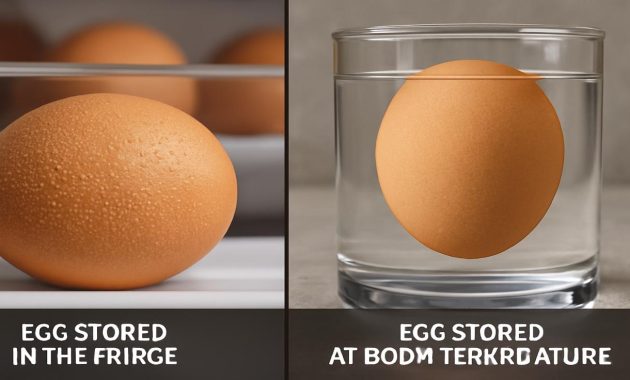
The egg sat in the palm of my hand, cool and smooth, still dusted with a whisper of straw. Somewhere outside, a hen complained lazily into the afternoon light, and the kitchen smelled faintly of coffee and warm bread. Without thinking, I did what most people do: I turned toward the fridge. Then the farmer across the table cleared his throat and said, almost gently, “If you want to know if that egg is really fresh, don’t you dare put it in there yet.”
I laughed, then realized he wasn’t joking. He pointed at a simple bowl of water on the counter. “First,” he said, “we see how honest the egg is.”
The Water Test: Listening to What an Egg Is Trying to Tell You
The bowl of water caught the late-morning sun, turning the surface into a sheet of silver. The farmer slipped the egg into the water with the care of someone who has done this a thousand times. The egg sank quietly, came to rest on its side at the bottom, and stayed there, still as a stone.
“There,” he nodded. “That’s what a fresh egg looks like when it tells the truth.”
Beneath the surface, a tiny story was unfolding. An egg, when newly laid, is dense. Its contents, snug and tightly packed, leave only a small air cell inside the shell. Drop that egg into room-temperature water, and it sinks, lying flat, like a stone on a riverbed. No drama, no wobbling. Just certainty.
As the days pass, however, the egg begins to change. A little moisture evaporates through the shell, and air moves in. The air cell grows, and the egg slowly becomes more buoyant. If the egg tilts, standing at an angle, it’s older—but still likely usable. When it stands straight up like a tiny submarine, it’s on the edge. If it floats to the surface and refuses to sink at all, its story is over. Time to say goodbye.
Here’s the quiet twist: this simple test works best when the egg hasn’t been shocked by cold—or dragged out of the fridge and thrown into warm water. Temperature changes affect the internal pressure, condensation forms on the shell, and suddenly you’re not just testing freshness; you’re testing how violently you’ve messed with the egg’s natural balance.
To see the real truth of an egg, you have to meet it where it lives: at room temperature, the way the hen left it. That’s the first clue that the fridge, for all its modern convenience, isn’t always the egg’s best ally—at least not at first.
Why Fridges and Eggshells Don’t Always Get Along
Walk into most kitchens in Europe or on small farms around the world, and you’ll find something quietly shocking to a lot of people raised on supermarket rules: cartons of eggs sitting calmly on the counter. No panic. No warnings. Just eggs, exactly where you can see and reach them, as if they belonged there.
When you chill a fresh egg straight from the nest, you’re doing more than making it cold. The sudden drop in temperature can cause the contents inside the shell to contract. That contracting mass tugs slightly at the delicate inner membranes. On the surface of the shell, the cold air meets the moisture in your kitchen and leaves a thin film of condensation—a soft, invisible sweat. That moisture turns the shell into a sticky landing strip for bacteria.
Once water clings to the shell, microscopic pores—tiny channels designed by nature to let air move in and out for a developing chick—become pathways. If an egg is also unwashed and still wearing its natural bloom (that thin, protective coating the hen gives it), condensation can weaken that shield. Over time, it’s not simply that the egg is colder; it’s also more vulnerable.
There’s another quiet betrayal that happens in the fridge: flavor fade. Eggshells are porous not just to air and moisture, but to odors. A freshly cracked egg has a gentle, creamy scent, faintly sweet and almost buttery when it hits a warm pan. But store that egg next to last night’s leftover stir-fry or a half-cut onion, and the shell starts listening. Days later, you might not be able to say exactly what changed, only that the egg tastes less like itself and more like the fridge.
Room-temperature storage, for truly fresh, unwashed eggs, slows down these intrusions. Their natural protective bloom acts like a raincoat, keeping bacteria and smells at bay. On a quiet counter, out of direct sunlight and away from heat, these eggs can sit, steady and self-contained, while you actually watch them age in a way that makes sense: by how they behave, not by the date stamp on a cardboard lid.
Bloom, Shell, and the Difference Between a Nest and a Supermarket
To understand why some eggs should never see the inside of your fridge—at least not right away—you have to get closer to the hen. Picture a warm nesting box, feathers, straw, and that soft, satisfied rustle that chickens make when they’ve finished their work. When a hen lays an egg, she doesn’t just drop a shell and walk away. She gives it something extra: a barely visible, waxy coating called the bloom, or cuticle.
This bloom is nature’s sealant. It closes off the shell’s pores, locking out much of the bacteria and dust swirling through the coop. It keeps moisture in, air in check, and the inside of the egg stable enough to support life if it’s destined to become a chick—or breakfast, if it’s destined for your pan.
Now picture the journey of most supermarket eggs. They’re laid, collected, sorted, and—crucially—washed. Often at high speed and with detergents or sanitizing agents. That process strips away the bloom in the name of safety and visual perfection. The eggs arrive at the store looking clean and uniform, but also naked. Without the bloom, they depend on steady refrigeration to stay safe. Their shells are still porous, but now there’s no natural overcoat left.
Farm-fresh, unwashed eggs live in a different story. They still wear that invisible armor. On a shaded counter, they can remain stable for days or even weeks, aging slowly and gracefully. This is where the “test for true freshness” becomes almost poetic: instead of a printed date, you read the egg itself. You float it. You feel its weight in your hand. You listen to the subtle slosh if you shake it ever so gently—no slosh for fresh, a gentle wobble for older.
The fridge, in this natural timeline, is like winter: a season you turn to when the egg is already older, when you want to pause the story, not start it. By rushing a freshly laid, bloom-covered egg into the icy confines of a refrigerator, you cut short that gentle, observable arc of aging—and sometimes, you even interfere with the bloom’s protective work.
The Quiet Art of Keeping Eggs at Room Temperature
There is a particular kind of comfort in walking into a kitchen where eggs live out on the counter. They sit there with a kind of old-fashioned ease, like a loaf of bread in a cloth bag or a jar of wooden spoons. But keeping eggs out of the fridge isn’t about quaint aesthetics; it’s a practice built on paying close attention.
First, it matters what sort of eggs you have. If they’re truly farm-fresh, unwashed, and laid within the last few days, they are ideal candidates for room-temperature storage. They prefer a place that is cool but not cold—a shaded corner away from the stove, the dishwasher’s steam, or a sunny window. A ceramic bowl or a simple carton works fine. No need for elaborate containers; just protection from knocks and direct heat.
Each morning, you can pause for a moment and let your fingertips tell you what the eggs won’t say aloud. Does the shell feel chalky and firm, or slightly thin? Do the eggs still sit low and heavy in your palm, or has a faint hollowness begun to show in their balance? Once a week—or more often if you’re curious—you can fill a small bowl with room-temperature water and test one or two. The bowl becomes a tiny oracle: sink flat (very fresh), tilt (aging but good), stand (use soon), float (no longer safe).
Storing your eggs this way invites you to cook more intuitively. Need a yolk that sits proud and tight for poaching or a runny-centered fried egg? Reach for the ones you tested yesterday that sank like stones. Making a custard or a cake where an older, looser white will blend more easily? Now those eggs that stand a little taller in water finally have their calling.
The secret is rhythm. Instead of buying a dozen anonymous, refrigerated eggs and forgetting them until the carton is half-empty and the dates are fuzzy, you move in step with your eggs. The fridge becomes a tool you reach for only when needed—when an egg has aged enough on the counter that you want to slow it down, not when it’s still glowing with fresh-from-the-nest warmth.
When to Trust the Counter and When the Fridge Has a Role
Not all eggs are born into the same story. Some arrive in your kitchen already chilled, washed, and date-stamped. Others come straight from a neighbor’s hens, still smudged with the field. And here, the rules shift.
If your eggs are from a supermarket and have been refrigerated from the moment they left the packing facility, they’re living in a cold chain. Once that chain starts, it’s best not to break it. Taking cold eggs out and leaving them on the counter for days, then putting them back into the fridge, means cycles of condensation, warming, and cooling. That cycle encourages the very bacterial movement the wash step tried to prevent. In that case, the fridge is their necessary home, and the water test should be done quickly, then they should go right back in.
If your eggs come from a small farm or backyard and you know they haven’t been washed, you have more freedom. Their natural bloom gives you an option: store them at room temperature, test them in water as they age, move older ones to the fridge if you need to keep them longer. In this narrative, refrigeration becomes an extension of time—not a starting line.
To make this easier, some people like to mark eggs lightly in pencil with the date they were laid, or simply rotate them in the bowl, newer eggs going to the bottom, older ones working their way to the top. Others just rely on the weekly bowl of water. However you do it, the point is the same: you’re no longer blindly trusting a printed date, but reading the egg itself.
And here is where the central truth quietly emerges: if you want to test an egg for true freshness, you need to meet it in its natural state—unshocked, unrefrigerated, breathing gently through its shell. The fridge, useful as it is, mutes some of the signs. The float test becomes less reliable if condensation has come and gone. The shell may have hairline fractures from knocks on cold shelves. In protecting the egg from time, you can blur your ability to tell where, exactly, in its story it stands.
How Different Storage Choices Compare
| Storage Method | Egg Type | Freshness Clarity | Notes |
|---|---|---|---|
| Room temperature, unwashed | Farm-fresh with bloom | Very clear with water test | Ideal for observing true freshness; use within a couple of weeks, then chill if needed. |
| Refrigerated from the start | Washed, supermarket | Moderately clear | Safe and long-lasting, but cold and condensation can blur some freshness signs. |
| Refrigerated after some days on counter | Unwashed, farm-fresh | Still clear if tested before chilling | Best of both worlds: you read freshness first, then slow the aging. |
| Cycles of fridge–counter–fridge | Any egg type | Unreliable | Encourages condensation; can mislead your freshness tests and invite bacteria. |
The Egg as a Tiny Clock You Can Actually Read
In a world of barcodes and expiration dates printed by machines, there is something deeply grounding about an object that tells you its own age, if you’re willing to listen. An egg is like a tiny, edible clock. It doesn’t tick, exactly, but it shifts: weight, buoyancy, firmness, smell, color of the yolk.
Crack a truly fresh, never-refrigerated egg into a bowl and watch what happens. The white gathers close to the yolk in a tight, high mound. The yolk stands proud, round as a marble, glowing deep yellow or orange, depending on the hen’s diet. When that egg hits a hot pan, it holds its shape almost stubbornly, a tidy, compact universe.
Do the same with an older egg—one that tilts or stands in the water test. The white loosens, spreading toward the rim of the bowl like fog. The yolk relaxes, flattening slightly. This isn’t a tragedy; it’s simply a different moment in the egg’s life. That older egg might blend more easily into a batter, fold into a silky omelet, or whip into meringue with less resistance.
The refrigerator slows these changes but doesn’t erase them. It can also dull your sense of them. When all your eggs arrive already chilled, stored beside wilting lettuce and jars of condiments, you lose the chance to feel how quickly or slowly they shift at room temperature, to sense the difference between “laid three days ago” and “laid three weeks ago.” Everything becomes averaged-out cold.
By resisting the impulse to rush every egg into the fridge, you give yourself a chance to become fluent in these small differences. You learn which eggs are perfect for poaching, which are destined for baking, which are best eaten tonight. You stop trusting the blind authority of a date stamp and start trusting your eyes, your hands, your nose.
FAQs About Storing Eggs and Testing for True Freshness
Can I always keep eggs out of the fridge?
No. You can safely keep unwashed, farm-fresh eggs at room temperature for a period, usually up to a couple of weeks if stored cool and out of sunlight. But washed, commercial eggs that have already been refrigerated should stay in the fridge. Their protective bloom has been removed, and they rely on cold storage for safety.
How exactly do I do the water test?
Fill a bowl with room-temperature water deep enough to fully submerge an egg. Gently place the egg in:
- If it sinks and lies flat: very fresh.
- If it sinks but tilts upward: older, but still safe.
- If it stands upright on the bottom: use soon.
- If it floats to the top: discard; it’s no longer safe.
Does refrigerating eggs make the water test useless?
Not useless, but less clear. Refrigerated eggs can sweat when moved to warmer air, and condensation may influence the shell and internal pressure. The overall trend (sinking vs. floating) still matters, but you get the most honest reading from eggs that have been stored consistently, especially at room temperature if they’re unwashed.
Is it safe to eat eggs that have never been in the fridge?
It can be, if those eggs are unwashed, freshly laid, and stored properly at a stable, cool room temperature. Many people around the world do this as a standard practice. The key is knowing the source of your eggs, keeping them clean but not aggressively washed, and using basic tests (like the water test and smell) before eating.
What if I cracked an egg and it smells a little “off” but it sank in water?
Trust your senses. The water test is a valuable tool, but smell and appearance matter more. If an egg smells sulfurous, rotten, or simply strange, or if the whites are oddly discolored, discard it—even if it passed the float test.
Why do eggs in some countries sit on store shelves, not in fridges?
Different countries have different handling methods. In many places, eggs aren’t aggressively washed or sanitized, so the natural bloom remains and room-temperature storage is common. In others, such as where eggs are washed and chilled early in their journey, refrigeration is the norm for safety.
So, should I never store eggs in the fridge?
“Never” isn’t the whole story. The deeper truth is this: don’t rush fresh, unwashed eggs into the fridge if you want to test and experience their true freshness. Give them time at room temperature first, read their signals with the water test and your senses, and use the fridge later as a way to gently slow an egg’s aging—rather than as its very first destination.