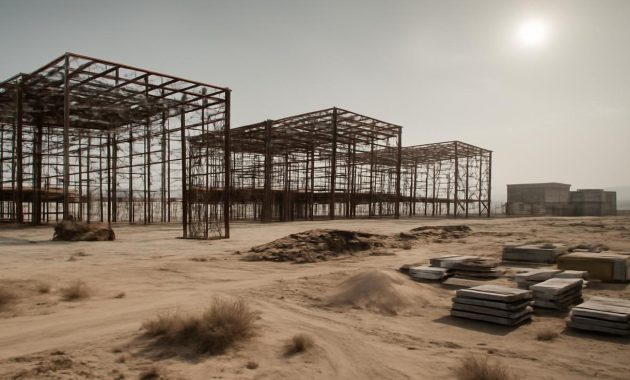
The desert was supposed to echo with the sound of clapperboards and camera calls, not the restless wind. On the edge of a vast Saudi plateau, survey stakes still stand in the sand, marking out roads that were never laid and studios that were never built. A couple of years ago, this was being talked about as the future capital of Middle Eastern cinema—the region’s largest film production complex, a glittering hub that would draw Hollywood, Bollywood, and Arab auteurs to the same horizon. Now, the talk is quieter. The plan, insiders say, has been shelved. Not officially killed, not publicly mourned—just quietly abandoned, as if the dream itself slipped away in the heat haze.
The Dream in the Desert
When the project was first whispered about in industry corridors, it sounded like a manifesto disguised as a studio lot. Imagine a sprawling complex: climate-controlled soundstages big enough to swallow aircraft hangars, backlot sets that could morph from old Cairo streets to futuristic sci‑fi cities, editing suites humming through the night. The location, somewhere between the pulse of Riyadh and the calm of the open desert, was meant to send a message—Saudi Arabia was no longer the place that banned cinemas; it was the place where films would be born.
On paper, it had everything. Tax rebates built to rival the most generous European schemes. Subsidies for international productions. Promises of streamlined visas and one‑stop permits. A country rebranding itself as a playground for culture, tourism, and “giga‑projects” that tried to out‑imagine one another. For a while, if you listened in on the right conference panels and film market cocktail parties, you would hear producers saying the same thing: “If they really pull this off, it could change the game.”
The game, it turns out, is harder to change than the brochures suggested.
On Location: A Country Rewriting Its Script
To understand why, you have to feel the place as much as analyze it. Stand in an old Riyadh neighborhood on a mild winter night: the air is cool and dry, carrying distant threads of oud from a passing car, the glow of coffee shops open well past midnight. This is not the same country that, only a decade ago, treated cinema as a suspect art. Multiplexes now flicker in shopping malls, pop‑up film festivals announce themselves on Instagram, and young Saudis leave theaters talking—not in hushed tones, but in the excited, overlapping chatter that only happens when people feel a door has opened.
Culturally, the script is being rewritten at a pace that almost feels vertiginous. Music concerts, fashion events, comedy festivals: all of them would have felt improbable in the recent past. The cinema project—a flagship studio complex that would dwarf anything else in the region—grew out of that same rush. It wasn’t just about buildings and backlots; it was about staking a claim: Saudi Arabia would not only watch the world’s stories, it would host their creation.
It made a certain sense. The landscapes alone are a director’s dream: copper‑red mountains in the west, empty quarter dunes that look like the surface of Mars, ancient sandstone formations where the light changes by the minute. Production scouts from abroad began posting sun‑bleached photos from these locations, hinting at what might be possible. The country, in its own way, started to see itself through the camera’s frame.
When Incentives Aren’t Enough
Money, in the film industry, talks loudly. But it doesn’t always say what you want it to. Saudi officials made sure the financial pitch was polished: rebates on qualifying spend, funding pools for co‑productions, talk of support for training local crews. Industry press releases followed the familiar script—percentages, caps, qualifying criteria—all the things producers scroll through on airplanes while calculating their next move.
And yet, the response was cautious. Major studios listened politely, ran the numbers, and hesitated. Behind closed doors, their questions were blunt: Could they really tell the kinds of stories they wanted here? What would happen if a script brushed against sensitive historical or social topics? Would approvals be fast enough to keep an expensive shoot on schedule? Could they count on seasoned local crew, or would they have to fly in everyone from abroad?
The incentives, generous on paper, kept running into the same invisible wall: trust. Trust not only in contracts and rebates, but in creative freedom, regulatory stability, and the quiet, unglamorous infrastructure that makes a film shoot work—grips, gaffers, drivers who know how to move equipment through busy streets without losing a day to confusion.
The region is no blank canvas. Nearby competitors—Abu Dhabi, Dubai, Jordan, Morocco—have spent years accumulating that trust, one production at a time. They have their own incentive systems, their own desert vistas and historic cities, and crucially, a track record. Faced with a choice between established hubs and a remarkably ambitious newcomer, many global studios chose the safer bet, even if it meant leaving Saudi money on the table.
The Quiet Retreat
There was no dramatic announcement. No admission that the “largest film production complex in the region” would not, after all, rise from the sand as promised. Instead, there was a gradual fading. The project’s name appeared less frequently in official speeches. Renderings once showcased at conferences slipped into the background. Executives who had once talked in sweeping terms about “transforming global content production” shifted to more modest language about “supporting the local ecosystem.”
In the film world, silence can be eloquent. A few producers who had been courted early on began hearing that timelines were “under review.” Some were told that the project would be “phased” or “re‑scoped,” phrases that often serve as halfway houses between ambition and abandonment. Industry insiders started using a softer phrase: “The mega‑studio plan is on the back burner.” Off the record, some went further: “It’s done. They’ve moved on.”
On the ground, the signs are prosaic. A patch of land once discussed as a future backlot still looks like ordinary desert. Temporary project offices host different meetings now. In a country juggling multiple giga‑projects—from new futuristic cities to entertainment districts that mimic theme park skylines—priorities shift. Money flows elsewhere. The story changes.
A Region Already in Competition
Part of that change comes down to geography and timing. Saudi Arabia stepped into a regional field that was already well marked. The United Arab Emirates has spent years attracting international shoots with streamlined permits and experienced crews. Jordan’s rugged mountains and canyons have hosted intergalactic war scenes and biblical epics. Morocco’s cities have played everything from ancient Carthage to modern‑day espionage hot spots.
The race for production dollars in the Middle East and North Africa has, for years, looked like a shifting mosaic of tax rates, exchange deals, and aesthetic offerings. Saudi Arabia’s planned complex tried to leapfrog that incremental evolution by going straight for the superlative—the biggest, the most ambitious, the flagship. But superlatives are heavy things to carry, especially in a business where relationships and reliability often matter more than scale.
Studios, in their risk‑averse way, read the regional map and calculated the odds. Why commit to an untested mega‑hub when smaller, proven hubs can already deliver what they need? Why front‑load the risk on a multi‑year infrastructure rollout, when political currents in the wider region still run unpredictable? The result was not a dramatic rejection, but something more fatal to any mega‑plan: a collective shrug.
| Production Hub | Key Strength | Main Challenge |
|---|---|---|
| Saudi Arabia (planned complex) | Ambitious incentives, diverse landscapes, major state backing | Limited track record, questions over creative freedom and stability |
| UAE | Established studios, experienced crew base, efficient permits | Higher overall costs, competition with other global hubs |
| Jordan | Distinctive landscapes, history with major international shoots | Limited capacity for very large‑scale, concurrent productions |
| Morocco | Versatile locations, cost‑effective crews, long experience | Intense global competition, infrastructure aging in parts |
Stories That Stay Closer to Home
Yet abandoning the mega‑complex does not mean abandoning film. If anything, it may mark a pivot from a grand, externally focused dream toward something more grounded and internal. When you walk into a modest Saudi production office today, you’re more likely to find a small team hunched over a script about a local family, a coming‑of‑age story, a social drama playing out in a Jeddah alleyway, than a pitch deck for a Hollywood blockbuster chase sequence in the dunes.
There is a growing recognition that you can’t fast‑track an ecosystem by importing it wholesale. Incentives can rent attention; they cannot buy soul. A national cinema grows from filmmakers who know their streets, who have lived with the contradictions of their society, who can translate subtle social codes into dialogue and silence. Those voices are beginning to emerge—not yet in big international numbers, but in the intimate, fragile way that any young film culture does.
In that sense, the quiet shelving of the mega‑project may be less a failure than a correction. Instead of building an enormous stage and hoping the world shows up, the energy is shifting toward smaller, more flexible platforms: film labs, regional festivals, funding for debut features, training programs that pair young Saudis with experienced regional mentors. The goal becomes not to host everyone else’s movies, but to make films that only Saudis, in all their diversity, could make.
What a Studio Can’t Manufacture
Anyone who has spent time on a real working set knows that the magic is less about the grandeur of the lot and more about the invisible choreography. It’s the assistant director who can shave ten minutes off each take without anyone feeling rushed. It’s the focus puller who can hold a performance in crisp clarity while the actor moves unpredictably. It’s the runner who knows exactly how long it takes to get from costume to soundstage on a busy day.
These are not things you design in an architectural master plan—they’re things you grow through repetition, through long days and small mistakes, through local war stories about “that one impossible shoot” everyone survived together. The abandoned complex, in its way, was a beautiful drawing of an ecosystem that did not yet exist.
That doesn’t mean Saudi Arabia is starting from zero. International shoots have come, drawn by landscapes and budgets, and each leaves behind a bit of know‑how, a few crew members who now understand how a big‑budget set breathes. But translating that into a self‑sustaining industry takes longer than a single project cycle or investment wave. It requires patience that mega‑projects, built to announce themselves with fanfare, rarely have.
The irony is that some of the most enduring film cultures grew up not in the shadow of massive studio complexes, but in cramped urban apartments and underfunded art schools, where directors borrowed cameras and friends became actors. They were born from necessity, not incentives—from the ache to tell a story, not the promise of a rebate.
The Politics of Silence
Still, the way a project dies matters. A quiet retreat leaves questions hanging in the air. For international partners, it can signal a lack of follow‑through: if the “largest complex” can be shelved so discreetly, what about other long‑term commitments? For local filmmakers, it creates a different kind of unease—were they being invited into a sustainable ecosystem, or just onto the set of a temporary spectacle?
Inside the country, few people speak bluntly about the project’s disappearance. Official optimism is a powerful current. There is always another initiative, another platform, another announcement. In private, though, some creatives admit to a muted disappointment. Not because they believed that one mega‑hub would solve everything, but because it had briefly represented a kind of validation: the sense that their work was being taken seriously on a grand scale.
Then again, there is a kind of freedom in lowered expectations. Without the glare of the “largest in the region” narrative, there is room to experiment in smaller, messier ways. To shoot a short film in a coastal neighborhood without worrying how it fits into a national strategy. To craft a web series that speaks in local slang, aimed at an audience that recognizes the exact brand of chips on the table and the specific way a cousin rolls his eyes.
What Comes After the Grand Announcement
So what does the post‑mega‑complex chapter look like? Likely, it is less cinematic from the outside—and far more meaningful from within. It looks like grants that barely cover costs but buy time for a writer to find the right ending. It looks like small production companies learning, project by project, how to manage cash flow and negotiate distribution. It looks like new Saudi actors, once limited to theater or television, finding their faces on cinema screens and then, gradually, streaming platforms watched far from home.
There will still be partnerships with international studios, still be big shoots flying in when the script demands those specific dunes or cliffs. Incentives will not vanish, but they will be only one instrument in a much more modest orchestra. And somewhere down the line—five years, ten, fifteen—if enough local stories take root, the idea of a major studio complex may resurface. If it does, it will be growing from soil enriched by real films, not just financial forecasts.
In that version of the future, the complex, if it ever rises, might not need to be the largest. It will just need to be lived‑in: scuffed doors where crews have brushed past in a hurry, a favorite corner of the lot where someone always sneaks off to rehearse lines, a coffee stand whose barista knows which directors are impossible before noon. Scale will matter less than memory.
As the sun slides down over the quiet expanse where the mega‑project was once plotted, nothing visibly mourns its absence. The desert is used to plans dissolving into mirage. But somewhere in a crowded apartment, a Saudi filmmaker is revising a script, trimming a line of dialogue, wondering how to stage a crucial scene on a budget that feels like a bad joke. The future of Saudi cinema is probably closer to that room than to any glossy architectural rendering.
Grand complexes make headlines. Small stories make cinema.
FAQ
Was the Saudi film production complex officially canceled?
There has been no widely publicized, formal cancellation, but industry sources and the fading of official references suggest the project has been quietly shelved or significantly downgraded.
Why did the incentives fail to attract major studios?
While financially attractive, the incentives could not overcome concerns about creative freedom, regulatory predictability, limited local crew depth, and competition from established regional hubs with stronger track records.
Does this mean Saudi Arabia is stepping back from film altogether?
No. The country is still investing in cinemas, festivals, and smaller‑scale production support. The shift is away from one gigantic central complex toward a more gradual, ecosystem‑based approach.
How does this affect local Saudi filmmakers?
Local filmmakers lose a potential flagship hub but may gain more realistic, targeted support—labs, grants, and training—that better match their current needs and the stage of the industry.
Could the mega‑studio idea return in the future?
It’s possible. If a strong base of local talent, consistent production activity, and trusted partnerships develops over time, a large dedicated complex could re‑emerge, this time rooted in an existing film culture rather than leading it.