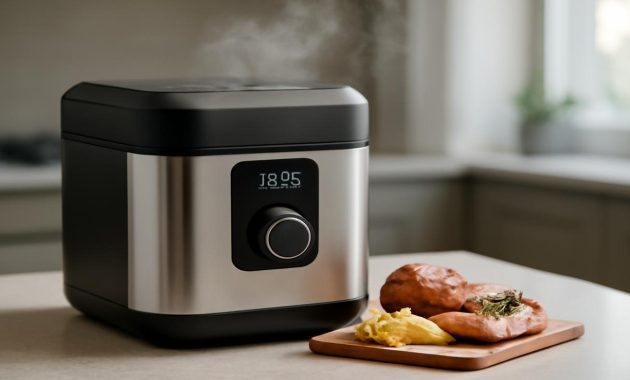
The first thing you notice is the quiet. No angry hiss of oil. No sharp snap of frozen fries hitting hot metal. Just a soft fan hum, the glow of a digital screen, and the smell of…rosemary and garlic drifting through your kitchen like you somehow woke up inside a country bakery. You stand there, barefoot, mug of tea warming your palms, watching a whole dinner transform behind glass—not in a pan, not in your oven, not in the old beloved air fryer, but in a single, boxy little machine doing far more than it looks capable of.
When the Air Fryer Fell from the Pedestal
For a while, the air fryer was the hero of the weeknight kitchen. It swooped in to promise crunchy fries without oil, chicken wings without mess, and “healthy” versions of all the things we secretly wanted to deep-fry. It was loud, a bit bulky, and sometimes smoked up the kitchen, but it felt like a tiny revolution on your countertop.
Then life caught up.
The baskets got greasy and annoying to scrub. The capacity felt too small when friends came over. You realized that while it was brilliant at crisping, it wasn’t really built for much else, not without a lot of improvising. And so the air fryer joined the slow cooker, the sandwich press, and the long-forgotten juicer in the crowded graveyard of “must-have” gadgets.
But something new has been quietly inching its way onto countertops—a kind of all-in-one, Swiss-army-knife appliance that doesn’t just fry with hot air. It roasts, bakes, grills, steams, dehydrates, toasts, slow cooks, reheats, and sometimes even ferments. A new kind of kitchen multi-cooker that doesn’t ask for your loyalty just for fries, but for nearly every meal.
Meet the Multi-Tasker: One Box, Nine Ways to Cook
Imagine this: You come home from work in the winter darkness. You drop a tray of chopped root vegetables—carrots, parsnips, sweet potatoes, onions—drizzled with olive oil, sprinkled with flaky salt and crushed pepper, into the gadget. You tap a preset for “roast,” adjust the temperature with a finger swipe, and walk away. Twenty-five minutes later, the edges are caramelized and toasted, the centers still soft, the kitchen perfumed with that faintly sweet, earthy aroma you usually only get from a good oven roast. Except you didn’t touch the oven at all.
What makes this gadget different from the air fryer is simple: it doesn’t think of itself as a fryer. It thinks of itself as your mini-kitchen. One compact body, nine different cooking methods:
- Air fry – for the familiar crisping you already love.
- Roast – deep, even browning on veggies, meats, and fish.
- Bake – cakes, cookies, breads, and casseroles.
- Grill – those charred stripes and smoky edges without an outdoor barbecue.
- Steam – delicate greens, dumplings, and flaky fish.
- Slow cook – low-and-slow stews and braises that melt into tenderness.
- Dehydrate – fruit chips, jerky, and crunchy vegetable snacks.
- Toast / Reheat – rejuvenating leftovers and crisping breads.
- Broil / Crisp top – that finishing blast of heat for bubbling cheese and crackly skins.
Instead of being forced into one kind of cooking, you start to think in textures, in moods, in time. Lazy Sunday? Let it slow cook a tomato-rich stew. Hot summer night? Steam some fish and asparagus without turning the whole room into an oven. Friends dropping by? Grill skewers and bake a tray of flatbreads in the same device, one after the other, while you pour wine and stay right there in the conversation.
The Secret Language of Heat and Air
At the heart of this new gadget is a simple idea: control. Controlling not just temperature, but how heat moves. Where an air fryer mostly blasts hot air around in a tight space, this machine shifts gears. In roasting mode, it keeps the heat circulating but slower and broader, wrapping your food rather than pummeling it. In baking mode, it stabilizes, giving you even, gentle warmth, so muffins rise instead of collapse. In steam mode, it introduces moisture so tender broccoli doesn’t dry into confetti.
You can hear the difference. Air fry mode has a confident fan whir, the sound of strong air currents rushing through. Slow cook mode is so quiet you forget it’s on, just an occasional relay click and a faint, comforting scent drifting out. Dehydrate mode hums like a distant generator, low and steady, as apples slowly transform into chewy, concentrated sweetness overnight.
And it’s not just how it sounds or smells—it’s how it feels to stand near it. With a big oven, you can sense the blast of heat every time you open the door. This gadget is more contained, like a self-possessed little sun, radiating just enough warmth to remind you something delicious is happening inside.
From Chaos Countertop to Calm Control Center
Close your eyes and picture your kitchen countertop for a moment. Is it crowded? The toaster hiding behind the blender. The coffee machine claiming its territory. Maybe the old air fryer pushed into a corner, taking up space but rarely earning it. This is where the new multi-method gadget quietly starts to feel like more than just another tool—it becomes the editor of your kitchen story.
You realize you don’t need a separate toaster oven. You can live without the bulky dehydrator you bought in a wave of “I’m going to make my own snacks” enthusiasm. The air fryer can finally retire, its basket scratched and its handle a little wobbly. All their roles fold into this single, boxy presence with a clear door and intuitive controls.
The rhythm of your cooking changes, too. Instead of planning meals around what your gadgets can do, you plan meals around what you want to eat, and then simply choose how to make it. Craving something crisp? Use the air fry or broil settings. Need comfort? Slow-cook or roast. Want something light and clean? Steam and then briefly grill for texture.
Even cleanup shifts from a dreaded chore to a manageable pause between bites. One main basket, one tray, maybe a rack. Non-stick, dishwasher-safe in many models, and designed with fewer dark, unreachable crevices. It’s as if the people who built it also got tired of burning their forearms trying to scrub out old machines.
How It Changes the Way You Actually Eat
This isn’t just about convenience; it quietly reshapes your relationship with food. With an old air fryer, everything starts to taste a bit the same—crisp outside, fast-cooked inside, great for certain days but overwhelming if it becomes your default. With nine different methods, texture comes back into your life like a missing sense suddenly restored.
Feel the snap of roasted Brussels sprouts, charred in spots, sweet and nutty beneath. The tender crumble of slow-cooked lamb falling from the bone into a pool of fragrant gravy. The pillowy steam of bao buns, soft as clouds, or the brittle crack of homemade apple chips that shatter between your teeth and release a concentrated burst of autumn.
It becomes easier—almost natural—to eat more real food. Toss whatever vegetables you have with oil and salt, hit roast. Mix oats, mashed banana, and a handful of nuts, bake into thick, rustic bars. Season chickpeas, air fry until crisp, then sprinkle them over a salad that suddenly feels hearty and exciting instead of dutiful and dull. In giving you more ways to cook, the gadget quietly gives you more reasons to choose ingredients that feel alive.
A Day in the Life with a Nine-Method Gadget
To understand how it slips into your world, you have to walk through an ordinary day with it.
Morning. You stumble into the kitchen, still a little foggy. Instead of juggling a toaster and a pan, you slice a hunk of sourdough, scatter cheese and tomato on top, and tap the “toast” or “bake” setting. While it warms, you make coffee, listening to the low hum. When you take your first bite, the bread crackles, the cheese is just beginning to brown, and there’s no greasy pan glaring at you from the sink.
Midday. Lunch is leftovers, but not the limp, rubbery kind microwaves often deliver. You slide last night’s roast chicken and vegetables onto a tray, hit “reheat” or a light “air fry,” and they return to life. Crisp skin again. Potatoes with a fresh snap on the outside. Suddenly it doesn’t feel like leftovers; it feels like a second chance.
Afternoon. Maybe today you decide to experiment. You slice apples thin, toss them with cinnamon, and lay them flat on the dehydrator rack. Over the next few hours, the kitchen fills with a gentle, cozy scent, like someone’s been baking pie. By evening, you have a jar of chewy, homemade apple chips to grab whenever you wander through looking for a snack.
Evening. You’re tired, but you want something that feels like you took care of yourself. You scatter cherry tomatoes, garlic, and onions into the gadget with olive oil and a pinch of chili flakes. Fifteen or twenty minutes of roasting later, you stir in cooked pasta and a splash of the starchy water, finish with herbs. While that was roasting, a small fillet of salmon steamed above, bathed in lemon slices and dill. Two cooking methods, one device, one pan to wash, and a dinner that tastes like a restaurant meal made by somebody who actually knows what you needed at the end of the day.
Comparing the Old Hero and the New One
It helps to see the trade in cold, clear terms. Below is a simple comparison that fits neatly on your phone screen, just like the gadget itself fits neatly on your counter:
| Feature | Traditional Air Fryer | 9-Method Multi-Cooker |
|---|---|---|
| Primary Purpose | Crisping and “frying” with hot air | Multiple cooking styles in one device |
| Cooking Methods | 1–3 (air fry, sometimes bake/roast) | Up to 9 (air fry, roast, bake, grill, steam, slow cook, dehydrate, toast/reheat, broil) |
| Space on Counter | Single-use footprint | Replaces several gadgets at once |
| Meal Variety | Mostly crisped foods and sides | Full meals: mains, sides, snacks, desserts |
| Learning Curve | Very simple but limited | Slightly higher, but with presets and guides |
| Energy Efficiency | Efficient for small crispy items | Efficient oven alternative for many dishes |
You don’t have to be a gadget person to see why the air fryer starts to look…one-dimensional. It did its job well. It changed weeknight fries forever. And now, gently, it’s time for something that can handle the whole menu.
The Quiet Joy of Letting One Tool Do More
There’s an underrated relief in owning fewer, better things. In knowing that the tools in your kitchen earn their space not with one flashy trick but with quiet, everyday usefulness. The new nine-method gadget isn’t about chasing novelty; it’s about shrinking the gap between “I wish I could cook that” and “I actually did.”
You don’t have to haul out a slow cooker for a winter braise or dig a dehydrator from the back of a cabinet to make your own fruit snacks. You’re less likely to reach for packaged, processed options when you know that turning simple ingredients into something comforting or exciting is as easy as choosing the right setting and pressing start.
Most of all, it changes your relationship with time. Meals no longer feel like an obstacle between work and the couch. They become small acts of care, briefer and simpler than you expected. Chop, season, slide in, tap: roast. Or steam. Or bake. While it works, you sit at the table, scroll a bit, talk to someone you love, stare out the window at the weather doing its thing. When the timer chimes, the air that rushes out as you open the door is thick with promise.
That’s when you realize the goodbye to the air fryer isn’t a rejection. It’s an evolution. You’re trading a one-note gadget for a compact, quiet, capable partner in the daily ritual of feeding yourself.
And tomorrow, when the kitchen is still sleepy and you reach for that first slice of toast or reheat last night’s roast veggies into a breakfast hash, the glow from that little glass window will feel familiar. Not showy, not trendy—just ready, again, to help you turn ordinary ingredients into something that tastes like time well spent.
FAQs
Is a multi-method cooker really worth upgrading from an air fryer?
If you only ever use your air fryer for frozen fries and nuggets, you might be content. But if you want to roast, bake, steam, slow cook, and dehydrate without more appliances, a nine-method cooker gives you far more flexibility in the same (or slightly larger) footprint.
Does it still make food as crispy as a regular air fryer?
Yes. The air fry and broil modes are designed to deliver the same crisp textures you expect from a standard air fryer. In many cases, the results are better because you can fine-tune temperature and fan power more precisely.
Will it replace my oven?
For small to medium households, it can handle a surprising amount of everyday cooking—roasts, bakes, reheating, and more. You may find you use your full-size oven less often, especially in warmer months or for smaller batches.
Is it complicated to learn all nine cooking methods?
Most models come with presets, visual guides, and clear manuals. You can start with familiar modes—air fry and roast—and gradually explore the others. After a few meals, switching between methods feels intuitive.
What kinds of meals benefit most from this type of gadget?
Sheet-pan style dinners, roasted vegetables, baked goods, slow-cooked stews, grilled proteins, steamed fish and greens, homemade snacks like kale chips or dried fruit, and leftovers that need to be reheated without going soggy all shine in a multi-method cooker.