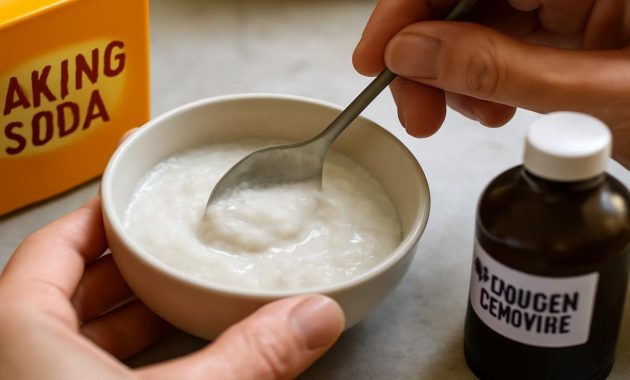
The first time you mix baking soda with hydrogen peroxide, it feels a bit like kitchen alchemy. The powder dissolves into the clear liquid, turning cloudy and thick, fizzing quietly like it’s waking up from a long sleep. There’s a faint, sharp-clean smell from the hydrogen peroxide, softened by the bland, chalky presence of the baking soda. It looks too simple to be powerful—too ordinary to be anything more than a makeshift paste in a coffee mug. Yet this humble duo has become one of the most recommended “secret weapon” combinations in homes, workshops, and even some dental routines around the world.
Why These Two Simple Ingredients Work So Well Together
To understand why people are so obsessed with this mix, you have to zoom in a little closer, past the kitchen counter and into the chemistry.
Baking soda—sodium bicarbonate—is the quiet, dependable one. It’s a mild alkali, slightly abrasive but gentle enough that you can rub it on your teeth or scrub it across your sink without much worry. It doesn’t smell like much, and on its own, it’s already a powerful cleaner, deodorizer, and buffer.
Hydrogen peroxide, on the other hand, is the effervescent extrovert. It’s a weak acid, usually sold in brown bottles at 3% concentration. When it breaks down, it turns into water and oxygen. That extra oxygen is the key—it’s what lifts stains, kills many types of bacteria, and brings that familiar fizz when poured on a cut or mixed with other materials.
When you bring them together, a quiet partnership turns into a dynamic duo. The baking soda’s slight abrasiveness helps physically remove grime, while its alkalinity can loosen certain types of gunk and residues. Hydrogen peroxide swoops in with its oxygen release, attacking stains and microorganisms. The mixture can foam and bubble, helping to lift dirt from tiny cracks and crevices that plain soap and water might miss.
It’s not a violent reaction—no explosions, no dramatic heat—but a controlled, gentle fizz that signals something is happening. It’s chemistry in slow motion, working at a pace that’s friendly to your home and, when used correctly, to your body.
How People Actually Use the Baking Soda and Hydrogen Peroxide Mix
In many homes, this mix doesn’t live in a labeled bottle under the sink. Instead, it’s something you mix on the spot, with a spoon, a small bowl, and a sense of purpose. You might reach for it when your white sneakers look like they’ve run through a muddy festival, or when the grout between your bathroom tiles has quietly turned from white to gray over the years.
1. A Go-To Paste for Stubborn Household Stains
Imagine a baking sheet that’s seen one too many roasting sessions: caramelized oil, dark brown corners, a sticky layer that laughs at dish soap. This is where the paste shines. You sprinkle baking soda over the surface, then slowly add hydrogen peroxide until it turns into a spreadable, slightly foamy paste. It feels almost like wet chalk between your fingers, gritty yet smooth.
You spread it on, leave it for a while, and let the chemistry do the heavy lifting. As you come back with a sponge, the caked-on residue starts to soften, to release. The same approach works for grime in the oven, the ring in the bathtub, or the soap scum that clings to shower tiles.
There’s something deeply satisfying about this slow transformation. No harsh fumes, no neon-colored liquids with warning labels you can smell from the hallway. Just a quiet little potion that you make yourself, cleaning with surprising force and a touch of ritual.
2. Brightening Grout and Tiles
One day, the grout on your bathroom floor simply looks tired. It’s not one big mess, just a gradual shading from fresh white to a dull, unbothered gray. Bleach might be the conventional answer, but it comes with its own smell, its own harshness.
Instead, some people turn to their old friends: baking soda and hydrogen peroxide. Mixed into a slightly thicker paste—more like frosting than sauce—it’s pressed into the grout lines with an old toothbrush. The bristles drag the mixture along each narrow channel, and the foam gently wiggles into invisible pores and crevices.
After a few minutes of waiting, the scrubbing begins. The paste loosens, dark water beads up, and the old color of the grout starts to return. It doesn’t always look brand-new, but it often looks refreshingly revived, like you opened the curtains in a room you forgot you loved.
3. Dealing with Organic Stains and Smells
This combination has a particular talent for organic messes—things that come from food, drink, dirt, and sometimes the less glamorous realities of life with kids or pets. Because hydrogen peroxide releases oxygen, it can help break down compounds in blood stains, sweat marks, or muddy paw prints. The baking soda steps in as both a gentle scrubber and a deodorizer, absorbing fun smells that you’d rather not linger.
A light paste dabbed onto a fresh stain on a white shirt, a mattress, or a carpet spot can sometimes lift the color and soften the odor. It’s not magic, and it doesn’t work on everything, but when it does, there’s a quiet little thrill in seeing a faded brown spot soften back toward the color of whatever it once was.
The key is always caution: hidden test spots, gentle dabbing instead of rough scrubbing, and a respect for fabrics and finishes that don’t always take kindly to experimentation. Yet for many, this mix is a loyal first response.
The Dental Connection: Whiter Teeth and Cleaner Mouths?
Step from the kitchen into the bathroom, and you’ll find this duo again—this time right next to your toothbrush.
Dentists and hygienists have long known that hydrogen peroxide can help with whitening, and baking soda can help with polishing. Put them together, and you get a mildly fizzy, slightly salty-tasting paste that some people swear by for a brighter smile.
4. Homemade Whitening Paste (With Caution)
Imagine standing at the sink at night, mixing a pinch of baking soda with a few drops of hydrogen peroxide in a tiny dish. The mixture turns into a thin, off-white paste, and you dip your toothbrush into it. As you brush, it feels slightly grittier than regular toothpaste, and there’s a gentle tingling from the peroxide.
The baking soda acts like very fine sandpaper—soft enough not to carve grooves into your enamel when used sparingly, but textured enough to help remove surface stains from coffee, tea, or red wine. Meanwhile, the peroxide dives deeper, using its oxygen to break apart stain molecules stuck to the outer layers of your teeth.
Done occasionally and gently, this routine can help with surface brightness. But there’s a reason dental professionals stress moderation: too much abrasion can wear down enamel over time, and overuse of peroxide can irritate gums. Many dentists recommend using this kind of DIY paste only once in a while, not as a daily replacement for toothpaste.
There’s a balance to strike here: the thrill of a natural, home-mixed solution against the long-term health of your teeth. It’s a relationship that works best when guided by common sense—and ideally, by a conversation with a dentist who knows your mouth as well as you do.
Why This Combo Pops Up in So Many Cleaning Routines
Scroll through home-cleaning blogs or listen to a friend who prides themselves on a low-tox routine, and you’ll notice this mix showing up again and again. There are deeper reasons for that beyond simple effectiveness.
5. A Gentle Alternative to Harsher Chemicals
Part of the appeal lies in what this mixture is not. It’s not a brightly colored chemical soup with a long ingredients list that reads like a lab inventory. It doesn’t sting your nose when you open the bottle. It isn’t advertised with dramatic animations of microscopic enemies being annihilated.
Instead, you have two ingredients you’ve probably already used separately for years. Baking soda often lives in your pantry, next to the flour and sugar. Hydrogen peroxide quietly waits in the medicine cabinet, ready to bubble on a small cut or disinfect a toothbrush.
When combined properly, they offer a quieter kind of clean: no overpowering fumes, no sticky residue, and very little mystery about what you’ve just spread across your countertops or your oven door. Both substances naturally break down—baking soda into harmless salts and hydrogen peroxide into water and oxygen—leaving behind minimal chemical footprints once the job is done.
There’s a groundedness in using them. You can feel the paste under your cloth, hear the faint fizz as it works, watch the stains fade. It turns cleaning from a chore you want to rush through into a kind of small, hands-on experiment—a story you get to participate in, rather than just spray and walk away from.
What You Should Never Do With This Mixture
For all its charm, this mix isn’t a cure-all. Like most things that feel a bit magical, it comes with boundaries—lines you shouldn’t cross if you want to keep things safe.
Hydrogen peroxide, though relatively mild at 3%, is still a chemical that deserves respect. Higher concentrations—like those used for bleaching hair or in certain industrial settings—can be far too strong for skin, surfaces, and certainly for internal use. Baking soda, while safe enough to eat in small quantities in baked goods, can disrupt your body’s natural balance if used recklessly, especially in large doses or as a DIY internal remedy.
Here are a few important guardrails that many experts emphasize:
- Do not ingest the mixture. It’s for external use—cleaning, surface stain removal, occasional dental applications (spit, don’t swallow).
- Don’t mix it with vinegar or strong acids at the same time. Baking soda plus vinegar fizzes, yes, but mostly neutralizes each other; adding peroxide into the chaos doesn’t make it better or stronger, just more unpredictable.
- Avoid using on delicate fabrics or surfaces without testing. Hydrogen peroxide can act as a mild bleach, and the paste can be too abrasive for some finishes.
- Keep it out of eyes and open, deep wounds. A little peroxide on shallow scrapes is traditional, but concentrated pastes with baking soda aren’t meant for tender tissue.
- Don’t store pre-mixed paste for long. Hydrogen peroxide degrades over time, especially in light and heat. Mix what you need, use it, and rinse it away.
Think of this combo as a powerful but polite guest in your home: incredibly helpful when treated with respect, problematic if you ask it to do things it was never meant to do.
A Quick Snapshot: Common Uses and Considerations
To see the versatility of this blend at a glance, it helps to lay it out clearly:
| Use | How It’s Typically Applied | Benefits | Important Notes |
|---|---|---|---|
| Oven pans & baking sheets | Paste spread over baked-on grease; left to sit, then scrubbed. | Loosens stubborn residue, reduces need for harsh degreasers. | Test on non-stick coatings; rinse thoroughly. |
| Tile grout | Thick paste brushed into grout lines, then scrubbed. | Helps lift discoloration and brighten lines. | Avoid colored grout or test first—may lighten color. |
| Occasional tooth stain removal | Very small amount used as a thin paste, brushed gently. | Can help remove some surface stains. | Use sparingly; talk to a dentist; not for daily use. |
| Laundry spot treatment (light fabrics) | Dabbed on stains, gently rubbed, then laundered. | Helps with some organic stains (sweat, some food). | Test first; peroxide can lighten fabrics. |
| Deodorizing sinks & drains | Sprinkled baking soda followed by peroxide, then rinse. | Reduces odor, loosens some buildup. | Not a substitute for professional plumbing care if drains are blocked. |
Listening to the Fizz: A More Mindful Way to Clean
There’s something soothing about stepping away from brightly labeled bottles and toward a simple bowl and spoon. The act of mixing baking soda and hydrogen peroxide invites you to slow down: to watch the tiny bubbles form, to feel the texture change as powder meets liquid, to smell the faint sharpness that says, “I’m ready to work.”
In a world where cleaning is often rushed and invisible—a quick spray, an instant wipe—this combination asks you to participate. To wait a few minutes. To scrub gently. To notice the change. There’s a kind of quiet, domestic storytelling in that process: the burned-on lasagna from last weekend’s dinner party, the grout that’s seen years of showers, the coffee stains that whisper of early mornings and late-night deadlines.
Mixing baking soda with hydrogen peroxide doesn’t turn you into a chemist, but it does reconnect you with the tangible, physical side of caring for your space and yourself. It reminds you that powerful things can be simple, and that not every solution has to come pre-packaged with a marketing campaign.
In the end, it’s just a paste. A humble, fizzy, slightly messy paste. But in the quiet fizzing and gentle scrubbing, it offers a surprisingly elegant answer to one of the oldest human questions: how do we make things clean again, without making a bigger mess in the process?
FAQ
Is it safe to mix baking soda and hydrogen peroxide?
Yes, when used in typical household amounts, mixing baking soda and 3% hydrogen peroxide is generally considered safe for external cleaning tasks. The reaction is mild and not explosive. Still, avoid contact with eyes, don’t ingest the mixture, and keep it away from children and pets.
Can I brush my teeth with baking soda and hydrogen peroxide every day?
Most dental professionals do not recommend daily use. Baking soda can be abrasive over time, and frequent hydrogen peroxide exposure may irritate gums. Occasional, gentle use may help with surface stains, but it’s wise to speak with your dentist before making it part of your routine.
Will this mixture disinfect surfaces?
Hydrogen peroxide has disinfecting properties, and baking soda can help with cleaning and odor control. Together, they can improve cleanliness and reduce some microbes, but they are not a guaranteed, broad-spectrum disinfectant in all conditions. For critical disinfection needs, follow guidelines from health authorities and use approved products.
Can this mixture bleach fabrics?
Hydrogen peroxide can act as a mild bleach, especially on darker or delicate fabrics. Always test on an inconspicuous area first. On whites and some light-colored fabrics, it may help lift stains; on others, it may cause lightening or uneven patches.
How long should I leave the paste on surfaces before scrubbing?
For many household surfaces like baking sheets or grout, 5–15 minutes is common. Very stubborn stains may benefit from a longer wait, but don’t let it dry into a rock-solid crust that becomes harder to remove. Always rinse well afterward.
Can I store a premade mixture of baking soda and hydrogen peroxide?
It’s best to mix only what you need. Hydrogen peroxide gradually breaks down, especially in light and warmth, and storing the mixture can reduce its effectiveness. The fresh fizz you see when you first combine them is part of what makes the mix so useful.
Is this mixture safe for all surfaces?
No. Avoid using it on very delicate surfaces such as some natural stones (like marble), certain metals, or specialty finishes that can scratch or discolor. When in doubt, test a tiny area first or consult the manufacturer’s care instructions.