The first cold evening of the season always seems to sneak up on you. One minute you’re wandering around the house in a T‑shirt, the next you’re tugging your sleeves down, wondering when exactly the floor tiles started feeling like ice cubes. Kettles click on. Radiators creak reluctantly awake. And, somewhere in the back of your mind, a small, anxious calculator starts whirring: how much is this going to cost me?
Lidl, Martin Lewis, and the New Winter Ritual
This winter, an unlikely little hero is about to take its place between your kettle and your toaster. Lidl is set to launch a Martin Lewis–approved gadget next week, quietly slipping onto the middle aisle shelves just as the first real chill sets in. It’s small, it’s practical, and it has one job: to help you understand, and therefore control, the energy you use at home.
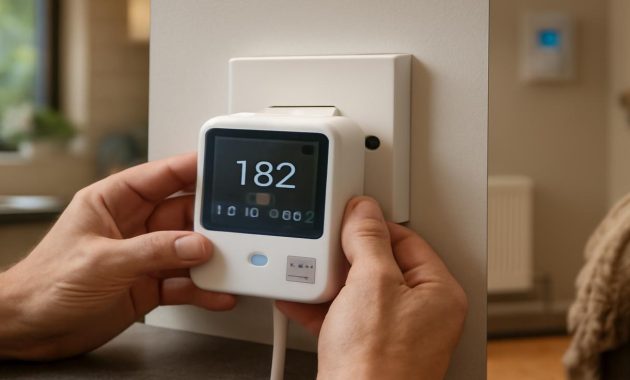
Picture it: a compact, no‑nonsense plug‑in device, the kind you could mistake for a chunky phone charger. But instead of topping up batteries, it tells you what your appliances are really costing you to run. You plug your heater, dehumidifier, air fryer, or TV into it, and suddenly the fog lifts. Numbers that once hovered in the abstract – kilowatt-hours, tariffs, standing charges – translate into something sharp, specific, and deeply personal: this is how much you’re paying, right now, to keep this thing on.
It’s the kind of tool Martin Lewis has been talking about for years: not a fancy tech toy, not a gimmick, but a simple, focused bit of kit designed to save you more money than it ever costs to buy. And now one of the UK’s favourite budget supermarkets is about to offer its own version, timed perfectly for the season when every decision about warmth feels loaded with meaning.
The Quiet Anxiety of Winter Bills
For many households, winter doesn’t just bring frost on the windscreen and darker afternoons. It brings tension. You feel it when you hover over the thermostat, wondering if 18°C is “good enough.” You feel it when kids complain they’re cold and you’re trying to balance comfort with costs. You feel it when an email pings in from your energy supplier and you delay opening it, as if unread numbers might somehow be kinder.
In that landscape, a gadget that simply tells the truth is oddly calming. No promises, no complicated dashboards, no subscription apps. Just plain figures: wattage, usage, cost. It’s like switching on a lamp in a cluttered room; the mess doesn’t disappear, but at least you can see it properly. And once you can see, you can start to act.
That’s the subtle power of this Lidl device and the reason someone like Martin Lewis would nod in approval. It doesn’t heat your home. It doesn’t haggle with energy companies on your behalf. What it does is something more basic and, in the long run, more powerful: it hands the knowledge back to you.
What This Gadget Actually Does (And Why It Matters)
While Lidl hasn’t wrapped it in flashy marketing language, the core idea is straightforward. This is a plug‑in energy monitor – a small device you slot into your wall socket, then plug an appliance into it. As the appliance runs, the monitor tracks how much electricity it uses and translates that into cost, based on your tariff.
You could, for instance, plug in a portable electric heater and let it run for an hour. The display might tell you it’s costing 60p per hour. Suddenly, that cosy corner you were planning to warm every evening has a price tag attached to it. You may decide it’s worth it on the coldest days, or you might explore alternative ways to heat just the person rather than the room: hot water bottles, heated throws, or simply shifting your routine so you spend more time in the warmest part of the home.
Here’s how this type of gadget typically helps people grasp their real‑world energy use:
- Reveals “energy vampires” – Devices you thought were harmless might be quietly sipping electricity all day.
- Compares options – Is it cheaper to use the oven or the air fryer for dinner? Now you can see it in pounds and pence.
- Gives confidence – When you know what something costs to run, you can stop guessing and start planning.
For a nation that has spent the last few winters watching energy prices seesaw and advice change by the month, that kind of clarity is almost a luxury.
The Lidl Middle Aisle Moment
Imagine walking through Lidl next week. The seasonal shelves are already sliding into winter mode: tins for stews, packets of soup mix, boxes of candles. Somewhere along the magical chaos of the middle aisle – that place where camping chairs and power tools coexist – you spot it. A compact device in simple packaging, priced low enough that it doesn’t make your heart race.
There is a particular sort of excitement in that moment, a mix of practicality and possibility. You’re not just buying a gadget. You’re buying back a bit of control. If you’ve ever stood in front of a smart meter, staring at a number that jumps when the kettle boils but doesn’t tell you which of the five things you left on earlier is bleeding you dry, this feels like a missing puzzle piece.
You hold the box in your hand. You think of the oil‑filled radiator in the bedroom, the tumble dryer you lean on when the rain won’t let up, the old second‑hand freezer humming in the garage. Which one is the worst offender? Which one is not so bad after all? This is your chance to find out.
How It Feels to Finally See the Numbers
Back home, you unpack the gadget and click it into the wall. There’s a small, utilitarian pleasure in its design – nothing flashy, a basic display, a few buttons. You enter your energy tariff (or the approximate cost per kWh from your last bill), then plug something in. Maybe it’s the little fan heater under your desk, the one you swear you only use “for a bit” when your toes go numb.
As it whirs to life, the numbers begin to climb. Watts. Hours. Cost. There’s a strange, almost voyeuristic feeling as you watch: this is what comfort looks like in pounds and pence. Not estimated, not averaged, but this exact moment. The air grows warm against your shins. The cost ticks up on the display.
Instead of panic, you might feel something else – focus. Now you can experiment, almost like a quiet, domestic science project. Turn the thermostat on the heater down one notch. The watts fall. Try running it for twenty minutes instead of an hour. Note the difference. It becomes a game of margins, but one with real stakes and real rewards.
This is where Martin Lewis’s long‑running message about knowing your numbers comes to life in the most tactile way. It’s one thing to be told that electric heaters are expensive to run, and another to stand there, barefoot on a cold carpet, watching the cost of that warmth climb by the minute. It doesn’t demand that you turn it off. It simply shows you the trade‑off.
| Appliance Tested | Power Use (Approx.) | Cost Per Hour* | What You Learn |
|---|---|---|---|
| Portable fan heater | 2000W | Higher | Great for short bursts, expensive for all‑evening use. |
| Heated throw | 100W–150W | Much lower | “Heat the person, not the room” really can save money. |
| Air fryer | 1300W–1700W | Moderate | Shorter cooking times often make this cheaper than the oven. |
| Old fridge/freezer | Varies | Steady daily cost | You see whether replacing it might pay for itself. |
*Actual costs depend on your tariff. The gadget helps you calculate it accurately for your home.
Little Experiments, Real‑World Savings
Over the first few days, the gadget becomes part of your routine. You test the dehumidifier in the damp back bedroom, curious whether leaving it on low all day is cheaper than an intense hour in the evening. You check the lamp in the corner that you always leave on, the fairy lights draped around a mirror, the TV left on standby. Some results surprise you. Others confirm what you suspected but never quite proved.
With every test, tiny decisions sharpen into conscious choices. Maybe you decide that the living room heater is worth every penny between 7pm and 10pm, but you’ll wrap up in a blanket the rest of the time. Maybe you shift a weekly baking session to a single big batch instead of several small ones. You start grouping tasks together: if you’re going to pay to warm the oven, you may as well roast the veg and bake the pudding in one go.
There’s an emotional shift here too. Instead of feeling helpless in the face of mysterious “usage,” you’ve become an observer, an experimenter, even a strategist. The house itself starts to feel different. Less like a roulette wheel of surprise costs, more like a system you can tweak and shape.
This, of course, is exactly why a consumer champion like Martin Lewis would see the value. The savings from this kind of knowledge are incremental but powerful. You don’t suddenly slash your bill in half. But you shave off a few pounds here, avoid an inefficient habit there, and over a winter those little victories begin to add up.
Why Timing Matters: Launching Just Before the Deep Cold
Lidl’s decision to launch this gadget now is more than clever marketing. Autumn and early winter are the months when household routines crystallise. We move from summer spontaneity to winter patterns: what time we cook, how long we watch TV in the evenings, when we switch the heating on and off, whether we work from the kitchen table or the bedroom desk.
Catch people at that moment, when they’re just beginning to feel the draft under the door and the damp in the corners, and you’re not just giving them another product – you’re giving them a steering wheel. Before the real cold snaps hit, families can test, adjust and set their habits for the season with real data behind them.
For some, this will be about trimming excess. For others, it will be about justifying a bit of comfort: proving to themselves that, yes, that heated throw really is a cost‑effective luxury; that boiling a full kettle every time is something they can tweak without feeling deprived. When numbers become visible, guilt can soften into pragmatic decision‑making.
A New Kind of Winter Comfort
There’s a deep, almost old‑fashioned satisfaction in knowing your home’s quirks – which window leaks the most heat, which room warms fastest, how long it takes your hot water tank to refill. The Lidl gadget is a modern extension of that relationship. It invites you to understand not just where the draughts are, but where the money goes.
On a dark December evening, the house smells of something rich and savoury from the oven. The radiators tick quietly. A podcast murmurs from the corner. Somewhere, your little energy monitor sits, dark and unassuming, waiting for the next thing you’ll plug into it. It’s not glamorous. It doesn’t glow or ping with alerts. But it has already changed the story you tell yourself about winter.
Instead of “I dread the next bill,” the story nudges towards “I know what we’re using, and why.” Instead of guessing, you’re choosing. Instead of feeling powerless, you’re informed.
As energy prices continue to feel unpredictable, there’s something profoundly grounding in that. You might still have to make tough decisions. You might still layer jumpers and count radiators. But you’re no longer walking blind. And all it took was a small, Martin Lewis–approved gadget picked up between the rice and the radiator covers on a grey afternoon in Lidl.
Frequently Asked Questions
What exactly is the Lidl Martin Lewis–approved gadget?
It’s a simple plug‑in energy usage monitor. You plug it into a wall socket, then plug an appliance into the monitor. It measures how much electricity that appliance uses and helps you estimate the cost based on your tariff.
How does this gadget help me save money in winter?
By showing you the real running cost of heaters, dehumidifiers, kitchen appliances and more, it lets you spot what’s expensive, what’s efficient and where small changes in habits can reduce your bill without sacrificing all your comfort.
Is it hard to set up and use?
No. These monitors are generally straightforward: plug in, enter your energy price per kWh (from your bill), and start testing appliances. The display usually shows power usage and estimated cost in an easy‑to‑read format.
Can it reduce my bills on its own?
The device itself doesn’t cut your energy use; it gives you information. The savings come from how you respond to what you learn – switching to more efficient appliances, adjusting how long you run heaters, or changing cooking habits.
Is it only useful during winter?
While it’s especially helpful in winter for testing heaters and dehumidifiers, it’s useful all year round. You can measure the cost of fridges, freezers, TVs, computers and kitchen gadgets whenever you like.
Do I need any special app or smart home system?
No. The appeal of this type of gadget is its simplicity. It typically has its own display and works independently, without needing Wi‑Fi, apps or smart home hubs.
What kind of households will benefit most?
Anyone who is anxious about energy bills or simply curious about what their appliances really cost to run will benefit. It’s particularly helpful for families juggling multiple heaters, people in smaller homes or flats, and anyone trying to cut costs without living in a freezing house all winter.