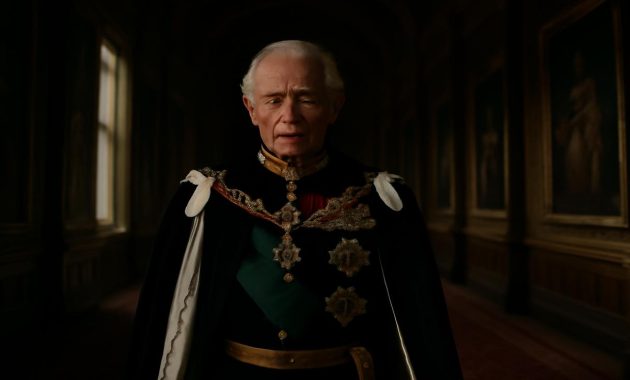
The rain was falling sideways over London, needling the flag that still flew, stubborn and bright, above Buckingham Palace. Inside, under chandeliers that have watched over a dozen monarchs, a seventy-something man in a perfectly tailored suit adjusted his cuffs, straightened his back against the complaint of aging bones, and prepared to walk into yet another room full of cameras, expectations, and unspoken questions. King Charles III, the man who waited longer than any heir in British history to wear the Crown, is now being asked, with increasing urgency: should he simply step aside?
The King Who Finally Arrived
For most of his life, Charles was defined by a future that never quite arrived. He was the prince in waiting, the eternal understudy standing in the wings while the spotlight belonged to his mother, Queen Elizabeth II. Decades passed. Prime ministers came and went. Polite jokes hardened into a kind of myth: the man destined to be King, but seemingly never allowed to be.
Then, at last, in a moment heavy with global mourning, the Crown settled onto his head. The wait was over—but only for the story to twist again. Not long into his reign, health concerns crashed through the softly curated images of royal duty and pageantry. A monarch who had finally stepped into his role now finds himself facing the same question many aging leaders of families, companies, and nations quietly confront: when does duty to tradition give way to duty to one’s own failing body?
The official statements have been measured and precise. Medical treatments. Adjusted schedules. “Good spirits.” But between the lines, whispers have risen into a storm. Experts talk of constitutional implications. Commentators weigh in on public perception, political timing, succession optics. And underneath all that, ordinary people—nurses on late shifts, commuters scrolling through headlines, retirees stirring sugar into their morning tea—are asking something simpler, more human: why won’t he rest?
The Weight of a Crown No One Can See
Imagine, for a moment, the feel of that Crown—not the glittering metal and stones, but the invisible one. The one that presses down every day of your life. From the moment Charles was old enough to understand words like “duty” and “country,” he understood that his existence was not entirely his own. His childhood, his education, his friendships, even his love life, were sifted through the tight sieve of expectation. You are not just a boy, he was told implicitly, you are the future.
In many ways, Charles grew up like an old oak on a well-trodden estate: admired, photographed, catalogued, but never allowed to grow completely wild. Yet within that carefully trimmed silhouette, something stubborn took root. He found solace in the outdoors, in trees and soil, in talking to plants—a habit once mocked, now praised as ahead of its time. He campaigned for the environment long before “sustainability” became a buzzword, and dreamed aloud about architecture, farming, spirituality, and the relationship between people and the land they inhabit.
All the while, one role loomed over every passion: future King. The job description was centuries old, but the man was undeniably modern—sensitive, outspoken in his own way, restless. Still, he was trained, again and again, to understand one rule above all others: you do not walk away. Monarchs abdicate only in crisis, and abdication is remembered not as mercy, but as fracture.
The Long Shadow of Abdication
In the British royal imagination, the word “abdication” still smells faintly of scandal and cigarette smoke. Edward VIII’s decision in 1936 to give up the throne for love is remembered less as a tender romantic gesture, and more as a national detour that forced a shy younger brother—George VI—into a role during the darkest years of the Second World War. In family stories, abdication is not noble. It is a wound.
That scar has shaped everything since. Queen Elizabeth II embodied a kind of unshakable permanence. She made duty look like breath itself—automatic, invisible, essential. She did not step back even as age bent her spine and slowed her walk. If kingship is a story handed down, this is the chapter Charles grew up memorizing: you carry on. You keep going. You stay.
So when doctors begin to murmur about health, and advisors recommend trimming engagements, Charles is not only hearing clinical advice. He is also hearing the echo of history, of a family that still measures itself against one moment of perceived abandonment nearly a century ago. Stepping back now, even for understandable reasons, risks being read through that old, unforgiving lens.
Duty or Stubborn Pride?
Of course, outside the palace walls, the debate sounds less poetic and more pointed. In living rooms, online forums, and opinion pieces, the question is laid out starkly: is King Charles III right to cling to the throne through his health challenges, or is this an act of pride dressed up as service?
In one corner stand those who argue that duty means staying at the helm until you quite literally cannot. The Crown, they say, is not a hat you take on and off according to personal convenience; it is an office, a symbol, a living thread that binds generations. Charles waited his entire life to assume this responsibility. To step back now, they argue, would be like dropping the baton halfway through the relay.
On the other side are voices that sound more contemporary, even pragmatic. What is the use of a monarch who cannot fully perform the role? Why not allow William—already a familiar figure—to assume more, or even take over entirely, while his father focuses on treatment and recovery? Isn’t the ultimate duty to ensure the Crown remains effective and relevant, rather than clung to at all costs?
Between these two positions lies a more fragile, human truth. Many have seen older relatives deteriorate while insisting they are “fine,” pushing beyond the limits of what their bodies quietly plead for. There is something achingly familiar in Charles’s refusal to step back: it is the aging surgeon who will not hang up the stethoscope, the long-serving teacher who cannot imagine not standing at the blackboard, the family matriarch who insists on hosting Christmas even when the stairs have become a mountain.
What the Public Sees—and Feels
Behind the cool language of “public support” and “favorability ratings” are people processing their own complicated feelings about aging, leadership, and responsibility. Seeing a monarch carry on in the face of health concerns stirs something primal: a mixture of admiration and discomfort. We applaud grit. We also worry about denial.
Some find inspiration in his persistence: if the King himself is still showing up, suit pressed, speech prepared, then perhaps we, too, can keep going through our own private storms. Others sense a misalignment: in a world that increasingly emphasizes mental health, self-care, and work-life balance, a visibly struggling sovereign can feel like a relic of an older, harsher expectation—suffer silently, serve visibly.
Pollsters measure shifting moods; columnists spin these feelings into arguments. But the deeper question lingers beneath: how much vulnerability are we comfortable seeing in our figureheads? A monarch in perfect health is easy to mythologize. A monarch frail yet refusing to yield forces us to confront a different story—the story of a person who may be wearing a Crown, but who is, finally, fully mortal.
The Crown in a Changing World
Step outside the palaces for a moment. Out into the London parks where parakeets scream from bare winter branches, into the Welsh valleys where rain polishes old stone walls, up into the Scottish Highlands where the wind threads itself through heather and rock. This is the real kingdom, the living land that, in royal rhetoric, the monarch “serves.” It is changing—climatically, politically, demographically.
Much of what Charles cares about most belongs out here. The soil. The seas. The fragile balance of ecosystems. It is one of the small ironies of this reign that the King who once seemed too opinionated for the traditionally neutral role of monarch now faces a constraint far more personal: a body that may no longer fully cooperate with the pace of his cares.
Meanwhile, the institution he represents is under its own kind of weather. The Commonwealth is a network of countries increasingly assertive about re-examining their ties to the monarchy. Younger generations often feel more distant from the pageantry, more skeptical of inherited privilege. The Crown must demonstrate relevance in a world driven by elections, algorithms, and urgent planetary crises.
In that context, Charles’s refusal to step back can be interpreted in two ways: either as a sign of stability in unsettled times, or as a missed opportunity to model a new kind of leadership—one that knows when to share, or even surrender, power gracefully.
Generations at the Gates
It is impossible to talk about Charles without also talking about the figure just behind him: Prince William. To many, William represents continuity edged with modernity—a comfortable bridge between tradition and the world of smartphones, blended families, and evolving social values. His image as a hands-on father, his visible public service with emergency services, and his quieter, more measured demeanor give him a certain solidity in the public eye.
This creates a peculiar tension. There is a King determined not to yield, and a Prince poised but patient, outwardly respectful of his father’s role. Around them, a nation watches two generations occupy the same narrow, ceremonial corridor of power, wondering when and how the handover will happen.
In countless families, similar dynamics play out on a smaller, messier scale. The aging parent who won’t sign over the business. The grandparent who clings to the family home they can no longer manage alone. The adult child waiting, torn between love and exasperation. The drama of succession is as common as it is uncomfortable. The royal version is simply played out in slow motion, under the unblinking lens of global scrutiny.
Numbers Beneath the Narrative
Strip away the symbolism for a moment, and you find a simple logistical reality: a head of state with health limitations is not a theoretical puzzle; it is a scheduling problem, a staffing challenge, a security and diplomacy puzzle. Engagements must be trimmed or reassigned. Travel plans reconsidered. Contingencies drafted behind closed doors.
Inside the machinery of monarchy, diaries and red boxes, private secretaries and courtiers, everything must flex to accommodate the unexpected gaps created by illness. To the public, these adjustments may seem subtle: a cancelled visit here, a video message in place of a speech there. But each alteration sends a message, however softly delivered, that the man at the center is no longer the tireless presence his role seems to demand.
Even so, Charles pushes on—perhaps not at full roster, but at enough of a cadence to signal determination. There is a fine line between adaptation and retreat, and he appears determined to stay on the former side of it.
| Aspect | Traditional Expectation | Modern Perspective |
|---|---|---|
| Role of the Monarch | Serve until death, embody unbroken continuity. | Step back if health limits effectiveness; share duties more openly. |
| Attitude to Health | Endure silently, minimize public discussion. | Prioritize wellbeing, normalize transparency and rest. |
| Succession Timing | Passively await death as natural handover point. | Consider proactive transition for stability and clarity. |
| Public Expectation | Revere stoic endurance, avoid visible weakness. | Value authenticity, accept vulnerability in leaders. |
These shifts in perspective are not academic; they shape how every royal decision lands. A refusal to step back, once universally praised as noble, is now filtered through a more complex lens. Some see heroism; others see an inability to adapt.
When Symbols Become Human
The monarchy is built on a paradox. Its power lies in being more than human—an institution, a line stretching backwards into misty history and forwards into a speculative future. Yet its survival depends, in the end, on very human bodies and minds doing the actual, daily work of representation.
When a monarch becomes ill, that paradox sharpens. The symbol must remain untarnished, but the person cannot simply be updated like a piece of software. Illness pulls the curtain aside. We glimpse the man beneath the robes, the fatigue behind the formal smile. For some, this makes the monarchy more relatable. For others, it breaks the spell.
King Charles III stands precisely on that fragile threshold. His insistence on continuing is, perhaps, an attempt to keep the symbol intact—to prevent people from seeing too clearly the frailties behind the Crown. At the same time, every photograph of a weary expression, every mention of “reduced workload,” chips away at the idea of an unshakeable sovereign.
A Quiet Room, A Heavy Decision
Somewhere in the palace—perhaps in a wood-paneled study smelling faintly of old books and furniture polish—there will come a moment when the King is alone with his thoughts. Outside, cars will hum past the gates, tourists will plan their next selfie, and news channels will scroll quietly relentless banners across their screens. Inside, he will be weighing something only he can fully understand.
Is it more faithful to his mother’s legacy to emulate her lifelong service, or to interpret duty for a new age—one in which stepping back might be an act of strength, not surrender? Does he owe it to the institution to carry on until the very end, or to pass on the torch while he still has the energy to guide and support his successor through the transition?
It is easy, from the outside, to declare what “should” be done. It is much harder, from within, to untangle a lifetime of expectation from the simple, anxious whisper of the body: I am tired. I am healing. I am not what I once was.
Out beyond the palace walls, winter will soften into spring. Buds will push through the soil in the gardens Charles has long championed. Migratory birds will arrive in hedgerows and wetlands, oblivious to headlines, loyal only to the ancient routes written into their instincts. The cycle of seasons, of succession, will continue with or without royal intervention.
Perhaps that is the final, humbling truth at the heart of this debate. The Crown may feel eternal, but it, too, is just one more human attempt to fix meaning onto the swirling movement of time. Whether King Charles III steps back or clings on, the world will keep turning. Rivers will rise and fall. Forests will be lost and replanted. People will be born, fall in love, fall ill, step aside, carry on.
Still, for now, the flag flies. The man behind the myth straightens his shoulders, folds his private fears into the old, familiar armor of ritual, and walks forward into the next room, the next camera flash, the next question. Refusal can be a kind of devotion. It can also be a quiet, lonely defiance against the one power no crown can outlast: time itself.
Frequently Asked Questions
Why is King Charles III’s decision not to step back so controversial?
The controversy stems from a clash between tradition and modern expectations. Historically, British monarchs serve until death, symbolizing continuity. Today, many people prioritize health, transparency, and efficient leadership, so a visibly unwell sovereign remaining in place raises questions about effectiveness, image, and whether the Crown should adapt to contemporary views on retirement and succession.
Has a British monarch ever abdicated before?
Yes. Edward VIII abdicated in 1936 to marry Wallis Simpson, a twice-divorced American. His decision shook the monarchy, forced his brother George VI onto the throne, and left a long-lasting sense in the royal family that abdication equals instability. That historical memory still influences how any talk of stepping back is perceived today.
Could King Charles III legally step aside or retire?
In theory, mechanisms exist for a monarch to abdicate or for powers to be delegated if the sovereign is incapacitated. However, abdication would require a formal, carefully managed constitutional process and new legislation. There is no established tradition of “retirement” for a British monarch, so any such move would be unprecedented in the modern era.
What role would Prince William play if Charles reduced his duties?
If Charles scaled back without fully abdicating, Prince William could assume more engagements, represent the Crown more frequently at high-profile events, and take on additional ceremonial and charitable responsibilities. However, unless Charles formally stepped down, William would still remain heir apparent, not King, and the ultimate authority of the Crown would remain with Charles.
How does public opinion influence the King’s decision?
Formally, the monarch does not govern according to public polls. Informally, the royal family is acutely aware that its legitimacy depends on public support. If large numbers of people start to see the King’s persistence as self-serving instead of dutiful, it could pressure advisors and politicians to explore options for a more active role for the heir, or even spark broader debates about the future of the monarchy itself.