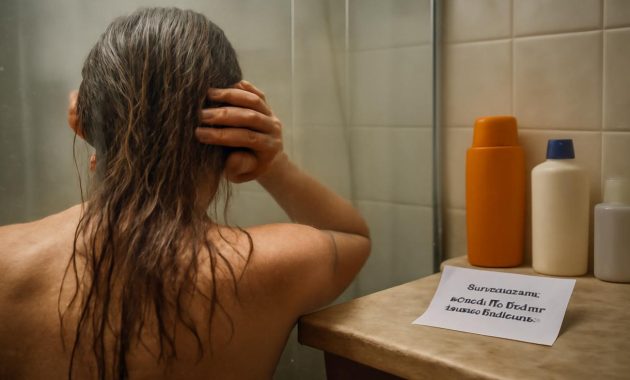
The first thing you notice is the sound. That hollow, winter-morning quiet pressed up against your bathroom window, and then the rush of hot water roaring to life. You step in, shoulders hunched, scalp tingling as steam climbs around you like a fog. Outside, the air is knife-sharp and dry. Inside, the shower is a private weather system—warm, sheltering, a place you linger just a little too long. This is where you thaw out. And, without realizing it, this is where your hair quietly begins to crackle, fray, and rebel.
The Seduction of Scalding Water
There’s something almost addictive about a blazing-hot shower in the depths of winter. The tiles are cold beneath your feet, your breath is a thin ghost in the air, and then—relief. That first hit of heat on your scalp feels like sinking into a hot spring after trudging through snow. You tilt your head back, close your eyes, and let the water pound away the morning.
But here’s the twist: the very thing that feels so comforting on a bitter day is the number one mistake we make for our hair in winter—cranking the water temperature up far too high.
It doesn’t feel dangerous. It feels luxurious. The steam rises, your mirror fogs, and you probably tell yourself that this is self-care. Yet every extra degree you turn that faucet is quietly peeling away the protective oils from your scalp and hair shaft. That glossy outer layer, the cuticle that keeps moisture locked in, starts to lift like tiny shingles in a storm. The hotter the water, the more those shingles flare open. And once they’re open, everything you want to keep—moisture, softness, shine—begins to leak out.
This isn’t just a problem for people who blow-dry or dye their hair. Even if you air-dry and have never colored a strand, a habit of ultra-hot showers in the cold months can leave your hair brittle at the ends, fluffy but not in a good way, and almost squeaky when you run your fingers through it. That “squeaky clean” feeling? It’s not your hair being extra clean. It’s your hair being stripped.
Outside the shower, winter is already harsh enough. The air is low in humidity. Indoor heating pulls even more moisture from everything it touches—your skin, your lips, and yes, each delicate strand of hair. Then in we go, into the boiling rainstorm we’ve designed in our bathroom, giving winter dryness a double boost.
The Quiet Science of Winter-Dry Hair
To understand why that deliciously hot water is so brutal, you have to zoom in—way in—under the bathroom light and into the structure of a single strand of hair.
Each strand is made of layers. On the outside, you’ve got the cuticle, a shield of overlapping scales. Their job is simple: keep the important stuff inside. Beneath that, in the cortex, live the proteins and pigments that give your hair its strength, flexibility, and color. When the cuticle lies flat and smooth, light reflects easily and your hair looks shiny and feels silky. When the cuticle is raised or roughed up, hair feels rough, tangles easily, and tends to fan out in frizz.
Hot water is like a gusty wind tearing at rooftop shingles. It makes those cuticle scales lift up. Once lifted, it’s easier for shampoo to wash away not just the dirt and oil you don’t want, but also the natural lipids and moisture that are supposed to protect each strand. Combine that with winter’s dry air, and there’s very little left to cushion your hair fibers from friction, cold, and styling tools.
Meanwhile, your scalp is trying to cope with these extremes. Imagine walking from a freezing sidewalk into a room with a roaring fireplace, again and again, day after day. The shift can be jarring. For many people, the scalp responds to hot water and dry air with tightness, flaking, or that prickly, itchy sensation that makes you want to scratch absentmindedly. Others notice their scalp going into oil-overdrive after being stripped every morning, leading to greasy roots and dry ends—a confusing combination that makes styling a small daily puzzle.
None of this happens all at once. It shows up slowly: your ponytail feels thinner, your ends look fuzzy in photos, your waves or curls lose their definition, or your hair just never seems to feel “settled” anymore. You might buy masks, oils, and leave-ins, tugging at remedies from every side of the beauty aisle, without suspecting that your biggest fix lives right at the faucet handle.
The Moment Everything Changes: Lukewarm Is the New Luxury
There’s a small, almost disappointing moment the first time you intentionally turn the water temperature down. It feels like giving up a guilty pleasure. You stand there, hand on the handle, bargaining with yourself. Maybe just hot for a minute. Maybe just on the roots. Just today. It’s cold out. You deserve this.
But when you let the water run at a true lukewarm—think pleasantly warm tea you could sip, not scalding coffee you’d blow on—you’re making a quiet, powerful decision in favor of your hair.
Lukewarm water still feels good, soothing even. It’s warm enough to lift dirt, oil, and product from the hair and scalp, but cool enough that your cuticle doesn’t rise in alarm. The natural oils that your scalp produces aren’t your enemy; in winter, they’re your secret allies. This balanced temperature lets them stay in better proportion, forming a more even, protective layer along the hair shaft.
Instead of that too-clean squeak, there’s a new sensation: your hair feels smoother between your fingers even before conditioner touches it. It doesn’t snag as easily. Rinsing doesn’t feel like friction; it feels like gliding. And when you step out of the shower and towel your hair—gently, without aggressive rubbing—you may already notice a difference in texture before it fully dries.
Some people like to keep the wash and rinse at lukewarm, then finish with a cool splash just at the very end. It doesn’t have to be icy—just slightly cooler than your rinse temperature. That quick shift encourages the cuticle to lie flatter, like a zipper closing. Flat cuticle, smoother surface, more shine. In winter light, when everything outside is muted and matte, that extra shimmer can feel like a small rebellion.
The Hidden Habits That Make Dry Hair Worse
Hot water might be the main villain in this quiet winter story, but it’s not acting alone. The supporting cast of daily habits can either protect your hair or invite more damage. In the hush of a cold morning, most of us are operating on autopilot—unaware that the little things we do in the shower are stacking up.
Here are some of those sneaky accomplices, and gentler options to replace them:
| Common Winter Habit | What It Does to Your Hair | A Gentler Alternative |
|---|---|---|
| Very hot showers every day | Strips natural oils, raises cuticle, increases frizz and breakage | Use lukewarm water; keep showers shorter, especially on hair-wash days |
| Shampooing every single morning | Over-cleanses scalp, leaves ends dry and fragile | Wash 2–4 times a week, or alternate with just a water rinse and conditioner |
| Rubbing hair with a regular bath towel | Creates friction, roughs up cuticle, leads to frizz and split ends | Gently squeeze out water with a soft cotton T-shirt or microfiber towel |
| Blasting hair with the hottest dryer setting | Further dehydrates strands, weakens structure over time | Use medium or cool settings; air-dry partially before blow-drying |
| Skipping conditioner “to save time” | Leaves cuticle unprotected, hair more exposed to winter air | Apply conditioner from mid-lengths to ends every wash, even briefly |
Each shift here is small, almost unremarkable on its own, like swapping out a single piece of clothing for something softer. But together, they create an environment where your hair has a chance to hold onto moisture instead of bleeding it out into the cold, dry air.
Creating a Winter Shower Ritual Your Hair Loves
Picture your next winter shower as less of a rushed appointment with cleanliness and more of a quiet ritual—one made for the season you’re in. It doesn’t have to be complicated. In fact, the beauty of a winter hair-friendly routine is in its simplicity and gentleness.
You step in. This time, before twisting the handle to your usual setting, you ease it back a bit. The water hits your shoulder: warm enough to relax your muscles, but not stinging on your skin. When you wet your hair, it doesn’t feel like a shock; it feels neutral, almost like slipping into a lake that’s held the last memory of summer.
You take a small amount of shampoo—less than you think you need—and focus it at the scalp only. This is where oil and sweat live; your ends don’t need that same attention. As you massage with your fingertips (not your nails), the movement feels more like a scalp massage than a scrub. That slow, circular pressure boosts blood flow, warms you in a different way, and turns a task into a touch of care.
The lukewarm water rinses it all away, bringing that satisfying feeling of “clean,” but without the squeaky drag. Conditioner comes next, and you’re deliberate about where it goes: mostly from the mid-lengths down, where the hair is oldest and more vulnerable. While it sits there for a few minutes, you might close your eyes and listen to the water, or simply feel the steam collecting on your face. You’re not rushing. You’re rethinking what comfort looks like—less scorching, more soothing.
When you rinse, maybe you nudge the temperature down just slightly, watching the steam thin in the air. It’s a quick, almost imperceptible act, but your hair remembers it in shine and smoothness later.
The Way Hair Feels When It’s Actually Hydrated
There is a particular sensation to truly hydrated hair that is hard to describe until you notice it for the first time in a long while. It doesn’t feel coated, heavy, or sticky. It feels like itself, but calmer—less electric, less eager to fly away or knot into tiny impossible tangles.
When you run your fingers through it, there’s an easy slide, not a snag every few centimeters. Curls and waves seem to gather into clearer shapes instead of fuzzing outward in all directions. Straight hair lies smoother down your back or against your shoulders, moving almost in one unified sheet instead of dozens of separate, misbehaving strings.
This is what becomes possible when you stop attacking your hair with heat from every angle in winter: from the shower, from the towel, from the dryer. Hydrated hair still has personality; it doesn’t become unnaturally perfect. But it behaves. It reflects light better. It doesn’t feel like straw brushing against your scarf or catching on the zipper of your coat.
It can be almost startling when you realize one morning that you didn’t need to pile on as many products as usual to make your hair look like something you recognize. The serum bottle stays a little fuller. The heavy oils aren’t quite as necessary. Your routine simplifies not because you gave up, but because you finally turned your attention to the small, daily habit at the root of the problem.
Listening to Your Hair in the Season You’re In
Hair isn’t static. It’s a living record of how you treat it over months and years, a slow-motion reflection of your habits, your climate, your stress levels, your health. In winter, that record gets written a bit faster, the lines etched a bit deeper. The combination of cold, wind, and indoor heating turns your home, your office, your commute into a low-humidity tunnel your hair has to travel through again and again.
When you notice more static in your hair as you pull off a wool hat, that’s your strands telling you they’re thirsty. When the ends feel scratchy between your fingers, that’s the cuticle fraying under repetitive heat and dryness. When your scalp feels tight after your shower, that’s your skin quietly hinting that the water is too hot, the wash too frequent, the balance off.
Listening doesn’t mean obsessing. It simply means paying attention in small, specific ways. You might ask yourself once a week: Does my hair feel drier than last week? Less shiny? More tangled? Is my scalp itchier at night? If the answer starts tipping toward “yes,” the first place to look isn’t always a new product aisle. It’s the temperature knob in your very own shower.
Outside, snow might be falling, or the sky might hold that flat, pewter winter light. You can’t control the air that waits for you beyond your front door, but you can shape the climate of your shower. You can choose a warmth that comforts without scorching, a routine that cleans without stripping, a rhythm that suits the season instead of fighting it.
In the end, the story of dry winter hair isn’t about how many masks you buy or how often you trim your ends. It’s about those daily seconds when you reach for the handle, half-awake, thinking only of how cold your toes feel on the tile. The number one mistake we make in the shower when it’s cold in winter isn’t laziness or neglect. It’s overindulgence in heat that feels like care but quietly erodes the softness we’re trying to protect.
Dial the temperature back. Let lukewarm become your new version of cozy. Give your hair a winter it doesn’t have to recover from in spring. The steam might be a little softer, but the shine that follows you out into the cold will be brighter than you remember.
FAQ: Winter Showers and Dry Hair
How hot is too hot for my hair in the shower?
If the water makes your skin turn pink or red, or you feel like you need to move out of the direct stream because it stings, it’s too hot. Aim for comfortably warm—similar to the temperature you’d use for a baby’s bath or tea you can sip without blowing on it.
Can I still enjoy a hot shower if I have dry hair?
You can compromise. Keep your hair pinned up while you enjoy a hotter shower on your body, then turn the temperature down to lukewarm before you wet and wash your hair. This way, your scalp and strands aren’t exposed to the highest heat.
How often should I wash my hair in winter?
Most people do well with washing two to four times a week in winter. If your scalp gets oily quickly, you might gently rinse with water or use conditioner on the lengths between shampoos instead of fully washing every day.
Does finishing with cold water really help my hair?
A short cool rinse at the end can help the cuticle lie flatter, which may improve shine and reduce frizz. It doesn’t have to be ice-cold—just cooler than your usual rinse temperature is enough to make a difference.
What else can I do besides lowering water temperature to fight dry winter hair?
Use a hydrating conditioner every wash, avoid rough towel-drying, limit high-heat styling tools, and consider using a leave-in conditioner or light hair oil on your ends. Keeping indoor humidity at a moderate level can also help your hair—and your skin—hold onto moisture.