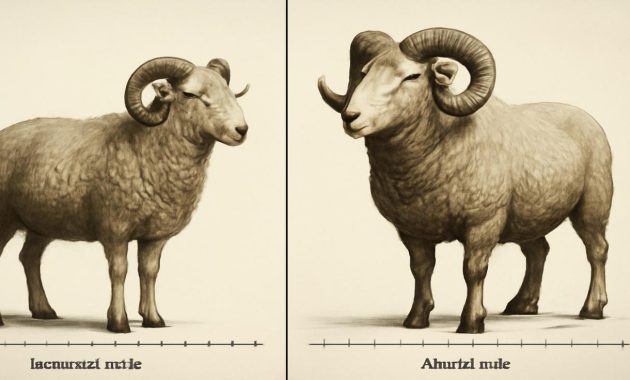
The old ram moved like a ghost through the meadow—slower than the others, but oddly unhurried, as if time itself had loosened its grip on him. The air smelled of damp soil and crushed clover, and the low sun pulled a soft silver sheen across his wool. A student beside the fence scribbled notes on a clipboard, glancing from the ram to a chart in her hand. She had underlined a single sentence three times: “Castrated males tend to live longer.”
It sounds like folklore, the kind of grim barnyard wisdom passed between farmers with a shrug and a half smile. But deep in the quiet records of farms, monasteries, royal courts, and even in the ledgers of old Korean dynasties, a strange pattern has been whispering the same message for centuries: remove the testes, add more years. From rodents to sheep, from cats to humans, a link keeps reappearing—castration, somehow, is connected to increased lifespan.
The Quiet Longevity of the Castrated Male
If you spend enough time reading animal studies, a theme begins to emerge like tracks in fresh snow. Many male mammals, on average, die younger than females. They fight more. They roam farther. Their hormones burn hot. Yet in studies where male animals are castrated—removing the main source of testosterone—those males often live noticeably longer than their intact brothers.
In old farm records, shepherds noticed that wethers—castrated rams—outlived full rams by several years. In laboratory notes, researchers found that castrated male rats and mice, housed in controlled environments, tended to survive longer than unaltered males. Even in pet clinics, quiet patterns show up: neutered male dogs and cats tend to have longer lifespans than intact ones, in part because they’re less likely to roam, fight, or develop certain diseases.
To see the pattern more clearly, imagine a small notebook filled with simple numbers—ages, sexes, procedures. It might look something like this:
| Species | Sex / Status | Typical Average Lifespan | Observed Effect of Castration |
|---|---|---|---|
| Sheep | Castrated ram (wether) | Often > 10 years | Tends to outlive intact rams by several years. |
| Dog | Neutered male | Often 1–2 years longer than intact males | Reduced risk of roaming, fighting, some cancers. |
| Lab rat | Castrated male | Longer than intact males in comparable conditions | Delayed age-related decline reported in several studies. |
| Human (historic eunuchs) | Castrated male | Several years beyond male average in some records | Some data suggest extended lifespan compared with non-castrated men of similar status. |
The numbers shift from study to study, and the gaps are not always dramatic. But the direction of the change—toward longer life—shows up often enough to be hard to ignore. It begs a question that is both deeply biological and quietly philosophical: what are we trading for a longer life, and why does the body seem to make that trade at the expense of reproduction?
The Hormone Bargain: How Testosterone Shapes Life and Death
It helps to think of testosterone as a kind of evolutionary gasoline—volatile, powerful, and never free. On a crisp autumn hillside, a stag’s bellow vibrates through the forest. His muscles are thick, his antlers heavy and ornate. Every fiber of his body is tuned for one purpose: win, mate, pass on genes. Testosterone surges through his blood, sharpening aggression, building strength, fueling daring that borders on recklessness.
But look closer at the cost of that blaze. High testosterone can nudge an animal toward risky behavior: fights, long-distance roaming in search of mates, confrontations with predators, and dramatic bursts of exertion. Inside the body, the same hormone that builds muscle can stoke inflammation, tweak immune function, and influence metabolism in ways that, over years, may wear organs down faster.
When a male mammal is castrated, that hormonal fire dims. Muscle growth slows. Secondary sex characteristics soften. Many forms of sexual and territorial behavior drop away or disappear entirely. The animal may become calmer, less aggressive, more home-bound. From an evolutionary standpoint, this is a dead end—no offspring, no legacy. But biologically, the body seems to shift into a quieter, more conservative mode, one that favors maintenance over high-risk, high-reward reproduction.
In rodent studies, scientists have watched this play out in real time. Castrated male rats often show fewer age-related declines in certain tissues and sometimes outlast intact males in controlled environments. In dogs and cats, neutering doesn’t just alter behavior; it can reduce the chance of developing some reproductive cancers and infections, even as it increases the risk of a different set of diseases. The overall pattern, in many but not all cases, leans toward a net gain in life expectancy.
Nature, it seems, plays a ruthless numbers game. For many male mammals, especially in the wild, it is better—at least from the gene’s perspective—to live fast, die young, and leave behind a streak of offspring, than to linger safely and childless in the shadows.
Monks, Eunuchs, and the Human Thread in the Pattern
It’s tempting to keep this story safely in the animal world, but our own history refuses to stay quiet. For hundreds of years, eunuchs—castrated men—served in royal courts, temples, harems, and bureaucracies from the Middle East to East Asia. They appear at the margins of paintings, scrolls, and chronicles: gatekeepers, scholars, singers, guards, advisers. Their bodies were altered, their lives bent around power and politics, and yet their biology kept whispering the same strange tune.
In records from a Korean dynasty, historians and scientists later found something remarkable. Among men registered as eunuchs, their average age at death appeared to be significantly higher than that of high-status intact males from the same era. The difference wasn’t trivial; in some analyses, it stretched into nearly a decade. These were not modern clinical trials, of course—no randomized control groups, no health insurance, no statins—but in the noisy data of human life, the signal came through anyhow.
Other hints arise in quieter corners. In some religious communities where celibacy is practiced, male members who live regimented, low-risk lives—more like the steady, conservative strategy of castrated males—have been observed to reach advanced ages more often than their lay counterparts. Castration per se is not at play, but the common thread of reduced reproductive drive and lower exposure to risk echoes the same theme.
None of this means that removing testes is a simple recipe for human longevity. Nutrition, infection, social status, violence, and sheer luck all intertwine. Many eunuchs lived harsh, constrained lives; some suffered intense social stigma or physical complications. And yet, across centuries and cultures, the data refuse to shut up: when the furnace of male sex hormones is turned down or altered, lives sometimes, maybe often, grow longer.
Slower Flames: Energy, Repair, and the Cost of Reproduction
To feel what might be happening beneath the skin, imagine a village with only so much wood for winter. The villagers must choose: burn hot and bright for festivals, or keep the embers low and steady so the fire will last until spring. The body faces a similar choice with energy and resources. Reproduction—especially in males that compete fiercely for mates—demands an intense, expensive blaze.
Castration seems to nudge energy away from that blaze and into the quieter, less glamorous business of upkeep. Without the constant push of high testosterone, metabolism often shifts. Some tissues accumulate more fat; muscle mass may decline. Yet repair processes—immune function, cellular maintenance, management of oxidative stress—may get relatively more attention.
In aging research, there is a recurring idea: organisms that reproduce less or later, or that experience a reduction in reproductive pressure, often live longer. You can see this in certain worms, flies, and even some fish and mammals. Remove the reproductive organs or interfere with the reproductive axis, and the clock of aging seems to tick a little more slowly. It doesn’t stop. It doesn’t rewind. But the hands move at a subtly different pace.
In mammals, the testes are not just sperm factories; they are hormonal broadcasting stations. They send messages not only to the muscles and bones but also to the brain, liver, immune system, and fat. When that station goes quiet, every neighboring system has to recalibrate. Blood lipids shift. Patterns of inflammation change. The way cells respond to damage is altered. In some species, in some contexts, these changes appear to stack up in favor of survival.
Of course, this bargain is not without its own costs. Castrated animals may be more prone to certain metabolic disorders or weight gain, especially in modern, food-rich environments. In some species, they may have weaker bones or altered responses to stress. There is no free lunch in biology—only trade-offs. But from the narrow perspective of sheer years lived, the balance can tilt toward more time.
Risk, Roaming, and the Dangerous Lives of Intact Males
The story of lifespan is not just written in hormones and cells; it’s carved into the choices a body is pushed to make. Stand at the edge of a rural road at dusk. Watch a young, intact male dog catch the scent of a female in heat and shoot like an arrow across the asphalt. Watch a wild male cat stalk into a rival’s territory, shoulders low, tail twitching, each step a gamble of claws and infection. Watch young male deer leap fences, fight on highways, chase, clash, collide.
Intact males often live under a storm of pressures. They are more likely to fight, more likely to roam far from shelter, more likely to push into dangerous or unfamiliar terrain. Their social hierarchies may be enforced by violence. Their mating seasons can be periods of near-starvation as they spend more energy on courtship and combat than on eating. In species where males grow elaborate weapons—antlers, horns, massive musculature—the burden of simply carrying and maintaining that body can shorten life.
Castrated males, stripped of their hormonal drive to compete and reproduce, step quietly out of many of these storms. They roam less. They fight less. They court less. Their lives, from the outside, may seem smaller, but they are also safer. In domestic animals, this alone can dramatically increase survival; fewer car accidents, fewer bite wounds, fewer deadly infections from fighting.
Even in laboratory settings, where every animal lives in the same controlled box, behavior still matters. Less aggression can mean fewer injuries and less chronic stress. A calmer social dynamic can ripple through groups, subtly altering how bodies wear down over time.
So when we talk about castration and lifespan, we are never just talking about inner chemistry. We are also talking about how a body moves in the world—how bold it is, how far it travels, how often it gambles. Testosterone doesn’t just sculpt muscles; it scripts behavior. Change that script, and you change the odds of survival.
What This Means for Us—and What It Doesn’t
Standing in front of that old ram in the meadow, or a neutered house cat asleep in a square of sunlight, or a page of statistics from a centuries-old court record, it’s easy to leap to human questions: Would castration make people live longer? Could it be some grim anti-aging trick? Should anyone even consider such a thing in the modern world?
The honest answer is layered. In mammals, including humans, there is compelling evidence that altering the reproductive axis can influence lifespan and aging—but it is not a simple lever marked “longer life” that you can pull without consequence. Castration in humans is a serious, irreversible medical and ethical issue, wrapped up with identity, bodily autonomy, and mental health. It is not a longevity therapy; it is a drastic alteration with profound personal and social meaning.
What the animal studies and historical records offer instead is a lens—a way of seeing how deeply reproduction, risk, and aging are braided together. They remind us that the forces that push us to seek mates, to compete, to prove ourselves, are not just cultural stories. They are written into blood chemistry, into how quickly our hearts beat when we’re challenged or aroused, into how we heal, eat, and sleep.
From a scientific standpoint, understanding why castrated mammals live longer can point toward gentler, more targeted ways of influencing aging. If certain downstream effects of testosterone accelerate wear and tear, could we soften those effects without erasing sexuality or identity? If some aspects of reproductive biology shorten life, could we design medicines or behaviors that mimic the protective side of castration without its costs?
And from a personal standpoint, the story nudges us to think about our own bargains with risk and intensity. Modern life offers its own versions of roaring through the forest in rut—career drives, status competitions, social media battles, overtraining, constant stress. We may not be dueling with antlers, but our nervous systems don’t always know the difference. The castrated mammals at the edges of our data sets are a quiet reminder that sometimes, dialing down the fire—however we choose to do it—can keep the embers burning longer.
Living Longer, Living Differently
One evening, the student in the meadow closes her notebook. The light is fading. The old ram has settled beneath a scraggly hawthorn, jaw working slowly as he chews. The heavier, younger rams are bashing horns in a far corner of the field, careless and kinetic. Their breath steams in the cooling air, each impact sending a shudder through the ground.
She knows, from the data, that many of those younger rams won’t grow as old as this faded, placid animal under the tree. Some will injure one another. Some will burn themselves out during a brutal breeding season. Some may simply wear down faster under the weight of their own biology. The old ram’s life has been narrower, bounded by human decisions made years ago. But it has also been, in a small, simple way, longer.
That tension—between length of life and shape of life—sits at the heart of the castration story. For mammals, longevity has never been the only prize. Passing on genes, carving a place in a social hierarchy, burning brightly in a short, dramatic season can matter more to evolution than decades of quiet survival.
Yet for us, as observers and as animals who can reflect on our own stories, there is value in listening to what these castrated bodies are telling us. The increased lifespan of neutered cats, the steady elderhood of wethers, the surprising ages of historic eunuchs—all of them are small, clear windows into the price of passion and the power of restraint.
We do not need to follow the same path to learn from it. Each of us navigates a landscape of choices: how hard to push, how fast to burn, how much to chase risk and how much to choose gentler, slower, steadier modes of living. Somewhere between the rutting stag and the old ram under the hawthorn, there is a balance.
Biology will always push and pull us. Hormones will rise and fall. Seasons will change. But the story of castration and lifespan in mammals shows that the way our bodies allocate energy—toward fire or toward embers—can change the arc of a life. As we walk our own meadows, surrounded by animals whose lives are shaped by choices not their own, we can at least carry this quiet knowledge: sometimes, living longer is less about finding a magic elixir, and more about learning when to let the fire soften to a glow.
Frequently Asked Questions
Does castration always increase lifespan in mammals?
No. While many studies show that castration or neutering can extend lifespan in certain species and contexts, the effect is not universal. It can vary with species, environment, diet, genetics, and how the animals are housed. In some cases, castration may increase the risk of specific diseases even as it reduces others.
Why do neutered dogs and cats often live longer?
Neutered companion animals tend to live longer partly because they take fewer risks: they roam less, fight less, and are less likely to be hit by cars or injured. Neutering also reduces the risk of some reproductive-related diseases. However, it can increase susceptibility to certain cancers or metabolic issues, so it’s a trade-off rather than a simple benefit.
Is testosterone always “bad” for longevity?
No. Testosterone is essential for normal development, bone health, muscle mass, mood, and sexual function. The relationship between testosterone and aging is complex. While very high or chronically elevated levels may be linked with certain health risks, insufficient levels can also harm health and quality of life.
Do historic eunuch records prove that castration extends human life?
They strongly suggest a connection but do not “prove” it in the strict scientific sense. Historic records are often incomplete and influenced by social status, living conditions, and selection bias. Still, the fact that multiple analyses point in a similar direction makes the pattern intriguing and biologically plausible.
Could castration be used as a human anti-aging strategy?
In practical and ethical terms, no. Castration is a drastic, life-altering procedure with profound physical and psychological consequences. Modern longevity research focuses instead on understanding the mechanisms behind the castration–lifespan link—such as hormone signaling, metabolism, and cellular repair—to find less extreme ways to support healthy aging.