The gate doesn’t creak; it sighs, as if it’s been opened by gentle, familiar hands a thousand times before. A low mist clings to the gravel drive, hugging the ground the way breath hangs in the air on a chilly morning. Somewhere beyond the trees, a bell chimes the soft hour, and a pair of robins trade notes from the hedgerow. For a moment, it doesn’t feel like you’re about to step into the residence of the future King and Queen of England. It feels like you’re walking up to an old friend’s house in the countryside—one that just happens to come with centuries of history in its brick and stone.
As you approach the entrance, your eye catches the soft glow from within—lamplight, warm and low, pooling against curtain fabric and flickering in the polished brass of the door handle. Inside, life is unfolding: children’s voices, the faint clatter of teacups, and that unmistakable comfort of a home lived in rather than merely admired. This is the quiet, beating heart of Prince William and Kate Middleton’s new home—less palace, more sanctuary.
A House That Breathes History
The first step across the threshold feels like walking into a story already in progress. Beneath your feet, wide-plank wooden floors run the length of the hallway, carrying the scuffed fingerprints of years gone by. They’re not the glossy, untouched sort that beg to be tiptoed over, but the kind that have been polished by actual footsteps—by wet boots and curious little shoes, by dogs skidding round corners, by the daily choreography of family life.
The air holds that quiet blend of old stone and beeswax polish, with a whisper of something sweet—perhaps a cake cooling somewhere just out of view. Light seeps in through paned windows, softened by the slightly wavy glass that hints at the building’s age. Shadows of bare branches fingerprint the walls, moving as the clouds drift past.
This home doesn’t try to impress you with grand statements. There are no gleaming golden ceilings or intimidating double staircases demanding you look up in awe. Instead, it invites you to notice the details: the subtle molding along the skirting boards, the way the bannister fits perfectly into your palm as you trail your hand along it, the gentle creak of a door that insists on announcing every entrance.
Everything seems to say: people live here. Real people, who drop school bags in the hall and leave a book half-open on the arm of a chair. There is a kind of quiet rebellion in that—choosing warmth over spectacle, the familiar over the ostentatious, in a world that expects royal homes to dazzle like stage sets.
A Royal Home, A Common Language of Comfort
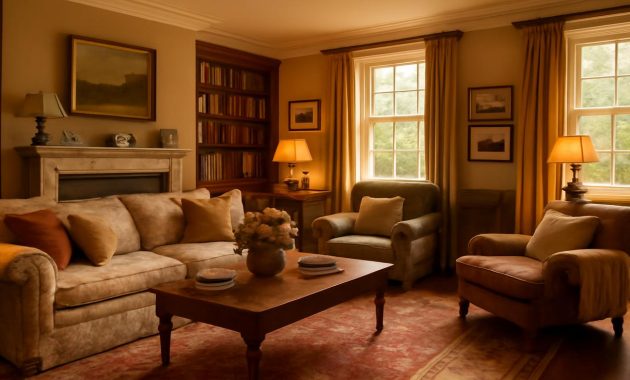
The sitting room feels like the heart of the house—a room where the day gathers itself. It’s the kind of space where the light changes personality throughout the hours, from pale, early-morning gray to late-afternoon amber. Soft, neutral walls hold it all together, the color of unbleached linen or stone warmed by the sun.
The furniture is a gentle conversation between tradition and ease. Classic sofas with rolled arms, dressed in calm, earthy tones—ecru, moss, dove gray—are layered with cushions that invite you to rearrange them without guilt. A basket of wool throws waits nearby, as if someone was planning ahead for an evening curled up with a book or an old film.
Here and there, you catch the careful threading of personality through the decor. A small, framed photograph of the children on a windswept beach, cheeks pink from the cold. A vase of seasonal flowers, not flamboyant or over-arranged, but just a loose, generous handful of garden blooms—a reminder that even among duty and protocol, there’s still time to notice what’s growing outside.
The room smells faintly of wood smoke and something citrusy from a candle flickering on the mantel. It’s easy to imagine this room on a winter evening: logs crackling in the fireplace, mugs of hot chocolate balanced on the coffee table, the shush of pages turning as someone reads aloud. You can almost hear the soft murmur of conversation after the children have gone to bed, the slow unspooling of the day between two people who carry a nation’s expectations yet still, at the end of it all, come home and ask each other, “How was your day?”
Where Heritage Meets Everyday Life
What makes this sitting room quietly remarkable isn’t just its comfort, but the way it gently folds history into the background of the everyday. An antique sideboard might hold a stack of recent magazines. A delicate porcelain dish, older than any modern headline, could be home to a scatter of keys and loose change. There’s a harmony here between past and present that feels unforced, as if the house has simply accepted each new chapter with grace.
In the corner, a small bookshelf holds an unpretentious mix of titles—gardening guides, wildlife field books, well-thumbed novels, perhaps a dog-eared volume of children’s stories. This is not a room staged for photographs, but one built for returning to, again and again, knowing you’ll find it just as you left it, if a little more lived-in each time.
| Room | Key Feeling | Design Details |
|---|---|---|
| Entrance Hall | Welcoming, grounded | Wood floors, soft lamps, family photos |
| Sitting Room | Cozy, lived-in | Neutral fabrics, throws, fireplace |
| Kitchen | Heart of the home | Farmhouse table, open shelves, warm light |
| Bedrooms | Quiet retreat | Soft linens, calm colors, personal touches |
| Children’s Spaces | Playful, safe | Low shelves, baskets, handmade pieces |
The Kitchen: Quiet Center of a Public Life
If the sitting room is the soul of the house, the kitchen is its heartbeat. This is where days begin in a soft, sleepy shuffle and where evenings gather themselves in the glow of overhead lights. There’s something reassuringly unroyal about it, almost defiantly so; a space that could belong to any family who values long breakfasts and unhurried conversation.
The surfaces are solid but unshowy—perhaps cool stone or well-loved wood, wiped down countless times after floury hands have rolled out dough or little fingers have helped decorate biscuits. An old-fashioned farmhouse table anchors the room, its top worn to a gentle sheen by elbows leaning in, school projects spread out, and weekend newspapers read from cover to cover.
On open shelves, mismatched mugs stand shoulder to shoulder, a quiet rebellion against the idea that everything must match to be beautiful. There might be a ceramic jug filled with utensils, a stack of bowls ready for porridge or soup, and a fruit bowl that actually looks like it belongs to a house where people pass through often, plucking an apple on their way outside.
It’s easy to imagine the rhythm here: the kettle’s first whistle just as dawn bruises the sky, cereal bowls clinking, the whir of a blender making smoothies for small hands that never seem to stop moving. Evening might bring the softer, slower sounds of simmering sauces, the clink of wine glasses, the scrape of a chair as someone leans back and laughs. The kitchen is where the public roles of Prince and Princess are gently set aside for something simpler, more elemental: the pleasure of feeding the people you love.
Small Rituals, Big Meanings
In a home like this, the smallest rituals become anchors. A particular mug reserved for morning tea. A certain spot at the table where the autumn light hits just right. A board where children’s drawings are pinned, their bright colors overlapping like confetti. These details may never appear in official photographs, but they are the threads that quietly hold a life together.
There is deep comfort in the ordinary: school lunchboxes lined up on the counter, a jar of wooden spoons, a towel slung over the handle of the oven. For a family whose days are often mapped out by red boxes and official schedules, the gentle repetition of kitchen life offers something rare—predictability, and the warm, unremarkable magic of home.
Children’s Corners and Quiet Retreats
Move further into the house and the spaces begin to shift in energy, like changing rooms in a play. The children’s areas are where the house drops its shoulders and grins. Here, the color palette grows bolder, softened still by natural light and the grounding of wooden floors, but brightened by toys, artwork, and the constant presence of imagination.
Low shelves hold baskets of building blocks and well-read picture books. A small table might be permanently scattered with colored pencils and half-finished drawings. The soft scuff of a toy car along the skirting board, the gentle thud of footsteps running down a corridor—these sounds are the house’s new soundtrack, a reminder that this is not just a residence, but a childhood unfolding in real time.
There’s a tenderness in the design choices here: rugs that are soft beneath bare feet, window seats that invite daydreaming, curtains that soften the morning light rather than shutting it out. Though the world outside may see the royal children as symbols of continuity, inside these walls they are simply children—given room to grow, to create, to leave trails of crayons and stuffed animals in their wake.
Rooms That Exhale at Night
Upstairs, the atmosphere quiets, the air thick with the hush of evening. Bedrooms are less about display and more about retreat—a place where titles and tiaras are left at the door. The decor leans toward calm: soft, layered linens, colors borrowed from the landscape outside—muted greens, cloud whites, gentle blues.
Bedside tables might host a comforting chaos of water glasses, dog-eared novels, framed photos whose edges are slightly worn from being picked up and dusted. A small chair draped with a cardigan, a pair of slippers nudged just out of place—small signs that this is where days are allowed to unravel and be stitched back together in sleep.
The house changes character at night. Hallway lights are dimmed, doors left ajar to let in the thin ribbon of light that reassures small sleepers. Somewhere, a clock marks the hours, but softly, as though mindful not to disturb. Outside, the vastness of their shared future might stretch out like the night sky, full of stars and responsibility. But inside, the bedroom is a smaller universe, one defined by shared blankets, quiet conversations, and the comfort of knowing that no matter how public life becomes, this space remains theirs.
Nature at the Threshold
What makes this new home feel especially alive is the way the outdoors seems to press gently against every window. Look out from almost any room and you’re met not with city streets, but with trees, lawns, and sky—a shifting gallery of seasons.
In spring, branches feather themselves with green just beyond the glass, and the air slips in carrying a hint of damp earth and new beginnings. Summer turns the light syrupy and golden, drawing long shadows across the floorboards in the late afternoon. Autumn arrives in a rustle of leaves and the soft percussion of rain on the windowpanes. Even winter has its own deep, velvety charm, as frost etches delicate patterns across the garden and indoor lamplight glows warmer by contrast.
The connection to nature isn’t an accident; it’s a choice stitched into the very fabric of the home. A pair of muddy wellington boots by the back door, a coat hook dropping shoulders under the weight of waxed jackets, a basket set aside for found objects—pinecones, feathers, interesting stones. These are the signatures of a family that steps outside often, who knows the names of birds in the hedgerow and the feel of wind on their faces.
A Sanctuary in a Demanding World
For all its history and all its quiet grandeur, what lingers most about this house is not its age, its architecture, or even its royal residents, but its unmistakable intention. It is a home designed to shelter, to soften, to steady. The walls hold countless echoes—from the clipped diction of past centuries to the carefree laughter of present-day children—but they all dissolve into the same truth: this is a place that understands the weight of the world outside and answers it with warmth.
In the end, what makes the interior of Prince William and Kate Middleton’s new home so compelling is not its distance from ordinary life, but its closeness to it. The soft lamps, the worn wood, the scattered books, the evidence of lives mid-story—all of it adds up to something profoundly human. Here, within walls that could so easily have become a museum of status, a family has chosen instead to create a sanctuary of comfort, continuity, and quiet joy.
Step back out through the front door and the mist might have thinned, the birds shifted to a new branch, the light changed just enough that you notice it. Behind you, the door closes with a settled, familiar finality. Inside, the house goes on breathing—holding its private warmth, its mingling of history and hope, its promise that even the most public lives still need somewhere softly lit and deeply loved to come home to.
Frequently Asked Questions
Is Prince William and Kate Middleton’s new home a palace?
No. While it carries the grace and history associated with royal residences, the home itself is more akin to a large, historic country house than a glittering palace. Its interior emphasizes comfort and family life over opulence.
What is the design style of their new home’s interior?
The interior blends classic English country style with modern simplicity. Think neutral tones, natural materials, soft textiles, and subtle heritage pieces woven into a warm, lived-in atmosphere rather than a formal, museum-like setting.
Is the home decorated with a lot of gold and formal antiques?
There are certainly historic touches and a few cherished antiques, but the overall feel is understated. The focus is on practical elegance—pieces that can be used and enjoyed daily, alongside a handful of items that speak to the building’s history.
How child-friendly is the house?
Very. The design clearly makes space for children’s lives: low shelves, baskets for toys, cozy reading nooks, durable rugs, and rooms where it’s safe and encouraged to play, imagine, and make a little mess.
Does nature play a role in the home’s interior feel?
Yes. Large windows frame views of trees and gardens, colors are often drawn from the surrounding landscape, and everyday details—like boots by the back door and vases of seasonal flowers—create a seamless dialogue between indoors and out.
Is the interior overly formal because it’s a royal residence?
The house respects its royal context, but the interior itself leans more toward relaxed refinement. It’s a place where formal duty can be left at the door, and where the family can enjoy ordinary moments in an extraordinary setting.
Can the public visit Prince William and Kate Middleton’s new home?
No. This residence is a private family home and not open for public tours. What is known and imagined about its interior comes from its architectural character, glimpses from official photographs, and the couple’s well-known preference for warm, practical, family-centered spaces.