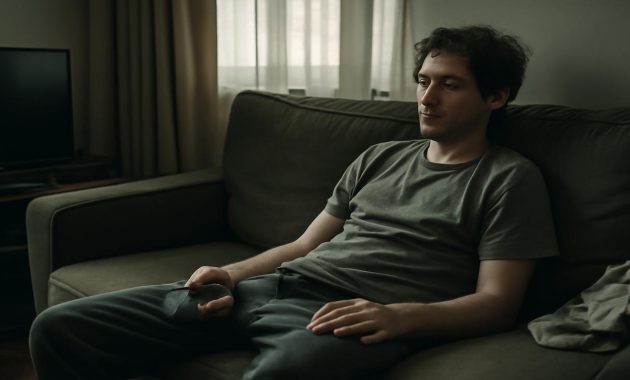
The first thing you notice is the weight. Not the number on a scale, but a kind of invisible gravity pressing gently—then not so gently—on your shoulders, your eyelids, the backs of your knees. It’s one of those formless days, the kind that starts without an alarm and unravels like a spool of thread on the floor. You pad from room to room, phone in hand, grazing on notifications and snacks, and by noon your body feels twice as dense as it did when you woke up. You haven’t done much, but you feel inexplicably spent, heavy, as though you’ve been walking through wet sand instead of carpet.
The Physics of a Day That Never Quite Starts
Think of a structured day as a river: it has banks, a direction, a sense of flow. An unstructured day, by contrast, is more like a flooded field—water everywhere, going nowhere in particular. Your body and brain evolved to move in rhythms and patterns; they thrive on predictable pulses of activity and rest. When those pulses vanish, something subtle but profound starts to happen inside you.
You wake without a clear reason to get out of bed. No meeting, no train to catch, no morning walk you’ve promised yourself. Your body lingers in that gray area between sleep and wakefulness. Cortisol, the hormone that helps you feel awake and ready, doesn’t get the same clear signal to rise on schedule. Melatonin, your sleep hormone, hangs around longer than it should. You shuffle to the kitchen feeling strangely groggy, as if someone forgot to turn on the “daytime” switch in your brain.
This hormonal fuzziness is one part of the heaviness. Your internal clock—the circadian rhythm—is looking for anchors: a wake time, a first hit of sunlight, a pattern of movement. Without them, the clock drifts, and when your internal time drifts, everything from digestion to body temperature to energy levels starts to wobble. Your muscles receive fewer clear cues to activate. Your blood vessels respond sluggishly. Even your posture sinks, as if your skeleton is quietly surrendering to gravity.
The strangest part is that your mind often doesn’t register all this as a biological issue. You might label it laziness, call it “being off your game,” or blame it on a bad night’s sleep. But very often, what you’re actually feeling is what happens when a day lacks the simple scaffolding your nervous system craves.
The Quiet War Between Structure and Stress
At first glance, a day without structure looks like the antidote to stress: no deadlines, no commute, no packed calendar. But under the skin, your nervous system is fighting a quiet war. The human brain dislikes uncertainty far more than it dislikes effort. And an unstructured day is built out of tiny uncertainties: When will I eat? What should I do next? Should I start that task or scroll a little longer?
Each micro-question is a decision, and decisions cost energy. Your brain leans heavily on your prefrontal cortex—the same area you use for focus, planning, and self-control—to answer them. When there’s structure, many of those decisions are pre-made. When there isn’t, you’re forced to constantly self-navigate. That constant micro-navigation drains you, even while your body is doing almost nothing.
Your stress response doesn’t always spike into obvious panic; often, it becomes a low hum. A background static of “I should be doing something,” mixed with “I don’t know where to start.” The sympathetic nervous system, which governs your fight-or-flight response, flickers on and off. Heart rate nudges up, then down. Muscles hover in a state of half-tension. Shoulders creep toward your ears. Jaw sets just a bit tighter. The result is that you feel weirdly tired yet restless, like a coiled spring that never actually releases.
On days with structure, your body can predict effort: “We walk to the train at 8; we focus from 9 to 11; we rest at lunch.” On days without it, stress isn’t tied to actual events, but to anticipation and ambiguity. Instead of a few steep hills of effort, you get a long, low-grade climb that never quite ends. No wonder your limbs feel heavier by late afternoon.
A Subtle Story Your Posture Is Telling
Watch your body the next time you drift through an unstructured day. Notice your posture at three key moments: when you first open your laptop or phone, when you’re sitting on the couch mid-afternoon, and when you’re lying in bed at night trying to remember what you did all day.
You’ll often find the same pattern: slumped shoulders, a caved-in chest, a pelvis tilted forward as you sink deeper into your chair or mattress. Your body folds in on itself, a physical echo of inward, unfocused energy. This posture compresses your lungs and diaphragm, slightly reducing how much air you naturally pull in with each breath. Breaths become shallow, which means less oxygen and less efficient circulation. Muscles that should be working—like those in your hips and upper back—go offline, while others—like those in your lower back and neck—quietly overwork.
It can feel as if gravity has turned up a notch, but really, the forces that usually counteract gravity—movement, muscle engagement, upright posture—have dialed themselves down. Your body feels heavier because you’re not giving it enough clear reasons to feel light.
Movement: The Missing Rhythm Your Body Waits For
Imagine your body as a tide pool on a rocky coast. When the tide rolls in and out regularly, water circulates, fresh oxygen and nutrients swirl, and the ecosystem thrives. When the tide stalls, the pool becomes stagnant. An unstructured day often stalls your inner tide.
On structured days, movement tends to happen almost by accident: the walk to the bus, the trip up the office stairs, the back-and-forth across a shop floor, even the subtle fidgeting you do in a meeting. These motions are like little pumps, moving blood, lymph, and energy around your body. Your sensory systems wake up; your joints get lubricated; muscles flicker on and off in useful patterns.
On days without structure, you may move less than you think. Your fingers fly across screens, your eyes dart through text, but the rest of you is largely still. Hours pass with minimal change in posture. Your circulation slows. Joints stiffen. You haven’t lost strength; you’ve lost momentum. It’s the difference between a kite gliding in constant wind and one hanging limp on a windless afternoon.
The irony is that this stillness doesn’t feel restful in the nourishing way a good nap or gentle walk does. Rest only truly restores you when it exists in contrast to genuine effort. When your day is one long flat line of semi-idle, semi-engaged time, your body doesn’t register any clear cycles of tension and release. Instead, everything becomes a kind of lukewarm middle ground. Your nervous system, unsure when the next “real” demand will come, never gets permission to fully drop into recovery mode.
Table: How Structure Changes the Way Your Body Feels
| Body Experience | On a Structured Day | On an Unstructured Day |
|---|---|---|
| Morning energy | Wake time is predictable; you feel a clear “switch on.” | Groggy, drifting between sleep and wakefulness. |
| Posture & muscle tone | More upright, engaged by tasks and movement. | Slumped, folded, joints feel stiff and slow. |
| Stress pattern | Short bursts around clear events, then release. | Low-grade, continuous hum of uncertainty. |
| Movement | Built-in walking, transitions, scheduled activity. | Long sedentary stretches, tiny movements only. |
| Evening mood | A sense of “spent but satisfied.” | Tired, heavy, yet oddly unsatisfied. |
A Brain Built for Patterns, Not Blank Pages
From a distance, structure can look like a cage. Routines, alarms, recurring events—they can feel like constraints on your freedom. But in many ways, they’re more like the frame of a house. Without walls, you don’t get infinite space; you get exposure. Wind, rain, cold, confusion. Your brain tries to build that frame every morning, and the less you give it to work with, the more energy it spends improvising.
The human brain is surprisingly conservative. It will always choose the path of least resistance, especially when you’re tired or overwhelmed. That path, on an unstructured day, usually leads toward what is easiest right now: another scroll, another snack, another vague task that doesn’t require emotional risk. Every time you drift toward ease, your brain is rewarded with quick hits of dopamine, small pings of pleasure and novelty. But none of this leads to completion or traction. You end the day with a pile of open loops: conversations half-started, ideas half-formed, to-dos half-done.
This is where the heaviness gathers. Each open loop is a tiny cognitive burden, something your subconscious keeps tabs on. “Don’t forget to finish that,” it whispers. “You still need to respond to them.” Even when you’re lying still, your mental to-do list is pacing the floor. You’re resting physically, but your inner project manager is on overtime.
Structure doesn’t just organize time; it organizes attention. It says, “For this next hour, this is what we’re doing.” It grants you the relief of not needing to decide every five minutes what matters. When your attention is channeled instead of scattered, your mental workload drops. Tasks feel like hills you can climb instead of fog you’re wandering through. That clarity spreads downward, into your chest, your stomach, your legs. Your whole body feels less burdened because the mind steering it is less burdened.
Why Freedom Feels So Heavy Sometimes
There’s a quiet paradox here: the more free your day is, the more skills you need to navigate it without sinking. You need self-awareness to know what you actually want, discipline to do the thing that doesn’t offer instant gratification, and gentleness toward yourself when the day doesn’t go as planned.
Without those anchors, freedom turns into formlessness. It’s like being dropped in a wide, open forest with no path and no compass. The openness is breathtaking for a moment—and then it’s terrifying. Your steps become tentative. Your body tenses with every choice of direction. You move slower, hesitate more, burn more energy on second-guessing than on walking.
This is one reason vacations can leave you strangely exhausted. When every day is a blank canvas, your brain lacks the shortcuts and scripts it uses at home. Everything—from where to eat to how to spend the afternoon—requires fresh decision-making. The body, again, translates that unending uncertainty into a low but persistent physical load.
Light Structures, Not Hard Rules
None of this means you must pack your days with obligations to feel lighter. What your body longs for is not rigid scheduling, but gentle patterns—predictable touchpoints that tell your nervous system, “You’re held. You know what happens next.” Think of these less as rules and more as a tide you choose to align with.
A structured morning might be as simple as: wake around the same time, open the blinds, drink water, move your body for five minutes, choose one thing that matters for the day. A structured evening might be: devices down at a certain time, a small ritual that tells your body “we’re landing now”—a stretch, a book, a few deep breaths by the window.
The power of these small anchors shows up in your body’s language. Legs feel less like sandbags. Chest feels less tight. Your head, surprisingly, feels less foggy and heavy by midday. You’re not eliminating effort; you’re trading chaotic effort for rhythmic effort. Your energy stops leaking in all directions and begins to move like that river again—directed, pulsing, purposeful.
Listening to the Heaviness as a Signal
When your body feels heavier on a day without structure, it isn’t accusing you. It’s informing you. It’s saying, “I don’t know when to rise and when to rest. Give me some markers. Show me where the day begins and ends.” That heaviness is less a verdict on your character and more a simple systems report from your physiology.
You can start incredibly small. A consistent wake time, even on weekends. Stepping outside within an hour of getting up, so your eyes catch daylight and tell your brain, “It’s morning now.” One or two pockets of honest, focused effort each day, with a defined beginning and, just as crucially, a defined end. Tiny rituals like washing your face before you sit down to work, or lighting a candle when you cook dinner, create landmarks in time. Your body loves landmarks.
Over time, you may find that your heaviest days are not the ones where you did the most, but the ones where you did the least with the least clarity. Days where time happened to you, instead of with you. And you might start to see structure not as an enemy of spontaneity, but as the quiet friend that makes spontaneity possible because it holds the rest of your life in a loose but steady container.
FAQs
Why do I feel more tired on days when I “do nothing”?
On low-structure days, your brain burns energy on constant micro-decisions, your movement patterns flatten out, and your internal clock loses clear signals. This combination creates mental fatigue and physical sluggishness, even if you haven’t done much that looks like effort from the outside.
Isn’t rest supposed to make my body feel lighter, not heavier?
Rest restores you when it alternates with real activation. When your whole day is a vague, low-effort, low-focus drift, your body never fully engages or fully rests. You hover in the middle, which feels more like stagnation than restoration—your body interprets that as heaviness rather than ease.
Do I need a strict schedule to avoid this heavy feeling?
No. Your body doesn’t need precision; it needs patterns. Gentle, repeatable anchors—like consistent wake times, short movement breaks, and simple morning or evening rituals—are usually enough to give your nervous system the sense of predictability it craves.
Why does my posture get worse on unstructured days?
Without built-in movement and varied tasks, you tend to stay in one or two positions for long stretches—often slumped over a screen. This posture compresses your lungs and strains your muscles, making you feel heavier, stiffer, and more fatigued over time.
How can I add structure without feeling trapped by routine?
Think of structure as a light framework, not a cage. Choose a few non-negotiable anchors—like when you wake, when you get daylight, and one daily priority—and leave the rest of the day flexible. This balance lets your body feel held and oriented while still leaving plenty of room for choice and spontaneity.