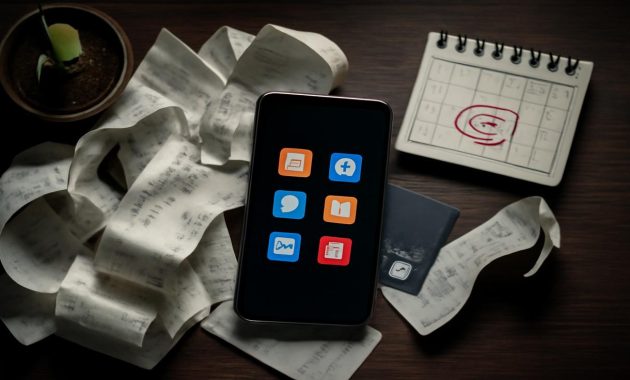
The first time I noticed it, I was standing in line for coffee on a Tuesday morning. The café windows were fogged from the breath of a dozen people ahead of me, all shifting their weight from one foot to the other, all holding phones, all doing the same quiet ritual. Tap card, glance at total, accept. No one flinched. No one looked surprised. It was just another four-dollar coffee woven into the rhythm of the day, as ordinary as a yawn. I ordered mine, of course. Extra shot. Almond milk. The barista smiled, I tapped, walked away, and felt that small, familiar tug somewhere between my ribs and my wallet—that soft awareness that I’d just made a choice that felt like nothing, but somehow added up to everything.
The Quiet Creep of “Normal” Spending
It’s strange how silent money can be now. You don’t hear it jingle. You don’t watch it leave your hand. You don’t even feel the texture of a note or coin growing warm in your palm. Instead, there’s a muted chime from your banking app, or a brief glow from the payment terminal, and a number—far away, buried in some digital ledger—shifts slightly. A few dollars here. A small subscription there. One impulsive delivery because you’re tired, or bored, or the fridge is full but nothing looks thrilling.
What makes this pattern dangerous isn’t the size of any single purchase. It’s the way it blends into the background. Like background noise—a fan humming, traffic purring in the distance—your daily spending hums along beneath your awareness. You don’t really notice it until the room goes quiet and you realize how loud it had been all along.
The pattern often looks something like this: a coffee, a snack, a ride-share, a streaming service, an app subscription you barely remember signing up for, lunch ordered in because a meeting ran over. None of it feels reckless. On the contrary, it feels like you’re just “getting through the day,” or rewarding yourself for working hard, or buying back a bit of time.
But it’s exactly this casual, almost invisible rhythm of spending that slowly tightens around your future like an extra belt notch you don’t remember adding. It doesn’t choke you all at once. It just…presses. A low, steady pressure that turns into long-term strain—financially, emotionally, even physically.
The Daily Pattern That Bends Your Future
Think about an average weekday. Not a special, dramatic one—just a simple, gray-sky Tuesday. Morning alarm. Scroll through notifications. Maybe a ten-minute battle with the snooze button. You’re already a bit behind, so you skip making breakfast and grab something on the way. It’s not a big deal. The line moves quickly. You swipe, tap, or wave your phone, and head to work, sipping as you walk.
At your desk, a colleague messages you about trying the new lunch spot around the corner. You say yes; you want to be sociable, to feel a part of things. At noon, the sunshine is dazzling, the food smells fantastic, and when the bill comes, you don’t feel like being fussy. Tap. Done. Back at work, the afternoon drags. You need a pick-me-up—maybe another coffee, maybe a sweet snack. Tap again. On the way home, you’re tired, so you decide to order delivery instead of cooking what’s already at home. Tap. Tip. Extra fee.
Overlay this with your monthly subscriptions: multiple streaming services, a premium music app, cloud storage, a note-taking app with fancy features, a monthly subscription box you half-look at when it arrives but never fully enjoy, a meditation app you swore you’d use every day but haven’t opened in weeks. They slide out of your account on different days, small enough that none of them feels worth confronting right now. You’ll “look at them later.” You don’t.
Individually, each of these expenses feels justified. That’s part of the trap. You’re not buying luxury handbags or booking spontaneous trips to faraway islands; you’re just smoothing the rough edges of an ordinary day. But something quiet is happening underneath the surface: today’s comfort is colliding with tomorrow’s freedom.
To see it clearly, it helps to bring this ghost pattern into the light and give it numbers, edges, and shape.
| Daily / Monthly Habit | Approx. Cost | Yearly Total | 10-Year Total* |
|---|---|---|---|
| Coffee shop drink (5 days/week) | $4/day | ≈ $1,040 | ≈ $10,400 |
| Lunch out (3 days/week) | $12/day | ≈ $1,872 | ≈ $18,720 |
| Delivery dinner (2x/week) | $25/order | ≈ $2,600 | ≈ $26,000 |
| Streaming & app subscriptions | $40/month | ≈ $480 | ≈ $4,800 |
| Total | — | ≈ $5,992 / year | ≈ $59,920 |
*Not including any potential investment growth, inflation, or price increases—just simple multiplication.
Nearly six thousand dollars a year. Almost sixty thousand in a decade. And that’s using conservative numbers. Layer in the reality that prices creep upward and that money you don’t spend could have been quietly growing in an investment account, and the true weight is even heavier. This is the long-term pressure built from tiny daily decisions that never felt important enough to question.
The Invisible Weight on Your Nervous System
Of course, money itself isn’t the villain here. It’s just a tool. The real story is what this spending pattern does to the way you feel about your life.
The first symptom is usually a persistent, low-grade financial anxiety. Not a full-blown panic—just a constant humming of “I should really get my money together” in the back of your mind. You might avoid opening your banking app for a few days. You might rely on the “tap and hope” method, assuming there’s probably enough in your account to get you through the week.
Then the bigger things start pressing in. The emergency that feels unsettlingly close: the car repair, the medical bill, the sudden job loss. The future you know you’re supposed to be planning for: a home, travel, a sabbatical, a cushion big enough to let you exhale. A version of you who isn’t constantly doing mental math in the cereal aisle.
The irony is sharp: the same spending pattern that promises daily ease creates a chronic undertow of unease. Each moment of “I deserve this” comes with a faint echo of “but can I sustain this?” You might not hear the echo clearly, but your body does. Tight shoulders. Sleepless nights. A bloodstream that has memorized the taste of adrenaline.
This is the deeper cost of easy, frictionless spending: it trains your nervous system to live in reaction mode. Need comfort? Buy something. Feel stressed? Order food. Feel left out? Join the outing, split the bill, and worry later. Each time, there’s a brief, pleasant spike of relief, followed by a subtle dip as future-you silently absorbs the impact.
Over time, the gap widens between the life you’re living and the life you imagined for yourself. You start to feel slightly out of control, not in a dramatic spiraling sense, but in the way you might feel if someone else were quietly steering your days just a few degrees off course. You’re not crashing—but you’re not exactly heading toward the horizon you wanted, either.
How Convenience Becomes a Story You Tell Yourself
There’s another layer, more tender and less talked about: the story you tell yourself about your worth, using money as the language.
Daily spending often becomes a way of self-soothing, especially when life feels heavy. “I’ve had a hard day, I deserve a treat.” Or: “I’m exhausted, I deserve to not cook.” Or: “Everyone else seems to be doing it, I don’t want to be the one who says no.” These are deeply human impulses. They’re not wrong. But if they become automatic, they slowly shape your identity.
You become someone who is always catching up rather than choosing. Someone whose money flows outward in a steady stream but never really gathers into a pool large enough to feel safe, or powerful, or purposeful. Someone who lives in a series of “right now” decisions, while “later” becomes hazier and more intimidating.
The frictionless nature of modern spending—stored cards, one-click purchases, contactless payments—removes the physical moment of choice. Your thumb learns the motion before your mind has the chance to weigh in. The narrative becomes, “I’m bad with money,” rather than, “My environment is designed to separate me from it without feeling a thing.”
This is how the daily pattern burrows into your identity. You stop seeing yourself as the kind of person who can build savings, or invest, or say no with confidence. That low, long-term pressure is no longer just on your bank balance; it sits on your sense of self, whispering that you’re behind, that you’re not disciplined enough, that everyone else got a handbook you somehow missed.
Rewriting the Script: Gentle Friction, Not Harsh Rules
Escaping this pressure doesn’t require a dramatic purge of everything that brings you joy. It asks for something quieter and more sustainable: the reintroduction of friction. Little pauses. Small rituals. Moments that turn “tap and go” into “pause and choose.”
You might start by simply noticing. Not forcing change, just tracking it. For one week, you write down every purchase in a note on your phone. The latte, the snack, the ride-share, the impulse-book, the late-night tacos. No judgment, no color coding, just clarity. By the end of the week, the pattern that was foggy in your memory becomes sharply defined on the screen in your hand.
That alone can be confronting. But it’s also empowering. Because once you can see the pattern, you can shape it. You might decide that café coffee is still worth it to you, but delivery dinners are not. Or that lunch out with friends stays, but solo, bored scrolling-and-buying gets a limit. You begin to distinguish between spending that adds something real to your life and spending that simply leaks out through the cracks of your fatigue.
These are not rules etched in stone. They’re more like stepping stones in a river—each one a small, deliberate place to put your foot so you don’t get swept away by the current of convenience.
From Pressure to Possibility
Imagine, just for a moment, what it would feel like for money to be quiet in a different way. Not invisible and slipping away, but steady and accumulating. Imagine looking at your account and seeing not the aftermath of a thousand tiny taps, but the evidence of a thousand tiny pauses—each one creating a bit more space for your future.
Picture a month where, instead of six or seven delivery dinners, you cook four extra simple, imperfect meals at home. Where two of your three streaming services are paused, and you rediscover the joy of rewatching things you already love. Where you choose two café coffees a week and make the rest at home, turning on music, letting the smell fill your kitchen before the day begins.
At first, the difference in your bank balance feels small. But there’s another difference you’ll feel even more quickly: a loosening in your chest. You’re no longer entirely at the mercy of impulse and autopilot. You’re beginning to separate your sense of comfort from the act of spending.
As the months stack up, these small choices stop feeling like sacrifices and start feeling like investments—not just in future dollars, but in future options. The option to take a lower-paying job that nourishes you more. The option to move somewhere that better matches your values. The option to weather a financial storm without feeling like the ground has opened beneath your feet.
This, ultimately, is how you reverse the long-term pressure of daily spending. Not by punishing yourself for every coffee or every outing, but by re-centering your relationship with time. You stop asking, “What do I deserve right now?” and start asking, “What kind of life do I want to deserve later—and what do I need to nurture that, today?”
Building a Daily Pattern That Holds You, Not Hurts You
A different daily rhythm is possible. It still has treats. It still has comfort. But it’s anchored in intention rather than habit.
Maybe it looks like this: once a week, you sit with a cup of tea and look at your upcoming days the way a gardener looks at a plot of soil. Where will you eat out—and truly savor it? Where will you bring food from home and let that decision feel like quiet power rather than deprivation? Which subscriptions still feel like tools, and which ones feel like clutter? You cancel one. Then another, later. You redirect that freed-up money into a separate account that’s not just “savings,” but named after something that makes your heart beat a little faster: “Year Off Fund,” or “Ocean Trip,” or “Freedom Cushion.”
You’re not chasing perfection. There will be impulsive days. There will be late-night orders and unplanned Ubers. That’s fine. What matters is that the center of gravity has shifted. The majority of your days now bend gently toward your future, rather than away from it.
The pressure doesn’t disappear overnight. But it changes temperature, tone, and weight. It becomes less like a constant squeeze and more like a steady hand on your back, reminding you that you are capable of being the author of this story, not just a character reacting to each page as it turns.
FAQs
Why do small daily expenses matter so much if they’re only a few dollars?
Small expenses matter because of repetition. A $5 purchase once is forgettable; a $5 habit five times a week for years quietly becomes thousands of dollars. The danger is that these costs feel trivial in the moment, so they slip past your awareness and accumulate out of sight.
Is the solution to cut out all treats and non-essential spending?
No. Extreme restriction usually backfires. The goal isn’t to eliminate joy, but to choose it consciously. Keeping some café visits, meals out, or subscriptions is completely fine—if they truly add value and fit within a bigger plan that supports your future.
How can I start changing my daily spending without feeling overwhelmed?
Begin with awareness, not drastic cuts. Track everything you spend for one week, then highlight what felt genuinely worthwhile versus what you barely remember. Pick just one or two habits to adjust—like reducing delivery meals or canceling one subscription—and redirect that money into savings.
What if my income is low—does this still apply to me?
Yes, though the context is different. When income is tight, daily spending patterns can have an even bigger impact. You may not be able to cut much, but small shifts can still reduce stress and create a bit more breathing room. It’s less about judgment and more about making the limited resources you have work in the way that matters most to you.
How long does it take to feel the benefits of changing my spending pattern?
Some benefits are immediate—like reduced anxiety from simply knowing where your money goes. Tangible financial results, like a growing savings balance, often start to feel real within a few months. Over years, the compounding effect of small, consistent choices can radically change your options and sense of security.