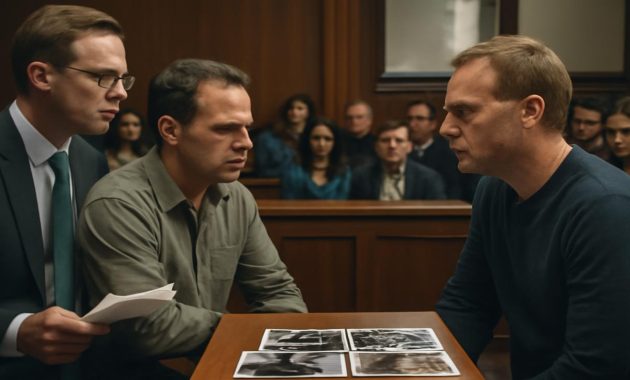
The first time Lena handed over her car keys to her neighbor, it felt like the most natural thing in the world. The late afternoon sun was sliding down the row of maple trees, kids were chalking hopscotch grids on the pavement, and the air smelled faintly of cut grass and charcoal smoke. Tom, who lived three houses down, stood at her porch with an apologetic half-smile and a story about a dead battery, a late shift, and a promise to “bring it right back.” It was the kind of small, neighborly gesture that stitched their quiet cul-de-sac together: sharing sugar, shoveling each other’s driveways in winter, grabbing packages off porches when someone was out of town. Just one neighbor helping another. No contract. No paperwork. Just trust.
The Favor That Started It All
They weren’t close friends exactly, but close enough. Lena had waved to Tom for years, exchanged greetings while dragging trash cans to the curb, swapped holiday cookies when December rolled around. She knew he had two young kids and a second job he worked on weekends. She knew he’d been through a rough divorce. She also knew his old sedan had been coughing and rattling for months.
So when he knocked that Thursday evening and asked to borrow her blue hatchback “just for a couple hours,” Lena barely hesitated. She checked the time—not even 6 p.m.—and weighed her plans. She didn’t need the car, and he did. Kindness won.
“Just be careful with her,” she said, dropping the keys into his open palm. He laughed.
“She’ll be back before you even miss her. I’ll fill the tank too.”
No one on that street had any idea that within weeks, those same keys would be at the center of a court case, a neighborhood split into camps, and a story that would be chewed over in living rooms, online comment sections, and a cramped courtroom where silence buzzed louder than any argument.
The Unpaid Fine and the Invisible Strings
What Lena didn’t know—what Tom hadn’t mentioned—was that there was a small, stubborn stack of unpaid traffic fines attached to his name. A speeding ticket from six months back. A parking violation. A notice that had turned into a warning, which had quietly turned into consequences.
It’s funny how bureaucracy moves: slow, patient, relentless. Somewhere in a government office, a system flagged Tom’s license. The status changed. An automated letter went out, printed in stiff, unfeeling ink: Suspended. He’d meant to deal with it. He’d tossed the letter on the kitchen counter, under a pizza menu and two school newsletters. Then life got busy, as it always does.
To Lena, the favor was simple. To the law, it was more complicated than that. Because when you hand your keys to someone, you’re not just lending them metal and gas. You’re handing over responsibility, whether you realize it or not. You’re stepping—however lightly—into a tangle of rules most people never read until something goes wrong.
By 7:45 p.m., the sky had shifted from peach to navy. Porch lights came on up and down the block. Lena made tea, answering a few emails on her laptop, not thinking once about her car. Down the highway, under a line of streetlights that turned raindrops into quicksilver, Tom was driving a little too fast, a little too distracted, trying to make up time.
Behind him, far enough back that he hadn’t yet noticed, a woman in an old white sedan was driving home after a double shift at the hospital. Her name was Dana. She would become the center of another kind of story—the kind written in medical bills and rehab appointments and quiet moments when she’d try and fail to open a jar with a wrist that no longer worked the way it used to.
The Accident That Rewrote Everything
There’s no dramatic soundtrack to the worst moments of your life. Usually it’s a song you don’t even remember was playing on the radio, a road you’ve taken a hundred times, a glance down at your phone, a flash of red brake lights too close, too late.
The official report would later say it like this: “Driver of Vehicle A failed to notice slowing traffic ahead, resulting in a rear-end collision with Vehicle B.” It would list time, weather, estimated speed, a diagram of two rectangles and some arrows. Clean. Clinical.
But the way Dana would remember it was different. The squeal of tires. The crunch of metal like a can being crushed by an angry hand. The bite of the seatbelt across her chest. The way her heart slammed into her ribs. The taste of fear when the car lurched forward and then stopped dead. The ringing silence afterward, broken by her own ragged breathing and the crackle of a distant radio.
Tom would remember the moment his world narrowed to the red burst of brake lights and a final thought—that stupid, useless thought people have when it’s already too late: Oh no.
Airbags exploded white and hot. Glass dusted the floor like glitter. Cars behind them veered, honked, stopped. Someone called an ambulance. Another person snapped a photo. A police cruiser pulled up, blue lights stuttering across the wet pavement and the stunned faces of a dozen strangers. The rain smelled like oil and hot rubber.
By 9:30 p.m., Lena’s phone buzzed on the coffee table. An unknown number. A brisk voice. A question that turned her blood to ice: “Do you own a blue hatchback, license plate ending in 8-9-2?”
The Courtroom, the Blame, and the Neighbors
The first time Lena walked into the courthouse, everything felt too big—ceilings, wood-paneled walls, the echo of shoes on polished floors. She’d never been there for anything more serious than jury duty selection. Now, her name was on forms thick enough to make a stack.
The accident had left Dana with a fractured wrist, whiplash, and a long trail of medical costs. Her car was a mess of bent metal. She couldn’t work for weeks. Bills stacked up like the tickets that had once gathered on Tom’s kitchen counter. Someone had to pay.
The police report noted the key facts: Tom was driving Lena’s car. His license was suspended due to unpaid fines. He was at fault in the collision. But that wasn’t the only story the law wanted to tell.
In the weeks that followed, insurance companies got involved. Lena learned new phrases: “vicarious liability,” “permissive use,” “duty of care.” Her insurance covered some damage, but not all. Lawyers began looking not just at Tom, but at her. Did she know his license was suspended? Should she have known? Was she responsible for the decision to hand over her keys?
Across town, Dana’s family urged her to protect herself. “This isn’t about being mean,” her sister said at the kitchen table, spreading out bills and pay stubs. “It’s about survival. If insurance won’t cover it all, you have to go after whoever’s responsible.”
And so a quiet, ordinary woman who had once lent her car in an act of kindness found her name next to the word “Defendant.” Tom was there, too—the “Driver at Fault.” Dana was the “Plaintiff.” But in that courtroom, none of those labels felt like they fit. They were just three people whose lives had collided on a dark stretch of highway.
Back on their street, the story spread like a gust of wind pushing open screen doors. Some neighbors shook their heads and said it was just a “terrible accident, nothing more.” Others whispered that Lena should never have lent out her car in the first place. A few were harsher: “You have to be smart these days. You can’t trust anyone.”
In the evenings, as porch lights flickered on, invisible lines began to appear: who waved, who no longer did, who pretended not to see the blue hatchback now parked farther up Lena’s driveway, as if it too were hiding.
When the Law Walks into the Living Room
The courtroom became the stage where all the invisible strings of that simple favor were pulled into the light. Lawyers spoke in measured, precise language, but what they were really doing was assigning blame, inch by inch, person by person.
On one side, Dana’s attorney argued that she deserved full compensation—for the pain, the hospital visits, the time off work, the long-term impact of injuries that might never fully heal. On the other side, lawyers for Lena and for Tom’s insurance company argued over what Lena could reasonably have known or predicted when she handed over those keys.
Tom sat there, shoulders tight, eyes sunken with lack of sleep. When he testified, his voice faltered.
“I didn’t tell her about the fines,” he admitted. “I didn’t think— I mean, I thought I’d fix it. I didn’t want to bother her with that. I just needed the car.”
Lena watched him, feeling the ground under her life shift again. She’d been angry at him for weeks, the way you’re angry at someone who’s dragged you into a story you never meant to be in. But in that moment, she mostly felt tired. Tired, and afraid.
Her own testimony was short but piercing. Had she asked to see his license? No. Had she known about his unpaid fines? No. Had she understood that, by lending her car, she could be held partly responsible for what happened later that night? Absolutely not.
The judge listened, expression unreadable. The courtroom smelled faintly of paper and old dust, the kind that clings to the corners of files and lives.
How a Neighborhood Turned into a Jury Box
Outside the courthouse, the story took on a life of its own. A local journalist picked it up, intrigued by the human tangle of it all. Soon it was more than a legal case. It was a debate, a talking point, a mirror people held up to their own beliefs about trust, responsibility, and how far a favor should go.
In coffee shops and online forums, people chose sides. Some saw Lena as a victim of an unforgiving system, a Good Samaritan punished for doing something that any decent neighbor might do. Others argued that “times have changed,” that you needed to protect yourself, that blind trust was a luxury no one could afford.
“She should’ve checked his license,” one commenter wrote, fingers flying across a phone screen. “You don’t know people like you think you do.”
“Since when do I have to turn into a cop every time I lend someone my car?” another replied. “It’s a favor, not a background check.”
On Lena’s street, the arguments were quieter but no less intense. Friends she’d known for a decade tried to walk the line between empathy and caution. One neighbor confided, “I feel for you, I do. But now I’m scared to lend anything to anyone. What if it’s my turn next?”
Tom’s house, once full of noisy weekend barbecues, grew still. Some blamed him for everything. Others saw a man crushed by his own mistakes, spiraling through guilt, legal fees, and the heavy knowledge that one rushed evening had wrecked not just his car and someone else’s, but the fragile trust of the entire street.
Lessons in the Fine Print of Everyday Kindness
What made the story catch fire wasn’t just the accident, or the courtroom, or the neighbors picking sides. It was the creeping realization that something so familiar—a simple, “Can I borrow your car?”—could drag anyone into the same nightmare.
Most of us live in a world built on informal agreements. You water my plants while I’m gone; I grab your kids from practice when you’re running late. You borrow my ladder; I borrow your snowblower. We trust, we improvise, we assume the risks are small and manageable. We don’t stop to imagine the knock-on effects: an unpaid fine, a suspended license, a moment of inattention, a life-changing injury.
The law, however, sees lines where we see neighborliness. It asks: Did you know the person you trusted might not be legally allowed to drive? Should you have known? Did your kindness cross into carelessness?
Those questions don’t just live in courtrooms. They slip into dinner conversations, carpool schedules, the quiet recalibrations of who-we-lend-what-to and under what conditions. That’s how a legal case becomes a cultural story—a legend with a warning tucked inside.
By the time the verdict came down, months had passed. The courtroom was quieter that day, but the weight of it all pressed on every seat. The judge’s ruling tried to thread a needle between compassion and precedent. Yes, Tom was primarily at fault; his unpaid fines and suspended license were central. But Lena’s liability wasn’t wiped clean. The reasoning was complicated, wrapped up in local laws and the language of insurance policies. It boiled down to a bitter truth: even good intentions can have a legal price tag.
What This Means for the Rest of Us
The story didn’t end when the case closed. It lingered in the way people acted afterward.
Lena stopped lending her car to anyone. She didn’t say it out loud at first, but when she finally did, it was in a tired voice over coffee with a friend. “I’m not a bad person for wanting to help,” she said. “But I can’t go through that again.”
Tom, facing fines, higher insurance, and the long, slow work of rebuilding his life, took on extra shifts and spoke less. On some evenings, he’d stand on his own porch, watching the kids ride their bikes, the same street that had once felt like a village. Now it felt like a jury.
Dana, wrist scarred and future slightly altered, got some of what she needed financially, but not all of what she’d lost. No verdict can fully pay for the feeling of safety you had before a stranger’s mistake burrowed into your bones.
The neighborhood adjusted. People still lent each other things, but more cautiously. Conversations about favors now had a hint of legal awareness: “Is it insured?” “Are you covered for that?” “Maybe I’ll drive instead.” The invisible social contract that had once been sealed with a smile now came with quiet footnotes.
For those watching from the outside—reading the article, scrolling through the comments, telling the story over lunch—the case became a parable of modern life: how our instinct to help collides with a world of forms, policies, and invisible risks.
A Simple Table of What Can Go Wrong
Below is a simple, mobile-friendly overview of how a favor like lending a car can unexpectedly turn into something much larger:
| Stage | What People Assume | What Can Actually Happen |
|---|---|---|
| Lending the car | It’s just a neighborly favor, no strings attached. | You may share legal and financial responsibility for what happens while they drive. |
| Driver’s status | If they have a car, they must have a valid license and insurance. | Unpaid fines or suspensions can make their driving illegal, increasing your risk. |
| Accident | Insurance will take care of everything. | Insurance may only cover part; lawsuits can reach beyond policies into personal assets. |
| Aftermath | Everyone understands it was just bad luck. | Friendships strain, neighbors take sides, and trust in everyday favors weakens. |
Finding a Way Back to Trust
So where does that leave the rest of us, standing at our own front doors with keys in hand, hearing a familiar knock?
The story of Lena, Tom, and Dana doesn’t hand out easy answers. It doesn’t say “never help anyone” or “trust blindly and hope for the best.” Instead, it sits in the complicated middle ground of being human in a world that keeps track of everything.
Maybe it means that the next time someone asks to borrow your car, you pause a little longer. You ask a few more questions. You think not just about who they are, but what you’re stepping into together. Maybe it means we learn to pair kindness with a quiet, unromantic layer of caution—checking insurance, understanding the rules in our own states or countries, realizing that a favor doesn’t erase the legal framework wrapped around it.
Or maybe it means something even simpler: that we broaden our understanding of what “being a good neighbor” actually requires in the modern world. Not just generosity, but honesty. Not just trust, but transparency. If your license is suspended, you say so. If your insurance is shaky, you admit it. If you can’t take on the risk, you offer another kind of help: a ride instead of the keys, a call to a cab instead of a silent assumption that everything will be fine.
The night the case finally ended, Lena drove home slowly, hands tight on the wheel. When she pulled into her driveway, the street was quiet, the maples standing like dark sentries against the sky. She sat there for a long moment before getting out, listening to the tick of the cooling engine, feeling the weight of all that had happened between the turning of a key and the slamming of a gavel.
Somewhere down the block, a porch light clicked on. A door opened. Life went on—messy, tangled, full of small kindnesses and hidden costs. She knew, now, that a simple favor was never really simple. But she also knew this: shutting her door forever wasn’t the answer either.
In the end, the story doesn’t tell us to stop being neighbors. It asks us to be wiser ones.
Frequently Asked Questions
Can I really be sued if I lend my car to a friend or neighbor?
Yes, in many places you can be drawn into legal and financial responsibility if someone causes an accident while driving your car with your permission. How much liability you face depends on local laws and your insurance policy, but your name is almost always part of the conversation after a serious crash.
Should I always check someone’s license before lending my car?
It’s not a legal requirement everywhere, but it’s a smart precaution. If you knowingly allow someone without a valid license to drive your car, your liability can increase significantly. Even a quick, honest conversation about their license and insurance status can protect both of you.
Does my car insurance cover other drivers?
Often, yes—many policies cover “permissive drivers,” people you allow to use your car. But coverage limits, deductibles, and exclusions vary widely. Some policies reduce coverage for non-household drivers, and others exclude unlicensed or high-risk drivers. It’s important to read your policy or talk to your insurer.
What happens if the driver has unpaid fines or a suspended license?
If the driver’s license is suspended because of unpaid fines or other violations, they may be driving illegally. That can complicate insurance coverage and increase the chances that you, as the owner, are pursued for damages, especially if you knew—or should reasonably have known—about their status.
How can I be a “good neighbor” without risking a legal nightmare?
You can still help, but do it thoughtfully. Offer to drive someone instead of lending your car, help pay for a ride-share or taxi, or assist them in resolving license or insurance issues. If you do lend your car, be clear about your expectations, know your insurance coverage, and have an honest conversation about their driving and license status first.