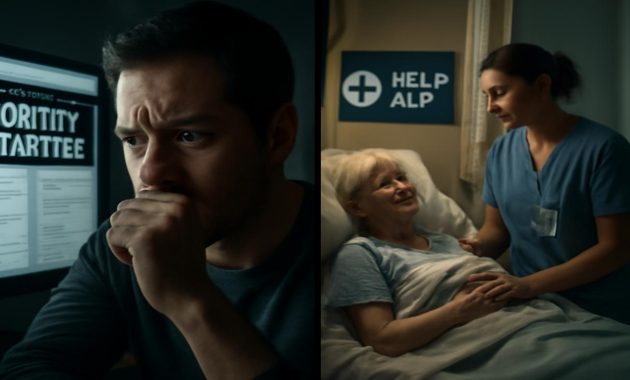
The email arrived on a Thursday morning that smelled of rain and burnt toast. Daniel almost deleted it without opening—another “urgent alert,” another whistleblower tip from some anonymous inbox. His small apartment was dim except for the blue light of his laptop, the screen a familiar battlefield of documents, spreadsheets, and grainy photos. Outside, the city traffic hummed like a distant hive. He took a sip of coffee gone lukewarm, clicked the subject line, and felt his world tilt half an inch to the left.
Subject: You need to see this. It’s about the charity that helps your mom.
The sender’s name meant nothing to him. The attached PDFs did. They were internal financial reports from a charity he recognized instantly—the same charity whose glossy brochures lined the nurses’ station at his mother’s rehab clinic. The same charity whose logo was on the pastel blanket that covered her at night.
Numbers flickered across his screen—figures quietly shuffled between “administrative costs” and “outreach initiatives,” invoices billed twice, gift cards for “community engagement” turning into airline tickets and spa retreats. It was the familiar pattern of rot he had traced so many times before. Only this time, the mold had spread into the one corner of his life he had stubbornly kept separate.
By the time he reached the last page, the coffee on his desk had grown cold, and a single thought kept circling in his mind like a trapped moth: If I do what I always do, my mother might lose everything keeping her alive.
The Man Behind the Mask
For three years, Daniel had lived two lives, though neither felt particularly glamorous. By day, he was a technical editor at a mid-sized publishing house, wrangling commas and rearranging clumsy sentences for academic journals. His coworkers knew him as quiet, precise, occasionally funny if you caught him after his second coffee.
By night—and often in the softer, hushed hours of pre-dawn—he was something else. Online, on certain forums that required encrypted logins and nosebleed levels of suspicion, he was known only as Galleon. A shadowy figure who specialized in one thing: exposing corrupt charities.
He never set out to be that person. It began with an accident, the way a landslide begins with a single dislodged stone. A few years earlier, he had donated a small sum to a disaster relief nonprofit after a hurricane flattened a string of coastal towns. Needing closure, he followed the group’s progress. What he found instead were discrepancies—receipts that didn’t match public reports, photos re-used from other disasters years before.
He started digging. He’d always been good with numbers, with patterns, with that quiet, stubborn patience needed to follow a faint trail where others saw only noise. Within months, he had gathered enough evidence to send to a journalist he trusted. The story blew open. The charity folded. People called the unknown whistleblower a hero. Donations, once funneled into granite countertops and luxury sedans, began to flow to real local relief efforts. Beneath the anonymity, Daniel felt something unfurl in his chest—a bitter, complicated pride.
So he kept going. He learned how to cross-reference public tax documents, how to track shell organizations, how to slip through the cracks of bad security like water through old wood. Each time he helped dismantle another corrupt charity, the internet lit up with outrage, and then, as always, moved on. But he stayed in the shadows, the invisible hinge on which certain lives quietly turned.
He told no one. Not his colleagues. Not his small circle of friends. Not his mother.
The Woman in the Pastel Blanket
His mother’s illness arrived like fog—slow, quiet, and suddenly everywhere. First, she forgot small things: where she left her keys, whether she’d added sugar to her tea. Then she repeated herself, asked the same question twice in a conversation. Finally, there were the moments that hollowed him out: the evening she stared at his face for a long time and asked, with bright, courteous confusion, “Now, dear, remind me, how exactly do we know each other?”
The doctors called it early-onset Alzheimer’s, delivered with the cool precision of a diagnosis that came with pamphlets and staged photos of smiling people in sunlit rooms. Treatment was expensive. Long-term care was a cliff he couldn’t afford to stand near. His own savings were modest, his freelance gigs unreliable. Their insurance plan covered a fraction and then turned its back. Bills began to arrive in the mail wearing the weight of small, quiet threats.
That’s when a social worker mentioned the charity.
“They’re one of the good ones,” she had said, handing him a brochure printed on thick, hopeful paper. “Grants for home care, subsidized therapy, respite services for family members. They bridge the gap, you know?”
He wanted to distrust them on instinct—too much experience had wired suspicion into his bones. But the brochures listed transparent budgets, auditors’ names, clear program descriptions. Independent reviews called them effective, compassionate, efficient. Staff at the clinic praised them without hesitation.
“We’d have lost half our patient support programs without them,” one nurse said, her tired eyes softening. “They show up when no one else does.”
And then the charity showed up for his mother.
A visiting nurse came twice a week. Therapy sessions were covered. They installed handrails in her bathroom, reorganized her kitchen with labels and tactile guides. The pastel blanket with their logo appeared on her bed, soft and warm against her thinning legs. The gap between what he could afford and what she needed suddenly felt navigable.
He did not look too closely. He did not dig. He convinced himself this was one corner of his life he needed to leave untouched. It was a fragile, necessary act of faith.
The Files That Broke the Wall
Now, the wall lay in pieces on his desk, shattered by a stranger’s email.
He printed the documents and laid them out in careful rows, the pages whispering against each other as he moved them. The smell of toner hung in the air, sharp and metallic. He took out a pencil and began to mark: this transfer questionable, that expense bloated, this vendor suspiciously linked to the CEO’s brother-in-law.
It was all there—a quiet siphoning of funds disguised under consultant fees, “awareness” campaigns that were little more than lavish events, bloated salaries nestled inside a tangle of acronyms. Even harder to swallow were the emails included in the leak: threads among senior executives weighing how much support to cut from “underperforming” regions without damaging their public image.
On page seven, he found the line that made his throat close. A table listing pilot programs under review, with color-coded risk assessments. Halfway down, highlighted in yellow: the memory care subsidy initiative at his mother’s clinic.
He read the projected savings if the program was reduced. He knew, almost to the dollar, what that would mean for his mother’s care.
The room felt smaller. The ticking of the kitchen clock, audible from his desk, sounded like a countdown.
Talking to Ghosts That Still Breathe
He visited his mother that evening. A storm had rolled through, and the world outside her facility smelled rinsed and new, the sidewalks shining darkly under the streetlights. Inside, the air held that peculiar mix of antiseptic and overcooked vegetables common to places where time slows down.
She sat by the window, the pastel blanket pulled up to her lap, watching the rain chase itself down the glass. Her hair, once thick and dark as river stones, was now a soft white halo. When he entered, her face lit up, the way it still did on the good days.
“There you are,” she said. “I was just thinking of you.”
He sat beside her, taking in the small details: the faint tremor in her hands, the way her slippers didn’t quite match. He asked about her day. She told him a story that was mostly true, though the order of events bent and folded in strange ways.
“The young woman came again,” she said. “You know, the one who helps me with the exercises. Very kind. She always brings those little cards with the pictures.”
“From the charity?” he asked, knowing the answer.
She nodded. “Yes, yes. They’re a blessing.” She patted his hand. “You don’t have to worry so much, you know. We are being looked after.”
Something hot and heavy settled under his breastbone. He looked at the blanket, at the neat logo embroidered in one corner. It struck him then how much of modern charity is branding, how compassion had to dress itself in colors and fonts to be believed. Underneath, somewhere between the bank accounts and the glossy campaigns, lay the truth—either a quiet integrity or a carefully hidden hunger.
For years he had hunted that hunger.
“Mom,” he said carefully, “if… if things changed with them, with the people helping here, would you want to know?”
She frowned, her brow creasing like paper folded and refolded. “Change?” she echoed. “What kind of change?”
He realized, with a painful clarity, that this question existed on a plane above her current world. Her days had shrunk to the size of her room, her routines, the faces she recognized. The machinery behind her care—the funding models, the grant cycles, the charity audits—was as distant as the dark side of the moon.
“Never mind,” he said softly. “It’s just… something I’m thinking about.”
She reached for his hand again, her fingers cool and surprisingly strong. “You’ve always done the right thing,” she said. “Even when it hurt. I remember that.”
He looked at her, wondering if she truly remembered or if the words were a ghost of all the versions of him she’d known over the years. The boy who wouldn’t lie about breaking the vase. The teenager who returned a lost wallet with all the money inside. The man who walked away from a promotion at a company whose numbers did not add up.
“Have I?” he asked, more to himself than to her.
Choosing Between Truth and Survival
In the days that followed, the dilemma lodged in his life like a splinter under the nail—small, constant, impossible to ignore. At his publishing job, sentences blurred as his mind returned again and again to the spreadsheets on his home desk. At night, sleep came fragmented, shredded into short episodes where numbers turned into hospital beds, and logos peeled back to reveal empty rooms.
He tried, briefly, to imagine doing nothing. He rehearsed the rationalizations like a litany:
- If he exposed the charity, his mother’s support might vanish overnight.
- Others like her, without family or savings, would be left with even less.
- Maybe the misuse of funds was marginal, a tolerable margin of error in a complicated system.
- He was too personally involved this time; his objectivity compromised.
But there was another column of arguments, just as insistent:
- If the charity was diverting funds, then every misused dollar was stolen from someone’s care.
- Catching smaller corruption early could prevent larger collapse later.
- His mother’s current comfort rested, in part, on a lie he was now complicit in.
- He had built his anonymous life on a principle: that truth, once revealed, allows better choices—even painful ones.
He sketched out options on a legal pad, the page filling with arrows and contingencies. Go public immediately. Wait until he could arrange alternative support for his mother. Leak selectively, targeting only the most egregious abuses. Approach the charity privately first, offer them a chance to correct course.
Each option carried its own risks, its own quiet betrayals.
A Table of Costs and Consequences
One evening, under the dim glare of his desk lamp, he tried to simplify what felt impossible. He created a small table, forcing himself to lay out the emotional calculus that no spreadsheet could quite capture.
| Choice | Immediate Impact | Long-Term Impact | Emotional Cost |
|---|---|---|---|
| Stay Silent | Mother’s care continues unchanged | Corruption grows; more patients harmed | Living with complicity and guilt |
| Expose Immediately | Risk of program cuts; mother may lose support | System may rebuild on more honest footing | Pain of possibly hurting mother to help others |
| Quietly Pressure Internally | Chance to fix issues while keeping services running | Depends on leadership’s willingness to change | Uncertainty; risk of being ignored or silenced |
Nothing on the table felt clean. There was no column for “right” that wasn’t smudged at the edges. Ethics, he realized, were simpler when other people bore the cost of your choices. When it was your mother’s name on the care chart, the lines blurred.
The Quiet Middle Path
In the end, his decision began not with a grand revelation, but with a phone call made in the stillness of early morning.
He called the only journalist who knew how to reach Galleon—a woman named Leah who had, over the years, become a kind of disembodied ally. They had never met. Their conversations were careful, encrypted, threaded with mutual caution and begrudging trust.
“This one is different,” he told her, voice low, as if the walls themselves might be listening. “It’s personal.”
She listened as he laid out the basics—not his mother, not yet, just the shape of the corruption and the potential fallout. The line crackled softly, like a campfire before dawn.
“I can’t make this choice for you,” Leah said finally. “But I can say this: not all exposures have to be explosions. Sometimes they can be slow burns. Pressures applied in the right places.”
She suggested a strategy: reach out to the charity’s internal compliance officer with anonymous evidence. Give their board a chance to respond. Make it clear that if they buried the truth, the information would not stay contained. Document every step. Create a trail of attempted good faith.
“You’ve always gone nuclear,” she said. “Maybe this time you light a smaller fuse first.”
He ended the call with a plan that still felt like standing on a frozen river, unsure how thick the ice really was.
That week, encrypted emails moved through servers like ghosts: one to the compliance department, one to select board members, one to an external auditor whose name appeared in their public reports. He attached the documents, highlighted the worst offenses, and asked pointed questions.
Then he waited.
Waiting, he discovered, was its own kind of moral test. Every day that passed without a response seemed to confirm the rot. Yet he had promised himself he would allow time—for once—for internal correction.
A week later, the charity’s board announced an “internal review” of certain financial practices. The public statement was bland as toast. Behind the scenes, through back channels and leaks, he learned that several executives were “stepping aside” pending investigation. A consultancy firm—one of the good ones, as far as he could tell—had been quietly brought in.
At his mother’s clinic, nothing changed. The nurses still came. The pastel blanket stayed. The young woman with the exercise cards knocked on the door every Tuesday and Friday.
The Story He’ll Never Tell
Months passed. The internal review became a restructuring. The charity announced new transparency measures, revised executive compensation, and a commitment to publish more detailed breakdowns of program spending. It was not perfect; it was not a fairy-tale redemption. But the siphoning slowed. In some cases, stopped.
Programs were evaluated with fresh eyes. Some peripheral initiatives were cut entirely. His mother’s subsidy program survived, though its budget grew tighter, its reporting more rigorous. The clinic director complained about extra paperwork but admitted the new oversight made sense.
“We should have had this level of scrutiny from the start,” she said one afternoon, rubbing her temples. “It’s annoying, but… it feels safer, in a way.”
His mother never knew any of it. Her world continued to contract to the size of familiar faces and the window with its shifting seasons. One day, she forgot his name but remembered, with strange clarity, the sound of the river near the house where he grew up. Another day, she asked after his father, dead for a decade, as if he had only stepped out for groceries.
Daniel never told her that he had, in a way, set fire to the scaffolding holding up her care. He never confessed that he’d done it carefully, slowly, like a surgeon burning diseased tissue to save the organ. He never said that, for a while, he had considered choosing her over the nameless many, and how that temptation had scared him more than anything he’d uncovered in a spreadsheet.
On a crisp autumn afternoon, sitting by her bedside as yellow leaves drifted past the window, he realized something else: the choice he’d made had not really been between truth and his mother. It had been between two versions of truth—the one that served his immediate fear, and the one that served a wider, messier, more fragile good.
He thought of all the anonymous figures whose stories brushed against his own without ever touching: families in other clinics, patients in other towns, donors who wrote checks in good faith. If he had stayed silent, they would have remained invisible to him, but not to the consequences.
His mother dozed in the chair, her hands folded over the pastel blanket. He watched the slow rise and fall of her chest, the slight flutter of her eyelids. Somewhere inside her, neurons misfired, memories frayed, paths once clear now overgrown. The charity’s logo stared up at him like a small, stitched eye.
He placed his hand on the blanket, his fingers spanning both the soft fabric and the symbol of an imperfect system. He thought of how fragile every safety net really is—how human, how prone to both grace and greed.
When his phone buzzed in his pocket—a secure message from Leah with a brief update on another charity under review—he silenced it. There would be time later for spreadsheets, for encrypted calls, for the ongoing, unglamorous work of holding systems accountable.
For now, he sat with his mother in the fading light, listening to the rustle of leaves against the window, feeling the warmth of her blanket seep through his hand, knowing that sometimes doing the right thing doesn’t feel righteous at all. It feels like standing in a narrow space between two wrongs and choosing the one that leaves you able to look at yourself in the mirror the next morning.
When she stirred and opened her eyes, she looked at him for a long moment.
“You look tired,” she murmured.
“Just thinking too much,” he said.
She nodded, as if this were a familiar refrain from some earlier chapter of their lives. “You always did that,” she said. “But you always tried to be kind, too. That matters, you know.”
He didn’t answer right away. Somewhere in the tangle of his double life—editor by day, whistleblower by night, son in between—he let her words settle like seeds. Kindness, he realized, was not the opposite of truth. The hardest part was learning how to hold both in the same shaking hand.
FAQs
Is this story based on real events?
The narrative is fictional but draws on real-world patterns of charity fraud, whistleblowing, and the ethical dilemmas people face when personal and public interests collide.
Do charities really misuse funds this way?
Some do, though many operate with integrity. Documented cases show funds diverted into inflated salaries, luxury expenses, or ineffective programs while marketing suggests otherwise. That’s why independent audits and transparent reporting are crucial.
What should I look for to tell if a charity is trustworthy?
Check for clear financial statements, independent audits, reasonable executive compensation, specific program descriptions, and a track record of measurable impact. Vague language and resistance to transparency are red flags.
Is whistleblowing always the right choice?
Whistleblowing can protect people and resources, but it carries risks—legal, professional, and emotional. The “right” choice depends on the severity of wrongdoing, available internal channels, and the potential harm of both action and inaction.
How can I balance caring for my family with doing what’s ethically right?
There’s rarely a perfect answer. Many people seek a middle path: protecting loved ones while pushing for change in ways that reduce harm, such as using internal reporting mechanisms first or planning support alternatives before going public.