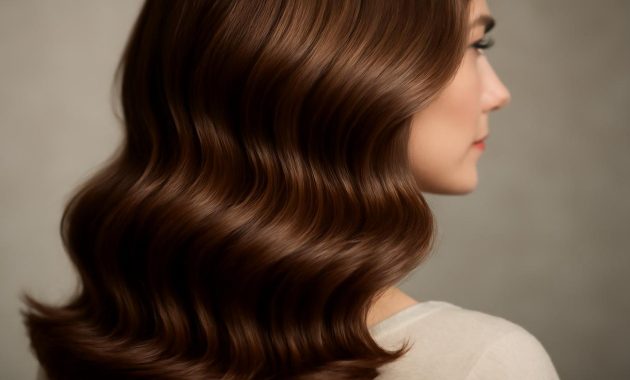
On an ordinary gray morning in London, outside the school gates where parents in puffer jackets and messy buns gather with coffee cups in hand, a familiar silhouette steps out of a car. The air is damp, the kind that makes most people’s hair surrender into frizz and flyaways. Yet there it is again—that gleam, that gravity-defying smoothness, those perfectly shaped waves that look effortless and impossible at the same time. Kate Middleton bends to kiss her children goodbye, the wind lifts a strand, and in a heartbeat the photos begin to ping around the world. Comment sections light up not about her coat, not about her shoes, but about her hair.
Somewhere between a polished blowout and a storybook fantasy, commentators have started calling it “princess hair.” It’s a term that’s spreading well beyond royal-watch circles, quickly becoming shorthand for a very specific kind of hair ideal: big but not brash, glossy but not greasy, styled but never stiff. It’s the kind of hair that appears to simply happen, even though it absolutely does not “just happen” at all.
What Is “Princess Hair,” Really?
“Princess hair” is less a strict hairstyle and more an aesthetic—that delicate sweet spot between done and undone, elevated and approachable. It’s the hair equivalent of a silk dress that somehow works at a garden party, a charity gala, and a school pickup line.
Imagine hair that moves as you walk, catching the light in wide, soft waves. The texture is smooth, as if someone turned down the volume on frizz without muting it entirely. The color may be natural or enhanced, but it’s always layered with subtle dimension so that every curl and dip reflects light differently. There’s usually a middle or soft side part. Ends are curved under or spiraled just enough to look intentional—never ringlet-tight, never dead-straight.
That is princess hair: long or longish, with body. Healthy-looking. Touchable. Romantic without feeling costume-y. It’s not Ariel’s red waterfall or Cinderella’s stiff bun; it’s the more modern fairy tale, the one that rides the subway, attends budget meetings, and shows up on Instagram in a Reformation dress.
Kate Middleton has become the most visible ambassador for this trend, but she’s hardly alone. You see versions of princess hair on Queen Letizia of Spain, Crown Princess Mary of Denmark, even on celebrity “royalty” like Selena Gomez and Amal Clooney at certain red-carpet moments. The exact shape shifts. What doesn’t change is the mood: poised, polished, softly powerful.
The Ingredients of a Modern Royal Mane
Spend a little time watching red-carpet arrivals, royal walkabouts, or high-profile weddings and a pattern emerges. This hair trend obeys a set of quiet rules. Not rigid, but reliable. Almost like etiquette for strands.
1. Movement Over Stiffness
Princess hair refuses to be crunchy. Even on the most formal occasions, it never looks shellacked. The wind can touch it; a child can tug it; a hat can be removed and the hair somehow falls back into place with a few absentminded finger-combs. There’s often hold and structure built in with mousse or root sprays, but the end result must sway when you walk. That movement is key—it suggests ease, even when the style took an hour in the chair.
2. Gloss, Not Grease
The shine of princess hair is like candlelight on a polished table: luminous, soft, not reflective like metal. This isn’t the wet-look trend you see on runways. Instead, it’s a nourished, inside-out glow that comes from conditioning, smoothing blowouts, and careful use of oils and serums—usually from mid-lengths to ends, not the roots.
3. Soft Silhouette
Even when the style is quite voluminous (hello, state banquets), the outline of the hairdo is curved, never sharp. No chunky, harsh layers. No brittle edges. The hair frames the face like a soft-focus lens, rounding at the ends, tucking slightly into the neck or settling on the shoulders in “S” shaped waves. This softness translates photographically, flattering in every angle, which—if you live a life in front of cameras—is invaluable.
4. Undetectable Architecture
Hidden underneath all that softness is structure: blow-dry techniques, round brushes, velcro rollers, strategic pinning, and likely a good setting spray. The goal is to look like you woke up with this, but up close you’ll spot the tiny signs: perfectly curved ends, uniform direction of waves, volume that starts at the roots and holds all day. The architecture is invisible, but it’s there.
5. A Sense of Story
Princess hair always feels like it belongs in a narrative. There’s a touch of fantasy in it, a whisper of ballrooms and balcony scenes, even if the actual setting is a charity kitchen. It connects to a collective memory—storybook images from childhood, historic portraits of queens with elaborate coifs, animated heroines with tumbling manes. Modern royal hair quietly borrows from that library, distilling it into a version that can survive rain, protocol, and paparazzi flashes.
How Kate Middleton Turned It Into a Signature
Scroll backward through Kate Middleton’s public life and you can watch the evolution of the style that the internet now calls princess hair. As a university student, her hair was glossy but casual: long, dark, parted slightly off-center, with a bit of flick at the ends. It was pretty, yes, but not yet emblematic.
Then came the engagement photos in 2010. Her hair falls in big, brushed-out curls—elegant but still a little bouncy, like she might head to a pub after the photoshoot. At the wedding, hidden beneath the tiara and veil, her hair is half-up, half-down, the top anchored yet the lengths still spilling in waves over lace shoulders. That look, in many ways, is the template: semi-formal, flowing, able to hold both a crown and a sense of personal style.
Over the years, the cut and color have been refined. Layers became more precise, placed to frame her cheekbones and jawline. Subtle highlights and lowlights were introduced to add depth for HD cameras. The overall length has shifted with seasons—sometimes grazing the chest, sometimes trimmed nearer the collarbone—but the essence has stayed consistent: shiny, softly wavy, photo-ready but never stiff.
It’s become such an identifiable element of her image that on the rare occasions she veers away—slicking it into a sharp ponytail or pinning it into a tighter updo—the internet goes into analysis mode. The constancy of her princess hair functions almost like a uniform piece; it signals stability, approachability, and classic femininity, which dovetails neatly with the role she plays in the monarchy’s public image.
Why “Princess Hair” Is Catching On Beyond Palaces
There are many hair trends we admire from afar but don’t adopt because they don’t quite fit into ordinary life: intricate braids that take an hour, sculptural buns that require a professional, neon streaks that clash with office dress codes. Princess hair is different. It translates.
Part of the appeal is that it walks that fine line between aspirational and attainable. The look says, “I’m put together, but I didn’t torture myself to get here.” It looks at home in a boardroom, on a brunch date, or at a wedding. You can dial it up for formal events (bigger curls, more volume, maybe half-up with jeweled pins) or tone it down for every day (looser waves, less perfect ends), and it still reads as the same vocabulary.
It also photographs incredibly well, which matters in the age of front-facing cameras, wedding photographers, and social feeds. The soft waves frame the face; the shine reflects natural light; the volume avoids that flat silhouette that makes us cringe in pictures. Social media, in many ways, is the modern equivalent of a royal court painter. Instead of one gilded portrait, we share dozens of casual images, and princess hair is made for that kind of omnipresent documentation.
Another reason? It feels gentle. In an era where many beauty trends are about extremes—razor-sharp contouring, glassy-straight hair, hyper-defined brows—princess hair leans into softness. It doesn’t shout; it glows. That gentleness is comforting, almost nostalgic, reminding us of the picture books and films we grew up with, yet updated enough not to feel like cosplay.
Breaking Down the Look: A Practical Guide
If you strip away the royal titles, hairstylists-on-call, and professionally controlled lighting, princess hair is built on a handful of reproducible steps. You don’t need a tiara; you need a bit of patience, the right tools, and a willingness to work with—rather than against—your hair’s natural tendencies.
| Element | What It Means | How to Achieve It |
|---|---|---|
| Length | From collarbone to mid-chest; long enough to wave. | Ask your stylist for “long layers” that maintain fullness at the ends. |
| Texture | Soft, brushed waves with no tight curls. | Use a large-barrel curling iron or rollers, then brush out gently. |
| Shine | Healthy, light-reflecting gloss. | Deep condition weekly; apply lightweight serum on mid-lengths and ends. |
| Volume | Lift at the roots, fullness along the sides. | Blow-dry with a round brush, lifting upward; consider velcro rollers at the crown. |
| Finish | Set, but flexible and touchable. | Use a light-hold hairspray or finishing spray; avoid hard-hold gels. |
The process usually begins in the shower. Princess hair relies on a balanced, healthy canvas: clean but not stripped, nourished but not weighed down. A volumizing or smoothing shampoo, depending on your texture, followed by a conditioner focused on mid-lengths and ends, sets the stage. Once towel-dried, a heat protectant is non-negotiable—remember, this style is heat-heavy, and there’s nothing royal about fried ends.
Next comes the blowout. This is where the magic lives. Hairstylists for royals and celebrities often rely on large round brushes to create that signature lift and bend. They work in sections, drawing the brush through the hair while following closely with a blow-dryer, then rolling the section up and allowing it to cool in a curl or under a velcro roller. This “setting” phase locks in volume and shape without resorting to tight curling irons.
Once everything is dry and cooled, the hair is brushed out—yes, brushed—into those loose, face-framing waves. If needed, a large-barrel curling iron can reinforce a few sections, particularly around the face and at the ends. The finishing touch is a whisper of serum and a cloud of flexible hairspray, often sprayed into the air and walked through rather than blasted directly onto the head.
Inclusivity, Texture, and Rewriting the Fairytale
It’s worth pausing to acknowledge something important: traditional images of “princess hair” have skewed heavily toward one narrow idea—usually long, straight or loosely wavy, and overwhelmingly European in texture. As conversations about representation deepen, the idea of what a princess—and by extension, princess hair—can look like is expanding, slowly but meaningfully.
Modern royal and public figures with curls, coils, and natural texture are reclaiming space in the narrative. Picture a crown nestled in an afro, or intricate braids falling down the back of a regal gown. That, too, is princess hair. The core qualities—intentional styling, health, movement, a sense of softness or story—can apply to any hair type, from 1A to 4C.
For coily or tightly curled hair, princess hair might mean defined, moisturized curls shaped into a halo; it might mean a twist-out with gentle volume or locs styled half-up, half-down. For wavy hair, it may be about enhancing natural bends rather than fighting them, using diffusers and lightweight creams instead of forcing everything into submission with flat irons.
The trend catching on today, even while sparked by figures like Kate Middleton, is gradually being translated through different textures and cultures. The fairy tale is no longer just one story with one silhouette; it’s a library.
Why We’re Still Charmed by Fairy-Tale Hair in a Real-World Age
We live in a time of contradictions. We want authenticity, but we also adore fantasy. We cut our hair into shags and lobs, then save photos of sweeping waves for special occasions. We critique rigid beauty standards, yet we keep a folder of “hair inspo” images on our phones. Princess hair lives right in the middle of that tension.
On one hand, it satisfies our appetite for softness and romance. It’s the kind of hair that looks at home under twinkling lights or in a slow-motion video at golden hour. It whispers of stories where the protagonist triumphs and the last page always turns toward hope.
On the other hand, its modern incarnation is less about passively being “rescued” and more about projection of control and composure. A woman wearing princess hair today could be giving a keynote address, running a non-profit, negotiating a contract. The hair is not the story; it’s the frame. It lends a sense of continuity and grace in a world that often feels chaotic.
Maybe that’s the secret. In an era where everything is up for reinvention—jobs, relationships, even identities—princess hair offers a tiny, manageable constant. Thirty minutes with a blow-dryer and some rollers, and you step out the door feeling like the best-lit version of yourself. Not a cartoon character, not a historical reenactment, but a person who can walk through the rain of real life and still, somehow, keep a bit of fairy-tale gloss intact.
So what exactly is princess hair, this trend slipping out of palaces and into salons and bathrooms around the world? It’s not just a style. It’s a language of softness and strength, a way of saying “I belong in this story” without needing a glass slipper or a coronation. Whether your hair falls in loose chestnut waves like Kate’s, coils tightly into a glorious cloud, or sits somewhere in between, the heart of the trend is less about copying a royal and more about claiming your own everyday version of a modern fairy tale—rooted, glossy, and very much alive.
Frequently Asked Questions about “Princess Hair”
Is princess hair only for long hair?
No. While the classic version is medium to long, you can adapt the idea to any length by focusing on softness, shine, and gentle movement. A collarbone-length cut with loose waves can look just as “princess” as waist-length hair.
Can people with curly or coily hair have princess hair?
Absolutely. Princess hair is about health, intentional styling, and a romantic feel—not a specific texture. Defined curls, twist-outs, braid-outs, and styled locs can all embody the princess hair aesthetic.
Do I need professional blowouts to get the look?
Professional help can make it easier, but it’s not essential. With a good round brush, heat protectant, and some practice, you can recreate a softer, more everyday version at home. Velcro rollers or large curling wands are helpful shortcuts.
What products are essential for princess hair?
Key products include a heat protectant, a lightweight volumizing or smoothing product (depending on your hair type), a shine-enhancing serum or oil for the ends, and a flexible-hold hairspray or finishing spray.
Is princess hair high-maintenance?
It can be, depending on how polished you want it. Day-to-day, a simplified styling routine and regular trims help. For big events, you may spend more time with heat tools and setting techniques to achieve that long-lasting, camera-ready finish.