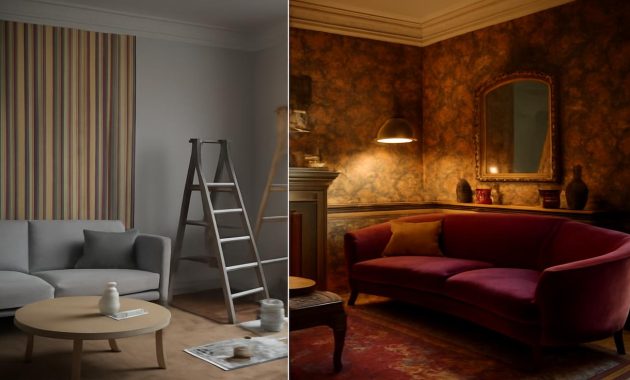
The first time I noticed the wall slats, really noticed them, was in a café that smelled like oat milk foam and cedar cleaner. Every vertical strip of oak marched along the wall in perfect, Instagram-ready lines. People were photographing their lattes against it like it was a celebrity. And yet, sitting there beneath the soft hum of pendant lights, the whole thing felt strangely… tired. Not ugly. Not offensive. Just already over. Like a song the algorithm kept replaying long after you’d stopped listening.
The Slow Fade of the Slatted Wall
For a few years, wall slats were everywhere, spreading from design accounts to DIY TikToks, from minimalist Scandinavian condos to suburban new builds that still smelled of paint. They promised a kind of quiet luxury: the warmth of wood, the shadow-play of light, a whisper of mid-century cool. You could glue them over drywall and suddenly your basic box of a living room felt like a boutique hotel lobby.
But trends have a life cycle — and wall slats reached saturation point faster than anyone expected. You probably started to notice it, too. The same beige-toned rooms. The same carefully spaced battens. That same “modern” accent wall, cloned in a thousand rentals and spec homes. What was once fresh began to feel like a default setting, a filter you’d forgotten to turn off.
Designers quietly began stepping back. The most forward-thinking studios hesitated before specifying yet another slatted feature. Clients wanted something more soulful, more layered, less like the cookie-cutter backdrop of every interiors reel. The craving was clear: people wanted spaces that felt like a story, not a show set.
And as 2026 edges closer, the shift is starting to come into focus. The clean lines are softening. The strict geometry is loosening. In their place, a vintage decor trend is rising — not the stiff, museum-piece kind of vintage, but something warmer, more tactile, more human. It’s a trend that invites you to touch the walls, to trace patterns with your fingers, to feel as if the room has lived a little before you ever walked in.
The Vintage Wall Revival That’s Sneaking Into Every Room
Walk into the homes that will quietly set the tone for 2026 and you’ll notice something: the walls are no longer just a backdrop. They’re characters in the story of the room. The new vintage wave isn’t about copying Grandma’s parlor, but about reimagining the textures and techniques she might recognize — and giving them a life that feels entirely now.
This isn’t the brittle, over-lacquered antique aesthetic. It’s more like stumbling on a sun-faded photograph in an old drawer: familiar but mysterious, comforting yet unexpectedly fresh. Where wall slats offered rhythm and order, vintage-inspired walls bring depth and memory. They draw your eye in, not along.
From Flat Planes to Lived-In Layers
The new vintage trend is not a single look so much as a language of layers. Plaster that looks like it’s been there for decades but still glows in morning light. Patterns that nod to botanical prints and art nouveau without drowning a room in nostalgia. Colors that feel harvested rather than manufactured: moss, ochre, old rose, storm blue, candlewax cream.
Imagine running your hand along a softly mottled limewashed wall as you pass through a hallway, feeling the subtle shifts in texture under your fingertips. Or waking up in a bedroom where the wall behind the bed carries a mural of wild grasses in muted tones, soft as a memory at dusk. This is the opposite of the rigid slat; it’s watercolor where there used to be ruled lines.
Designers are embracing imperfections on purpose: hairline cracks in plaster, slightly uneven brush strokes, faded edges of a painted motif. The goal isn’t faux-oldness, but a sense of place — as if your rooms have history, even if your building was finished last year.
What’s Replacing Wall Slats in 2026
So, if those vertical ribs of oak and walnut are quietly retreating, what’s stepping into the spotlight? Across studios and mood boards, a handful of vintage-leaning ideas keep appearing, each with its own particular charm. Together, they sketch out the story of where walls are headed next.
| Trend | What It Feels Like | Why It’s Replacing Slats |
|---|---|---|
| Limewash & Plaster Walls | Soft, chalky, subtly cloudy surfaces | Offers depth and movement without hard lines |
| Vintage-Inspired Wallpaper | Botanical, art deco, and heritage prints | Brings story, pattern, and personality to walls |
| Paneled & Wainscoted Walls | Classic millwork, painted in muted tones | Adds architectural character and cozy structure |
| Hand-Painted Motifs & Murals | Artistic, one-of-a-kind focal points | Creates a unique narrative instead of a template |
| Collected Gallery Walls | Frames, textiles, and objects layered together | Turns walls into memory boards, not just surfaces |
Limewash: The New Neutral (That’s Anything but Boring)
Among all the contenders, limewash is quietly becoming the unofficial hero of 2026 walls. If wall slats were about lines and repetition, limewash is about light and shadow. It turns a plain surface into something that looks almost alive, shifting subtly as the day moves on.
Stand close to a limewashed wall and you can see its soft clouds of pigment, the brush marks fading and overlapping like fog on stone. Step back and it becomes a gentle, almost velvety color field. It has depth without shouting for attention. In a room where every object is carefully chosen, the walls don’t need to compete; they simply hold everything together.
The beauty of limewash — and similar plaster finishes — is how they respond to touch and time. Tiny scuffs become part of the story, adding to the sense that the space is lived-in, not staged. Where slats demanded precision and perfection, this new surface welcomes a little chaos.
Wallpaper, but Make It Memory-Soaked
Wallpaper is back, but it’s not the glossy, hyper-graphic kind that tried to dominate a few years ago. The 2026 version is gentler, more nostalgic, more like the pages of a well-worn book. Think trailing vines in faded greens, tiny wildflowers scattered across a dusky background, or a repeating art-deco arch that seems pulled from an old seaside hotel.
In a small powder room, a vintage-inspired print can feel like stepping into a secret garden. In a bedroom, subtle stripes or pin-dots can wrap the space in a cocoon-like stillness. Even kitchens — once the domain of white tiles and practical paint — are beginning to reclaim floral and toile patterns in little corners: behind open shelving, inside glass-front cabinets, above a line of deep, moody tiling.
Unlike slats, which often felt like a single statement repeated endlessly, vintage wallpaper can be deeply personal. You might choose a pattern that reminds you of a childhood house, or of a place you once traveled, or of a book you loved. It’s trend and autobiography, fused.
How 2026’s Vintage Walls Transform Every Room
The shift away from wall slats isn’t just cosmetic; it changes how a room behaves. Lines organize space. Pattern and patina, on the other hand, soften it. They invite lingering, rereading, revisiting. They make you aware of the room, but in a gentle, background kind of way — like music you hum without realizing.
Living Rooms: From Showpiece to Sanctuary
In living rooms, the new vintage trend loosens everything up. Instead of one dramatic slatted wall behind the TV, you might find paneled lower walls painted in a quiet mushroom tone, with the upper surfaces finished in a cloudy plaster. The boundary between old and new blurs: a sleek sofa sits against a wall that looks like it could have been there for a century.
A single wall might carry a large-scale, hand-blocked print — leaves, fans, soft geometrics — echoed softly in cushions and throws. Bookshelves cut into this backdrop don’t compete; they nestle into it. The room feels less like a showroom and more like a place you can actually exhale.
Bedrooms: Murals, Murmurs, and Mood
Bedrooms, always the emotional core of a home, are where the vintage wave becomes almost cinematic. Picture a headboard wall washed in a dusky, uneven plum, or a faded mural of climbing roses that seems half-remembered. You wake up not to a crisp, hard-lined accent but to a kind of painted dawn, already soft.
Instead of slats framing the bed like a modern throne, fabric sometimes takes over: a vintage tapestry hung loosely, or a series of small framed botanical sketches scattered above paneled wainscoting. The result is quieter, but also deeper. It doesn’t perform for social media; it whispers just to you.
Kitchens and Bathrooms: Practical Can Still Be Poetic
You might think the most hardworking rooms in the house would resist this wave of vintage romance, but they’re among the first to embrace it. Kitchens, in particular, are stepping away from the all-white-and-wood formula that’s dominated for years.
Imagine cabinets in earthy olive or warm putty, with the walls above the counter limewashed in a pale, smoky cream that looks like candlelight permanently lives there. A small section of vintage-inspired tile — perhaps in a soft, sun-faded pattern — becomes a backsplash that feels more heirloom than hardware store.
Bathrooms are turning into tiny jewel-boxes: clawfoot tubs against lightly cracked plaster, or showers enclosed within walls painted in deep, watery greens and blues. A narrow strip of floral wallpaper above a dado rail, a framed old etching reflected in the mirror — these details replace the rigid verticals of slats with stories.
Why We’re Letting Go of the Slats
Trends don’t fade just because designers decide it’s time. They fade when they stop answering the questions people are asking of their homes. And lately, those questions have changed.
We’ve been living inside our walls more intensely than ever. Homes aren’t just where we sleep and eat; they’re where we work, worry, recover, dream. The sleek, hotel-lobby perfection that wall slats helped create suddenly feels a little flat, a little detached from the mess and magic of real life.
The rise of vintage-inspired walls is partly a reaction to that. It’s an instinctive reaching back toward things that feel grounded: craft, patience, layers you can’t scroll past in a second. A plaster wall that takes days to build up, a mural that bears the touch of a hand, a wallpaper pattern someone drew decades ago — these carry a time signature that runs slower than the feed.
There’s also a subtle environmental undercurrent. Instead of installing new slats from scratch, homeowners are more open to working with what’s there: uncovering old plaster, restoring panelling, repurposing vintage prints or secondhand art. The walls tell the story of the building’s life, not just the latest Pinterest mood board.
Making the Shift in Your Own Space
If you’re staring at a wall of slats right now, wondering if it’s suddenly passé, exhale. Design isn’t a judgment; it’s a conversation. You don’t need to rip everything out overnight. In fact, the most interesting spaces in 2026 will probably be the ones that blend eras rather than chase a single look.
Maybe you paint the slats in a deep, enveloping color instead of raw wood, letting them recede into a moodier background. Maybe you keep them on a small section but pair them with limewashed neighboring walls, or soften their severity with vintage textiles and curved furniture. The bigger picture matters more than any one element.
If you are starting from scratch, begin with how you want the room to feel, not how you want it to photograph. Do you want to feel cocooned? Go deeper with color, plaster, and paneled lower walls. Do you want to feel refreshed and airy, but still grounded? Try pale limewash with small vintage art pieces in warm frames. Your walls can be bolder now, more personal — they are allowed to look like they belong to you, not to a trend cycle.
FAQ
Are wall slats completely “out” for 2026?
Not completely. They’re moving from center stage to supporting role. You’ll see fewer full-height feature walls of bare wood slats and more subtle, painted or partial applications, often mixed with richer textures like plaster and vintage details.
What vintage wall trend is easiest to try in a small space?
A powder room or small hallway is perfect for vintage-inspired wallpaper or a limewash finish. The limited square footage keeps it affordable, and the impact is immediate and dramatic without overwhelming the rest of the home.
Will vintage-style walls work in a modern apartment?
Yes. Pair softer, vintage-inspired walls with clean-lined furniture and simple lighting. A limewashed wall behind a streamlined sofa, or classic wainscoting in a modern entryway, adds soul without making the space feel themed or costume-like.
Are limewash and plaster finishes hard to maintain?
They age differently from standard paint, but that’s part of their charm. Minor marks and variations tend to blend in and even enhance the patina. In high-traffic or splash-prone areas, sealed or more durable plaster products are often used.
How can I add a vintage feel without committing to new wall finishes?
Use your existing walls as a canvas and layer on vintage or vintage-inspired elements: framed old prints, thrifted mirrors, small tapestries, picture ledges with collected art, or a curated gallery wall. These additions can shift the entire mood of a room without a single strip of wallpaper or plaster.