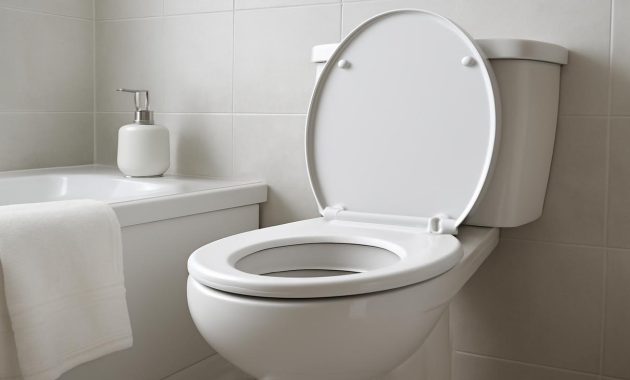
The argument starts, as it always does, with a flush. Somewhere in the world right now, a bathroom door is swinging open, someone is shouting, “Who left the seat up?” and another person is insisting, “It’s not that big of a deal.” You know this scene. Maybe you live this scene. The toilet seat—humble, plastic, unremarkable—has somehow become one of the fiercest battlegrounds of domestic life. But beneath the jokes and jabs, there’s a quieter, more unsettling question swirling in the porcelain: what’s actually more hygienic? And what do the people who study germs for a living really recommend?
The Invisible Storm Every Time You Flush
Let’s start with something you can’t see, but you’ve definitely been sharing a room with: the toilet plume.
Imagine this: you finish your business, you reach for the handle, you flush. The water rushes down with a familiar roar, spiraling, churning, dragging whatever’s in the bowl down with it. But it doesn’t all go down. Some of it goes up.
In that split second, a mist of microscopic droplets—an invisible storm of water, bacteria, and whatever else was in the bowl—erupts upward. Researchers have filmed this using lasers and high-speed cameras, and the video is almost hypnotic in a horrifying way: a delicate green cloud lifting and drifting through the air, climbing as high as your sink, your mirror, even your toothbrush.
That plume can travel several feet and linger in the air for minutes. Some studies have found that bacteria from toilets can land on nearby surfaces—countertops, doorknobs, towels. And yes, even your phone if you’re bringing it in there with you. Which, let’s be honest, you probably are.
So the question becomes less “seat up or seat down” and more “how much of the bathroom do you want your toilet to share its contents with?”
The Case for Down: It’s Not Just About Courtesy
In many households, “seat down” has become shorthand for “respect the people you live with.” No one wants to stumble, half-awake at 2 a.m., sit without looking, and discover there’s no seat beneath them. That shock is the stuff of family legends and long-term grudges.
But hygiene experts quietly add another layer: put the lid down before you flush.
Think about that thin, hinged piece of plastic or wood not as decoration, but as a kind of shield. When you close the lid before flushing, you’re essentially lowering a barrier between the swirling water and the rest of your bathroom. While it doesn’t completely seal everything in—it’s not a submarine hatch—it does significantly reduce the spread of droplets.
Microbiologists who study what happens in and around toilets generally land on a surprisingly simple recommendation: when possible, close the lid before you flush. Not just for politeness. For containment.
And once you’re already closing the lid, the “seat up or down” question quietly shifts. If the last step is always “lid down,” it makes the most sense for the seat to also rest in a neutral, ready-for-anyone position: seat down, lid down. When the ritual is consistent, the arguments tend to cool.
The Psychology of the Seat War
Of course, the debate didn’t start because of aerosolized bacteria. It started because of habits and expectations.
Leaving the seat up has often been framed as laziness, or worse, a refusal to think about the people who share the space. For many women, it’s a symbol: You knew someone else would use this after you, and you still left it like this. For many men, the response is: I changed it for me, now you change it for you.
But that sees the seat as a private object, not a shared one. Hygiene experts, on the other hand, think of bathrooms as ecosystems. Every surface, every object, is part of a network where germs can travel, land, and sometimes stick around. Seats, handles, flush levers, faucets—everything becomes a tiny little chapter in the story of what your household shares.
Seen from that angle, the cleanest, calmest outcome is pretty simple: establish one default position that serves everyone and reduces contamination. And that position, they say, is both seat and lid down.
What Hygiene Experts Actually Recommend
When you strip out the emotions and household politics, the advice from hygiene and infection-control professionals is remarkably consistent. They care less about who’s winning the “up versus down” battle, and more about what happens right before and right after the flush.
| Aspect | Better Practice | Why It Matters |
|---|---|---|
| Lid position during flush | Lid down before flushing | Reduces spread of droplets and bacteria around the bathroom. |
| Seat position between uses | Seat down, lid down as default | Keeps things more sanitary and predictable for all users. |
| Toilet cleaning | Regular scrubbing of bowl, seat, and flush handle | Reduces buildup of bacteria and visible grime. |
| Bathroom items nearby | Keep toothbrushes, razors, and cosmetics away from the bowl | Minimizes the chance of contamination from toilet plume. |
| Hand hygiene | Wash thoroughly after every use | Hands are the main vehicle for germ transfer—not the seat itself. |
Notice something important there: the seat itself isn’t the chief villain. It’s part of the story, but it isn’t the main character. In fact, experts will tell you that the most germ-covered surfaces are often things we barely think about: flush handles, light switches, door knobs, and faucet handles. These are the things multiple people touch, often before washing their hands.
Despite all the fear about “toilet seat germs,” most infections aren’t picked up by skin contact with a seat. The skin on your thighs is actually a decent barrier. It’s your hands touching contaminated surfaces, then your face, food, or eyes that tend to cause trouble.
So they recommend focusing less on dramatic imaginary scenarios—like catching something terrible from the seat itself—and more on the simple rituals: close lid, flush, wash hands, clean the room regularly.
Seat Up, Seat Down: A Truce Built on Science
Let’s zoom back into the daily drama. Maybe you share a bathroom with a partner, roommates, or an entire family. People are moving in and out all day, each with their own speed, preferences, and patience levels.
The toilet seat debate works a bit like a tiny, household-level version of a social contract. Is the toilet a “reset to neutral” situation, where everyone leaves it in a shared, considerate position? Or is it a “you adjust it for you, I adjust it for me” scenario?
Science doesn’t care about fairness in that philosophical sense. But what it can tell us is: there is a practical neutral. The most hygienic default is this:
- Seat down
- Lid down
- Flush with lid closed
That configuration makes life easier for the next person—who just has to lift what they need or sit as-is—and it also reduces the mist of droplets that gets released every time someone flushes.
Picture the rhythm of a bathroom where everyone follows that pattern. You step in, lift lid (and seat if necessary), use the toilet, put the seat and lid down, flush, then wash your hands. It becomes less about who did what wrong, and more about a simple routine everyone silently agrees to follow.
It’s not quite poetic, but there’s a quiet elegance to it: a tiny daily act of care that protects the people you live with, even when they never actually see you do it.
When the Lid Isn’t an Option
Of course, not every toilet has a lid you can close. Public restrooms, older models in some homes, or minimalist designs sometimes skip the lid entirely. So what then?
In those cases, hygiene experts recommend shifting your focus. You obviously can’t block the plume, but you can:
- Avoid placing personal items—bags, phones, toothbrush cases—on or near sinks and counters close to the toilet.
- Wash hands thoroughly with soap for at least 20 seconds after use.
- Avoid touching your face until you’ve washed your hands.
- Use a paper towel to turn off taps and open doors where possible.
For public restrooms, the seat position debate largely fades. Most people are more focused on not touching anything they don’t have to. Ironically, many public toilet seats are not as densely contaminated as people fear, simply because they’re not skin-to-skin contact surfaces for very long—and they tend to be cleaned more often than, say, the flush handle.
Still, if you’re using a lidless toilet at home, you might consider installing a lid-and-seat combo. They’re inexpensive, relatively easy to attach, and instantly give you a bit more control over what the toilet shares with the rest of the room.
The Things We Keep Too Close to the Toilet
Walk into your bathroom and take a slow look around. Where is your toothbrush? Your razor? The little jar of cotton swabs? That open container of face cream? Maybe a cup holding makeup brushes? A kid’s bath toy or two?
If any of those are less than a few feet from the toilet—and especially if they sit right in the line of fire, like on the back of the tank or the counter beside it—they’re living inside the splash zone.
Hygiene experts recommend storing anything that goes into your mouth, eyes, or onto your skin as far from the toilet as reasonably possible. Better yet, behind a cabinet door or in a drawer. Toothbrushes in particular should be:
- Kept upright, where they can dry between uses.
- As far from the toilet as the room allows.
- Not stored touching one another if multiple people share a bathroom.
Combine that with the “lid down before flush” habit, and you’ve just dramatically cut down on the potential for whatever’s in the bowl to end up gently resting on the bristles you put into your mouth twice a day.
Cleanliness vs. Sterility: What’s Realistic?
It’s tempting to go too far with this knowledge and imagine that every square inch of your bathroom is teeming with danger. That every flush is a crisis, every droplet a threat. But that kind of thinking doesn’t line up with how our bodies actually work.
We live surrounded by microbes. Our skin, gut, and environment are full of them, and most of the time, our immune systems handle the load with quiet competence. The goal isn’t to turn your bathroom into a sterile box. That’s impossible in a lived-in home. The goal is to reduce unnecessary risk and obvious contamination.
That’s why experts talk more about “good hygiene” and less about “total germ elimination.” Putting the seat and lid down, keeping toothbrushes away from the toilet, washing your hands, and cleaning surfaces regularly—that’s the sweet spot. Sensible, manageable, effective.
Bringing It Home: A New Bathroom Ritual
So where does that leave the age-old question: should the toilet seat stay up or down?
If you listen to the people who think about disease control, air flow, and bacteria for a living, the answer is surprisingly undramatic:
The toilet seat should end down, and the lid should end down, too.
That position:
- Reduces the spread of droplets when you flush.
- Makes the bathroom more comfortable and predictable for everyone.
- Encourages a simple, shared ritual rather than a running argument.
Instead of “Who left the seat up?” you can start nudging the conversation toward, “Hey, can we all just agree to close the lid before flushing?” It shifts the tone from blame to shared responsibility. It’s not just about not falling in; it’s about taking care of each other in the smallest, most habitual ways.
In the end, the toilet seat debate isn’t really about plastic hinges, or even etiquette. It’s about the kind of home you want to live in: one where everyone pretends they’re the only person who uses the space, or one where a tiny act—lowering a seat, closing a lid— quietly says, “I know someone comes after me, and I care what they walk into.”
And if that future peace begins with the soft click of a lid being lowered, right before the rush and swirl of water and the quiet, unseen storm it contains—well, that’s not a bad place for a truce to start.
FAQ: Toilet Seat, Lid, and Bathroom Hygiene
Should the toilet seat be left up or down?
For both hygiene and courtesy, the best default is seat down, lid down. It makes the toilet ready for most users and helps reduce the spread of droplets when flushing.
Does closing the lid before flushing really make a difference?
Yes. Studies show that flushing can create an aerosol plume that spreads droplets into the air. A closed lid doesn’t block everything, but it significantly reduces how far and how much spreads.
Is the toilet seat actually dirty enough to make me sick?
Toilet seats carry bacteria, but they are usually not the main source of infection. Your skin is a good barrier. Hands, flush handles, faucets, and door knobs are more important routes for germs because you touch them and then your face or food.
How often should I clean my toilet and bathroom surfaces?
A general guideline is to clean the toilet bowl and seat at least once a week in most homes, more often if many people use the same bathroom. High-touch surfaces like flush handles, faucets, and door knobs benefit from more frequent wiping, especially during illness.
Is it bad to keep my toothbrush near the toilet?
It’s not ideal. Toothbrushes are better stored as far from the toilet as possible, preferably in a cabinet or at least away from the direct line of spray. Combining this with closing the lid before flushing greatly reduces the risk of contamination.
What about public restrooms without lids—what can I do there?
In lidless public toilets, you can’t control the plume much, but you can reduce risk by avoiding placing belongings on nearby surfaces, washing your hands thoroughly, and not touching your face until after you’ve washed.
Is leaving the seat up really that unhygienic by itself?
The seat position alone doesn’t drastically change the germ situation. The bigger hygiene factor is whether the lid is closed during flushing and how clean the bathroom is overall. However, a seat-left-up habit can encourage a more careless approach, while a consistent “seat and lid down” routine supports better hygiene and household harmony.