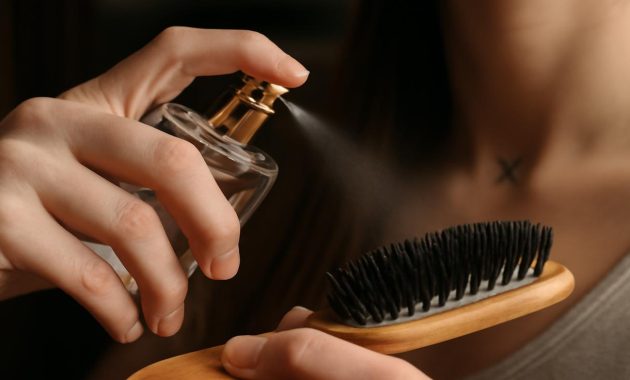
The woman on the train smelled like late summer in a walled garden. Not the obvious, shouty kind of scent—but a quiet trail that unfurled as she moved: a little rose, a little pear, a whisper of something woody and warm. You noticed it the moment she slipped into the seat in front of you. An hour later, when you both stood to get off, that same ribbon of fragrance still hung in the air as if she carried her own invisible atmosphere. You glanced at your wrist—where your own expensive perfume had long since turned into a faint, ghostly memory—and wondered, not for the first time: how do some people make perfume last from morning to night, while yours disappears before lunch?
The Wrist-Rubbing Myth We Inherited
Chances are, you learned perfume from watching someone else. Maybe it was your mother at the mirror, dabbing a little on each wrist and pressing them together. Maybe it was a glamorous friend before a night out, spraying a mist into the air and walking through it like a movie star. These gestures feel almost ceremonial, like part of becoming dressed. But they’re also the reason your favorite fragrance fades faster than you want to admit.
Perfumers, if you ask them, will wince at the sight of someone rubbing wrists together. Rubbing works the way friction always works: it creates heat, breaks down delicate top notes, and speeds up evaporation. Those sparkling, bright molecules that make your perfume feel fresh and alive—citrus, greens, herbs—are the first to go, and rubbing only shoves them out the door faster. You’re left with the base notes sooner, yes, but the whole composition becomes a little flatter, a little more short-lived.
Spraying directly on the neck isn’t much better. The skin there is thin and often drier, exposed to sun, wind, and collars. Scents evaporate more quickly from dry, warm surfaces than from well-moisturized, slightly cooler ones. And if you wear your fragrance in the same spot every day, sun-exposed neck skin can become more reactive over time. Not exactly the romantic, “my perfume and I are one” experience you were hoping for.
There is, however, a quieter, nearly effortless way to make perfume last from your first coffee to your last message of the night—and it doesn’t require carrying the bottle around or reapplying every few hours. It begins with one surprising idea: your clothes, not your wrists, should do most of the work.
The Simple Trick: Let Your Clothes Do the Talking
Textiles hold scent the way forests hold light—gently, gradually, and for longer than bare skin ever can. Fabric fibers, especially natural ones like cotton, wool, and linen, catch perfume molecules and release them slowly throughout the day as you move and the air around you shifts. That woman on the train? Chances are, she wasn’t relying on her wrists at all. Her cardigan, scarf, or the collar of her blouse was doing the heavy lifting.
The trick is almost embarrassingly simple: instead of spraying your perfume directly on your skin, spray it on your clothes from a small distance. One or two fine mists across your chest area, a whisper across your shoulders, maybe a touch on the inner lining of a jacket or scarf. Suddenly, your scent isn’t glued to two tiny patches of swiftly evaporating skin; it’s living across a broad, textured landscape of fabric.
There’s something deeply sensory about this shift. You step into your shirt in the morning, and a soft version of your fragrance rises to meet you, like stepping into air that already knows your name. Throughout the day, as you sit, stand, hug, reach for your bag, your scent moves with you in quiet eddies rather than sharp bursts. People close to you catch traces of it not just when you raise a wrist to your face, but whenever they’re near the small atmosphere your clothes are holding.
Of course, fabric is as personal as skin. Some perfumes cling beautifully to a dense knit sweater, others love the smooth surface of a silk blouse. Dark clothing forgives more than pale linen. A single spray on the inside of a coat collar can last for days, a secret echo each time you slip it on. The method is adaptable, almost like learning a new language with your wardrobe and your fragrance in conversation.
How to Spray Clothes Without Ruining Them
There’s a small choreography that keeps this trick elegant instead of risky. Hold the bottle about 20–30 centimeters away from the fabric. You’re not power-washing your shirt; you’re giving it a fine veil, like morning mist settling on a field. Avoid obvious problem zones—pure white silk, fragile vintage pieces, leather, or suede—where direct contact might stain. For those, spray the air in front of you and step through the cloud, or target the lining or underside of the garment instead.
If you’re unsure, test on an invisible area first: the inside hem, the bottom of a sleeve, the underside of a lapel. Let it dry and check for marks. Most modern perfumes, used lightly, won’t leave visible traces on everyday fabrics. And what you gain in longevity is remarkable: where perfume on skin might greet you warmly for three or four hours, a careful mist on clothing can still be present, softly, at the end of the day—or even the next.
Why Perfume Fades: A Tiny Journey in the Air
Every spray is a beginning and an ending at once. When you press the atomizer, you’re launching a cloud of tiny droplets loaded with alcohol and fragrance oils. The alcohol flies off first, fast and volatile, carrying those breezy top notes—lemon, bergamot, watery fruits—into the air. It’s the hello of the perfume, the part that often convinces you to buy the bottle. Then, as minutes and hours pass, the fragrance settles into its heart and base: florals, woods, resins, vanilla, amber, musk. These heavier molecules sit closer to your skin. They’re the reason your sweater at night smells more mellow and intimate than your first bright spritz in the bathroom mirror.
On skin, this entire journey is sped up by temperature, sweat, and how oily or dry your body is. Warm, dry skin lets perfume evaporate quickly. Oily or well-moisturized skin acts more like a soft cushion, giving the perfume more to cling to. That’s why one person’s “all-day scent” is another person’s “gone by noon.” Our skins are landscapes with their own weather patterns.
Fabric changes the rules. It doesn’t sweat, it doesn’t produce heat, and it doesn’t metabolize anything. It simply holds on. Perfume molecules get tangled in the threads, especially in knits and textured blends. The scent lifts gently as the fabric brushes against your body and the world around you. The top notes may still fade relatively quickly, but the heart and base notes—a creamy sandalwood, a smoky vetiver, a haze of jasmine—have a longer stage life. Instead of sprinting, they saunter.
| Where You Apply | Longevity | Scent Trail | Best Use |
|---|---|---|---|
| Rubbing wrists together | Shorter, top notes fade fast | Strong at first, then drops quickly | Not recommended; breaks down scent |
| Directly on neck only | Moderate, depends on skin | Intimate, close to the skin | Romantic evenings, short events |
| Pulse points + moisturized skin | Better, more even development | Soft aura around the body | Daily wear, layered with clothes |
| Lightly on clothes | Longest, can last all day | Gentle trail as you move | All-day scent, subtle yet present |
Little Rituals That Change Everything
Making your perfume last is less about dousing yourself and more about small, thoughtful rituals that set the stage. Think of it like preparing a canvas before you paint.
1. Start With Soft, Hydrated Skin
Fragrance clings better to moisture and oil than to dry, thirsty skin. After a shower, while your skin is still slightly damp, apply an unscented or lightly scented body lotion or oil. This doesn’t have to be fancy—just something that makes your skin feel supple. When you later spray perfume on or near these areas, it will sit more comfortably and evaporate more slowly.
If your fragrance comes with a matching body cream, that’s even better. Layering a lightly scented lotion beneath your perfume creates a kind of echo chamber for the scent, giving it depth and resilience. Instead of needing six sprays, you might find that two or three, combined with a base of lotion, feel richer and more alive for longer.
2. Choose Your Pulse Points Wisely
Despite all the wrist-rubbing myths, pulse points themselves still matter. Places where blood runs closer to the surface—behind the ears, inside the elbows, at the base of the throat, behind the knees—are naturally a touch warmer. Warmth encourages scent to rise. The key is to spray and then leave the perfume alone.
A gentle pattern might look like this: a small spritz into the air in front of you as you step into it, then one delicate spray at the base of your throat, and one on the inside of your elbow (no rubbing). Let it settle like morning dew. Then, move to your clothes: a light mist across your shirt or the inside of your jacket. Skin gives intimacy; fabric gives longevity. Together, they create a day-long story.
3. Think About Where You’ll Be
Fragrance is part of how you occupy space. A long day in a shared office calls for a different strategy than a night in a noisy bar. If you’ll be in close quarters—on a plane, in a meeting room—lean more on clothing and fewer direct skin pulse points, so your scent stays soft and close. If you’ll be mostly outdoors or in busy, open spaces, you can afford a little more warmth-driven diffusion from skin.
Some people even develop different “maps” for different days: light clothes-only application for hot weather; skin-plus-clothes layering for cold days when everything, even scent, seems to move more slowly through the air.
Matching Your Perfume to the Day You Want
One of the overlooked secrets of all-day fragrance is match-making: the art of choosing the right type of perfume for the day you’re planning. Not all compositions are built to last the same amount of time, no matter how or where you apply them. Some are morning poems; others are long novels that unfold chapter by chapter.
Typically, citrus-heavy fragrances and light colognes are the sprinters: bright, delightful, but rarely marathon runners. Woody, spicy, amber, and oriental scents, on the other hand, are made with heavier molecules that cling to skin and fabric more willingly. Patchouli, vanilla, labdanum, cedar, sandalwood: these are the quiet anchors that hold a scent steady over hours.
Pay attention to how your perfumes behave on you. Take a day to notice: spray one fragrance only on your skin and track it in your mind—two hours in, four hours in, eight hours in. Another day, try your clothes-only method. Another day, combine both. Each scent becomes a familiar character whose habits you understand. You might discover that your favorite summer eau de toilette truly shines only when added to clothes, while your deeper winter scent wraps you in a skin-hug you want on your neck and chest.
In the end, persistence isn’t only about strength. Many of the most beautiful long-lasting scents don’t roar; they hum. They leave a trace when someone leans in to whisper, when you step from a car, when you walk past shelves in a quiet shop. Longevity, at its best, feels like continuity—like your perfume is still telling the same story, gently, as the light shifts from morning to afternoon to night.
Living With a Scent That Knows You
There’s something incredibly intimate about a perfume that stays with you all day. It becomes woven into the fabric of your routine, literally and figuratively. Your scarf smells faintly of yesterday’s laughter; your coat quietly remembers last weekend’s café; your sweater holds a memory of the book you finished in the park. When you hang your clothes in the evening, a soft cloud rises, a reminder that you’ve lived a full day in this particular skin, with this particular invisible halo.
Letting your clothes carry your fragrance doesn’t mean abandoning skin entirely. It just means giving up the outdated rituals that don’t serve you—the rubbing, the frantic over-spraying on your neck in the elevator, the disappointment at a scent that disappears too soon. Instead, you step into a calmer, more intentional relationship with your perfume.
Few things are as quietly luxurious as catching your own subtle trail at 9 p.m. and realizing it’s the same gentle veil you wrapped yourself in at 8 a.m. No frantic re-spritzing from a travel atomizer. No cloud of assaulting fragrance on your colleagues. Just a steady, soft presence that feels like an extension of how you move through the day.
So the next time you reach for that familiar bottle, pause. Resist the urge to slap your wrists together or drench your neck. Moisturize your skin. Spray lightly where the blood runs warm. Then lift your shirt, your scarf, your coat, and let the fabric take a whisper of your favorite scent. As you step out the door, you’re not just wearing perfume. You’re stepping into a story that will follow you quietly, from first light to the last key turning in the lock.
FAQ
Does spraying perfume on clothes really make it last longer?
Yes, in most cases. Fabric holds onto fragrance molecules longer than bare skin because it doesn’t heat up or produce oils and sweat in the same way. A light mist on clothes can keep your scent noticeable for many more hours than skin alone.
Can perfume stain my clothes?
It can, depending on the formula and the fabric. Dark, sturdy fabrics are usually safe with a light mist. Delicate materials like silk, satin, and very pale colors are more at risk. Always spray from a distance and test on a hidden area if you’re unsure.
Is it bad to spray perfume on my neck?
Not necessarily bad, but it’s not the most efficient way to get longevity. The neck is exposed to sun and air, and perfume evaporates faster there. It’s better to use the neck lightly and rely more on moisturized skin elsewhere plus your clothes.
Why shouldn’t I rub my wrists together after applying perfume?
Rubbing creates friction and heat, which can break down the top notes and change the perfume’s structure. It also speeds up evaporation, so your scent often fades faster. Spray or dab, then let it dry naturally.
How many sprays do I really need for all-day fragrance?
It depends on the strength of the perfume, but usually 3–5 focused sprays are enough when used smartly: one or two on moisturized pulse points, and one or two lightly on clothes. More than that often doesn’t last longer; it just smells louder.
Can I mix different perfumes for better longevity?
You can layer fragrances, but longevity isn’t guaranteed and the final scent might be unpredictable. A better strategy is to use matching body products (like lotion or oil) from the same line, then apply your perfume on top.
How can I make light, fresh scents last longer?
For airy, citrusy perfumes, focus on layering: apply an unscented or complementary lotion first, then spray the perfume on both your skin and clothes. Even then, very light fragrances are designed to be fleeting, so embrace their softness rather than forcing intensity.