The first time you hear it, it sounds like science fiction: a high‑speed train shooting beneath the sea, racing through a glass‑black world where sunlight never touches, stitching two continents together in a matter of minutes. No airplane window, no ship’s deck—just the quiet hum of electric motors and the knowledge that above your head, thousands of tons of water press down on a tunnel of steel and concrete. Yet somewhere on our planet, survey lines are being drawn, seabeds are being scanned, and teams of engineers are sketching the future: the world’s longest underwater high‑speed train, now officially in progress, preparing to link two continents beneath the waves.
A Ribbon of Steel Under the Sea
Picture yourself standing on a windy shoreline. Waves slap at the rocks, gulls circle overhead, and ships idle on the horizon. Invisible to you, far beyond that gray line where sea meets sky, an enormous project is quietly moving forward. Engineers talk in numbers that barely seem real: tens of kilometers of tunnel segments; trains traveling at aircraft-like speeds; depths where human divers cannot safely linger for long. This is not just another infrastructure project—it’s a new chapter in how we imagine distance.
Underwater tunnels already exist, of course. The Channel Tunnel between the UK and France has been ferrying people beneath the English Channel since the 1990s. There is the Marmaray Tunnel under the Bosporus, the Seikan Tunnel in Japan, and an emerging patchwork of submarine links across the world. But what is unfolding now is something different in scale and ambition: a tunnel designed not simply to get you from A to B, but to do it at high-speed rail velocities, stretching farther beneath the sea than any line before it, and fusing two continents into a near-continuous land route.
In a way, this is the logical next step in a century‑long story. We started with ferries and steamships, then leapfrogged to air travel. High‑speed trains turned continental travel into a smooth, grounded experience. Now, we are taking those bullet trains and sending them under the ocean. The psychological effect is profound. The sea, once a barrier and a border, becomes a roof.
Engineering in the Realm of Pressure and Darkness
The ocean is gentle only from a distance. For engineers designing the world’s longest underwater high‑speed train line, it is an opponent that never blinks. At depth, water pressure multiplies with every meter, pushing relentlessly against any structure humans dare to place there. Seabeds shift. Sediments slide. Currents carve invisible shapes in the dark.
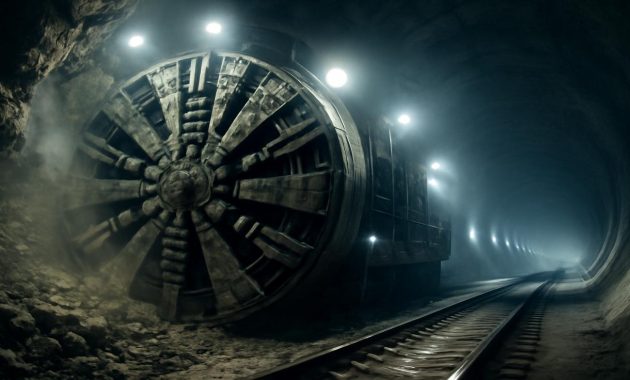
To tame that environment, the planned tunnel calls on a toolkit that reads like a catalog of modern ingenuity. Huge tunnel‑boring machines will chew through bedrock, inch by controlled inch, their steel teeth grinding in the shadows. These cylindrical giants—some longer than a city block—will be lowered into access shafts and launched beneath the seafloor, guided by lasers, sensors, and real‑time 3D maps. Above them, ships track their progress; below, the ground shudders softly as the machines crawl forward.
Where geology allows, engineers may opt for immersed tube sections: colossal pre‑cast tunnel pieces floated out to sea, then gently sunk into a prepared trench and sealed together like building blocks. Imagine sections of a hollow spine, carefully articulated, curved to match the contours of the seabed. Divers and remotely operated vehicles inspect the joints. Grout fills voids, reinforcing the structure against the restless push of the ocean.
Inside, the design has to serve not only physics but people. High‑speed trains demand smooth, straight alignments, with gentle curves and gradients to keep passengers comfortable at speeds that can exceed 300 km/h. That means the tunnel must thread an elegant line through the subsurface, avoiding geological faults, soft sediments, and unexpected pockets of water. Ventilation systems must breathe for the tunnel, constantly exchanging air, monitoring temperature, filtering dust and microscopic particles.
Then there are the safety systems, layered like armor. Cross‑passages link twin tunnel bores every few hundred meters, giving passengers escape routes in case of emergency. Fire‑resistant linings and high‑capacity pumps stand ready to respond to the worst‑case scenarios that teams have rehearsed again and again in simulations. Redundancy is the quiet hero here: backup power, backup communications, backup everything, all unseen but omnipresent, so the traveler’s experience can be as simple as sitting down, watching the world blur by, and never worrying about the ocean above.
What It Will Feel Like to Travel Beneath the Continents
Strip away the engineering diagrams, and what remains is a human story: someone boarding a train on one continent and stepping off on another without ever seeing the open sea. You wheel your suitcase into a sleek station where the architecture echoes waves and sea creatures in subtle patterns. Boarding feels almost routine. Trains depart on the minute, doors hiss shut with a soft thud, and there is that brief, weightless pause before acceleration.
As the train dives into the tunnel, daylight recedes into a tunnel of softly lit panels. There are no windows to gaze upon the deep—unlike a fantasy aquarium ride, this is about safety and speed, not sightseeing—but the sensation of descent is real in your imagination. Your ears register a faint pressure change. The world outside the car is rock, water, and darkness. Inside, it’s quiet and bright, a controlled microclimate of air‑conditioned comfort and padded seats. A digital display shows your speed: 150 km/h. 230 km/h. 300 km/h.
You walk through the car. Families doze, tourists scroll through photos, business travelers tap on keyboards as if the ocean overhead were nothing more than a line on a map. Coffee aromas drift from the bistro car. On a screen, an animation shows a tiny train icon moving through a blue‑gray band labeled “Seabed Tunnel,” with a biometric calm that belies the engineering ballet enabling it.
Time shrinks. A sea crossing that once required hours of check‑ins, boarding calls, weather delays, and turbulence now unspools as a single, unbroken, electrically powered glide. No security lines snaking past duty‑free shelves. No seatbelt signs switching on and off with every invisible pocket of air. Beyond the novelty, there’s something else: a deep sense of continuity. The journey feels less like a jump and more like a line, connecting landscapes and cultures along a solid, uninterrupted spine of steel rails.
Why We Are Building It Now
Projects like this do not emerge from a single impulse. They grow where politics, economics, and technology intersect. The world’s longest underwater high‑speed train, binding one continent to another, is being built in an era defined by urgency: climate change, strained global supply chains, and the relentless movement of people and ideas.
High‑speed rail has one decisive advantage over air travel: emissions. Electric trains, especially when powered by renewable energy grids, can move vast numbers of people with a fraction of the carbon footprint per passenger. Linking continents by fast trains might sound extravagant, but when compared to the thousands of short‑haul flights currently hopping between neighboring landmasses, it starts to look like a pragmatic climate tool. Each trainload of travelers choosing rails over planes is a small dent in a very large problem.
Then there is trade. Freight versions of these undersea corridors can move goods on tight schedules, immune to storms that divert ships and to disruptions that close airspace. A container that once waited at a port for customs, weather, and docking slots can roll directly from factories deep inland, through the tunnel, and out to distant markets. For coastal cities, the tunnel is not just a marvel but a new artery.
Finally, there is the intangible but potent force of imagination. When cities and nations commit to a generational project—one that will not be finished quickly or cheaply—they make a declaration about the future. They are betting that tomorrow’s world will be more interconnected, more cooperative, and more dependent on shared infrastructure that crosses old boundaries. Steel and concrete become a visible expression of long‑term thinking.
The Ocean as Partner, Not Obstacle
To build under the sea is to negotiate with an ecosystem older and more intricate than anything on land. The quietest parts of the project are not always in the noisy construction yards but in conference rooms where marine biologists and engineers sit together, poring over maps of migration routes and sea‑grass beds. The longest underwater high‑speed train cannot be just a triumph of human will; it must also be a careful guest in the ocean’s domain.
Environmental impact studies stretch out over seasons. Survey vessels tow sonar equipment that paints detailed pictures of the seafloor. Hydrophones listen for whales and dolphins, mapping their favorite paths. Drones skim the surface, sampling water quality, while submersibles explore deeper slopes and canyons. Every discovery can alter the route, the construction schedule, or the methods used.
Noise is a major concern. Pile‑driving, dredging, and ship traffic can disrupt marine life that navigates by sound. To reduce harm, developers experiment with quieter drilling techniques, bubble curtains that dampen sound waves, and carefully timed operations to avoid sensitive breeding seasons. The tunnel itself, once completed, becomes a relatively silent presence compared to the roar of shipping above.
Surprisingly, undersea structures sometimes create accidental sanctuaries. The rocky protection layers over immersed tunnels—designed to shield them from anchors and erosion—can provide new surfaces where corals attach, algae grow, and fish gather. Artificial reefs may form in the lee of the project, though they must be monitored to ensure they support, rather than displace, existing habitats.
At the core of all this effort is a quiet shift in attitude. The ocean is no longer seen as empty space to be crossed with as little thought as possible. It is a living, layered world whose health is intertwined with our own. If an underwater train line can be built in a way that respects that truth, it hints at a future where large‑scale engineering works in concert with the seas rather than against them.
How It Compares to Other Megaprojects
In the crowded pantheon of megaprojects, what sets this underwater high‑speed line apart is not only its length but its ambition to combine three frontiers at once: depth, speed, and distance. To appreciate it, it helps to set it alongside its predecessors.
| Project | Type | Approx. Length (Underwater) | Max Speed |
|---|---|---|---|
| Channel Tunnel | Rail Tunnel | ~38 km | Up to ~160 km/h |
| Seikan Tunnel | Rail Tunnel | ~23 km | Up to ~200 km/h |
| Marmaray | Rail Tunnel | ~1.4 km | Urban/Regional Speeds |
| New Underwater High‑Speed Line | High‑Speed Rail Tunnel | Significantly longer than existing rail sea tunnels | High‑speed (aircraft‑like) velocities |
Each earlier project was once branded impossible. The Channel Tunnel was a punchline for decades before it finally punctured the seabed. The Seikan Tunnel dove deeper than any rail tunnel before it, distressingly close to the shifting boundary of tectonic plates. Marmaray threaded a line between ancient ruins and densely packed urban neighborhoods.
This new tunnel builds on those lessons—better sealing technologies, more responsive monitoring systems, more precise geotechnical models—and pushes them further. Where earlier lines balanced modest speeds with safety, the new line is designed from the outset for the high‑speed era, right down to the shape of the trains, the smoothness of the track, and the aerodynamic detailing of the tunnel lining.
Living With a New Geography
Once the trains start running, an odd thing happens: the extraordinary becomes ordinary. What begins as a marvel of engineering gradually fades into the background hum of daily life. Students commute between universities on different continents. Families choose weekend trips that would once have felt like expeditions. A late‑night text—“Catch the early train, and you’ll be here by lunch”—no longer sounds like wishful thinking.
Cities on either side of the water feel the shift in their bones. Property markets respond to new patterns of accessibility. Businesses reorganize their logistics, clustering near stations that now act as portals to another landmass. Cultural exchanges intensify not through grand political agreements but through simple repetition: people crossing and recrossing so often that “over there” begins to feel suspiciously like “over here.”
Maps will have to catch up. In classrooms, students will trace continental outlines with their fingers and learn that somewhere under that patch of blue, a glowing thread of human activity pulses, carrying thousands of lives each day. Airline route maps will look different too, as short‑haul flights gradually give way to timetables pinned to tracks instead of runways.
There is something quietly radical about that. We grew up with the ocean as a final frontier, a place that separated as much as it connected. With every undersea tunnel—each longer, faster, and more daring than the last—we redraw that understanding. The sea remains wild, but our relationship with it becomes more intricate, more interlaced with the rhythms of our daily routines.
And yet, if you find yourself one day gliding through that underwater tunnel, continents above, seabed below, the experience itself may feel surprisingly soft‑spoken. A comfortable seat, a steady murmur of wheels on rail, a gentle pressure in your ears, a cup of coffee cooling in your hand. Outside: darkness and water and the patient memory of ancient currents. Inside: a small, bright capsule of human intention, moving forward.
Frequently Asked Questions
Is it really safe to travel through such a long underwater tunnel?
Yes. Safety is central to the design. The tunnel is built with multiple layers of protection: thick structural linings, advanced waterproofing, constant monitoring for leaks or shifts, and redundant power and ventilation systems. Twin bores are usually linked by cross‑passages, giving passengers secure escape routes. Modern tunnels are engineered to handle fire, flooding, and seismic events through careful planning and regular drills.
Will passengers be able to see the ocean while traveling?
No. For safety and structural reasons, underwater high‑speed tunnels are enclosed in solid linings. There are no viewing windows opening onto the sea. The journey feels like any other modern rail tunnel—bright interior lighting, controlled climate, and limited sense of the outside environment.
How fast will the trains go?
Exact speeds depend on the final design, but they are planned to operate at high‑speed rail velocities—often in the range of 250–300 km/h or more. In the underwater sections, the alignment is engineered for smooth, straight runs that support those speeds while maintaining comfort and safety.
Is this better for the environment than flying?
In general, yes. Electric high‑speed trains can move large numbers of people with much lower greenhouse gas emissions per passenger compared to short‑haul flights, especially when powered by low‑carbon electricity. The construction phase has its own environmental impact, but over time, shifting frequent travelers from planes to rails can significantly reduce overall emissions.
How long will it take to build the world’s longest underwater high‑speed train link?
Such projects usually span more than a decade from early studies to the first passenger service. Detailed design, environmental assessments, financing, tunnel excavation, track laying, systems installation, and rigorous testing all take time. While timelines vary, what is clear is that this is a generational investment intended to serve many decades of travelers once complete.
Will the tunnel affect marine life?
Construction inevitably influences the local marine environment, particularly through noise, seabed disturbance, and increased vessel traffic. To reduce harm, extensive environmental impact assessments guide the choice of route, timing, and building methods. Mitigation measures—like quieter techniques, protected areas, and post‑construction monitoring—are designed to minimize long‑term disruption.
Why not just build more bridges or rely on planes and ships?
Bridges over deep or heavily trafficked waters can be extremely challenging and visually intrusive, and they remain exposed to storms and shipping risks. Ships are efficient for bulk cargo but relatively slow for passengers. Planes are fast but carbon‑intensive. An underwater high‑speed rail link offers a protected, weather‑resistant, low‑emission corridor that can carry both people and goods with high reliability, reshaping regional connectivity in ways other modes cannot easily match.