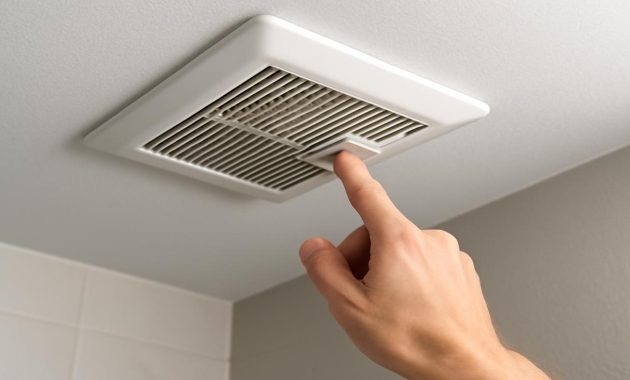
The first time I heard it, I thought it was just the old house breathing. A faint hum, a barely-there whirr above the shower, like a distant bee trapped in a lampshade. It didn’t sound like much, not compared to the thunder of water, the hiss of steam, the familiar fog crawling across the mirror. I toweled off, wiped a streak in the glass with my hand, and went on with my morning. Weeks later, when I finally understood what that sound meant—and what one forgotten switch on the bathroom vent fan could have saved me from—it was too late. The ceiling paint had started to bubble. A black fuzz appeared in the corner where wall meets tile. The grout lines looked tired, darker than they used to. The house had been trying to whisper the warning all along.
The Hum You Don’t Hear—But Your House Does
Most of us don’t think of our bathrooms as ecosystems. They’re pit stops, wake-up stations, evening retreat spaces. We step in, flip on the light, maybe tap the fan switch out of habit, and leave a foggy cloud in our wake. But your bathroom is one of the wettest indoor habitats you own—a tiny rainforest that springs to life with every shower.
Watch it sometime. Really watch it. Hot water pounds against porcelain and enamel, and the room fills with mist almost instantly. The mirror blurs into a milky smear. Tiny beads of condensation gather along the window frame, the chrome towel bar, the edge of the vanity. Your skin glows, pores open, and for a few minutes the world shrinks to warm air and steam.
Then, you shut the water off. The sound fades. The floor mat squishes under your feet. The warmth begins to thin—but the moisture doesn’t vanish. It clings. It seeps into drywall paper, wood trim, caulk joints, and the microscopic textures of grout. Even if the room feels drier, your bathroom is still holding onto a heavy breath of humidity.
That’s where your vent fan is supposed to come in. Not as a token noise to signal “shower in progress,” but as a quiet, persistent machine that changes the fate of your bathroom’s air. The trouble is, most people never tell it to do the job it’s actually built to do. We flip it on when we step into the shower… and flip it off as soon as we step out.
According to building scientists and indoor air quality experts, that habit is exactly how mold wins.
The Overlooked Setting Experts Won’t Stop Talking About
Hidden on more bathroom fans than you’d guess is a small, easily ignored feature—sometimes a numbered dial, sometimes a slider, sometimes tucked behind the cover plate. It doesn’t look like much. It might be labeled “delay timer,” “humidity control,” “auto,” or “continuous/low.” Most homeowners never touch it. Many don’t even know it’s there.
Yet when contractors, building inspectors, and indoor air quality specialists talk shop about mold prevention, they keep circling back to this same, unglamorous setting. The one that keeps your fan running after you’ve left the room, or humming along quietly in the background at a steady low speed. The one that, they say, has been shown in field studies and building performance testing to cut mold risk by a staggering margin—often more than 40% compared with bathrooms where the fan is just turned on and off by hand.
It isn’t magic. It’s patience.
Moisture doesn’t disappear the moment you turn off the water. The surfaces of your bathroom need time to give up that dampness. The air needs time to trade out humid, heavy air for fresh, dryer air from elsewhere in the home. When you shut the fan off right away, you trap that moisture in a still, closed box. Mold loves that box.
The overlooked setting simply refuses to rush the job.
The Power of the “Run-On” Timer
On many modern fans, you’ll find a run-on or delay timer. Flip off the light or press the fan switch, and instead of going silent, the fan keeps going—10, 20, sometimes 30 minutes more. This is the setting most experts quietly swear by.
Those 10–30 minutes are when the battle is actually won. That’s when your mirror finally clears completely, when condensation retreats from the ceiling, when moisture is pulled out of the microscopic pockets where mold spores are waiting. By the time the fan shuts off on its own, your bathroom has exhaled. It’s no longer a rain forest; it’s just a room again.
When researchers compare bathrooms that use post-shower ventilation—the fan kept running well after the shower ends—with those that don’t, they see a clear pattern: lower average humidity, faster drying times, and much less mold growth. Not a tiny statistical difference, but reductions often above 40% in visible mold and moisture damage over time.
The Secret Life of the “Continuous Low” Setting
Some fans favor another method: they don’t wait for you at all. Look closely and you might find a “continuous” or “low” setting. At that level, the fan runs almost all the time at a quiet, gentle speed, sipping electricity while constantly nudging moist air out and drawing new air in.
To human ears, it’s often barely audible—a soft background hush blended into the refrigerator’s murmur and the creak of floorboards. To your bathroom walls, it’s life-changing. Instead of wild swings of humidity—desert dry to jungle wet and back again—your space lives in a much steadier climate.
Experts love this sort of small but relentless effort. Continuous low-speed ventilation keeps humidity peaks shorter and less extreme. That’s bad news for mold, which thrives on repeated, long-lasting dampness. Over months and years, that nearly invisible setting can mean the difference between clean grout and black-speckled seams, between solid drywall and soft, crumbling corners.
Inside the Damp: What Your Bathroom Feels Like to Mold
Imagine you are a mold spore, drifting unseen through the air. You are small, patient, opportunistic. You land on the paper surface of drywall behind the vanity, or tuck yourself into a tiny crack in caulk near the tub. You wait.
On Monday morning, hot water roars to life. Steam billows. The air swells with moisture. Your world grows glossy with condensation. For fifteen perfect minutes, everything is wet. When the shower ends, the fan goes off. The light flicks out. The door closes. The room stays warm, still, and humid.
Tuesday, the same. Wednesday, the same. Week after week, your spot never quite dries out before the next shower. In this rhythm of damp, your roots—hyphae—begin to spread, invisible at first, then faintly gray, then boldly black or green. By the time a human spots you in the corner of the ceiling, you’ve already woven a small empire inside the wall surface.
Now imagine the same week, different house—one where that quiet little vent setting is turned on.
The shower ends, but the sound above doesn’t. While the human heads off with dripping hair and a coffee in hand, the fan keeps working, insistently. Moist air is pulled out, replaced with drier air from the hallway. The mirror clears completely. The droplets retreat from your hiding spot. The drywall paper feels a shade too dry, a bit unfriendly. The next day, the same. And the next. You try to start your slow conquest, but the rhythm is wrong. You get only brief wet spells and long stretches of dryness. The empire never begins.
To humans, the difference between those two weeks might be nothing more than a ticking timer buried inside a plastic fan housing. To spores, it’s the difference between feast and famine, colony and exile.
Finding the Hidden Switch in Your Own Home
Walk into your bathroom as if you’ve never really seen it before. Stand in the doorway and look up: there’s the vent cover, a simple square or circle in the ceiling, usually yellowed a bit with age. Behind it, somewhere, is the rest of the story.
If your house is newer, there’s a decent chance the fan has more than just “on” and “off.” If there’s a separate wall control with multiple buttons—light, fan, timer—that’s your first clue. Press the ones you never use. Sometimes a timer icon or small numbers (5, 10, 20, 30) sit quietly on the panel, waiting to be discovered.
Other models hide the brains under the fan’s own cover. With the power safely off, you can gently remove the plastic grille—usually it pulls down and releases from simple metal springs. Inside, along the housing edge, you may see two or three tiny dials. One might be labeled “CFM” (the fan speed), another “delay,” “timer,” or “humidity.” Those are the overlooked controls experts are always hunting during inspections.
Humidity-sensing fans, increasingly common in remodels and energy-efficient homes, go a step further: they switch on by themselves when moisture rises above a set level, then keep running until it drops. Homeowners often never touch the sensor setting at all, leaving it at a factory default that’s either too sensitive (running all the time) or not enough (barely reacting). But when tuned properly, this feature behaves like a tiny, tireless weather station in your ceiling—activating only when the bathroom actually needs help.
| Fan Feature | What It Looks Like | How It Helps Fight Mold |
|---|---|---|
| Run-On / Delay Timer | Button or dial set for 10–30 minutes after switch-off | Keeps air moving until surfaces are fully dry, cutting lingering humidity peaks. |
| Continuous Low Setting | Fan hums softly most of the day at reduced speed | Prevents your bathroom from ever becoming a “sealed jar” of moist air. |
| Humidity Sensor | Dial marked with % or “humidity” under fan cover or on wall control | Automatically turns fan on/off based on actual moisture levels. |
| Wall Timer Switch | Switch with 5/10/20/30-minute presets | Makes it easy to leave the fan running after you leave the room. |
You don’t need to be an electrician or an engineer to use these features. The simplest expert-recommended routine is this: after every shower or bath, ensure the fan will keep running for at least 20 minutes after you leave. If you have a timer, set it and forget it. If your fan has a continuous low option, consider leaving it on that setting full-time, especially during humid seasons.
Over days, you may not notice anything different. The room will feel normal. But over months, the paint will hold, the grout will stay cleaner, and that telltale dark shading in corners will simply never arrive.
When the Fan Isn’t Enough—and How to Read the Signs
Even the best setting can only do so much if the fan itself isn’t up to the task. Many homes still rely on fans that are too weak, too noisy (so people won’t use them), or, in some cases, not actually vented outdoors at all. Some older units dump moist air into an attic, where it condenses on cold rafters and quietly breeds a different mold problem overhead.
Your bathroom will usually tell you when the system isn’t working, if you learn to read it:
- The mirror stays fogged for more than 10–15 minutes after the shower ends, even with the fan running.
- Paint near the shower or ceiling begins to peel, bubble, or discolor.
- The room smells musty a day or two after use, even when it looks clean.
- Metal fixtures show frequent corrosion or rust spots.
Those are your warning lights. They don’t necessarily mean your house is in trouble yet, but they suggest moisture is lingering longer than it should. Turning on that overlooked vent setting is often the simplest first fix. If that doesn’t change the story—if the mirror is still cloudy long after the fan stops—it may be time to consider a quieter, stronger fan, better ducting, or a check to be sure the vent actually exits outdoors.
Experts who spend their days in crawlspaces and attics will tell you something that sounds, at first, like an exaggeration: mold is less about “leaks” and more about “habits.” Yes, a dripping pipe or a missing shingle can unleash a disaster, but the slow, widespread mold that creeps into bathrooms, closets, and bedrooms so often traces back to everyday moisture that had nowhere to go. Habits like short fan runs, closed doors, and sealed windows give mold a rhythm it can dance to.
That’s why they keep returning to the same simple refrain: let the fan keep breathing for you, even after you’re done.
A Tiny Dial, a Long Memory
In a way, that forgotten vent setting is less about technology and more about time. It asks you to extend your attention beyond the moment you’re in—to think twenty minutes into the future about air you won’t see and surfaces you won’t touch. It’s a quiet practice of patience disguised as a bit of hardware.
Years after the first black smudge on my own bathroom ceiling, I moved into a different house—newer, tighter, with a fan you could hardly hear. The previous owner had never touched the settings; the humidity sensor was dialed low, the timer set to a perfunctory five minutes. The first week, after a shower, I stood in the hallway and listened. The fan clicked off almost as soon as the mirror cleared and the door closed.
One evening, with the ladder out for changing a lightbulb, I popped the fan’s cover and found the tiny white dials tucked inside. Delay time. Humidity level. I turned the delay up to 20 minutes. I nudged the humidity trigger to a more realistic middle ground. The next shower was the same experience for me—warm water, fogged glass, soft towel. But for the house, the story had changed. The fan hummed on long after I walked away, working in that quiet, almost invisible overtime that building scientists talk about. It felt like I’d given the house a new habit, a slightly better way of breathing.
Mold, after all, is not a monster that appears overnight. It’s a memory—a visible record of all the times our spaces stayed damp when they needed to dry. Every day we either help the house forget that dampness a little faster, or we let it linger in its walls and corners. One tiny setting on one small fan can tilt that memory in our favor.
The next time you step out of the shower and hear that faint whirr overhead, pause before you silence it. Let the fan finish the story your morning started. Somewhere behind the walls, in the paper and the paint and the shadows of the grout lines, thousands of would-be spores will quietly fail to take root. You’ll never see their absence. But you’ll feel, over years, the way your bathroom simply stays what it was always meant to be: just a room, just air, just light on tile—not a jungle in miniature, plotting in the corners.
Frequently Asked Questions
How long should I run my bathroom fan after a shower?
Most building and indoor air quality experts recommend at least 20 minutes of fan run-time after a shower. If you have a delay timer, set it to 20–30 minutes. If you only have a manual switch, get in the habit of leaving the fan on and turning it off later, or installing a wall timer switch.
What is the specific vent setting that reduces mold so much?
The key setting is any option that keeps the fan running beyond your time in the bathroom: a “run-on” or delay timer, a “continuous low” mode, or an automatic humidity-sensing control. These extend ventilation into the crucial drying period, which has been shown to reduce mold risk by more than 40% compared to short, user-controlled fan runs.
Does running the fan longer waste a lot of electricity?
Modern bathroom fans are relatively efficient, especially at low or continuous settings. The small increase in electricity use is typically far less costly than repairing mold damage, repainting, or replacing moisture-damaged materials. Many high-efficiency fans use only a few watts on low-speed continuous mode.
How do I know if my fan has a delay timer or humidity sensor?
Look at the wall controls first—timer buttons or extra toggles are a strong clue. If the wall switch is basic, turn off power, remove the fan cover, and check for small dials or labeled controls on the housing. Manuals stored online for your fan’s model number (often printed inside the housing) can also reveal hidden features.
What if my bathroom still stays damp even with the timer setting?
If mirrors and surfaces stay wet for a long time, your fan may be undersized, clogged with dust, too noisy to use comfortably, or not vented properly to the outdoors. Cleaning the fan grille and duct, slightly opening the bathroom door during and after showers, and upgrading to a quieter, more powerful, properly vented unit can all help.
Is it enough to just open a window instead of using the fan?
Opening a window can help in dry, cool weather, but it’s unreliable in humid or cold climates and doesn’t guarantee good airflow. A properly sized, ducted bathroom fan with a post-shower run-on setting offers far more consistent, year-round protection against mold.
Can I add a timer or humidity control to an existing fan?
In many cases, yes. You can often install a wall timer switch to control an existing fan without replacing the fan itself. For humidity sensing or continuous low-speed operation, you may need a fan upgrade. An electrician or qualified contractor can help match the right control strategy to your current setup.