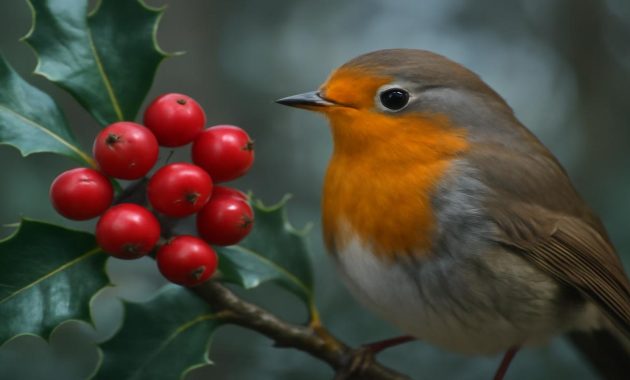
The first time I heard it, I was standing at the sink with my hands in dishwater, staring absently through the frosted kitchen window. A single, bright note slipped through the double glazing, clear as a bell in the dull gray of January. It was a robin—bold, russet-breasted, perched like a watercolor dab of color on the bare hedge. Snow freckled the fence. The garden looked empty, asleep. But the robin, round and insistent, had come back for something. And as I watched, it hopped down, vanished beneath the drooping branches of one small, stubborn tree, and emerged with a vivid flash of orange between its beak.
The quiet tree that comes alive in winter
If you ask a circle of seasoned birdwatchers why robins keep returning to some gardens and not others, the conversation doesn’t stay vague for long. It narrows, almost inevitably, to one winter fruit—persimmons.
Not the shiny supermarket specimens piled in plastic trays under bright lights, but the real winter fruit: the ones that hang like ember-colored lanterns on leafless branches long after everything else has fallen. In back gardens, on allotment plots, at the ragged edges of smallholdings, persimmon trees become unexpected beacons in the stark season. When their leaves finally drop, what remains is startling: bare, twisting branches studded with bold, orange fruits that seem to glow even on the dullest afternoons.
Robins notice. They always do.
Long after the last apples have turned to mush on the grass and the hedgerow berries have been stripped away, these fruits linger—softening slowly in the cold, sugars concentrating with every frost. Birdwatchers swear that once a local robin discovers a persimmon tree, it will weave that garden into its winter patrol, dropping by again and again as the days grow shorter.
The one winter fruit birdwatchers keep talking about
Among people who pay attention to birds the way others follow sports or stock prices, you soon learn that food is everything—especially in winter. Each berry, seed, and fruit becomes a small question of survival. Robins, for all their charm and storybook sweetness, are tough, territorial birds. A winter territory is only as good as the food it provides.
So which fruit quietly tips the scales in your garden’s favor? Birdwatchers, almost conspiratorially, point to persimmons because they combine three things robins crave: late-season reliability, high energy, and easy access.
Most garden fruits are gone by early winter, either harvested or fallen. Persimmons, on the other hand, are procrastinators. They can hang on the tree right into the heart of the cold months, unhurried, gradually ripening. Frost doesn’t ruin them; it sweetens them. Where a soft apple collapses into sour, icy mush, a persimmon becomes dense and jammy, the tannins mellowing into something almost honeyed. To a robin that has spent the morning working frozen soil for worms, this is luxury.
One longtime birder described it to me with a small, satisfied smile: “Everything else is winter rations—dried seed, leftover hips, a bit of fat on a feeder. Persimmon is dessert.”
| Winter Food | Availability in Deep Winter | Energy & Appeal for Robins |
|---|---|---|
| Mixed seeds | High (if provided by humans) | Good energy, but scattered and exposed |
| Apples & pears (fallen) | Short-lived after frost | Attractive at first, quickly rot or freeze hard |
| Hedgerow berries | Often stripped by early winter | Popular, but vanish fast and vary by year |
| Persimmons on tree | Very long; can hang for weeks or months | Soft, sugary, high-energy “fruit parcels” |
From the robin’s point of view, each intact persimmon is like a self-wrapped meal. The fruit’s smooth skin protects the soft pulp inside from drying out in the wind. Once a crack opens—from frost, a peck, or a small tear—the bird can work its way into the treasure, returning again and again until every edible smear of orange is gone.
Why robins remember where the persimmons grow
Watch a garden robin in winter and you’ll see how economical its movements become. It perches on a favorite lookout: a fence post, a low branch, the sharp tip of a bamboo cane. From there, it surveys the lawn and beds in tight, methodical sweeps. A quick drop to the ground. A flurry of leaves. A pounce, a pause, then a dart back to safety. Everything is short, purposeful, rehearsed.
When a persimmon tree enters that winter script, the robin adds a new line to its invisible map: Here, fruit. Reliable. Worth defending. Because robins are territorial, their mental maps of food are drawn tightly and jealously. A feeder here, a patch of turning leaves there, the damp corner by the compost heap—and, if they’re lucky, a tree full of slowly softening orange globes.
Birdwatchers often talk about “fidelity” when it comes to robins, not in a sentimental sense, but a literal one: if a territory sees a robin through a hard winter, there is a good chance that bird—or another that inherits the ground—will return. A persimmon tree that held its fruit during the leanest weeks becomes an anchor point in that seasonal memory.
You can see the relationship deepen if you care to watch closely. Early in the season, as the persimmons are still firm, the robin might only visit occasionally, testing the skin, regarding them with cautious interest. But after a hard frost, when the fruit starts to soften and the first yielding pockets appear, its visits become more assertive, more frequent. It will chase off other small birds that dare come too near. It will sit above the ripest fruits, chest puffed out, singing as though it personally summoned the winter sun.
Planting for song: how persimmons reshape a garden’s winter mood
Gardeners who plant with birds in mind often talk about layers: trees for height and cover, shrubs for nesting and berries, ground-level plants for seeds and insects. Persimmons quietly slip into this design as both structure and lifeline, especially in winter.
Even in a small space, a persimmon tree makes a gentle statement. Spring brings discreet, creamy blossoms that pass almost unnoticed, but the summer leaves are a calm, glossy green. Then autumn sets the stage. The foliage flames into rusty oranges and deep golds before dropping cleanly, leaving those bright, hanging fruits perfectly framed by the emptiness around them.
On a gray afternoon, the effect is theatrical. You look out, expecting winter’s usual monochrome, and instead see what looks like a bare tree decorated for some quiet, forgotten festival. On the branches, robins hop and tilt, picking their way with curious precision from one lantern of fruit to the next.
Design-wise, persimmons ask for less fuss than many ornamental trees. They are slow, patient growers. They don’t demand constant pruning or coddling. Their roots are more polite than many fruit trees, making them easier to site in a modest garden. But their real presence emerges when everything else has thinned out—when seed heads are ragged, the last rosehips have been stripped, and the garden’s edges feel stark.
Imagine standing at the back door on a freezing morning, your breath twisting in front of you, and seeing that bright tree alive with small movements: a robin ducking between the fruit, a wren flitting through the lower branches, a blackbird making a clumsy landing with more ambition than grace. This is where the emotional payoff of planting for wildlife really lives—in that contrast between the apparent emptiness of winter and the deep, pulsing life you’ve quietly made room for.
The small rituals of sharing fruit
Of course, planting a persimmon tree is one thing; deciding how much of its bounty to share is another. The fruit is as edible for us as for the birds, and deeply rewarding when properly ripe. You can slice it into salads, bake it into puddings, or simply eat it with a spoon, scooping the soft flesh straight from the skin.
Many bird-friendly gardeners adopt a ritual compromise. They harvest a portion of the crop while it is still firm, leaving a generous share on the higher branches. Over the course of the winter, as those reserved fruits soften and spot and sag, the balance of ownership tips to the wildlife.
Some go further and help the birds along. A common winter task becomes “opening” the fruit: gently tearing the skin of a few persimmons so that small birds can access the flesh more easily. The first time you press a thumb into the side of a frosted fruit and feel it give like warm jam, then step back and watch a robin dart in to explore the new opening, it feels strangely collaborative—as though you and the bird are solving the same seasonal puzzle from different sides.
Making your garden irresistible to robins
While persimmons might be the one winter fruit that hooks robins most reliably, the tree works best as part of a wider invitation. A single fruiting tree will be noticed; a garden subtly tuned to robin life will be adopted.
Start with shelter. Robins prefer a mix of open ground and low cover: dense shrubs, tangles of stems, evergreen patches where they can duck away from predators. Brash, open lawns with little structure may attract them in milder months but offer scant comfort when the wind bites. Pairing a persimmon tree with a shrubby understorey—perhaps dogwood, viburnum, or compact evergreens—gives robins perches from which to surveil their prize.
Then think about water. A birdbath that isn’t allowed to freeze solid (or that you gently break the ice on each morning) will pull in robins as surely as food. Drinking and bathing are non-negotiable daily habits. Place water where the robin feels secure: near cover, but with clear sightlines for spotting danger.
Supplemental food rounds out the offer. In the harshest spells, the fruit on the tree may not be quite enough, especially if your garden hosts several birds. Robins are particularly keen on mealworms (live or dried soaked in a little water), soft fruit scraps, and high-quality suet mixes. Placing these near, but not directly under, your persimmon tree creates a small winter circuit—the bird moves between resources, building a strong sense of territory around your space.
Trust, built in small winter visits
Over time, if your garden feels safe and reliably stocked, you’ll notice the robin shifting from wary guest to bold resident. It will start to appear not only at the tree, but along your path as you carry tools, on the handle of the spade as you pause, at the feet of a chair when you sit outside with a mug cradled between your hands.
With a persimmon tree in the mix, this sense of trust deepens seasonally. The bird remembers that, when insect life thinned and days narrowed to brittle blue light, this particular patch of earth held what it needed. You become, by association, part of that remembered safety.
Watching a robin tug at a strand of persimmon flesh, its head jerking with effort, tiny claws braced against the fruit, you can almost hear the quiet, practical ledger it keeps: Here, sustenance. Here, water. Here, strange but mostly harmless giant who sometimes opens the fruit for me.
Listening to winter differently
Installing a persimmon tree for the sake of robins does something subtle to your own seasons as well. It encourages you to pay attention in months when you might otherwise close the curtains and wait for spring. You find yourself glancing at the tree more often, noting which fruits are softening, which have been hollowed to translucent skins, which now hold a faint rim of ice around their torn edges.
You begin to notice the timing of the visits. In bitter cold, the robin might arrive just after first light, taking quick, decisive bites before retreating to shelter. On slightly milder days, it lingers, preening between feeds, singing short, contemplative phrases that hang in the still air. Snow changes everything: the orange fruits blaze against the white, and the bird’s movements, urgent and dark-eyed, trace fine lines of intent through the scene.
Birdwatchers often say that winter listening is a learned skill. Our ears are busy in spring, when dawn choruses shout their way into consciousness. In winter, the sounds are quieter, more spare. A single robin claiming a tree heavy with persimmons may be one of the clearest, most hopeful songs in that pared-back soundscape. Once you know what it means, you hear it differently—not just as music, but as evidence of a small, ongoing success in your garden.
Planting that one winter fruit is, in the end, a simple act. You dig a hole, you water a sapling, you wait a few years. But the reward is layered: not just in the sweet, soft fruit you might spoon from the skin on a cold afternoon, but in the bright, insistent presence of a robin that chooses, again and again, to return to your patch of ground when the year is at its thinnest.
FAQs
Do robins really eat persimmons, or are they more interested in insects?
Robins are naturally insect and worm specialists, but in winter these foods become scarce. Fruit, especially soft and sugary types like persimmons, becomes an important backup. When persimmons are ripe or frost-softened, robins will happily feed on them, often returning daily to the same fruits.
Can I grow a persimmon tree in a small garden?
Yes. Many persimmon varieties are compact and slow-growing, making them suitable for smaller gardens or even large containers. Pruning can keep the canopy in check, and the tree’s neat growth habit makes it an easy fit among other shrubs and small trees.
Do I need more than one persimmon tree for fruit?
It depends on the variety. Some persimmon trees are self-fertile and will produce fruit on their own, while others crop better with a second, compatible tree nearby. When you choose a sapling, check whether it’s self-fertile if you only have space for one.
Will persimmons attract other birds besides robins?
Yes. Blackbirds, thrushes, starlings, and even some finches may investigate the fruit, especially as it softens. This can create a lively winter feeding hub in your garden, though your resident robin may attempt to defend the best spots.
How can I make persimmon fruit easier for robins to eat?
Once the fruit is ripe or has been softened by frost, you can gently tear or score the skin on a few fruits to expose the flesh. This gives robins an immediate access point. Avoid over-handling or bruising the fruit; small openings are enough for the birds to work on.
Is it still worth planting persimmons if I already provide bird feeders?
Very much so. Feeders offer vital supplementary food, but a persimmon tree provides natural, sheltered, high-energy fruit over many winters with minimal effort. Together, they create a richer, more dependable resource that encourages robins—and other birds—to treat your garden as a true winter stronghold.