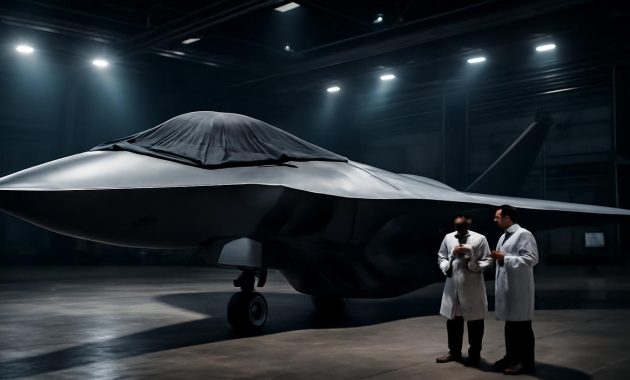
The first time the new fighter roared over the Tyrrhenian Sea, it wasn’t finished, not really. It was a prototype—a promise painted in dull primer gray, its skin still hiding a skeleton of wires, algorithms, and ambitions shared by three nations that, once upon a time, fought bitter wars against each other. Below, Italian coastlines shimmered, and somewhere in Tokyo and London, engineers watched live telemetry, hearts racing, coffee cups trembling beside keyboards. On paper, this jet was more than a machine; it was a message about the future. Yet even as its engines climbed into the cold blue, another reality climbed with it: the cost.
A Jet Born From Old Ghosts and New Fears
Italy, Japan, and the United Kingdom did not wake up one morning and casually decide to build the most advanced fighter jet in their histories. This project—now known as the Global Combat Air Programme, or GCAP—emerged from a world where the sky has become crowded with threats, drones, stealth fighters, hypersonic missiles, and invisible cyber intrusions. The romantic age of fighter aces is long gone; the next war in the air, everyone suspects, will be fought as much by code as by pilot.
In northern Italy, near Turin, there is a hangar that smells of metal dust and sealant, where technicians in white suits shuffle beneath unfinished wings. In Nagoya, Japan, the birth of this jet overlaps with the quiet hum of industrial perfection—robot arms, laser cutters, chipmakers working in facilities so clean they resemble shrines more than factories. In the UK, the echo of this future aircraft rings across the old airfields that once launched Spitfires and Hurricanes, the ghosts of World War II watching as composite panels, data fusion software, and AI copilots take their place.
GCAP is not simply about speed or stealth, though it promises both. It is billed as a sixth-generation fighter, an aircraft that doesn’t just evade radars but bends the battle around it. Imagine a jet that talks fluently to satellites, drones, ground units, and even other nations’ aircraft, trading information in microseconds like a digital nervous system stretching across continents. An aircraft that can fly with an “AI wingman,” controlling unmanned drones ahead of it like chess pieces on a vast, invisible board.
To build such a creature means knitting together not only metal and electronics, but also histories, cultures, and political priorities. Italy’s aerospace traditions, Japan’s precision engineering, Britain’s military aviation heritage—all have found themselves woven into a single silhouette streaking across the sky. Yet in those meetings, behind glossy presentations and earnest handshakes, one number has swelled larger and larger: the cost of making this future real.
The Price Tag That Quietly Tripled
When the idea of a joint next-generation fighter was first sketched out, officials spoke in cautious, almost optimistic tones. Shared development, shared risk, shared technology: the holy trinity of modern defense cooperation. The logic seemed straightforward. Instead of three countries separately spending staggering sums on their own jets, they would pool resources into one sophisticated platform. Economies of scale would keep it sensible. Reasonable. Manageable.
But weapon systems have a familiar habit. They grow. Features creep in. Requirements expand. Threats evolve faster than PowerPoint slides. What began as a highly advanced, but theoretically controlled, investment has now ballooned. Behind closed doors, officials have had to admit the uncomfortable truth: projected costs have already tripled.
In a quiet office in Rome, a defense analyst leans back and says, half joking, half resigned, “We always knew it would be expensive, but not like this.” In Tokyo, where constitutional debates about defense spending are a daily undercurrent, planners are crunching numbers late into the night, running models that try to reconcile rising security concerns with the stark realities of a national budget. And in London, the familiar tension between ambitious defense projects and crumbling domestic infrastructure simmers once more.
Tripled. It is a brutal verb. It changes the mood in meeting rooms, reshapes political speeches, and sharpens the questions asked by taxpayers. How many schools, hospitals, rail lines, or green-energy projects could be funded with the same money now circling in classified project accounts?
How a Future Jet Becomes So Expensive
Part of the answer lies in the nature of what this fighter is supposed to be. It is not just a fast aircraft—it is a flying supercomputer, a sensor hub, an intelligence node. It must survive in skies filled with enemy radars designed to see everything and missiles designed to kill anything. That means exotic materials, stealth coatings that must be applied in painstaking layers, networked systems that must be hardened against hacking, and engines that can power not only flight, but a small city’s worth of electronics.
The development pipeline is long and merciless. Wind tunnel models first, then digital twins—detailed virtual versions of the aircraft that are tested in simulation thousands of times before any real plane leaves the ground. A glitch in code that governs radar fusion or threat detection can’t just be patched like a smartphone app; it has to be validated over and over again because lives hang from the result. Every integration of a new radar mode, every tweak to an electronic warfare suite, every test of a drone “loyal wingman” scenario… it all costs time, people, and money.
Then there is the collaboration itself. Three industrial ecosystems, three sets of military requirements, three parliaments, three bureaucracies. Each modification to satisfy one partner can ripple into extra design work for everyone. Systems have to be interoperable, secure, and exportable—without spilling too many secrets. That balancing act is as delicate as machining a turbine blade to within a fraction of a millimeter.
Still, tucked inside those daunting figures is something quietly impressive: three former wartime enemies have chosen to bind parts of their defense futures together. The political symbolism almost stands in defiance of the invoices piling up.
What You Get When You Spend This Much
Numbers alone can numb the mind. Tens of billions here, perhaps more than a hundred billion over the life of the program—it becomes abstract. So what, exactly, is being bought with those ever-growing checks? Look closer, and you start to see a vision of air combat that borders on science fiction.
The future jet will almost certainly feature an “adaptive” cockpit, where information shifts on panoramic displays according to what the pilot needs most in that moment. Instead of dials and cluttered gauges, think of an augmented reality experience at Mach 1.5: enemy aircraft icons painted subtly on a visor, missile trajectories transparent but precise, friendlies distinguished in calm colors rather than the hot reds that scream alarm.
Behind that calm lies furious computation. The aircraft will likely receive data from satellites, AWACS planes, ground sensors, and swarms of drones. Its software will fuse that torrent of information into something a human can actually understand and act on. That is where artificial intelligence steps in—not as a cold commander, but as a relentless assistant, suppressing noise, flagging real threats, suggesting maneuvers or jamming strategies in milliseconds.
There is another aspect that is less glamorous but crucial: sustainability and upgradeability. These jets are expected to fly for decades, long after their designers retire. So their bones must be future-proof—modular bays for weapons and sensors, computing cores that can be swapped out like servers in a data center, open architectures that let Italy, Japan, and the UK plug in new technologies as they appear. Every bolt of flexibility fixed into the design today is an insurance policy against the unknown wars of 2045, 2055, even 2060.
Of course, that flexibility itself costs money. To make a jet endlessly adaptable, you have to design for paths that don’t yet exist. You must imagine weapons that haven’t been invented, adversaries that haven’t yet arisen, and crises that no strategist has mapped.
Comparing the Old Guard and the New Machine
Sit for a moment with a quiet row of aging fighters on a base in southern Italy, the kind that have flown patrol after patrol over the Mediterranean, their paint weathered by salt and sun. Now picture, a few years from now, a new silhouette parked among them—jagged, purposeful lines, a canopy tinted like the lens of an expensive camera, no obvious angles for radars to bite into.
Against the current generation of fighters, this future jet is meant to be another species entirely. It will likely burn less fuel for the same thrust, thanks to advanced engines. It will need fewer pilots per mission because of drone teammates. It may require fewer aircraft to achieve the same mission success, armed with smarter, longer-range weapons directed by more precise sensors.
That last point is where its supporters build their argument. Yes, it is expensive. Yes, the price has tripled. But, they say, you are not paying for a one-to-one replacement of today’s jets. You are paying for a smaller, more capable fleet that can dominate wider airspace with fewer sorties and lower attrition. You are paying, in their words, to deter the wars you really don’t want to fight.
To make that argument more tangible, imagine the cost spread over the entire life of the program—30, perhaps 40 years. Factories humming, engineers employed, universities feeding talent into aerospace labs, spinoff technologies leaking into civilian uses: more efficient engines, better materials, smarter AI. When the public debates a single, swollen headline number, all of that long tail tends to fade into the background.
| Aspect | Original Vision | Current Reality |
|---|---|---|
| Estimated Cost | Controlled, shared development budget | Projected costs already tripled |
| Industrial Role | Focused national projects | Deep trilateral supply chains and tech sharing |
| Technological Ambition | Advanced but incremental | Full sixth‑generation leap: AI, drones, data fusion |
| Operational Entry | Comfortable mid‑century timeline | Tight deadlines under rising global tension |
Politics in the Slipstream
Every future fighter jet carries more than missiles under its wings; it carries domestic politics on its back. In Rome, Tokyo, and London, the GCAP jet has already become a talking point—a symbol used by those who warn of a dangerous world and by those who argue that security must start at home.
In Italy, the program threads into a broader conversation about the country’s industrial identity. Can it remain a serious aerospace player without investing in such ambitious projects? Or does every euro poured into a fighter jet deepen frustrations in communities that feel left behind? The tension is palpable in parliamentary debates, where one side invokes jobs in Turin and Naples, while the other side points to neglected bridges and underfunded schools in the same regions.
Japan, for its part, is crossing a historical threshold. For decades, its constitution heavily restricted its military posture. Now, as regional threats intensify, the idea of a cutting-edge fighter jet developed in partnership with European allies carries both reassurance and unease. Citizens who grew up under pacifist ideals watch their leaders carefully, asking whether advanced hardware truly guarantees safety, or whether it risks pulling the nation into conflicts far from its shores.
In the UK, the jet ties into a deeper longing—a desire to still matter on the world stage. The fighter becomes a kind of flying statement that Britain remains a premier aerospace power, capable of working at the highest technological tier. Yet that dream runs headlong into the price of living crises, straining public services, and a population increasingly impatient with projects whose benefits feel remote.
As the cost triples, the politics sharpen. Each budget review forces a re-justification. That, ironically, can be healthy. It demands that every increase in cost answer a simple, brutal question: why is this worth it?
The Human Side of a Machine
Step away from the numbers and picture the faces behind the project. A young Italian engineer staring at a simulation of radar signatures late at night, a Japanese programmer tuning threat-detection algorithms, a British test pilot walking slowly around a full-scale mock-up, hand running along a composite wing that feels almost warm from the lights.
These people speak different languages, but they understand each other in the grammar of thrust, drag, latency, and load. When they argue in design reviews, it is rarely about politics; it is about millimeters and microseconds. They are the ones who must translate a tripled budget into a tangible, working aircraft that does what it promises.
They also carry a more intimate burden—knowing that someday, a human being will strap into the cockpit of the machine they built, trust their lives to its software and bolts, and fly it into places where someone else is trying to kill them. For all the talk of AI and drones, there will still be skin and bone in that cockpit for many years to come.
In quiet moments, away from the fluorescent glow of offices and labs, some of them likely feel the tension that runs through this entire story. Pride in their craft. Fascination with the beauty of flight and the perfection of well-engineered systems. And, shadowing it all, the nagging awareness that they are making an instrument of war more exquisite than anything before it.
What This Jet Says About Us
Look up on a clear evening and picture, a decade or so from now, a future fighter jet slicing invisibly across the stratosphere, unseen, unheard. Below it, cities glow—Naples, Osaka, Manchester. Streets thrum with lives: someone closing a café, someone tucking a child into bed, someone standing at a train platform scrolling news about defense budgets they don’t quite understand.
The story of this fighter—the one whose price tag has quietly, relentlessly tripled—is not just about technology or strategy. It is a mirror held up to our era. It asks what kinds of security we choose to buy with the money we collectively earn. It reveals how much trust we place in deterrence from the sky versus cooperation on the ground.
Italy, Japan, and the UK have decided that this aircraft is part of their answer to a darker, more uncertain world. The cost surge does not invalidate that decision, but it does intensify the moral arithmetic underlying it. Every extra billion demands not only an engineer’s justification but a citizen’s consent.
In the end, the jet will likely fly—sleek, lethal, unnervingly intelligent. It will patrol borders that most people never see, engage threats most people never meet, and bring comfort to some and discomfort to others. Its existence will be defended in speeches, debated in editorials, celebrated at air shows, and criticized in marches.
And perhaps, if we’re lucky in a quiet, unspectacular way, the most important thing this staggeringly expensive machine will ever do… is nothing at all. Perhaps it will spend its life as a deterrent, a prowling shadow that keeps worse possibilities from ever solidifying into reality. It is a strange paradox of modern airpower: the ultimate success of a weapon may be measured not by the enemies it destroys, but by the wars it quietly helps to avoid.
But the invoice will remain. High above the clouds, a future fighter jet traces invisible paths. On the ground, three nations, and the people who live in them, keep asking the question that will haunt the program from first sketch to final flight hour: when the cost of the future triples, how much is peace in the sky really worth?
FAQ
Why are Italy, Japan, and the UK developing a fighter jet together?
The three countries are pooling their industrial expertise, budgets, and strategic interests to create a highly advanced fighter they might not be able to afford or develop as quickly on their own. Collaboration spreads risk, shares technology, and strengthens political ties.
What makes this a “future” or sixth‑generation fighter?
It is expected to integrate stealth design, powerful sensors, AI‑driven decision support, data fusion from multiple sources, and coordination with unmanned drones. It is more like a flying command hub than a traditional fighter, built to operate in highly contested, information‑dense environments.
How has the cost already tripled?
Ambitious technologies, expanding requirements, integration complexities between three nations, and efforts to future‑proof the design have all pushed the budget far beyond early expectations. As features accumulate and timelines tighten, development costs climb steeply.
Will this jet replace existing fighters completely?
Over time, it is intended to replace or complement current frontline fighters, becoming the core of air combat fleets in Italy, Japan, and the UK. However, there will be a long period of overlap where older jets and the new platform operate side by side.
Is the high cost justified?
Supporters argue that the jet’s capabilities, deterrent value, industrial benefits, and long service life justify the expense. Critics counter that the money could be better spent on domestic priorities or alternative security measures. Ultimately, it is a political and ethical judgment each society must make.