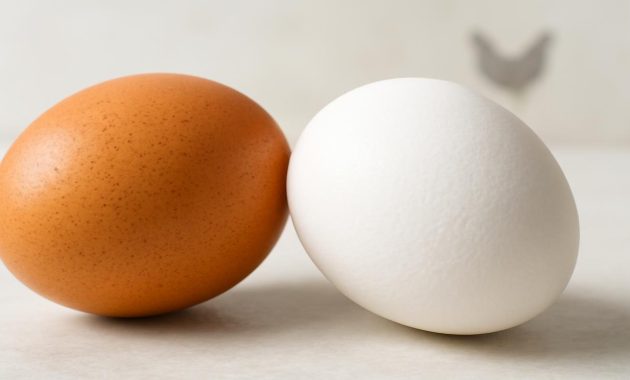
The first time you crack a still‑warm egg from a farm stand, it’s hard not to feel a little reverence. The shell resists with a soft snap, the membrane gives way under your thumbs, and the yolk eases into the pan like a small sun. Maybe it’s brown, maybe it’s white—maybe, if the farmer has a flair for surprises, it’s a pale blue or speckled olive. But somewhere in that moment, a question that has haunted supermarket aisles for decades pops up again: what’s the real difference between brown and white eggs… and is one actually better?
The Aisle of Assumptions
Walk into almost any grocery store and pause in front of the egg case. Fluorescent light hums overhead, the cool air rolls from the refrigerated shelves, and you’re faced with a neat battalion of cartons: white eggs in basic packaging, brown eggs wearing all the wholesome marketing—rustic fonts, pasture scenes, words like “natural” and “farm fresh.” The brown eggs almost look as if they’ve been plucked directly from a henhouse at dawn, accompanied by a rooster’s crow.
Most of us have heard some version of the story: brown eggs are healthier, richer, more “real.” White eggs are cheaper, industrial, somehow less. Maybe your grandmother swore that brown shells meant better nutrition. Maybe you’ve always assumed the higher price tag on brown eggs must be proof of their superior goodness.
Science, as it turns out, is a master at quietly dismantling these assumptions. When you strip away the packaging, branding, and nostalgia, the truth is both simpler and more interesting than any marketing slogan. To understand it, you have to step out of the supermarket and into the henhouse.
What the Hen Knows: Color Comes from Feathers, Not Magic
Imagine standing in a small barn at first light. Dust motes drift through shafts of sun. The air smells faintly of hay and warm feathers. A flock of hens shuffles and murmurs in their coop—some are snowy white with bright red combs, others are burnished shades of cinnamon and copper. Their behavior is the same, their routines synchronized: scratch, cluck, lay, repeat.
Now here’s the core of the mystery: the color of an eggshell is determined almost entirely by the genetics of the hen that lays it. Not by what she eats, not by how much she roams, not by whether the farm has a quaint wooden sign. It’s about breed, biology, and a little bit of pigment chemistry.
Hens with white feathers and white ear lobes—think of the classic Leghorn—tend to lay white eggs. Hens with red or brown feathers and red ear lobes—like Rhode Island Reds or Plymouth Rocks—usually lay brown eggs. Some special breeds lay blue or green eggs, thanks to different pigments entirely. But in all of these cases, shell color is like eye color in humans: inherited, predictable, and mostly cosmetic.
The Brief, Beautiful Chemistry of a Shell
Inside the hen, an egg starts as a yolk surrounded by albumen (egg white). As it moves through the oviduct, layer after layer of shell is added, mostly calcium carbonate—the same chalky mineral that coats seashells. For white eggs, the process largely stops there. The shell is formed, smooth and pale.
For brown eggs, the hen adds one more flourish in the last few hours before the egg is laid: a pigment called protoporphyrin IX. It’s derived from the same pathway that creates heme, the iron-containing compound in blood. This pigment is brushed onto the outside of the shell like a natural stain, coloring it tan, brown, or even speckled. Scrape or sand a brown egg hard enough and you’ll notice the inner shell is actually white.
So the first scientific truth is this: brown and white eggs are chemically almost identical in their shell structure. One simply has a pigment overlay, like a painted wall.
Nutrition Myths, Cracked Open
Here’s where the story often gets tangled. Somewhere along the way, pigment picked up a halo of superiority. People began to associate brown eggs with “country” hens and white eggs with factory farms, and the leap from rustic to healthy happened almost automatically.
But when researchers analyze the actual contents of the egg—the protein, fat, vitamins, minerals—they find that shell color, by itself, does essentially nothing. A brown egg and a white egg from two hens kept under the same conditions, eating the same feed, are nutritionally indistinguishable to the human body.
Here’s a simplified way to picture it: the hen’s diet sets the “recipe” for what goes inside the shell. The breed and genetics decide what the shell looks like on the outside. Those are mostly separate dials.
| Feature (per large egg) | Typical Brown Egg | Typical White Egg |
|---|---|---|
| Calories | ~70 | ~70 |
| Protein | ~6 g | ~6 g |
| Total Fat | ~5 g | ~5 g |
| Cholesterol | Similar range | Similar range |
| Vitamins & Minerals | Depends on hen’s diet | Depends on hen’s diet |
If you’ve ever broken a farm egg next to a supermarket egg and seen a darker, almost orange yolk in the former, the difference you’re seeing isn’t shell pigment—it’s diet. Hens that forage on grass, seeds, and insects, or receive feed rich in carotenoids (pigments found in plants like corn and alfalfa), deposit more of those pigments in their yolks. That’s what deepens the color, and it may slightly shift nutrients like omega-3 fats or certain vitamins.
So if your favorite local farm mostly raises brown-egg-laying breeds on pasture, and you notice their eggs taste richer, you’re not imaging it. But the credit belongs to how those hens live and what they eat, not the shade of their shells.
Why Brown Eggs Often Cost More
There’s another wrinkle in the myth. Brown eggs are usually more expensive, and our brains are experts at turning price into perceived value. But the cost difference has a practical origin: many brown-egg-laying breeds are larger birds that require more feed. More feed means higher costs, which trickle down into the price sticker. Add in the branding that often surrounds brown eggs, and the gap widens.
It’s not that the eggs themselves are inherently more costly to produce because they’re brown; it’s that the hens laying them often come from breeds whose bodies demand a little more fuel. That, plus a well-polished image of rustic authenticity, and the market does the rest.
Texture, Strength, and the Myth of the Sturdier Shell
If you’ve ever tried to crack a particularly stubborn brown egg on the edge of a bowl and watched the white dribble out while the shell hangs on, you might have suspected another popular belief: that brown shells are thicker or stronger than white ones.
This one is partially understandable. Shell thickness can vary, and it does matter—thicker shells break less easily. But once again, science gently redirects the credit. Shell strength has far more to do with the hen’s age, diet, and overall health than with shell color.
Young hens of any breed tend to lay eggs with sturdier shells. As hens age, the shells often become thinner. Calcium plays a starring role here: a hen that doesn’t get enough in her diet can’t invest as much into the architecture of her eggs, and the shells suffer. Breed can influence this, but not in lockstep with color.
In other words, if your brown eggs seem tougher and your white eggs more fragile, it likely reflects differences in the hens’ age or nutrition, or where the eggs came from, not a universal rule about shell color.
Inside the Kitchen: Taste, Texture, and Bias
What about flavor, though—the thing that matters most when the eggs finally meet skillet or whisk? When you fry, scramble, poach, or bake with brown and white eggs from hens of comparable diet and environment, blind taste tests repeatedly find no consistent, measurable difference based solely on shell color.
Yet, many people swear they can tell. That’s where a quieter science comes into play: the psychology of expectation. If you crack a deep-brown egg from a carton that promises “farm-fresh goodness,” your brain may prime your palate for more flavor. You may notice nuances you weren’t looking for in a plain white egg. It’s a familiar story in food research: labels and appearance shape our experience as much as chemistry does.
Of course, if the brown egg came from a local flock that roams outside and the white egg from a hen in a crowded barn with standard feed, the difference might be very real. But once again, you’d be tasting the hen’s life—not the color of the shell.
How Science Actually Compares Eggs
To strip away all these overlapping variables—breed, diet, age, living conditions—researchers design studies that put eggs on a level playing field. Hens of different shell-color breeds are raised in similar housing, given the same feed, and monitored over time. Their eggs are then analyzed for macronutrients, micronutrients, shell thickness, and sometimes even flavor through controlled tasting panels.
Across these studies, the pattern is consistent: within comparable conditions, brown and white eggs fall into the same basic nutritional and culinary neighborhood. Minor variations exist, as they do with any natural food, but not in a way that lines up faithfully with color. You might as well try to predict the taste of an apple by the shade of red on its skin.
Where science does find meaningful differences, it points to factors like:
- Presence of omega-3s in the feed
- Access to pasture or insects
- Overall hen health and stress levels
- Storage time and temperature
These elements leave fingerprints on the egg’s interior: slightly altered fatty acid profiles, variations in vitamin content, changes in yolk color and even albumen firmness. None of them care whether the shell is brown or white.
Choosing Eggs in the Real World
Back at the grocery store, your hand hovers over the cartons again. Now that the science has peeled away the myths, how do you decide? If shell color doesn’t matter, what does?
It helps to think of egg choice as a conversation between your values, your budget, and your taste. Shell color, at this point, is basically the accent in that conversation—a detail, not the main voice.
If you care primarily about nutrition, the best clues come from how the hens were fed. Terms like “omega-3 enriched” indicate that the birds were given flaxseed or similar ingredients, which can increase the omega-3 content of the yolk. If you value animal welfare or environmental impact, you might look for certifications or labels that speak to housing and outdoor access, or buy directly from farmers whose practices you can observe and question.
From a pure cooking perspective, freshness often matters more than anything else. Very fresh eggs have whites that stand taller and are easier to poach; slightly older eggs peel better when hard-boiled. Neither trick depends on shell color.
So you might choose brown eggs because they remind you of your grandfather’s hens, or white eggs because they’re less expensive and you go through a dozen a week. You might buy a rainbow mix from a local farm because it makes opening the carton feel like a small celebration. None of these choices is wrong—they’re simply not nutritional necessities based on color alone.
A New Way to Look at the Carton
It’s oddly freeing, once the color myth falls away. The carton stops being a silent test of your food wisdom and becomes what it truly is: a starting place for questions that matter more.
Where did these eggs come from? How did the hens live? What were they fed? How far did the eggs travel, and how long ago were they laid? Those are the questions that shape the story of the egg in your hand, far more than whether its shell looks like porcelain or beach sand.
And in a way, that’s the quiet gift of the science behind egg color. It doesn’t scold us for our assumptions; it simply invites us to look closer, to trade easy symbols for more nuanced truths.
FAQs: Brown vs. White Eggs
Are brown eggs healthier than white eggs?
No. When hens are raised under similar conditions and eat similar diets, brown and white eggs are nutritionally equivalent. Any real nutritional differences come from the hen’s feed and lifestyle, not the shell color.
Why are brown eggs usually more expensive?
Many brown-egg-laying breeds are larger and require more feed, which increases production costs. Brown eggs are also often marketed as more “natural” or “premium,” which can add to their price. The color itself does not make them more costly to produce.
Do brown eggs taste better?
Not inherently. Flavor differences usually reflect the hen’s diet and how fresh the egg is. Hens that forage outside and eat a varied diet can produce eggs with richer-tasting yolks, regardless of shell color.
Are brown eggs more natural or less processed?
Shell color doesn’t indicate how “natural” an egg is. Both brown and white eggs can come from large industrial farms or small backyard flocks. The farming practices, not the color, tell you how the egg was produced.
Are brown eggs’ shells thicker or stronger?
Shell strength depends more on the hen’s age, health, and calcium intake than on shell color. Young, well-nourished hens tend to lay stronger-shelled eggs, whether brown or white.
Why do some eggs have different yolk colors?
Yolk color reflects the hen’s diet, particularly the pigments (carotenoids) in the plants or feed she consumes. More carotenoid-rich feed can produce deeper golden or orange yolks in both brown and white eggs.
So which should I buy: brown or white?
Choose based on freshness, farming practices you support, taste preferences, and budget—not shell color. Brown and white eggs can both be excellent; the story behind the egg matters far more than the shade of its shell.