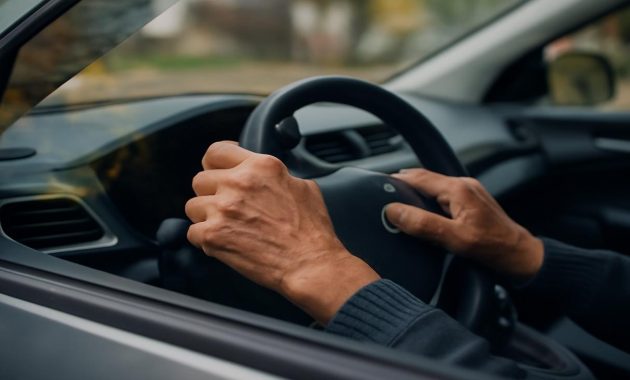
The traffic light blinks red over the quiet intersection, and in the soft wash of early evening, a silver sedan idles at the line. Behind the wheel, 79-year-old Edith drums her fingers on the steering wheel, humming along to a crackling oldies station. The light shifts to green. She pauses—just a second longer than the impatient driver behind her would like—then eases onto the gas. Somewhere in the line of cars, a horn blares, sharp and indignant. Edith flinches but keeps going. She knows what they’re thinking. Too old to drive. Shouldn’t be out here at all.
When the Open Road Meets the Passing Years
For millions of seniors, driving is more than a convenience; it’s a lifeline. The ability to get in a car and pull away from the curb is a last fragment of independence in a life slowly being pruned back by age, illness, and loss. The grocery trip, the visit to a friend across town, the quiet drive to the lake at sunset—these journeys carry more weight than their destinations.
Yet as populations age, governments and safety advocates are increasingly facing a bristling question: should driving licences be automatically withdrawn after a certain age? Or at least, should there be an upper age limit where the keys are, as a matter of policy, taken away?
On paper, the argument looks strangely tidy: reflexes slow, eyesight dims, reaction times lengthen, and the complexity of traffic increases. If we already impose age limits to protect young drivers, why not for the very old?
But what appears tidy in a policy document feels very different at street level, in the sweaty grip on a steering wheel, in the quiet humiliation of a letter that says you’re done. One person’s “necessary safety measure” is another’s “shocking discrimination”—and out on the road, those worlds collide every single day.
The Numbers in the Rearview Mirror
To understand this debate, it helps to step out of emotion for a moment and look through the data windshield. Road safety statistics paint a nuanced, sometimes counterintuitive picture.
On the one hand, older drivers are involved in fewer crashes overall. They tend to drive less, avoid late nights, stick to familiar routes, and often self-regulate when they feel their skills slipping. Their mileage shrinks; their risk exposure does too.
On the other hand, when seniors are involved in crashes, the consequences tend to be far more serious. Fragile bones, thinner skin, underlying conditions—what might be a minor accident for a 30-year-old can be life-threatening for an 80-year-old. Per mile driven, senior drivers—especially those over about 75—are often overrepresented in serious and fatal crashes.
Still, numbers alone don’t tell the whole story, and they certainly don’t hand us an obvious age at which to draw a sharp line and say, “You. Off the road.” To illustrate the complexity, it helps to boil some elements down in a simple, mobile-friendly view:
| Aspect | Younger Drivers (18–25) | Senior Drivers (75+) |
|---|---|---|
| Typical Risk Factor | Speeding, distraction, risk-taking | Slower reactions, vision limits, confusion |
| Trips per Week | Generally high; varied routes and times | Often fewer; shorter and familiar routes |
| Crash Frequency | Higher number of crashes overall | Lower total crashes, but more severe |
| Typical Policy Response | Graduated licences, restrictions, education | Medical checks, shorter renewals, proposed age limits |
Placed side by side, a strange symmetry emerges. Young drivers fight for the right to be taken seriously; older drivers fight not to be dismissed. In between is a sweeping assumption: that risk can be neatly mapped onto birthdays. But the body doesn’t operate on calendar time; it changes in uneven, sometimes surprising ways.
Living Inside the Policy: Independence on Four Wheels
Picture a small rural town where the bus swings by twice a day, if that. The nearest supermarket is fifteen minutes by car, the nearest hospital forty. The sidewalks, such as they are, are cracked and pushed aside by tree roots. Streetlights thin out after the first couple of intersections. In places like these, the question of whether a 78-year-old should drive feels less theoretical and more like a test of survival.
For seniors with limited pensions, ride-hailing and taxis can be expensive or simply absent. Public transportation, where it exists, may be physically inaccessible—high steps, no ramps, long waits in the cold. Walking might not be possible for someone with a walker, with lungs that start to burn after a single block.
Strip away the car, and what vanishes isn’t just movement, but identity. No more surprise visits to grandchildren. No more spontaneous detours to the bakery because the smell of fresh bread hangs in the rain-heavy air. No more driving a friend to a doctor’s appointment and talking quietly in the parking lot about the kind of fear you don’t share with your children.
Among people who work closely with retirees, there’s a phrase that surfaces often: “the shrinking world.” It begins with small losses—no longer driving at night, no longer taking the highway, no longer going alone. When the licence disappears completely, the world tightens another notch. Weeks become scheduled around who can give a ride, which favor can be cashed in, what trip is worth the trouble of asking.
The emotional impact runs deeper than convenience. Losing a licence can feel like being declared publicly incompetent, the bureaucratic equivalent of a stamp on the forehead: no longer capable. That bruise to dignity doesn’t heal easily, and for some, it’s the first real sign that they’ve stepped irreversibly into a new life stage—one society doesn’t always know what to do with.
Safety vs. Stigma: A Tight Curve to Navigate
At the same time, families and other drivers are haunted by a different set of images. A grandparent missing an exit, panicking in traffic, swerving into the wrong lane. A confused elderly driver turning the wrong way down a one-way street. The sick-dread news story about a senior who mistook the accelerator for the brake in a supermarket parking lot.
Motor vehicles are unforgiving machines. A moment of confusion, a missed glance at a blind spot, the wrong decision at a roundabout—these slip-ups can be deadly not only for the driver but for strangers who happen to be in the wrong place at the wrong time.
So the question gets sharper: how much risk are we collectively willing to accept in order to preserve individual independence? It’s not an easy equation, especially when our fears get tangled with our prejudices.
The line between safety-focused policy and outright discrimination can be thinner than a lane divider. If you single out an entire age group for harsher treatment, are you acting on evidence—or on broad stereotypes about what it means to be “old”?
Age-based rules can unintentionally blur this line. A blanket licence withdrawal at, say, 80 implies something very clean and simple: that everyone below that age can be presumed safe and everyone above, unsafe. But reality is messy. There are 65-year-olds who should not be near a steering wheel, and 88-year-olds who drive more competently than half the people around them at rush hour.
When society reaches for a straight age limit, it risks turning a complex, deeply personal assessment into a blunt instrument. The intent may be safety; the result can feel like stigma. And stigma has a way of echoing outward from the road into every other space where older people are evaluated, spoken about, and quietly judged.
Beyond All-Or-Nothing: Rethinking How We Test Fitness to Drive
So if a simple upper age cut-off is too coarse, what else is on the table?
Many regions are experimenting with a more nuanced toolkit: regular medical assessments, vision tests, cognitive screenings, and practical driving evaluations that focus on real-world situations rather than written theory alone. Instead of circling a birthdate on the calendar, the emphasis shifts to an individual’s functional abilities.
It isn’t perfect. Medical tests can feel invasive; there’s fear they could be misused or influenced by biased assumptions. Screening systems cost money and require trained staff. And there’s the deeply human tension in asking a doctor to become the one who takes away the keys—transforming a trusted ally into, in some eyes, the enforcer.
Yet these targeted measures hold critical advantages over a simple age ban. They acknowledge that impairment shows up differently and at different times. They make room for people who age slowly, whose eyesight can be corrected, whose reflexes can be trained and sustained.
Some communities pair these tests with conditional licences—allowing older drivers to stay on the road under certain conditions: only during daylight, only in a limited radius from home, or only on local roads. The steering wheel doesn’t vanish; its scope simply narrows in ways that match the driver’s abilities.
Technology, too, is quietly reshaping the equation. Newer cars with automatic emergency braking, lane-keeping assist, blind-spot monitoring, and large, clear displays can give older drivers an extra buffer of support. Navigation systems help reduce the panic of getting lost. Even smartphone apps can remind seniors about when to take medications that, if mistimed, might affect alertness behind the wheel.
But these solutions assume access and affordability—two things not evenly distributed among retirees. Any system that hinges on high-tech vehicles risks deepening inequality, effectively giving safety and independence to those who can afford the latest model, while others are told to step aside.
A Society on the Passenger Seat: Our Shared Responsibility
Behind every senior driver is a constellation of people and institutions quietly shaping their fate: adult children, doctors, licensing authorities, urban planners, automakers. The debate about licence withdrawal is a mirror reflecting how seriously we take our duty of care toward aging citizens—and how ready we are to redesign the world so that they don’t have to rely exclusively on a car to exist within it.
Consider urban design. In many places, cities and suburbs are built as if the car is the only imaginable way to move. Long blocks without crossings, bus stops far from homes, sparse benches, poor lighting—all these features conspire against someone with a slower gait or weaker heart. Then we look at an 82-year-old and say, “You’re unsafe to drive,” while offering almost nothing in exchange.
Imagine a different landscape: frequent, low-floor buses whose drivers know the regulars by name; safe, level sidewalks that welcome walkers and wheelchairs; neighborhood services within a short stroll; community ride-sharing programs where volunteers drive seniors to appointments, markets, and social events. In that world, giving up a licence is less like falling off a cliff and more like stepping gently from one platform to another.
Family members stand at the heart of this transition. They’re the ones who notice the new dents in the bumper, the missed turns, the stories about “those crazy drivers” that hint at growing confusion. They’re also the ones who may feel torn between protecting their parent and respecting their autonomy.
Conversations about driving can quickly become battlegrounds, loaded with old family dynamics and unspoken fears. But when these conversations are supported—by counselors, by clear medical guidance, by social workers—they can start earlier, happen more gradually, and leave more room for dignity.
Withdrawal doesn’t have to be the first step. It can be the endpoint of a carefully navigated road that includes driving courses tailored for seniors, car adaptations, route planning, and phased restrictions. When done with empathy instead of ultimatum, the moment of finally handing over the keys becomes less cruel, more like a mutual recognition of what’s needed to keep everyone safe.
Walking the Fine Line: Necessary Measure or Unjust Discrimination?
So where does that leave the original, sharply framed question: is automatic licence withdrawal after a certain age a necessary safety measure or outright discrimination?
Perhaps the most honest answer is that those two categories are not as neatly separated as we sometimes pretend. Safety measures can become discriminatory when they’re lazy—when they ignore nuance, overlook context, or ride too heavily on stereotypes. Conversely, a policy that looks initially like discrimination—because it targets a specific group—may be justified if it’s carefully backed by evidence and surrounded by alternative options for preserving independence.
A blanket upper age limit likely fails that test. It may be simple to administer, but it treats 10, 15, even 20 years of difference as interchangeable. It ignores whether someone lives in the center of a transit-rich city or on a dirt road miles from the nearest shop. It doesn’t ask whether an older driver has adapted their habits, drives only in daylight, or has been spotless on the road for decades.
A more ethical path lies in shifting from age-based to ability-based assessments, and from punishment-oriented to support-oriented systems. It means accepting that some seniors will—must—stop driving, but refusing to leave them stranded when they do. It means recognizing that “retirees” are not a monolith but a wildly diverse collection of people whose only shared trait is more candles on the cake.
Back at the intersection, the light changes again. Edith turns left, carefully, scanning the crossing twice before she moves. Maybe she’s still safe to be here; maybe she shouldn’t be. Only a thoughtful, personal assessment could really say. What she knows, as she drives toward the grocery store, is simpler: the road may be crowded with opinions, but for her, each mile still feels like a small declaration of being fully, stubbornly alive.
FAQ
Do seniors really cause more accidents than younger drivers?
Per driver, older motorists are involved in fewer crashes than young, inexperienced drivers, largely because they drive less and more cautiously. However, per mile driven, the rate of serious and fatal crashes tends to rise again in higher age groups, especially after about 75, due to fragility and age-related impairments.
Is it legal to set a maximum driving age?
In most countries, there is no absolute maximum age at which driving is forbidden. Instead, licensing authorities often use shorter renewal intervals, mandatory medical exams, or on-road tests after a certain age. A strict upper age limit is relatively rare and can raise legal and ethical concerns about age discrimination.
What are alternatives to automatic licence withdrawal for seniors?
Alternatives include regular vision and medical checks, cognitive assessments, on-road driving evaluations, conditional licences (such as daylight-only driving), refresher courses designed for older drivers, and adaptation of vehicles with assistive technologies.
How can families talk to an older relative about unsafe driving?
It helps to start early and gently, focusing on safety rather than blame. Share specific concerns, suggest a professional driving assessment, and offer concrete alternatives (rides, public transport, delivery services). Framing the conversation as a joint effort to protect everyone can reduce defensiveness.
What can communities do to support seniors who stop driving?
Communities can improve public transport accessibility, create affordable or free shuttle services, organize volunteer driver programs, build safer walking and cycling infrastructure, and ensure essential services are available close to where seniors live. These steps make it easier to give up a licence without losing independence.