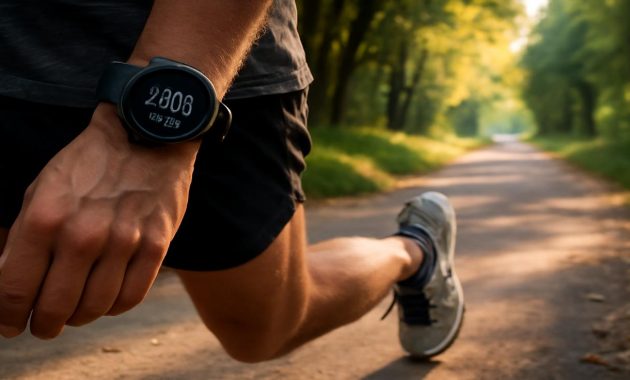
The first thing you notice is the sound. Not the clank of weights or the metallic groan of treadmills, but the soft, rhythmic whisper of your own footsteps on the pavement. Morning light spills across the street, painting the parked cars in a sleepy gold. Your breath falls into a pattern, the swing of your arms keeps time, and the city around you is just waking up. No gym membership card. No locker room. No loud music. Just you, the air on your skin, and a quiet little promise: this 30 minutes is yours.
Why Walking Feels “Too Easy” (and Why That’s Misleading)
Walking has a terrible PR problem. It’s the thing you do when you’re injured, tired, or “not serious” about fitness. It’s what people suggest with a shrug: “Just go for a walk.” The word itself sounds leisurely, like you’re strolling past bakery windows with a coffee in hand, not really doing anything.
But there’s a world of difference between an aimless shuffle and a deliberate, non-stop 30-minute walk at a steady 5 km/h pace.
Imagine what 5 km/h actually feels like. It’s not a lazy drift. It’s a “late for the train but not quite running” speed. Your stride lengthens. Your arms naturally swing. Your breathing deepens. You can still hold a conversation, but you’re clearly working. This is the sweet spot where walking stops being a background activity and starts being real, measurable exercise.
And that’s the key: consistency and intention. Skipping the gym for a walk can absolutely “work” — for your heart, your weight, your mood — but only if that walk is purposeful: non-stop, 30 minutes, roughly 5 km/h. Not speed-walking like an Olympic athlete, not stopping every few minutes to scroll your phone. Just you, continuously moving through the world at a steady, focused pace.
The Magic Number: 30 Minutes at 5 km/h
There’s something quietly powerful about a 30-minute block of time. It’s small enough to fit into a lunch break, before breakfast, or right after dinner. But it’s large enough that your body starts to change how it’s working. Your heart rate rises into that comfortable “I’m working, but this is sustainable” zone. Your muscles warm and loosen. Blood flow increases. The tight, anxious buzz of the day softens a little.
At around 5 km/h — which for most people is a brisk, purposeful pace — you’re covering about 2.5 kilometers in 30 minutes. For your body, that’s not nothing. That’s thousands of steps of repeated, low-impact, full-body motion. Your calves, hamstrings, quads, glutes, core, and even upper back and shoulders are quietly engaged in a coordinated dance. It’s a full-body activity wearing a very humble disguise.
Many people ask, “Can walking replace the gym?” The truer question is: “Can I be consistent enough and intentional enough with walking that it gives me what I hoped to get from the gym?” Because walking done casually won’t. But walking done with a plan often does more than you expect.
What 30 Minutes of Brisk Walking Actually Does Inside Your Body
While you’re busily observing the trees, the clouds, or the passing faces, here’s what’s happening beneath the surface during that steady 5 km/h walk:
- Your heart starts to beat faster, strengthening over time like any muscle that’s regularly challenged.
- Your blood vessels become more flexible and responsive, helping regulate blood pressure.
- Your muscles use more glucose from the bloodstream, helping stabilize blood sugar levels.
- Your lungs expand more, increasing oxygen intake and improving respiratory function.
- Your brain gets a gentle bath of feel-good neurotransmitters like serotonin and endorphins, lifting mood and calming stress.
All of that from what looks, from the outside, like a perfectly ordinary walk down the street.
How Walking Stacks Up Against the Gym
Picture this scenario: it’s 6:00 PM. You’re supposed to go to the gym. Your bag is sitting by the door like a judgmental dog. You’re already tired from work, your phone is buzzing, and dinner hasn’t even crossed your mind yet. The gym now feels like one more thing you have to conquer.
Now contrast that with this: you slip on a pair of comfortable shoes, put your keys in your pocket, and step outside. There’s no commute. No fluorescent lights. No complicated machines. Your body knows exactly what to do. One foot, then the other, for half an hour.
Here’s where walking can quietly win: not in intensity, but in consistency. You might go to the gym twice a week with a mixture of guilt and resistance. But you can walk almost every day without the same mental friction. When it comes to long-term health and weight management, the habit you keep will beat the program you abandon every single time.
Comparing a 30-Minute Walk and a 30-Minute Gym Session
Of course, not all movement is identical. A heavy strength session builds more muscle. A high-intensity interval workout burns more calories per minute. But if you’re in that very common category of “I keep intending to work out, but I don’t,” the comparison shifts.
| Activity (Approx. 70 kg person) | 30 Minutes of Effort | Estimated Calories Burned |
|---|---|---|
| Brisk walking at 5 km/h | Continuous, non-stop | ~120–170 kcal |
| Light cycling (easy pace) | Continuous | ~150–220 kcal |
| Moderate weight training | With rests between sets | ~90–130 kcal |
| Jogging (about 8 km/h) | Continuous | ~240–320 kcal |
These are rough estimates, but they reveal something important: your 30-minute brisk walk is absolutely in the game. It may not be the highest burner, but it’s not trivial. And if you actually do it five or six days a week, the total impact outpaces the occasional, half-hearted gym visit by a mile.
The Crucial Conditions: Non-Stop, Steady, and Intentional
Here’s where the nuance comes in: not every “walk” counts as the kind of exercise that can stand in for a gym session. To really harvest the benefits, a few things matter more than you’d think.
1. Non-Stop Means Non-Stop
Pausing at a traffic light for 20 seconds is fine. Standing for five minutes scrolling your messages is not. The point of the 30 minutes is continuity. That steady, unbroken effort keeps your heart rate elevated, your muscles engaged, and your body in that gentle training zone it needs to adapt and improve.
Think of it like trying to heat a pot of water: if you keep turning the stove off every minute, it never quite gets there. Your body is the same. Stop too often and the session never really takes off.
2. Pace: Around 5 km/h (But Feel It More Than Count It)
You don’t need to obsessively check your speed like a cyclist. Instead, aim for a pace where:
- You can talk in short sentences, but not sing.
- Your breathing is noticeably deeper, but not desperate.
- You feel “on purpose” — like you’re going somewhere, not wandering.
If you’re using a phone or watch, 5 km/h is a nice benchmark. But your body is a surprisingly accurate gauge once you pay attention. After a few walks, you’ll recognize the rhythm that feels right.
3. Make It a Ritual, Not a Chore
Humans are creatures of ritual. Your walk will be easier to maintain if it has a little ceremony to it. Maybe it’s always after breakfast, listening to the same gentle playlist or the same podcast. Maybe it’s at sunset, when the sky is turning soft and the day has finally let go.
The sensory details matter: the feel of your shoes lacing up, the brush of air on your cheeks, the familiar corner store you always pass, the dog who barks from the same balcony each evening. Over time, these become cues that tell your brain, “We’re doing the thing that makes us feel better.” That emotional association is more powerful than any fitness app notification.
What Changes When You Commit to the 30-Minute Walk
Imagine you start tomorrow. No gym pressure, no all-or-nothing declarations. Just this: 30 minutes, non-stop, brisk walking, most days of the week. What might you notice over the coming weeks?
At first, it will simply feel like effort. Your legs might complain, especially if your life has been mostly chair-bound. You’ll be acutely aware of small hills you never mentally registered before. Traffic lights will feel like tiny gifts of rest.
But then, subtle shifts begin:
- You reach the 10-minute mark and realize you’re not as winded as last time.
- Your body warms faster; your stride feels smoother, less stiff.
- You start to crave the feeling of “having walked” on days you skip.
- Your mind uses the time to process worries instead of marinating in them.
Your clothes may start to fit differently. Not dramatically at first, but there’s a looseness at the waist, a softness easing from your posture. More than anything, there’s a growing sense of capability. You begin to think, “If I can walk 30 minutes most days, what else can I do?”
That’s the hidden magic: walking doesn’t just work on your muscles; it works on your identity. You stop seeing yourself as “the person who should go to the gym but doesn’t” and become “the person who moves every day.” From there, other changes feel more possible and less like punishment.
Making It Real in an Imperfect Life
Of course, time isn’t a perfectly shaped block waiting for you every day. Some mornings are chaos; some evenings vanish into errands and obligations. Still, the 30-minute walk is surprisingly flexible once you treat it as important instead of optional.
Here are a few ways people quietly weave it into ordinary lives:
- The commute walker: Getting off public transport one or two stops early and walking the rest at a brisk pace.
- The lunch-break loop: Spending half of a lunch break walking a nearby route, then eating at the desk afterward.
- The evening decompressor: Turning post-dinner TV time into a neighborhood loop with a podcast or quiet music.
- The morning reset: Waking 30 minutes earlier to walk in the stillness before the day’s noise kicks in.
None of these require workout clothes, fancy shoes, or a training program. Just intention. And shoes that don’t hurt your feet.
And the 5 km/h pace? The longer you keep the habit, the more natural that briskness feels. What once took conscious effort becomes your default. You just…walk that way now. You’ve built a new normal.
Yes, You Can Skip the Gym — If You Honor the Walk
There’s a quiet revolution in deciding that you don’t have to become a gym person to become a healthier person. You can step outside your front door and let the sidewalk, the park path, or the quiet country lane be your track.
But there’s a condition attached, and it’s not negotiable: the walk has to be real. Non-stop. Intentional. Around 5 km/h. About 30 minutes. Not a casual meander, not constant stopping to check your phone, not cutting it short the moment you feel bored.
You’ll know you’re doing it right when you feel that comfortable, sustainable challenge in your body: breathing deeper but not gasping, heart beating stronger but not pounding in your ears. You finish the walk feeling awake, not destroyed. Like you’ve signaled to your body, “We live in this thing, and we take care of it.”
And somewhere along the way, you might notice something subtle but profound: you don’t miss the gym as much as you thought you would. The world has become your workout space — the puddles you step around, the slopes you climb, the corners you turn. You’re not trapped inside four walls forcing your body to move. You’re out in the open, following the simplest rule:
One foot. Then the other. For 30 minutes. At a pace that says, “I’m here, I’m alive, and this, right now, matters.”
Frequently Asked Questions
Is walking 30 minutes a day at 5 km/h enough to lose weight?
It can be, especially if you combine it with mindful eating. A daily 30-minute brisk walk burns a modest number of calories, but over weeks and months, that steady burn adds up. The real advantage is that walking is easy to sustain, which makes long-term weight loss more realistic than with short, extreme efforts you can’t keep up.
What if I can’t maintain 5 km/h yet?
Start where you are. Walk at a pace that feels “comfortably hard” — you can talk but not sing. Over time, as your fitness improves, your natural speed will creep closer to that 5 km/h mark. The key is continuous effort for 30 minutes, not perfection on day one.
Do I need special shoes or gear?
You don’t need anything fancy, but comfortable, supportive shoes make a big difference, especially if you’re walking on hard surfaces. Clothes should let you move freely and handle the weather. Everything else — watches, apps, trackers — is optional.
Can I break the 30 minutes into shorter walks?
Multiple shorter walks are great for overall movement, but they’re not quite the same as one non-stop 30-minute session. For heart and endurance benefits that can stand in for a gym-style workout, that continuous block is especially valuable. You can still add extra shorter walks throughout the day as a bonus.
What if my route has lots of stops, like traffic lights?
A few brief pauses won’t ruin your walk. Try to choose a route with fewer interruptions if possible — parks, longer blocks, or quieter streets work well. When you do have to stop, keep your body lightly engaged: stand tall, don’t sit, and start walking again as soon as you can.
Should I still do strength training if I walk every day?
If you can, adding some simple strength work — like bodyweight squats, push-ups, or resistance band exercises — a couple of times a week is ideal. Walking is fantastic for your heart, mood, and general fitness, but strength training helps protect your joints, improve posture, and maintain muscle as you age. Think of walking as your foundation and strength as a powerful upgrade.
How soon will I notice benefits?
Many people feel mental benefits — less stress, clearer thinking, better sleep — within the first week or two. Physical changes like improved stamina usually appear within a few weeks, and weight or body shape changes often take a month or more. The real transformation comes from what happens quietly over time when you just keep showing up for that daily 30 minutes.